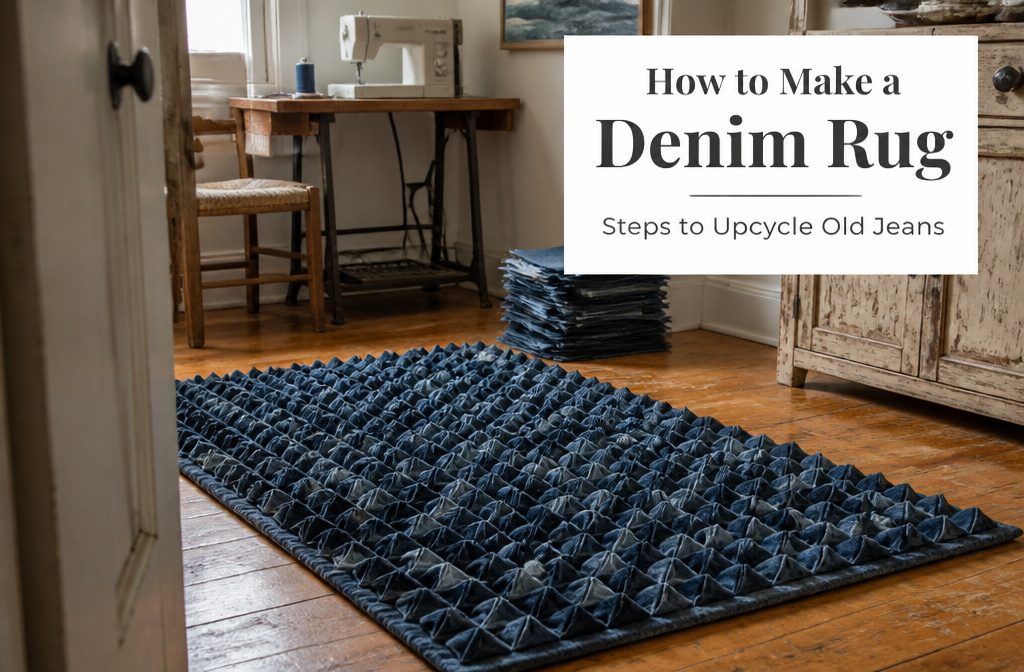
A denim rug made from cut squares sewn to base fabric takes four to five pairs of jeans and costs nothing if you pull from what’s already in the closet.
Most people underestimate the fabric count: a 2-by-3-foot rag-style rug needs around 1,100 squares, each folded into a triangle and stitched down in overlapping rows that stand upright rather than lie flat.
1. Gather the Materials
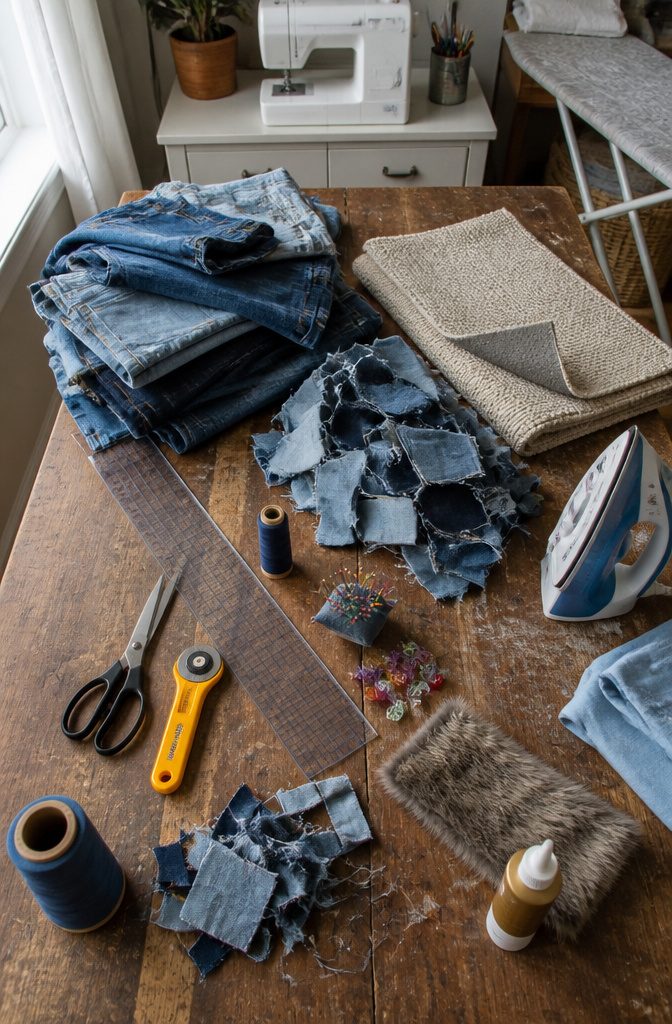
Before you start cutting, make sure you have what you need on hand. The foundation is old jeans or denim scraps, and the more pairs you gather, the larger your finished rug can be.
Four to five pairs will give you a decent-sized piece. Mixing shades of denim makes the color more interesting.
You’ll also need:
- Scissors or a rotary cutter for cutting strips
- Ruler or measuring tape to keep cuts consistent
- Sewing machine or needle and thread for joining pieces
- Upholstery thread for heavy-duty seams that won’t pull apart underfoot
- Pins or clips to hold fabric in place while you work
- Iron and ironing board to press seams flat
Optional but useful: a non-slip rug pad if you’re putting this on hardwood, fabric glue for extra hold where seams meet, and faux fur if you want to edge the finished rug.
2. Sort and Clean the Denim
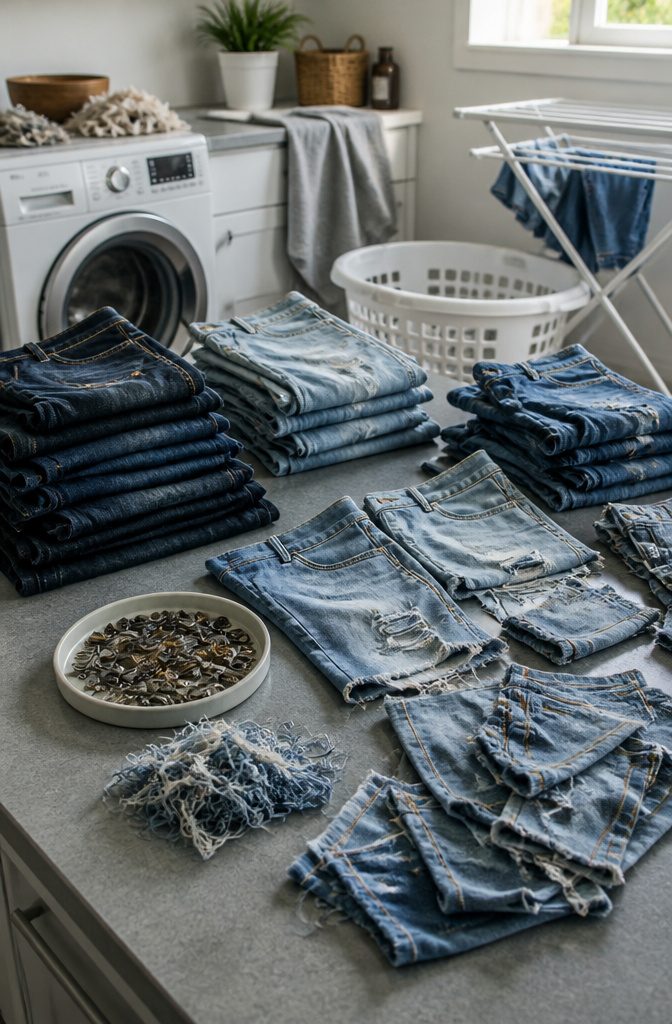
Start by sorting your denim pieces by color if you want the rug to have a uniform look, or mix shades deliberately for contrast.
Pull out every pair of jeans you plan to use and lay them out so you can see what you’re working with.
I group darks separately from light or medium washes, then decide whether I want the finished rug to read as one solid tone or show variation.
Wash all the denim before you do anything else.
Even jeans you think are clean carry dust and body oils that will show up later if you skip this step. Run them through a normal cycle, dry them completely, and check each piece for damage as you fold.
Holes, frayed seams, and thin spots where the fabric has worn through should be set aside. Denim that’s too compromised won’t hold up to the handling that comes next.
Before cutting, remove buttons, zippers, rivets, and any other hardware still attached to the fabric. These non-fabric elements will dull your scissors and get in the way when you start assembling the rug.
3. Cut the Denim
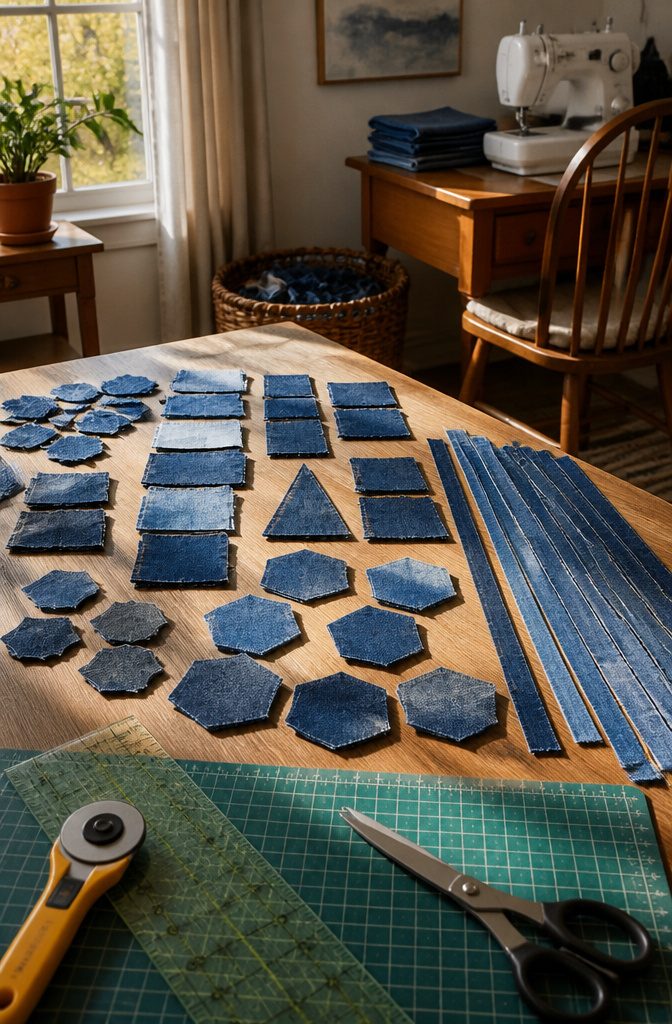
With your denim sorted and cleaned, it’s time to cut the fabric into shapes. A rotary cutter or fabric scissors will give you the precision you need here.
The most common approach is to cut the denim into small squares ranging from 2 inches per side to 3 × 3 inches, and they don’t need to be uniform. That variation actually adds character to the finished rug.
You can also cut squares, rectangles, triangles, or hexagons depending on the construction method you plan to use. Experimenting with different shapes lets you create something more personal than a strict grid.
If you’re planning a braided rug instead, you’ll need strips rather than squares.
Cut strips about 4 centimeters wide for techniques that involve weaving or braiding the denim into continuous rows. The strip method uses more fabric per square foot but moves faster once you start assembling.
4. Arrange the Pieces
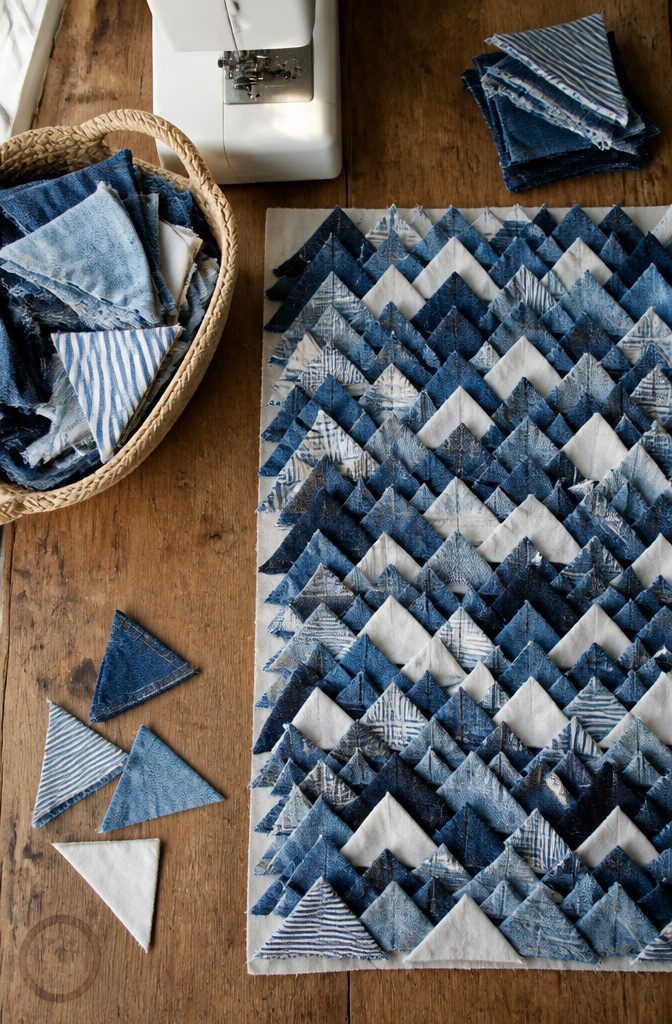
Lay your cut pieces flat on the floor or on a large table before you commit to sewing anything. This is where you get to see the rug take shape, and testing different arrangements now saves time later.
I like to try a few color combinations first: alternate light and dark denim for contrast, or scatter different shades of blue randomly across the surface for a looser, more eclectic look.
You can also work in white denim or striped fabric if you have it.
If you’re making a rag-style rug, fold each square in half to form a triangle and place the triangles in rows on your base fabric.
Position the rows close together so the folded pieces push against each other and stand upright rather than lying flat. Space them evenly and layer each new triangle slightly over the last one as you move across the row.
Take your time here. A balanced pattern reads as intentional; a rushed one shows.
5. Sew or Braid the Rug
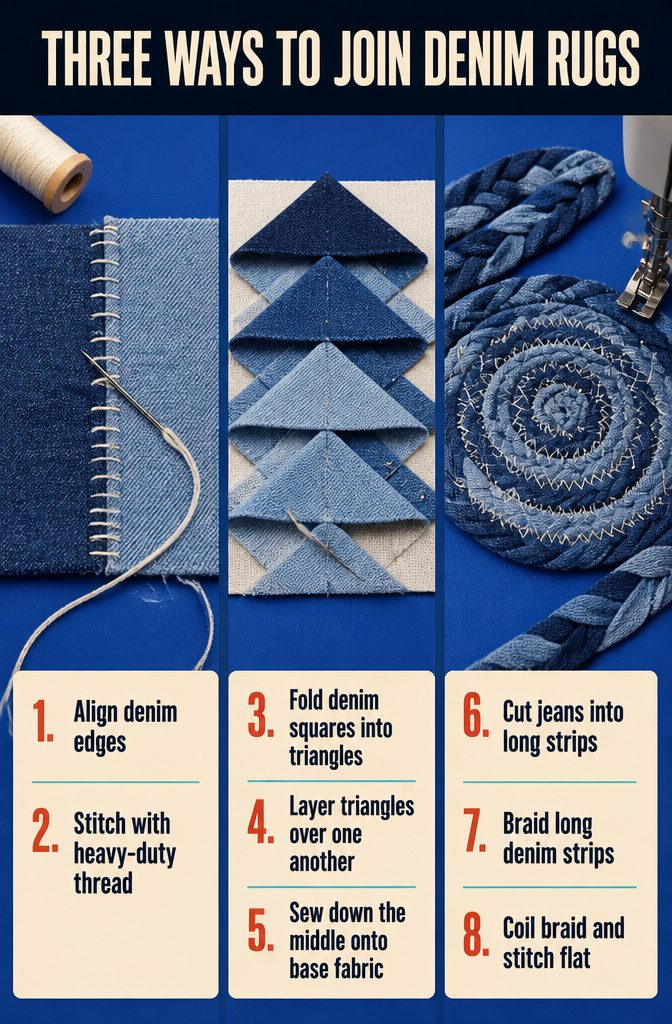
The straightforward path is to sew cut pieces edge to edge with heavy-duty thread.
Align the edges, then stitch with either a whipstitch for a secure hold or a ladder stitch if you want a nearly invisible seam. Keep stitches tight and even so no gaps open up between pieces.
A second method folds each denim square into a triangle, then sews it down the middle onto a base fabric.
You layer triangles over one another and work back to front in rows. The bulk becomes the challenge here: thick layers strain a machine hard enough to break needles if you push through more than five layers at once.
A commenter working through this method found a size 16 needle handled the weight; another suggested size 18.
For a braided rug, cut jeans into long strips and braid them before coiling and stitching the braid flat. This method gives you a soft surface underfoot and works well beside a bed or in front of the kitchen sink.
6. Finish and Secure the Rug
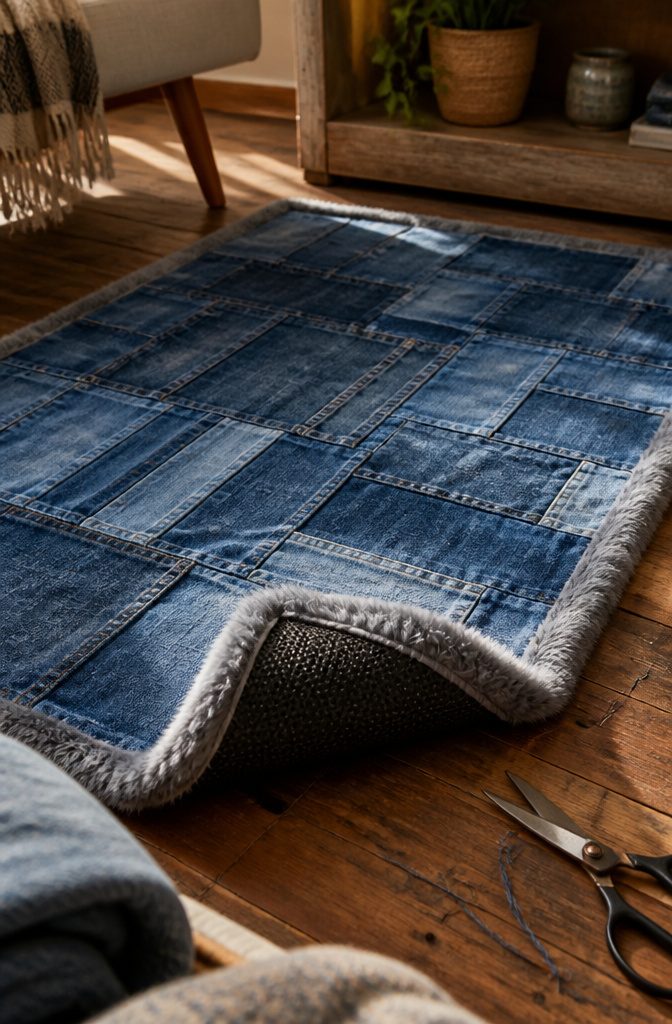
Backstitch at the start and end of each denim piece to lock the thread and keep the rug from unraveling under foot traffic.
Once all your pieces are attached, trim excess fabric close to the stitching line with sharp scissors and pull away any loose threads that got caught in the seams.
The base cloth you built on won’t show in the finished rug, so there’s no need to bind the edges unless you prefer a cleaner back.
If you’re using the rug on hardwood, slide an anti-slip mat underneath to keep it from sliding. These mats come in standard sizes and can be trimmed to fit, usually rubber or latex backing that grips smooth surfaces without adhesive.
For a softer edge or a more polished look, faux-fur edging stitched around the perimeter adds texture, though most braided denim rugs work fine without it. The denim itself is surprisingly soft underfoot once the rug settles in.
Using Old Denim as the Main Material
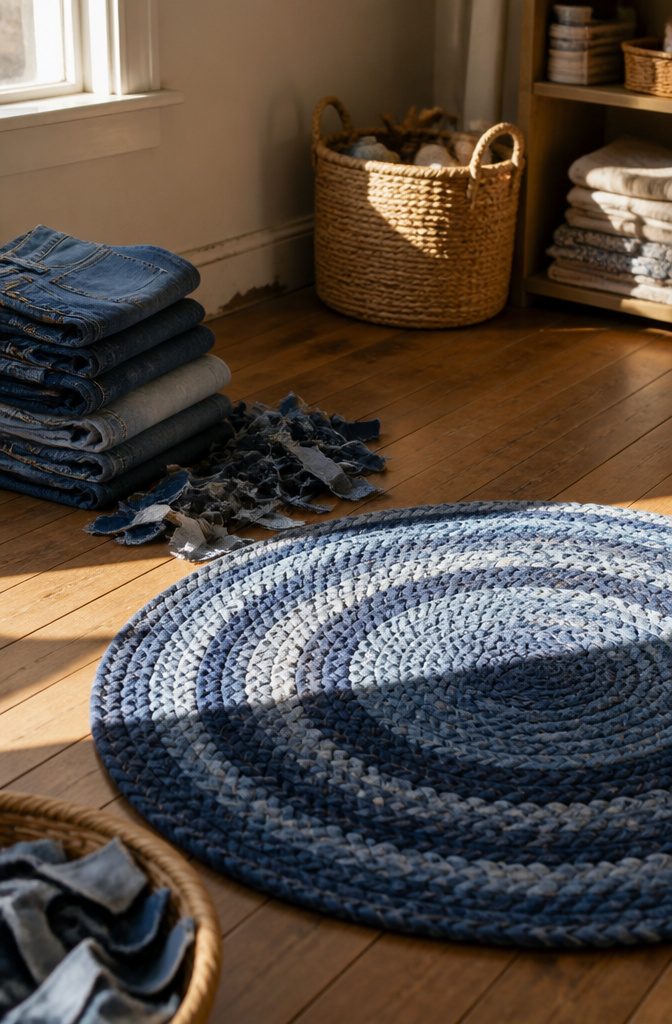
Old jeans are the starting material here.
I like pulling from what’s already in the closet, and asking family and friends usually turns up a few pairs nobody’s wearing. Thrift shops fill in the rest if you’re short.
The quantity depends on the size you’re after and how you construct it. For a rug around 2 feet by 3 feet, expect to use about 2–3 pairs of jeans if you’re working with strips or braids.
If you’re sewing individual squares onto a base the way one method does, the count climbs: roughly 1,100 squares for that same 2-by-3-foot size.
Each pair of jeans yields plenty of squares, so the number sounds high but the material goes further than it seems at first.
Denim scraps work just as well as whole pairs. A few scraps from old slacks or other denim pieces can fill out the fabric you need without buying anything new.
Color and Appearance
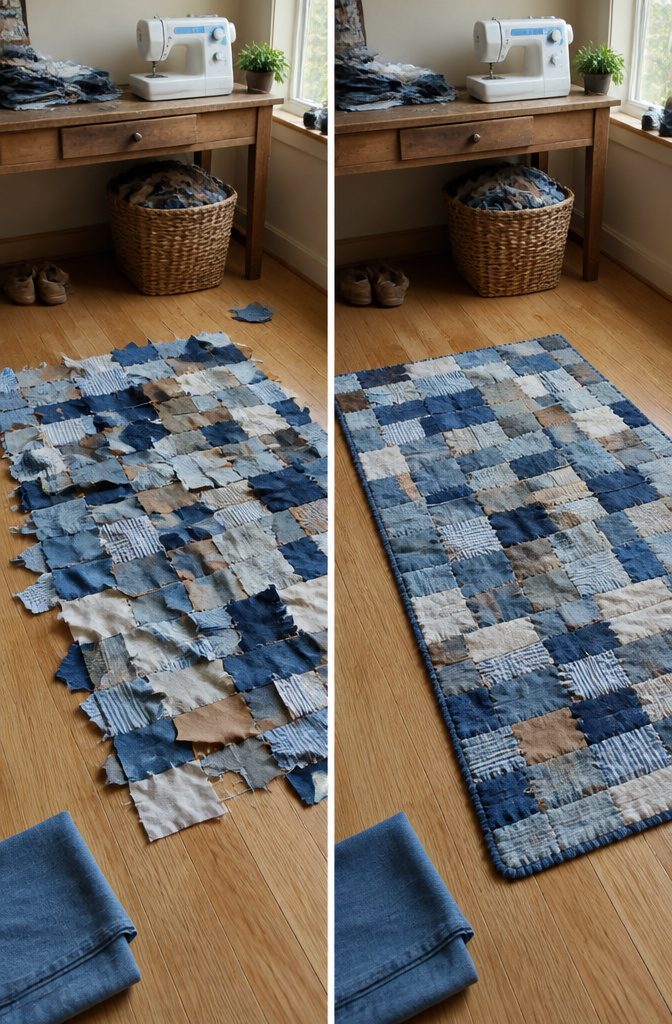
The finished rug shows whatever shades you put into it, and variation is what makes the look work.
You can mix different shades of denim for contrast, or you can stick to one range and let the texture do the talking.
One approach uses several shades of blue denim, brown slacks fabric, white denim, and blue-and-white striped denim, all placed randomly. The random placement keeps the eye moving and makes the rug feel less formal.
If you prefer more control, you can alternate light and dark shades for sharper contrast or arrange similar tones together for a softer gradient.
Color combinations and patterns are worth trying before you commit to stitching. The braided method tends to blend shades more evenly, while a rag rug holds each piece distinct and shows off the full range you collected.
Frequently Asked Questions
How many pairs of jeans do I need to make a denim rug?
For a rug around 2 feet by 3 feet, you’ll need about 2–3 pairs of jeans if you’re working with strips or braids.
If you’re sewing individual squares onto a base, expect to use 4–5 pairs since that method requires roughly 1,100 small squares. Mixing different shades of denim adds visual interest without needing extra material.
How do I make a braided rug out of jeans?
Cut your jeans into long strips about 4 centimeters wide, then braid the strips together before coiling and stitching the braid flat.
Use upholstery thread and a heavy-duty needle to handle the thick layers. The finished rug is soft underfoot and works well beside a bed or in front of the sink.
How much fabric do I need for a rag rug?
A 2-by-3-foot rag rug made from folded denim squares requires around 1,100 squares, which you can get from 4–5 pairs of jeans.
Squares can range from 2 inches per side to 3 by 3 inches, and they don’t need to be perfectly uniform. Denim scraps from old slacks or other pieces work just as well as whole jeans.
Can I mix different colors of denim in my rug?
Yes, mixing shades makes the rug more visually interesting. You can use several shades of blue denim along with brown slacks fabric, white denim, and striped pieces placed randomly, or you can alternate light and dark for sharper contrast.
Color variation is what gives the finished piece character rather than looking flat.