A farmhouse accent wall can be a Saturday project with plywood strips or stretch into a full weekend once you start adding stone veneer and lighting behind it.
The deciding factor is how much architecture your room already has: a space that feels cold and new wants reclaimed wood or board and batten to build in character, while a room with good bones but no focal point needs a gallery wall or slats that catch morning light.
The white wainscoting option uses 1×3 pine and half-inch MDF panels, the kind of lumber-aisle stock that keeps a project grounded in real budgets.
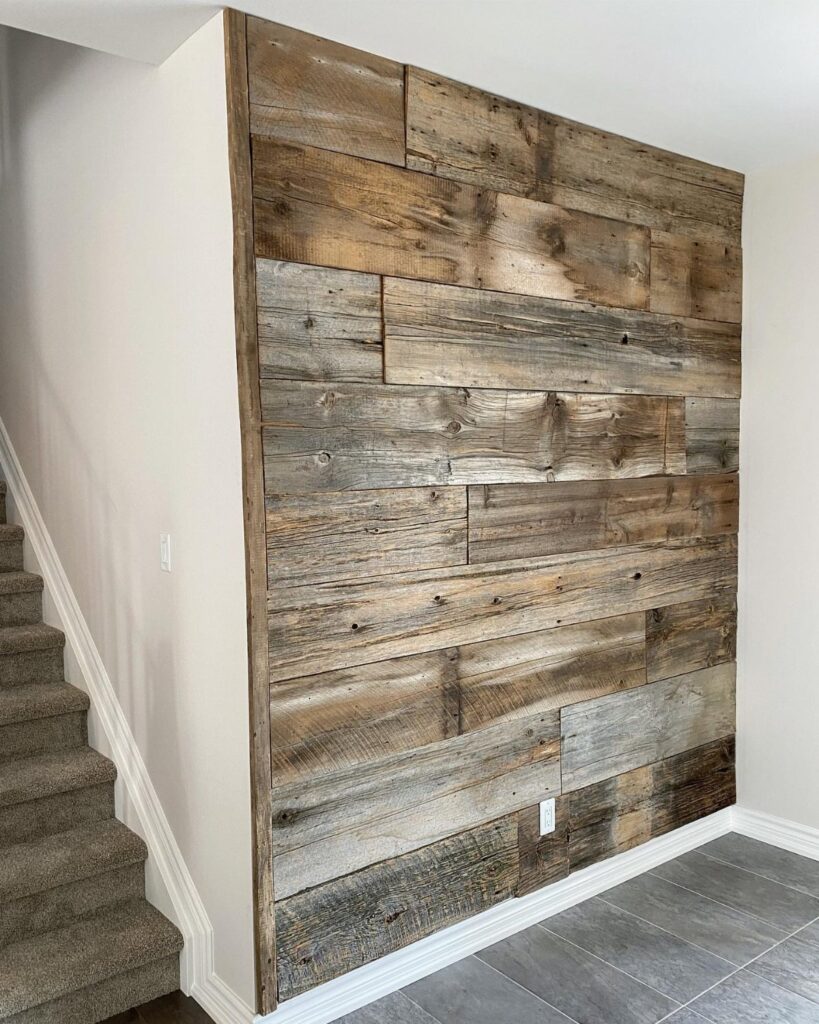
1. Reclaimed Wood Accent Wall

Horizontal reclaimed planks in mixed browns give a wall the kind of age you cannot paint on. I would start here if the room feels cold or new, since the variation in tone and grain does the warming for you.
The boards need level mounting from the first row, whether you run them across or up. A wall that starts straight stays straight, so check every few feet as you go.
This works best in living rooms, bedrooms, or any entry where you want the house to feel like it has been there longer than it has.
If your budget is tight, one solid wall of reclaimed wood beats scattered pieces everywhere.

【REAL WOOD】– Made of 100% dried fir wood imitating vintage reclaimed barnwood appearance for interior finish. The colors will vary from browns to grays depending on the batch.
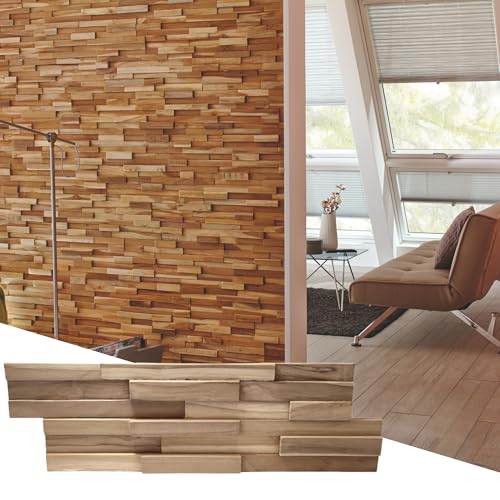
Premium real wood wall panels: beautiful hand-selected reclaimed and upcycled Asian teak wood wall panels

REAL WOOD – Made of 100% dried fir wood imitating vintage reclaimed barnwood appearance for interior finish. The colors will vary from browns to grays depending on the batch.
2. Shiplap Accent Wall

Clean horizontal lines with a narrow shadow gap between each board, shiplap reads more intentional than rough-sawn wood. You can leave it natural, paint it white, or warm it with gray, and it still keeps that farmhouse structure.
I like it in hallways and bedrooms where reclaimed planks would feel too busy. The consistent spacing calms a small space instead of filling it up.
If you want function with the look, shelf brackets mount flat over the grooves without fighting the pattern.
A full wall behind a bed or along a stair run gives you the most impact for your weekend and your money.
One fun thing about accent walls is the options—so many options! Farmhouse living room accent wall ideas, like freshly painted shiplap, wainscoting, board-and-batten paneling, and beadboard, bring architectural interest to a living room.

Beautiful accent for accents walls, ceilings, fireplace walls or TV walls

6 BOARDS, ABOUT 18 SQ FT: Six 94" L x 5.375" W x 0.6" thick shiplap planks per box, with a 4-5/8" exposed face once installed. Order 10% extra for cuts and waste.
3. Exposed Brick Accent Wall
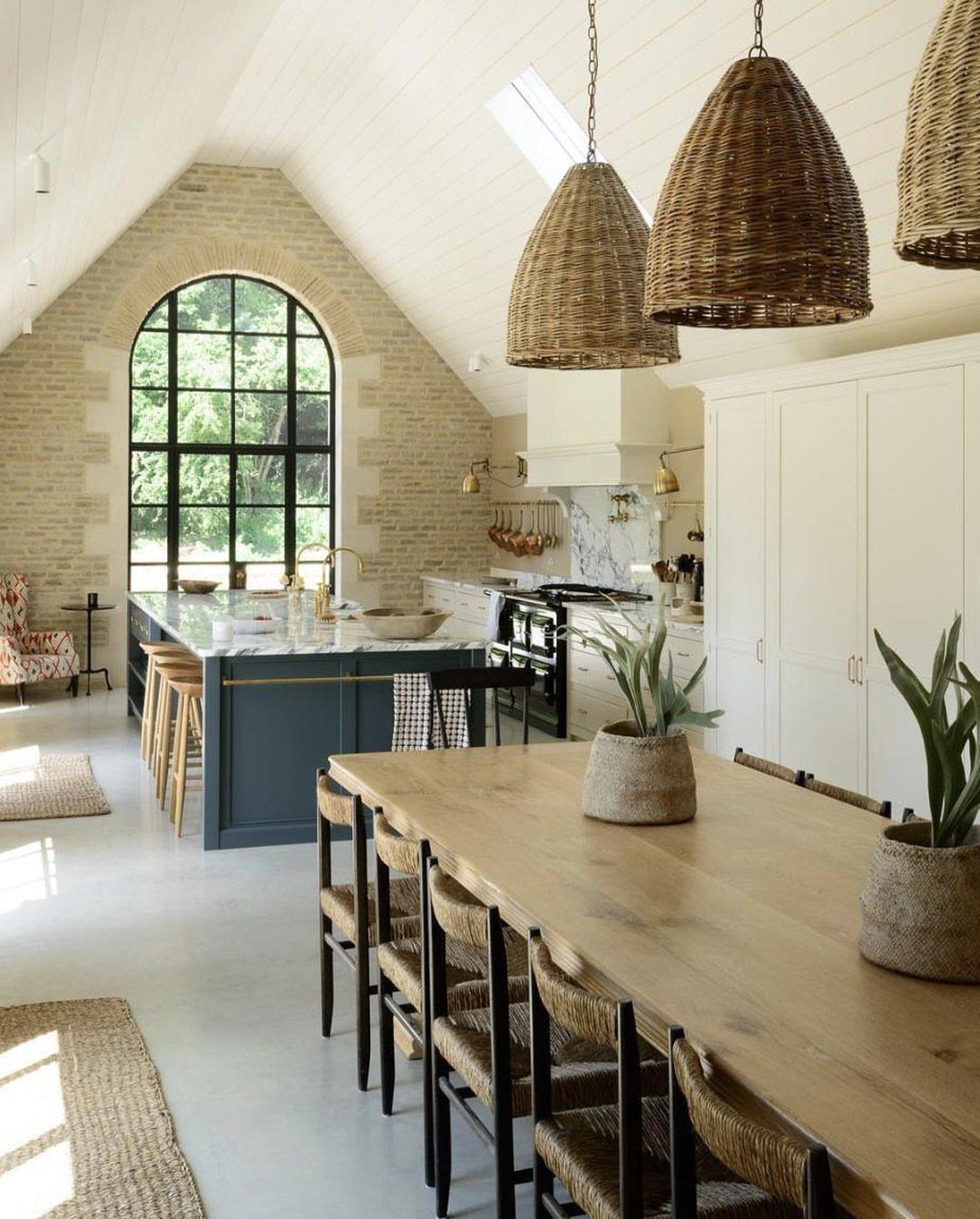
Original brick carries its own history, but good veneer panels can get you close if the wall behind your drywall is just studs.
The question is not whether you have brick; it is whether you want the weight and texture it brings.
I would whitewash or limewash if the room is small or the ceiling low. That keeps the texture without the darkness that can turn industrial instead of farmhouse.
In a kitchen or a room with height, warmer brick left as-is pairs well with black metal accents, a simple sign, or nothing at all.
Check your lighting first. Brick without enough light goes flat; with it, the surface keeps changing through the day.

Stylish Wall Upgrade: This wainscotting wall panel kit adds texture and charm to any space. The 37.8” tall beadboard panels create a beautiful decorative accent for living rooms, bedrooms, kitchens, studies, and more

Elevate Your Walls Instantly – These fluted PS wainscoting panels add a clean, modern architectural look to any space, perfect for accent walls, half walls, and decorative wall upgrades in living rooms, dining rooms, and hallways

Premade Board and Batten Paintable Wainscoting Kit: Package includes 20 premade molding trim slats, 4 decorative edge strips, and two pairs of gloves for convenient installation
4. Board and Batten Accent Wall
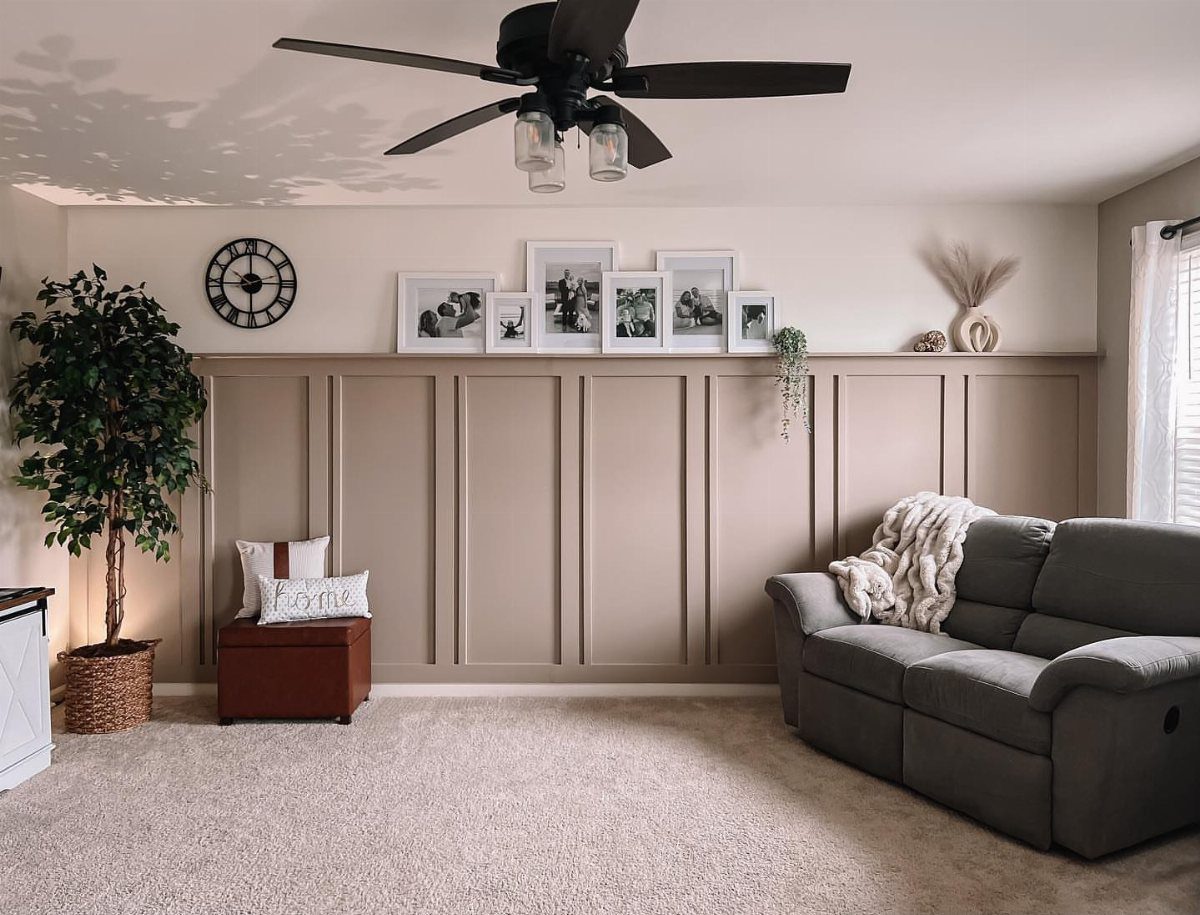
Vertical planks with flat battens over every seam, board and batten gives you the architecture of an old farmhouse without the splinters.
The lines draw the eye up, which helps a room with a standard ceiling feel taller than it is.
I would use this in a dining room or home office where you want character but need the space to stay orderly.
The structure reads as built-in, so you can stop at chair-rail height or run it floor to ceiling depending on how much wall you want to commit.
Paint it taupe or warm gray if you want it to recede; go darker only if the room gets enough daylight to balance it out.

Quantity and Coverage: this board and batten wall panel kit includes 42 pre cut MDF strips, each approx 3.15"W x 0.35"T; The finished wall coverage is approx 157.5 x 94.5 inches/ 400 x 240 cm: simply measure your wall and order the exact number of kits needed

All-in-One Design - Package of 10 premade molding trim slat + 2 decorative edge strip create instant board & batten walls

Pre-Cut Arch Wainscoting Panel Board:A complete set of 4 pre cut arched wall decorative strips, each set containing 9 components: one arched component and 8 vertical strips, totaling 36 components; These 9mm thick panels can be easily connected, adding a delicate touch to doors or walls
5. Gallery Wall Accent Wall

A gallery wall turns what you already own into the feature: frames, signs, a growth chart, the odd metal arrow. Leave some open space.
Leave breathing room so each piece registers on its own.
I would keep the subject matter tied to one mood, family photos or rustic text or collected seascapes, rather than mixing all three. A consistent frame finish helps too; black, wood, or white, but not all of them at once.
One large piece can anchor the arrangement, or you can build outward from a center line.
This suits renters and first-home owners because it moves with you. The holes are small, the investment is in the stories, not the wall.

[Realistic 3D Brick Textures, Small Size Each Brick] Commomy 3D faux brick wall panels create a farmhouse style decoration for you! Note: The individual brick is SMALLER SIZE THAN ACTUAL BRICK (Each Small Tile Measures length 5.0inch, Width 1.8inch)

【Realistic 3D Brick Texture, SMALL BRICK SIZE】Upgraded 3D textured surface adds depth and a modern decorative look to any wall. Please Note: each individual brick is smaller than real bricks. Each Brick Size is 4.8" x 1.7".10 sheets cover approx. 0.9 m² (9.7 sq ft).

【Realistic Small-Size 3D Brick Texture】Embossed, touchable faux brick surface creates a realistic wall effect and can be painted to match your décor. Each brick is smaller than standard brick (approx. 5" × 1.8")
6. Sage Green Paneled Accent Wall

Sage green with raised molding panels gives a bedroom wall the calm of an old garden pressed indoors. The color sits back enough to sleep near but still reads as designed, especially against white or natural linen bedding.
I would add botanical prints in simple frames if the wall feels too empty above the bed; the green makes them look intentional rather than leftover.
The molding is the detail that lifts this above a painted block of color, so take the time to measure the grid evenly.
This suits someone who wants farmhouse without the roughness of reclaimed wood. The finish is smooth, the mood is quiet, and the room still feels like yours in the morning.

Real Wood Wall Planks: 100% Real Barn Wood Wall Planks With Natural Knots and Dents, the Surface Of Wood Shiplap Planks Is Processed With High Temperature Carbonization, the Real Wood Wall Shiplap Planks Is Non-Toxic, Sterilized and More Safe For Children, Voc Free Process Ensures These Stick on Shiplap Planks For Walls Are Safe To Use In Home

RECLAIMED WOOD ACCENT: Real reclaimed and recycled wood, naturally-weathered wood paneling adds a beautiful, rustic accent to your walls
RECLAIMED WOOD ACCENT: Real reclaimed and recycled wood, naturally-weathered wood paneling adds a beautiful, rustic accent to your walls
7. Dark Gray Accent Wall

Dark gray reads as neutral in a farmhouse setting, not trendy, because the style already lives with raw wood and iron. A single wall behind a bed or fireplace keeps the mood from swallowing the room.
Paint the paneling the same shade as the flat wall between it so the lines stay subtle.
I would keep furniture lighter, oak or cream, and add one warm metal light fixture so the wall does not flatten the whole space.
This suits someone who wants the coziness of a darker room without committing to navy or forest green. It trades the bright, airy farmhouse look for something that feels like evening year-round.
8. Wallpaper and Wainscoting Wall
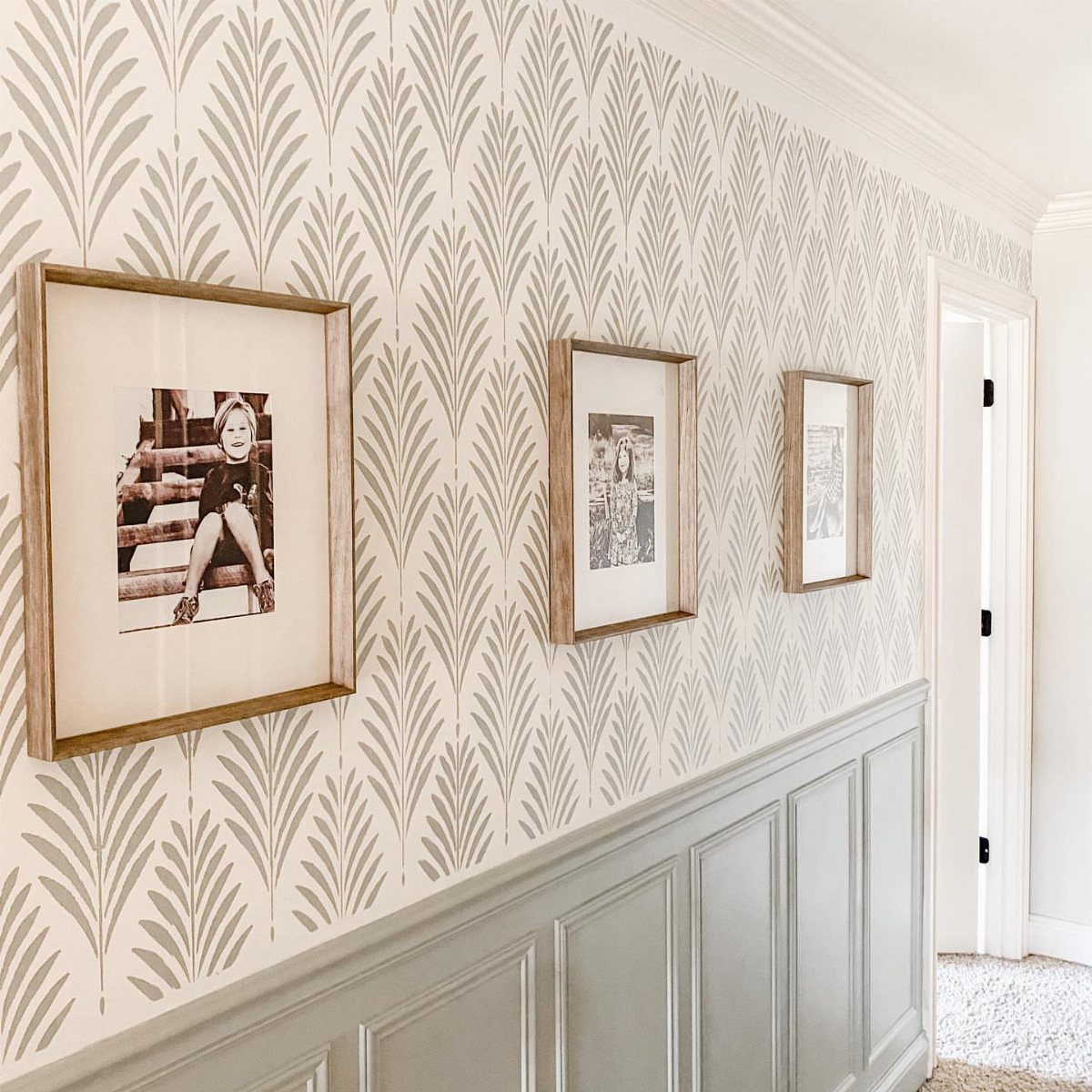
Wainscoting splits a wall into two jobs: the lower half handles scuffs and chairs, the upper half carries pattern.
Botanical or grasscloth wallpaper above painted boards gives a hallway or family room the layered look of a house that grew over time, not a single weekend project.
Install the wainscoting at standard chair-rail height, then paper above. Keeping both tones in the same family matters; a warm gray board with a cool gray print fights itself.
This works best in a long, narrow space where a full patterned wall would close in. It costs more than paint alone, less than floor-to-ceiling paper, and it breaks up the repetition of an open-plan layout.

Complete MDF Wainscoting Kit: You will receive a full set of 23 pieces MDF wall panels, including baseboards, top rails, vertical and horizontal battens, and shelf edges, suitable for adding a finishing touch to your accent wall. Ideal for DIY wall decor and interior wall molding projects

What You Will Receive:Wall molding kit includes 8 pieces 9.8x37.8 inch PS wall panels + 2 pieces 1.8x37.8 inch decorative edge strip. Assemble into a 39 x 79 inch shaped wall panel,total coverage area is 21.5 sq. ft

Transform your space effortlessly without searching for separate parts. Each package comes complete with 8 premium main wall panels and 2 perfectly matching finishing trims. This curated set provides everything you need to create a cohesive, designer-level accent wall or elegant half-wall paneling right out of the box.
9. Textured Stone Accent Wall
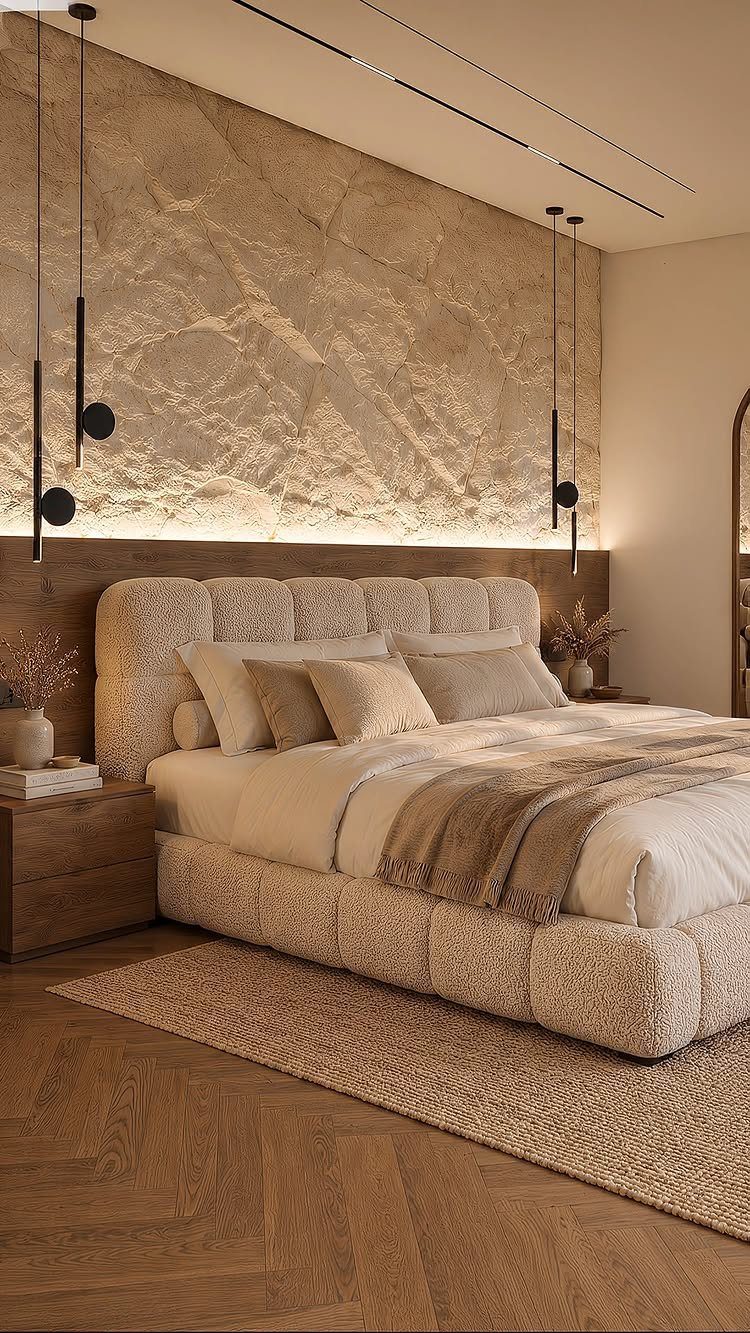
Stone veneer panels, not full masonry, give the weight of a lodge fireplace without the structural work. A light, warm tone keeps a bedroom from feeling like a basement rec room.
Panels ship in interlocking pieces that glue or screw to drywall. Cove lighting at the top, hidden behind a wood ledge, turns the texture into a nightlight and makes the wall feel built-in rather than applied.
I would use this behind a bed or a television, never on a wall with windows; the interruption breaks the effect.
It trades the soft, painted look for something that demands attention, so balance it with plain bedding and simple furniture lines.

Wall Molding Kit: the MDF board and batten wall panel kit includes 1 set of wall trim strips; The strips are 4cm wide and 9mm thick, consisting of 21 strips of 87cm width, 12 strips of 100cm width, and 6 strips of 75cm width, for a total of 39 strips; The finished size is 118 x 103 inches; You can paint, stain, or further decorate them according to your preferences to achieve your desired style and color

Premade Board and Batten Paintable Wainscoting Kit: Package includes 10 premade molding trim slats, 2 decorative edge strips, and two pairs of gloves for convenient installation

【Paintable Board and Batten Wall Panel Kit】Package contains 10 premade molding trim slats and 2 decorative edge strips, which can be spliced to form a 94.5 x 54 in accent wall
10. Vertical Wood Slat Wall

Narrow slats with a small gap between them turn a flat painted wall into something that catches morning light.
Cut slats from thin plywood ripped into strips, or buy premade lattice slats in pine. Paint the wall behind them first, a shade darker than the slats so the gaps read as shadow, not unfinished.
Attach with a brad nailer into studs; adhesive alone will eventually let go.
This suits a modern farmhouse where shiplap feels too expected. It takes a Saturday and a modest lumber budget for a full wall.
Dust settles in the gaps, though a vacuum brush handle reaches fine.

One box contains 100 cost-effective thin brick veneers, covers 14.2 sq. ft. Each piece is 2.36-in width x 8.66-in length x 0.15-in thick. Want to take a closer look at these tiles before placing a full order?Order a sample brick! Samples come full size and they're a great way to get a feel for a tile's size, color and texture. You can even see how it looks on the wall in your chosen space.

FAST DIY INSTALLATION: Our lightweight polyurethane panels are designed for quick and easy installation, saving you time and professional labor costs. Unlike heavy real brick, these panels are easy to handle and can be installed by a single person using basic tools—perfect for a weekend DIY project.

One box contains 100 cost-effective thin brick veneers, covers 14.2 sq. ft. Each piece is 2.36-in width x 8.66-in length x 0.15-in thick. Want to take a closer look at these tiles before placing a full order?Order a sample brick! Samples come full size and they're a great way to get a feel for a tile's size, color and texture. You can even see how it looks on the wall in your chosen space.
11. White Wainscoting Accent Wall
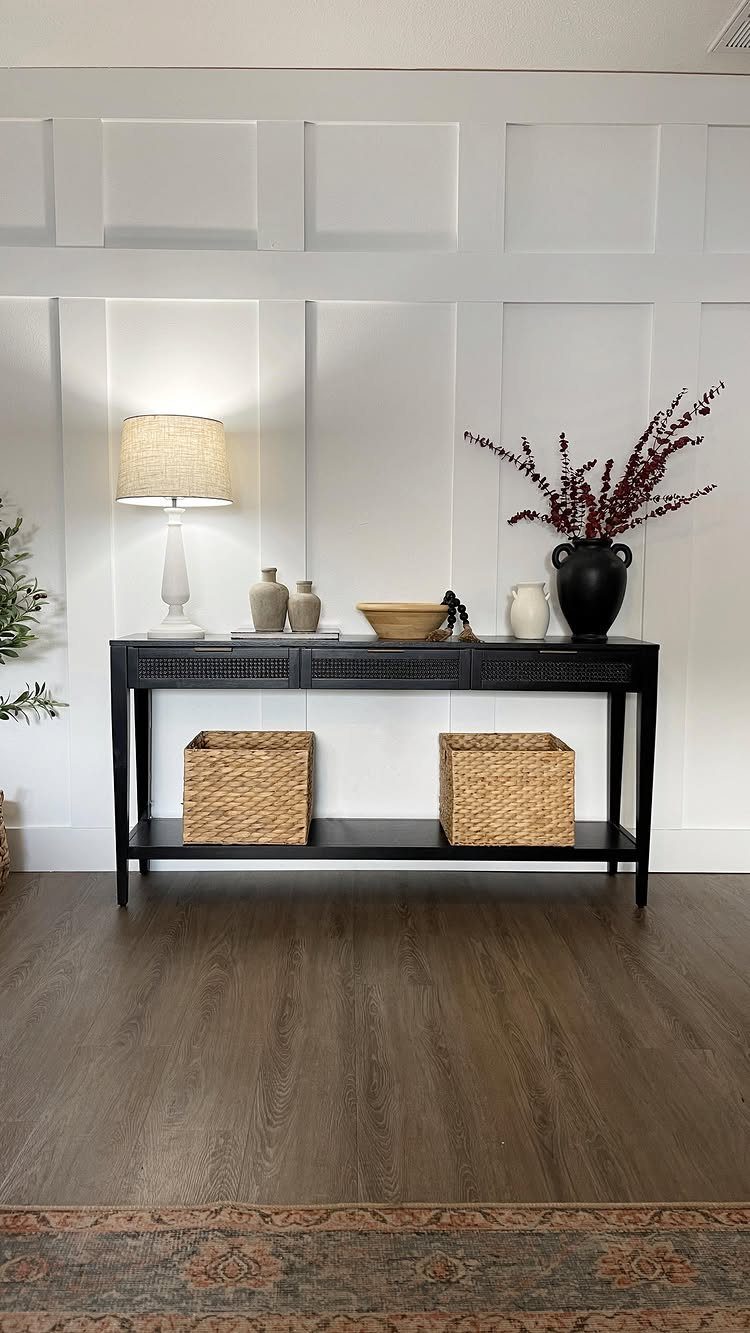
White wainscoting brightens a room that does not get enough natural light and gives plain drywall the architecture of an older house. Large rectangular panels read as board and batten spaced wide, not the narrow beadboard of a cottage.
Build it with 1×3 pine for the vertical stiles and horizontal rails, then 1/2-inch MDF panels cut to fit between. Prime everything before installation; painting after leaves drips in the corners that show against white.
Keep the wall above the same shade, or go one step warmer so it does not feel clinical.
Bold furniture sits well against it because the wall itself stays quiet. Some rooms need a backdrop, not a statement.
12. Weathered Wood Wainscoting
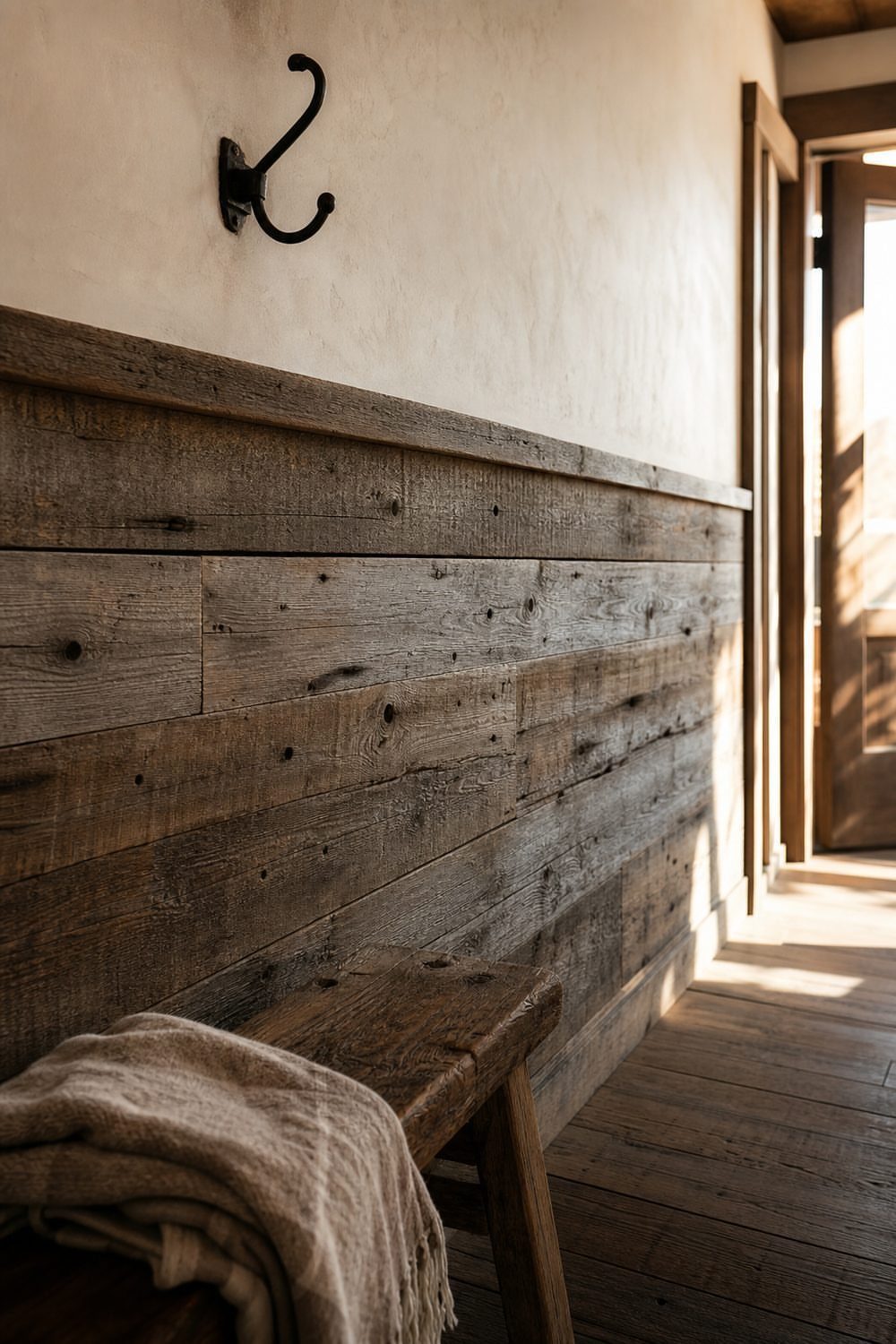
A ledge at the top, a simple 1×2 cap, gives a place to set a drink or lean a small frame.
Source the wood from fence boards, pallet wood run through a planer, or buy new pine and beat it with chains, stain it gray-brown, then sand.
The horizontal run widens a narrow entry visually; vertical would draw the eye up in a space that has no height to spare.
This is the most rustic option here. It suits an entry that opens straight into living space, where the first impression matters, and it forgives the scuffs that would ruin painted wainscoting in the same spot.
Choosing the Right Materials
Real wood and real stone carry weight that thin prints or vinyl cannot match. I would rather use fewer square feet of the genuine material than cover a wall with something that only photographs well.
Salvaged wood needs inspection before it goes up. Check for rot, old fasteners, or finish that might off-gas.
A sign with lead paint belongs in a frame, not over your sofa. If the piece is heavy, hit a stud; drywall anchors fail when a barn door bracket decides it has had enough.
For stone, lightweight veneer panels glue to standard framing without a footing. Full masonry does not; it needs engineered support that most interior walls do not have.
I would confirm the wall structure before I ordered either.
A small wall done right beats a large wall done cheap. One run of reclaimed oak commands more attention than a whole room of printed laminate.
Placement Tips for Accent Walls
The wall you see first when you enter should carry the accent.
I would treat entry walls as the highest-impact opportunity. A reclaimed wood or slat wall there sets the tone before anyone sits down.
Hallways work too, but only if they are wide enough; a textured wall in a narrow corridor turns into a brushing hazard.
Visibility matters more than square footage. A wall seen from two rooms does double duty.
A wall hidden behind a door most of the day does not.
Check your sightlines from adjacent spaces. The accent wall should reward the glance, not demand a detour to appreciate it.
Color Considerations
Farmhouse palettes live in the range between cream and charcoal, with stops at sage, taupe, and weathered gray. I would keep the saturation low; a muted color reads as material, not decoration.
For darker walls, charcoal and deep gray carry the weight without the trendy edge of navy or emerald. They need balance: lighter furniture, warm metal fixtures, and enough daylight that the room does not feel like evening at noon.
Green works when it stays grayed down. Sage succeeds because it steps back; a kelly or forest green would shout.
DIY Vs. Professional Installation
A brad nailer and a level will handle shiplap, slats, or basic board and batten in a weekend.
I would call a pro only when the wall needs structural changes: stone veneer over a questionable substructure, electrical relocation, or anything requiring a permit.
Reclaimed wood adds time before installation. Planing, de-nailing, and sorting boards by tone takes a Saturday by itself.
Rushing this stage shows in the finished wall; gaps vary, colors clash, and the casual look turns careless.
Get two quotes if you are on the fence; the labor cost often decides whether the project happens at all.
For renters, gallery walls and peelable wallpaper stay the safe self-install options. The holes are small, the commitment is reversible, and the wall returns to neutral when the lease ends.
Frequently Asked Questions
Are accent walls out of style in 2026?
No, accent walls are still in style, though the form has shifted.
A single painted wall feels dated now; what reads current is texture that runs the full height, whether that’s vertical boards, old barn wood, or shiplap with actual shadow lines.
The material itself does the work now, not just a different shade of paint.
What wall colors look good in a farmhouse look?
Muted, earthy tones carry the farmhouse palette. Sage green, warm gray, taupe, and dark gray read as designed without turning trendy.
White stays current when it carries texture through shiplap or wainscoting, not when it sits flat on drywall.
What is the rule for accent walls?
Pick the wall your eye hits first when you enter the room. One strong focal point lets the other three walls stay simple.
Is farmhouse decor still in style in 2026?
Yes, farmhouse decor remains popular and keeps evolving. The style has moved toward modern farmhouse, mixing raw wood and iron with cleaner lines, and it still centers on comfort, natural materials, and a sense of history.