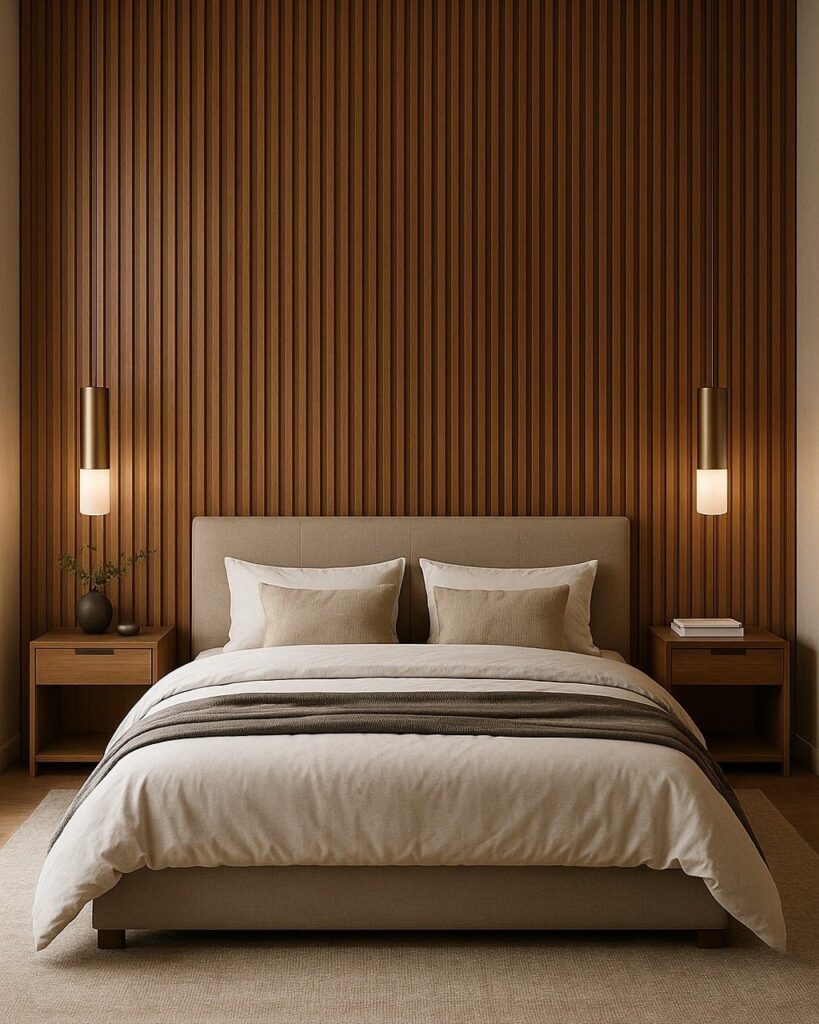
Wood panel bedrooms run from a Saturday peel-and-stick job to real marble and contractor labor, and the list below covers everything from half-wall tricks to a full ceiling treatment.
A backlit slat wall hides its wiring behind the slats, while fluted White Ash panels keep their calm in cream and boucle rooms, and both show up further down with the details on how each reads in different light.
1. Half-Wall Paneling Under Painted Section

Paint above and wood below splits the wall without making the room feel closed in.
I like the panel top to hit near the one-third mark, trimmed out clean, with the paint color pulled from a warm undertone hiding in the wood grain.
Dry-lay the boxes before you cut anything, so the grain variation spreads evenly.

Includes: 3 pre-cut 20"x27" wall molding frames and 2 chair rail trim pieces, Covers 78.7"W x 39.9"H wall area (6.5 ft wide). All pieces feature a peel-and-stick design for easy installation.

Effortless Peel & Stick Installation--Enjoy hassle-free setup with our self-adhesive PVC slat panels! Just measure, peel off the backing, and press onto any clean, flat surface—no tools or expertise needed. Perfect for DIY beginners and quick home makeovers.
2. Fluted Wall Panelling

Fluted grooves catch light differently than sharp slats; the rounded channels let it roll along the curve, and the finished wall sits quietly in rooms done in cream, sand, and boucle.
White Ash Fluted Wood Panels run an N-shaped wave that looks sharp across a full wall and holds up just as well on a skinny strip between two windows.
The texture reads as built-in, not applied, which matters when you are working around existing wardrobes or a mounted television. I would use this where you want calm over contrast.

High-Quality Wall Panels: Our acoustic panel set is crafted with high-density polyester fiber, premium medium-density fiberboard, and a solid wood veneer. This combination provides an elegant look, superior sound damping, and excellent sound deadening, significantly improving room acoustics

【Professional-Grade Sound Absorption】Engineered with 1750gsm high-density acoustical polyesterfiber and wood materials, our acoustic wall panels deliver industry-leading sound absorbing (NRC 0.92+). Create private zones in studios, or bedrooms, and protect your privacy to the greatest extent.

High-Quality Wall Panels: Our acoustic panel set is crafted with high-density polyester fiber, premium medium-density fiberboard, and a solid wood veneer. This combination provides an elegant look, superior sound damping, and excellent sound deadening, significantly improving room acoustics
3. Rustic Mid-Century Wood Panelled Bedroom
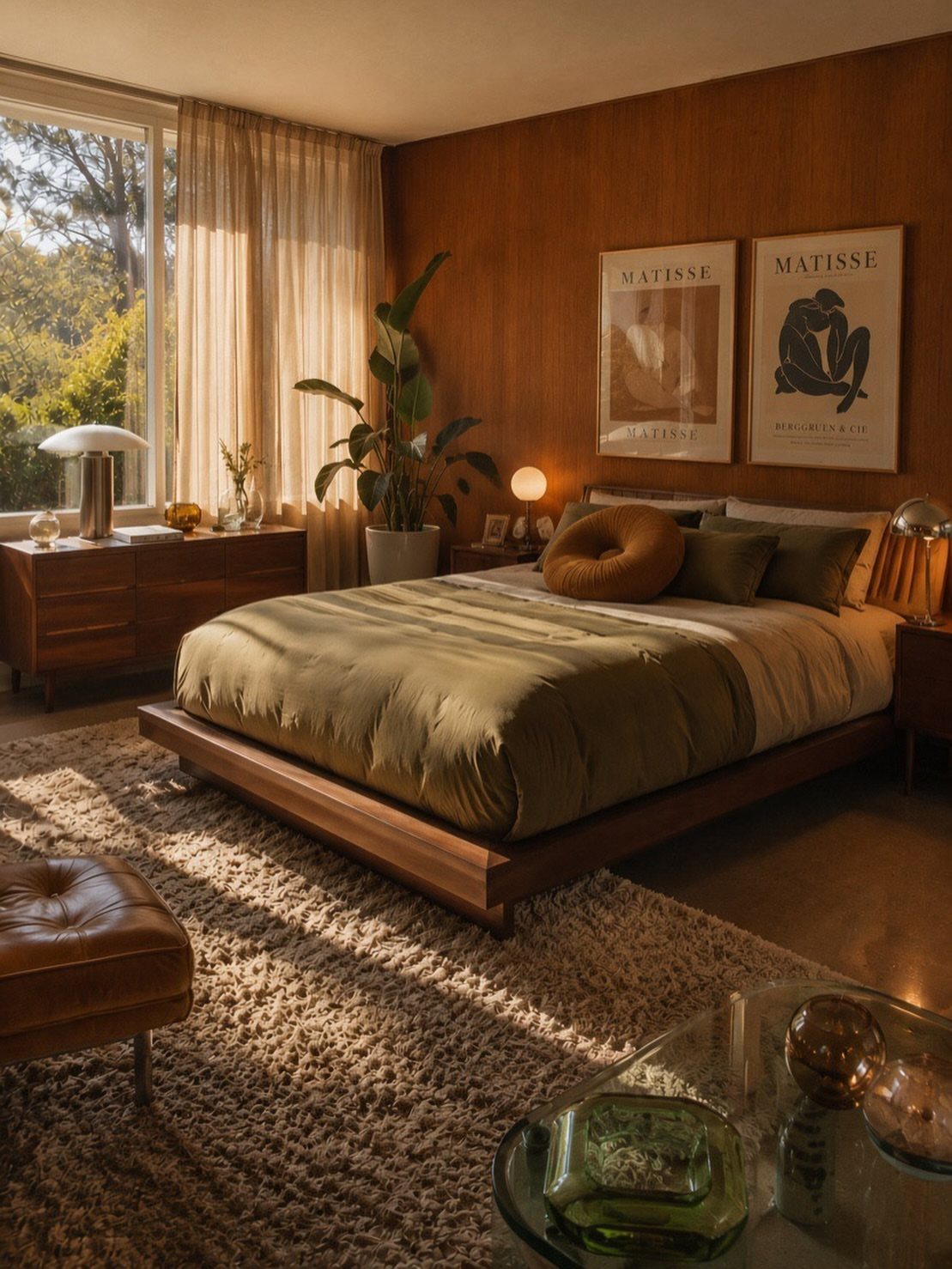
Reclaimed wood does the opposite of manufactured finishes. Nail holes, saw marks, and the color shift from board to board hand a wall a history it never lived.

【REAL WOOD】– Made of 100% dried fir wood imitating vintage reclaimed barnwood appearance for interior finish. The colors will vary from browns to grays depending on the batch.
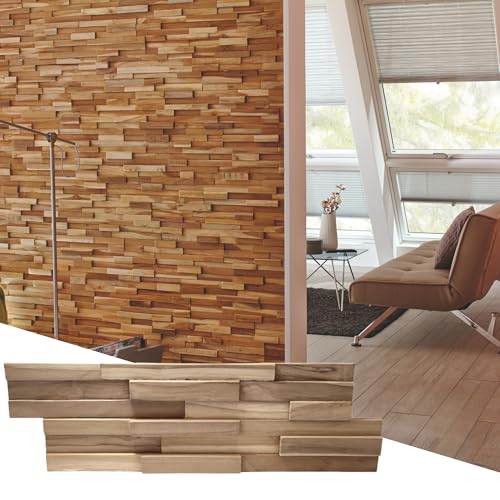
Premium real wood wall panels: beautiful hand-selected reclaimed and upcycled Asian teak wood wall panels

REAL WOOD – Made of 100% dried fir wood imitating vintage reclaimed barnwood appearance for interior finish. The colors will vary from browns to grays depending on the batch.
4. Panel Section as Headboard

Let the wall do the headboard job instead of buying one. White Ash Solid Wood Slat Wall Panels fit this use best.
The slats run vertical, so the ceiling feels higher than it is.

100% Solid Pine Wood Construction: Crafted entirely from premium solid pine wood, this queen bed frame is free from engineered wood or metal frames. It's the most natural and durable solid wood frame in its class, providing unmatched stability and support for a restful sleep experience.

Made of solid wood and 8 plywood slats supporting up to 440 lbs, this mid-century walnut finish structure provides stable mattress support without squeaking.

【ASSEMBLED DIMENSIONS】Product Dimension: 78.54"L x 42.52"W x 37.79"H (Head-board)x 19.69"H(Foot-board); Inner Frame Size: 38.98"Wx73.94" L ; Height between bed slat and the floor: 9 inch; For any questions about products and services, please don’t hesitate to contact us
5. Dark Wall for Moody Bedroom

This one trades morning brightness for evening coziness; I would not do it in a room that gets no direct sun. The peel-and-stick backing keeps the job to a Saturday, not a weekend plus cleanup.

MODERN DESIGN: This dark wood color square LED ceiling light is hardwired and consists of three layers of materials: black metal ceiling plate, rectangular wooden frame and 3000K LED. It is unique and design, a very beautiful decoration in your home. The soft light brings a sense of cozy atmosphere to your home.

Package includes:2 × Wooden Ceiling Fan Medallion.

Size:12"OD x3 1/4"ID,Please check the size before ordering.
6. Wood Paneling on Bedroom Ceiling

Plan this one properly, since overhead work is a two-person job and needs fixing into joists.
I would add a cove light at the edge if your ceiling allows it; the glow between slat and drywall reads expensive for the cost of a strip.
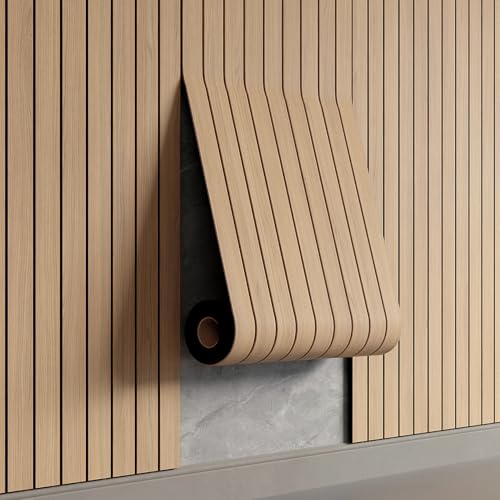
Effortless Peel & Stick Installation--Enjoy hassle-free setup with our self-adhesive PVC slat panels! Just measure, peel off the backing, and press onto any clean, flat surface—no tools or expertise needed. Perfect for DIY beginners and quick home makeovers.
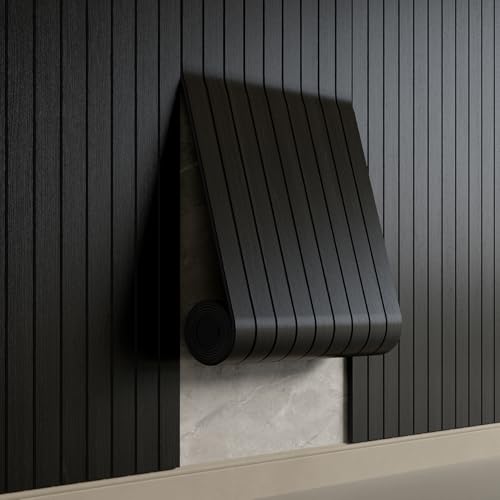
Effortless Peel & Stick Installation--Enjoy hassle-free setup with our self-adhesive PVC slat panels! Just measure, peel off the backing, and press onto any clean, flat surface—no tools or expertise needed. Perfect for DIY beginners and quick home makeovers.

High-Quality Wall Panels: Our acoustic panel set is crafted with high-density polyester fiber, premium medium-density fiberboard, and a solid wood veneer. This combination provides an elegant look, superior sound damping, and excellent sound deadening, significantly improving room acoustics
7. Backlit Slat Wall Behind Headboard

A slat wall changes completely after dark when LED strips sit behind it.
This suits anyone who wants the wall to work as a lamp. It trades away the clean daylight look for wiring and a channel, though done right neither shows.
I’d skip it if you already like your bedside lamps and don’t want another thing to install.

【Superior Sound Absorption】: Designed with a 0.35" MDF board and a 0.35" high-density polyester fiber backing, these wood slat acoustic panels offer enhanced sound control through a balanced dual-layer structure. The thicker MDF layer helps improve sound blocking and structural stability, while the dense 0.35" felt backing effectively absorbs echoes and reduces noise reflection. Made from non-toxic, eco-friendly materials, ideal for creating a quieter, more comfortable space.

Easy Peel & Stick Installation – Flexible & Bendable: Elvone flexible wood panels for wall feature a strong self-adhesive backing for quick, tool-free application. As bendable wall panel peel and stick, they adapt to slightly uneven surfaces. Simply measure, cut, and peel and stick onto any clean, flat wall

Modern 3D Textured: 3D wood slat design creates depth and visual interest while enhancing sound absorption. Great for bedroom, living room and office to reduce echo and noise, both practical and stylish
8. Vintage Vertical Wood Wall Panelling Bedroom

Vertical boards running floor to ceiling pull the eye up and make a low bedroom feel taller than it is. The grain runs uninterrupted, so the wall reads as one warm plane rather than a grid of boxes.
Paint the ceiling and remaining walls a tone that lets the wood be the event. White linen bedding against it keeps the room from going heavy; the wood does enough work on its own.
This is the paneling choice for someone who wants the look to last past the current trend cycle. It asks for real wood, not peel-and-stick, and that means either a bigger budget or fewer walls covered.

Real Wood Wall Planks: 100% Real Barn Wood Wall Planks With Natural Knots and Dents, the Surface Of Wood Shiplap Planks Is Processed With High Temperature Carbonization, the Real Wood Wall Shiplap Planks Is Non-Toxic, Sterilized and More Safe For Children, Voc Free Process Ensures These Stick on Shiplap Planks For Walls Are Safe To Use In Home
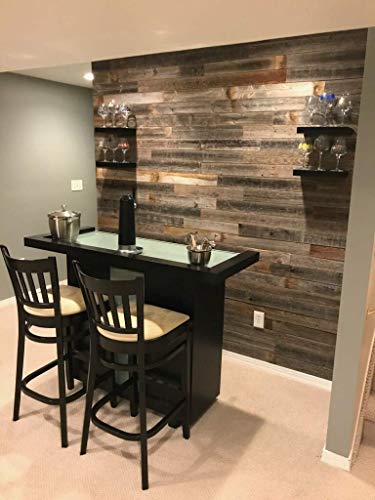
RECLAIMED WOOD ACCENT: Real reclaimed and recycled wood, naturally-weathered wood paneling adds a beautiful, rustic accent to your walls

🪵 Authentic Reclaimed Barnwood: Made from 100% authentic, real weathered wood, reclaimed in Oklahoma, USA for true rustic character.
9. Curved Wood Feature Wall

Curved relief panels in light oak turn the wall behind the bed into something that catches morning light differently than flat boards would. The shapes make shadows that shift through the day.
Without it, the curves still read as movement; with it, the wall becomes a nightlight you never have to dust.
This needs a wall with nothing in its way: no windows, no vents, no thermostat you cannot move. The panels come in set sizes, so measure the bed width against the panel dimensions before you order.
I would not try to cut these myself; the curve is the whole point and a bad cut ruins it.

High-Quality Wall Panels: Our acoustic panel set is crafted with high-density polyester fiber, premium medium-density fiberboard, and a solid wood veneer. This combination provides an elegant look, superior sound damping, and excellent sound deadening, significantly improving room acoustics

[Solid Wooden Construction]: Crafted from solid wood materials, the wood bed frame ensures long-lasting strength and stability. The platform bed that consists of 8 plywood slats provides reliable support for mattress.The bed frame features a sturdy construction that support up to 440 lbs.

TIMELESS ELEGANCE: Classic wood panel design adds sophistication and charm that never goes out of style
10. Large Rectangular Wood Panels

Oversized rectangular panels behind a low bed read as architecture, not decoration. The scale works because the boards are wide and few, not narrow and many.
Check your ceiling height before you choose this. Panels that go floor to ceiling in a low room can feel like a box closing in; the same panels where the ceiling has more height breathe.
Walnut tone sits well with grey upholstery because neither tries to be the star.
This is a contractor job or a very confident DIYer. The panels are heavy, and hiding the seams between them takes skill.
If your wall is not perfectly flat, budget for prep or pick a different idea.

Material: The ceiling medallion ceiling fan light covers is made of wood material,no easy to break,which can be used for a long time.

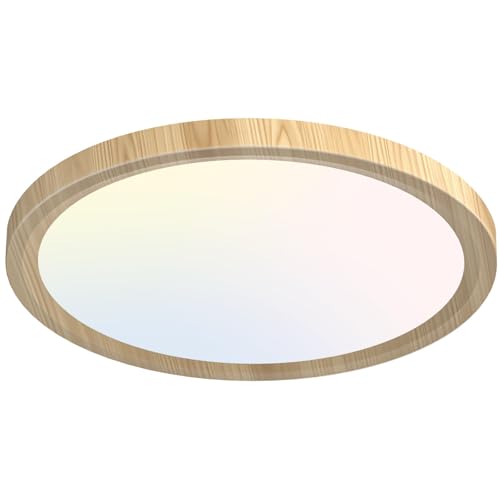
[High Performance Wood-Look Ceiling Light] This fixture features a wood grain finish that beautifully mimics real wood. Our 28W integrated ceiling light produces an impressive 3200 lumens, comparable to a traditional 280W four-bulb setup (60W each). Enjoy energy savings of up to 90%, making it a great alternative to conventional bulbs. Reduce your electricity usage while minimizing the need for frequent lamp changes. (Non-dimmable)
11. Accordion Textured Wood Wall

Angled vertical sections set into a dark wood wall catch light on one face and drop it into shadow on the next, so the surface changes as you move through the room.
The accordion effect reads as texture from across the space and as geometry up close.
The dark tone soaks up light, which means the bedroom needs good lamps elsewhere. Black bedside fixtures against this wall disappear; brass or white ones stand out enough to find the switch.
This suits a room that already has neutral walls and carpet you are not replacing. It is a single-wall commitment, not a whole-room treatment, and the wall behind the bed is the natural place because no door swings through it.
12. Wood Paneling with Marble Insets

Two vertical marble strips breaking up dark wood paneling give the eye a place to rest. The stone’s veining moves differently than wood grain, so the wall holds two kinds of natural pattern without competing.
Pendant lights hanging in front of the marble, not the wood, make sense of the composition. The spheres sit at reading height; any higher and they would compete with the ceiling for attention.
This is the most expensive idea on the list. Real marble slabs, proper mounting, and electrical for the pendants add up fast.
A painted faux marble strip saves money but reads as fake once you are close enough to touch it.
I’d only do this if the bedroom is the room you spend waking hours in; for a room you just sleep in, the cost does not pay back.
13. Flanking Wood Panel Accents

Symmetry does the heavy lifting here. Two vertical wood panels frame a central section, turning an ordinary wall into something that reads as intentional and finished.
This suits renters who cannot panel a whole room but can secure two flat sections with removable strips or French cleats.
Paint the center first in a tone that picks up your bedding, then mount the flanking panels so sconces or clip lights land at reading height.
I would keep the panels darker than the center wall; the contrast gives the eye somewhere to rest. Walnut or stained oak both work with neutral linens.
Skip this if your bed sits off-center; the whole effect depends on matching distances.
Why Wood Paneling Works
Wood breaks up sound in a way flat plaster cannot. Hard floors in a bedroom let sound bounce around; slats or grooves break those waves up before they hit the far wall, and the room quiets down.
Panels also go straight over uneven plaster, old patch jobs, or the faint rectangle where a radiator used to hang, all without skim coating.
Installation Tips
Add 10% to your measurements after you think you are done.
Let the panels sit in the room for 48 to 72 hours before you fix them.
Look at the color under your bedroom bulbs after dark. A tone picked in daylight alone often turns into something else once warm light hits it, and bedrooms get used more at night than in the morning.
Material Choices
Solid wood slats suit feature walls and headboard sections where you want sound control and a modern, linear look.
Tambour bends around curves, columns, and alcoves because its backing flexes. The finished surface reads as ribbed and tactile.
Peel-and-stick planks work for rentals and quick refreshes on small walls. They are self-adhesive and strictly DIY, suited to rustic or coastal moods.
MDF takes paint smoother than real wood if you are planning a painted finish. The texture matters less once color covers it, and the surface stays even across a whole wall.
Design Considerations
Match the panel style to the problem the room presents. A curved wall or built-in alcove needs tambour’s flexibility; a flat wall behind the bed wants the rigidity of slats or 3D panels.
Height changes the read entirely. Horizontal planks or wide rectangles emphasize width and work better where the ceiling already has enough height.
Consider what is staying in the room. A wall with a mounted television or existing wardrobe needs a panel type that reads as built-in, not something applied over the scene.
Fluted or slatted panels handle this better than heavy relief.
For renters, two flanking panels on a single wall turn a temporary fix into something intentional. Removable strips or French cleats hold them without touching the rest of the room.
Frequently Asked Questions
Is wood paneling outdated in 2026?
Wood paneling is not outdated.
Wood paneling in 2026 runs from fluted panels and curved relief to backlit slat walls and marble insets, so the material itself is not the problem; the dated look comes from using it the same way everywhere.
Styles like vertical floor-to-ceiling boards and reclaimed wood with nail holes read as intentional, not retro.
A treatment that suits the room’s light and scale reads current; a dark, flat wall from floor to ceiling reads like the basement most people picture.
Which panel is best for a bedroom?
The best panel depends on what you need the wall to do. White Ash Fluted Wood Panels suit full walls or narrow strips between windows where you want calm texture without contrast.
A rental lease and a single Saturday are enough for peel-and-stick planks. Reclaimed wood is the choice when you want variation board to board, not uniformity.
How much would it cost to wood panel a room?
Costs sort by commitment level, not by fixed price lists. Heavy oversized rectangular panels may need contractor labor and wall prep on top of material cost.
What are some ideas for wood panels for bedrooms?
Half-wall paneling under paint, fluted grooves, reclaimed rustic boards, a slat panel as headboard, a dark full wall, ceiling slats with cove lighting, backlit slats behind the bed, vertical boards floor to ceiling, curved relief panels, large rectangular panels, an accordion-textured dark wall, marble insets, and two flanking accent panels give a range of approaches to pick from.
Each solves a different problem, from making a low ceiling feel higher to hiding the back of a sofa bed or adding reading light without bedside lamps.