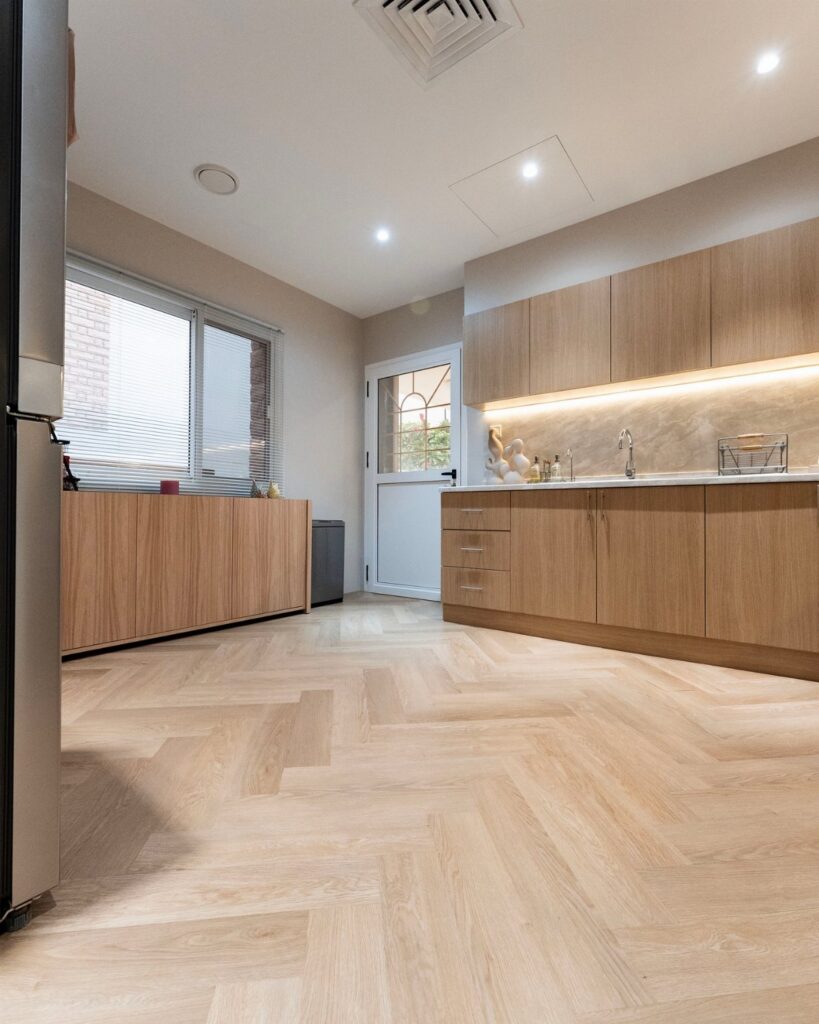
These vinyl flooring ideas with oak cabinets range from warm honey tones to herringbone layout to pale wood-look, and the right one depends on whether your kitchen needs the floor to echo the cabinets, widen the room, or lighten the whole space.
The click-together planks float over existing flooring, so even the herringbone pattern stays a weekend project with a second person helping.
1. Luxury Vinyl Plank with Honey Oak Cabinets
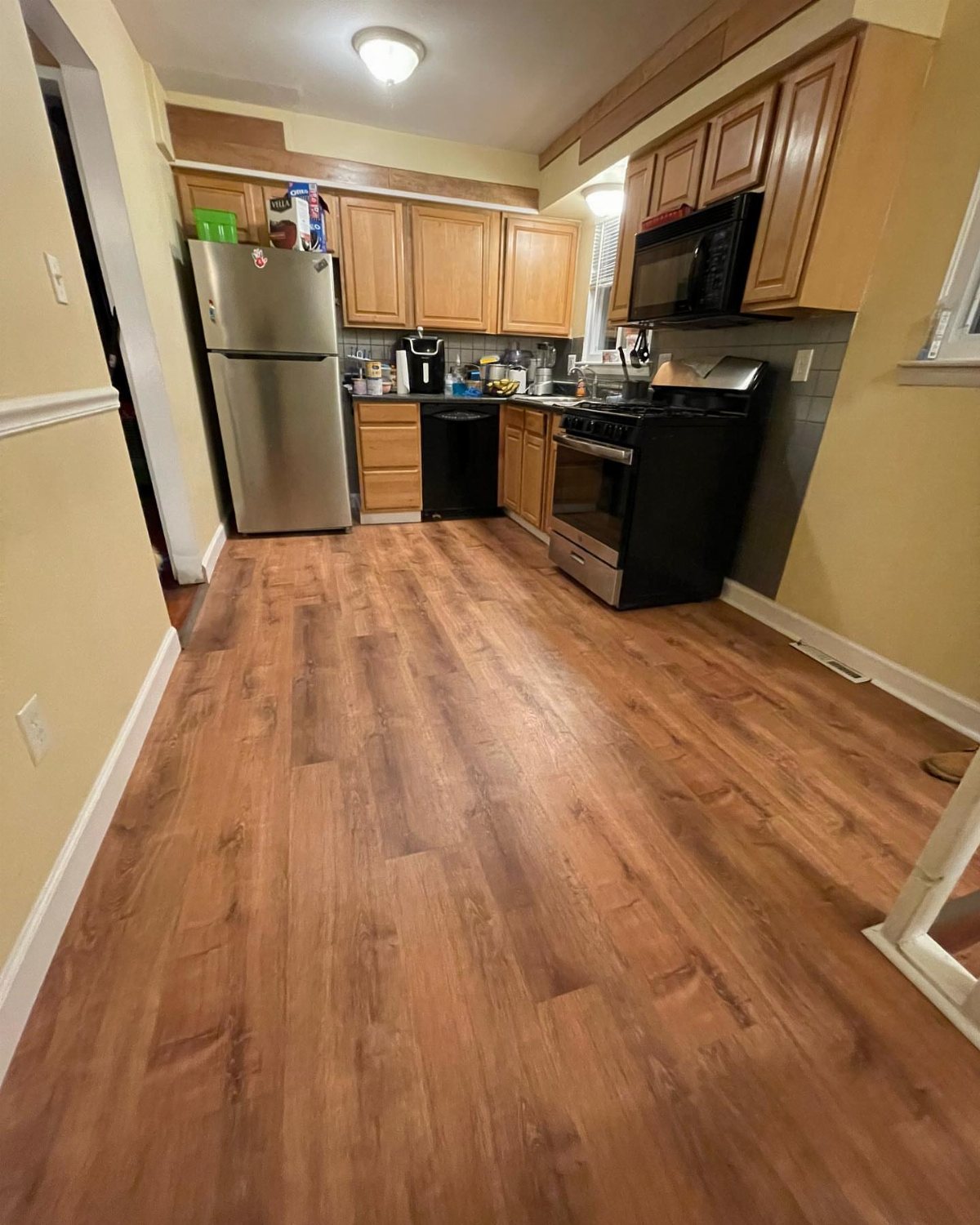
Luxury vinyl plank gives you the grain pattern of real hardwood without the worry about spills or dropped pots.
I would look for a finish in light oak or birch tones, something that picks up the same warmth as honey oak cabinets rather than competing against them.
The planks click together and float over most existing floors, so a kitchen this size is a weekend job if you have a second pair of hands.
A darker plank is an option if you want the cabinets to read as the single light element in the room, though I find that works better in a kitchen with more natural light than this one has.
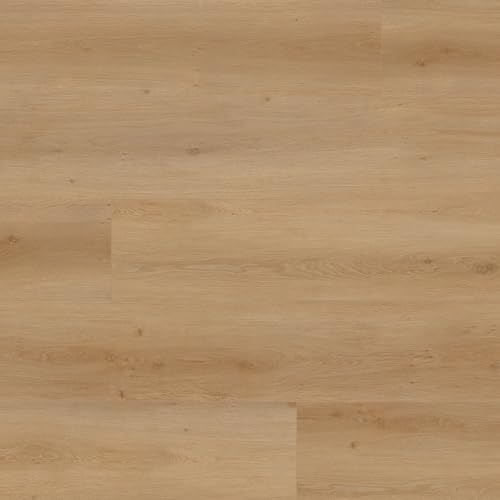
100% Waterproof & Ultra-Durable Construction: Premium rigid-core vinyl planks with a 22 mil wear layer resist scratches, stains, and spills for kitchens, living rooms, bathrooms, and high-traffic areas

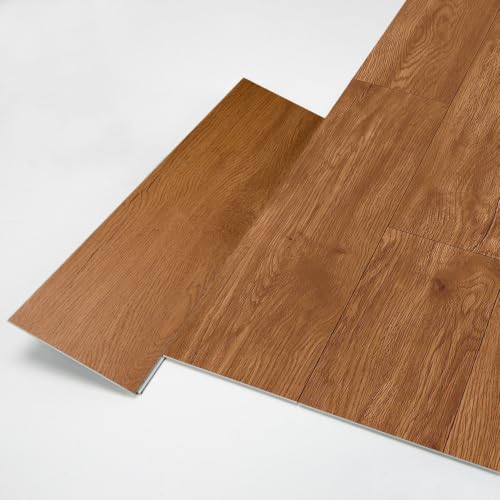
Authentic Wood Look: American Oak’s honey hue carries a classic bright warmth through your space; Features beautiful wood-look grain and realistic knots across rich variations of blonde
2. Herringbone Vinyl Flooring with Oak Cabinets
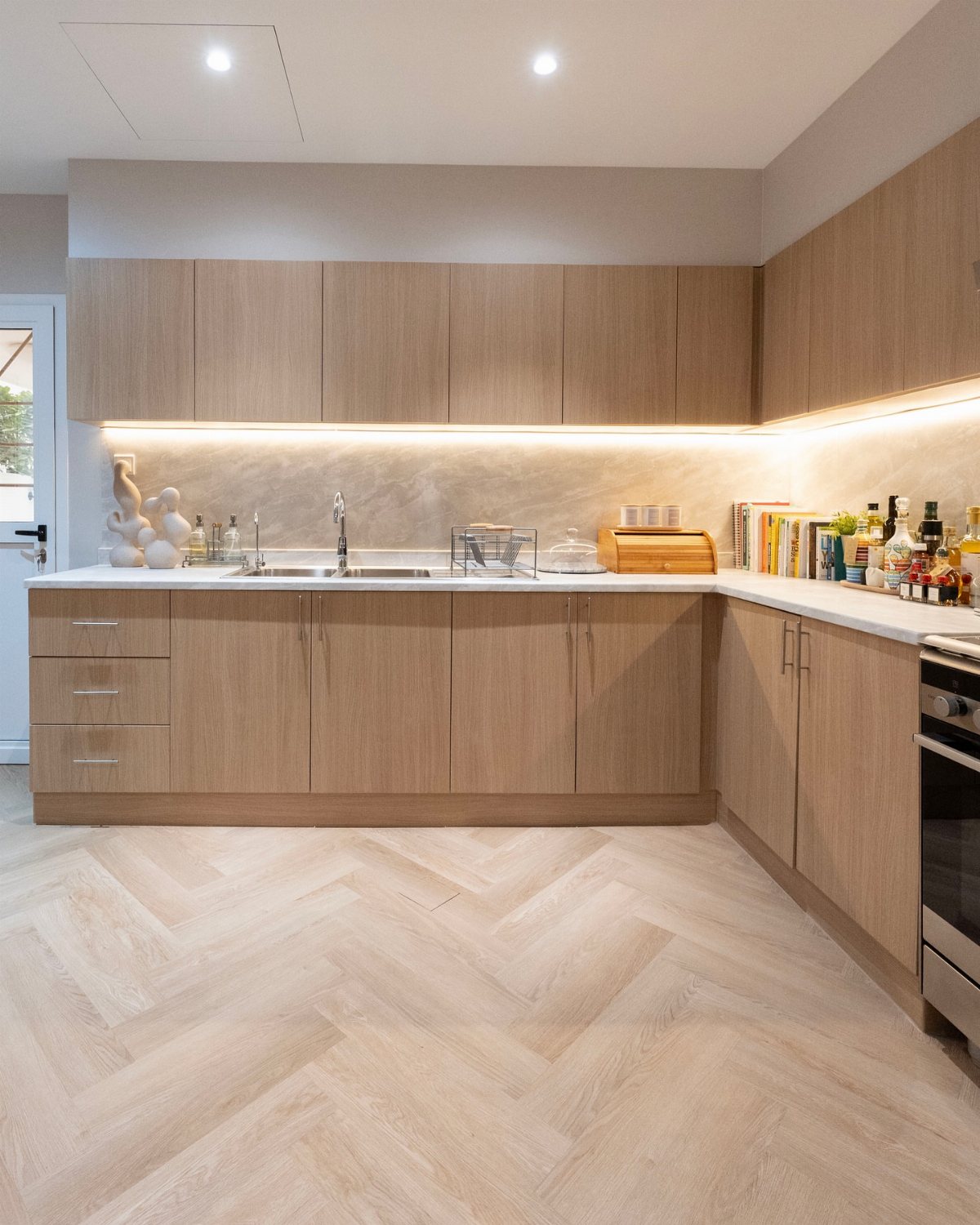
Herringbone looks fussy until you see it laid: the angles draw the eye across the floor and make a narrow galley feel wider than it is.
The vinyl version comes in puzzle-piece planks that interlock at 90 degrees, so you do not need the specialist fitter that real wood herringbone demands.
I would check the plank length before ordering. Short planks give you more zigzags, which can turn busy in a small kitchen; longer planks calm the pattern down.
The light tone here keeps the geometry from feeling too formal, and it matches the oak cabinets without matching them exactly.
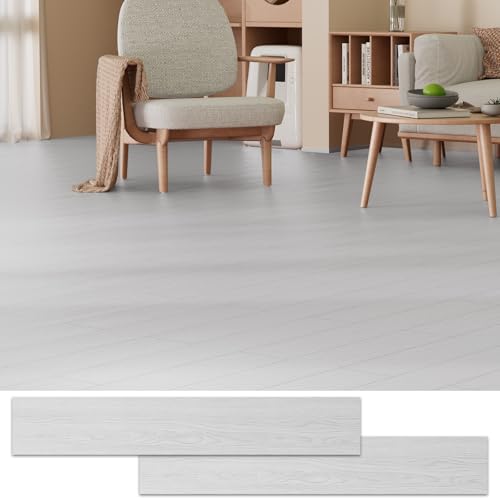
Textured & Versatile: Available in popular wood look with a natural matte finish that replicates the authentic feel of natural materials. The luxury vinyl plank flooring seamlessly complements Nordic, modern minimalist, industrial and other trending decor styles, instantly elevating the overall aesthetic of any space. Ideal for living rooms, bedrooms, kitchens and more.

Sample Dimensions & Details: Each plank measures 29.5 in. x 5.9 in., and the sample pack includes 2 individual planks. This option allows you to evaluate the texture, thickness, and appearance of the material within your own space before committing to a full-sized project.

Realistic Visual Effects: SULSUMIC flooring faithfully replicates authentic wood grain and natural hues, offering a look and feel that rivals solid wood. It instantly elevates your home’s aesthetics, creating a warm and comfortable living space
3. Light Wood-Look Vinyl Planks
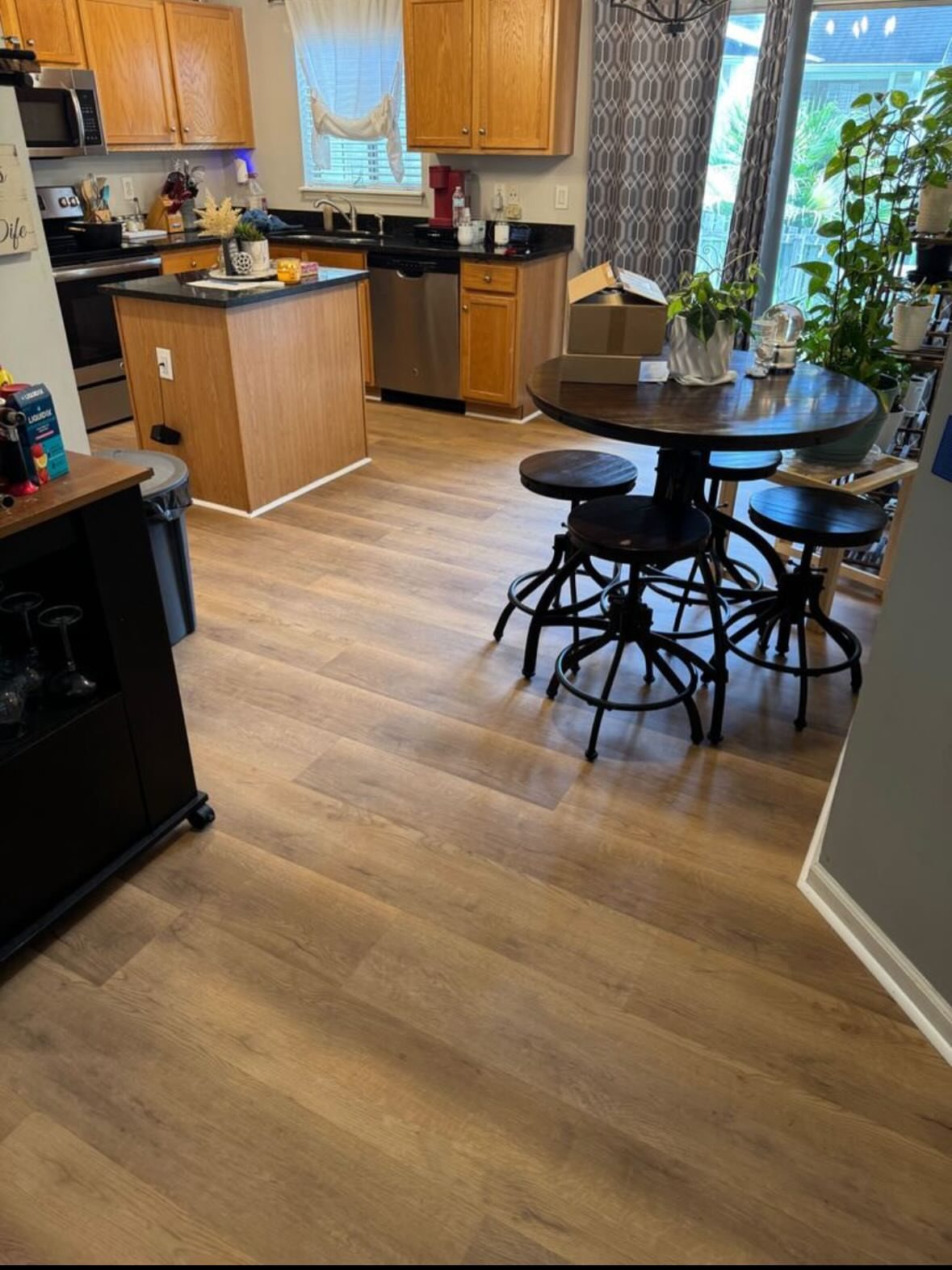
Light wood-look vinyl is the choice when your oak cabinets feel heavy and you want the floor to do the lifting.
The pale tone bounces light around, which matters in a kitchen with a single window and a sliding door at the far end.
I would pair it with a dark counter on the island, the way this kitchen does, so the room has some weight at center.
The planks run cheap for the thinner wear layers, and you pay more if you want the commercial grade that stands up to dogs and dragged chairs.
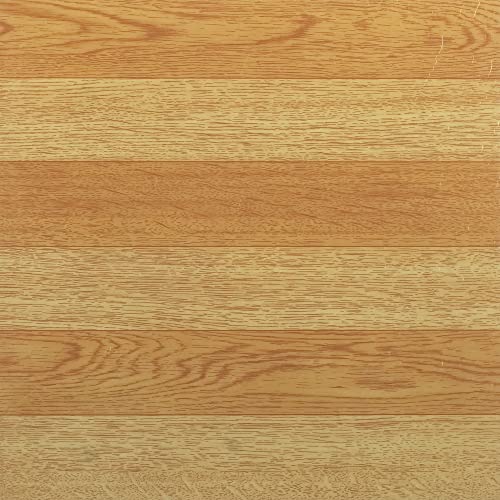
Nexus Vinyl Tiles: Refresh your home for a low cost and no hassle with the Nexus Vinyl Floor Tiles. Our tiles can be used in any room in your home including the kitchen, dining room, bedrooms, bathrooms, foyers, and basements. No messy glue or adhesives needed. Includes 20 vinyl tiles.
Ideal to fill gaps, nicks and scratches on wood, laminate and vinyl flooring

Nexus Vinyl Tiles: Refresh your home for a low cost and no hassle with the Nexus Vinyl Floor Tiles. Our tiles can be used in any room in your home including the kitchen, dining room, bedrooms, bathrooms, foyers, and basements. No messy glue or adhesives needed. Includes 20 vinyl tiles.
Choosing Flooring Undertones
Oak cabinets carry one of three undertones: golden, red, or white. The flooring you pick should answer that tone, not fight it.
Golden oak reads warm, so a floor with its own warm base, light oak or birch, keeps the room coherent. Red oak turns sharper against anything with a pink cast; a neutral greige steadies it.
White oak is the coolest of the three and can handle a floor with a gray thread without looking muddy.
The mistake is matching too close. A floor the same value as the cabinets flattens the room into one plane.
Contrast, even gentle contrast, gives the eye somewhere to land. I would also look at the counter and the backsplash as a set with the floor, not as separate decisions.
When those three relate, the cabinets stop looking like a leftover from another decade.

【Scratch-resistant for living rooms】Wood textured vinyl tiles stand up to pets, kids, and rolling chairs without showing wear.

【NAACOO UNIVERSAL FLOOR KIT】 4 IN 1 Portable KIT--Tapping Block has unique combination edge design for use with most types of flooring, push tongue and groove wood floor together creating a tight seam, Match Spacers create a uniform gap between the wall. Pull Bar Flooring Tool suitable for work close to a wall, corner, closets or in tight spaces, closing the gaps and seams in laminate floors without causing damage. Rubber mallet can be used with pull bar hook and tapping block, which makes it easier to complete the floor installation work.
【Scratch-resistant for living rooms】Wood textured vinyl tiles stand up to pets, kids, and rolling chairs without showing wear.
Flooring Durability
Vinyl plank holds up to the actual life of a kitchen: water sits on it instead of soaking in, and the wear layer takes the scratch from a dragged chair or a dog’s nails.
The difference between standard vinyl and luxury vinyl plank is thickness and rigidity. LVP carries more protective top layers, which matters if you are laying it once and hoping to forget it.
Maintenance is wiping, not refinishing. That is the practical side of choosing it under oak cabinets; the aesthetic side is that it can read as wood without the wood’s anxiety.
For a household that cooks daily and cleans when there is time, that combination is hard to argue against.

🏠DETAILS: 15.8x78.8 Inch, total 8.65 sq.ft (40cmX2m) Made of durable thin vinyl, thickness: 0.015 In (0.4MM). Peel and stick wood planks vinyl flooring roll, brown shiplap planks color. Waterproof. Removable.

Bright and Natural Oak Finish: Featuring a clean, airy oak wood grain texture, this self-adhesive waterproof vinyl plank flooring brings a sense of spaciousness and Scandinavian-inspired warmth to any room. Perfect for modern, minimalist, Scandinavian, coastal, or farmhouse decor styles in your kitchen, bathroom, bedroom, or living room.

【Light Natural Oak Wood Grain & Thickened Material】 Our peel and stick floor tile features a light natural oak base with fine natural oak grain lines,ring-shaped patterns,subtle color transitions,making it a premium wood peel and stick floor tile choice.Composed of wear-resistant layer,high-definition wood grain print layer,thickened vinyl substrate layer,and strong self-adhesive backing – provides excellent stability and durability,ideal for long-lasting waterproof vinyl flooring applications.
Color Harmony
Cool gray floors can push golden oak toward orange, which is not always what you want. You want the floor and cabinets to feel like they belong together, not like you studied a color wheel for hours.
Green finishes, moss or forest, have shown up as a bolder pairing with oak. I have not tried it myself, but the logic is sound: the earthy tone cuts the warmth without going cold.
If your countertops or backsplash already carry pattern, the floor should quiet down. Busy above and busy below makes the cabinets disappear in the noise.
High-gloss cabinets especially need a floor with less texture, or the room starts to shimmer.

Product Details: Light brown oak wood grain contact paper, made of high quality vinyl film, the thickness is twice than regular wallpapers, and air guides groove design can avoid air bubbles when sticking. 15.74 inches wide by 196.85 inches long, covers 21.52 Sq. Ft. each roll

Tivoli Wood-Look Floor Planks: Transform your floor for a low cost and no hassle with the Tivoli Vinyl Floor Planks. These planks can be used in any room in your home. No messy glue or adhesives needed. Includes 10 vinyl planks.

【Suitable Size】:Peel and stick floor tiles each pack measures 36"×6" (1.5sq. ft.) to ensure adequate coverage,with its affordable price and high quality experience, this wood pinstripe floor tiles will be a good choice for your room decoration
Installation Considerations
Most vinyl plank now clicks together and floats over the existing floor. That means no adhesive, no sanding, and a kitchen this size finished between Saturday morning and Sunday evening if you have help.
The savings are labor costs, which run half the job or more.
I would still check the subfloor first. Any flex or moisture underneath telegraphs through in a year.
The click-lock system is forgiving, but it is not magic. If the planks are the shorter herringbone style, the install takes longer; the angles matter more than straight runs.
LVP is the thicker option and handles unevenness better, which is worth the extra cost if your floor has dips from an old house settling.

Tips:Due to the different screen materials of different devices, the color of the product you see and the actual product may be inaccurate. Color appearance may vary due to screen calibration, lighting conditions. Please refer to the actual product

Sample Dimensions & Details: Each plank measures 29.5 in. x 5.9 in., and the sample pack includes 2 individual planks. This option allows you to evaluate the texture, thickness, and appearance of the material within your own space before committing to a full-sized project.

【Ultra-Durable & Pet-Friendly】With a 0.3mm wear layer tested over 15,000 abrasion cycles, this luxury vinyl plank flooring resists scratches, dents, and spills. Ideal for busy homes with pets and kids, it stays beautiful for years even in high-traffic areas.
Frequently Asked Questions
What color of flooring goes best with oak cabinets?
A floor that sits a clear step above or below honey oak reads as a choice; matching the cabinet tone too closely looks like a mistake.
Greige and quiet neutrals settle the room without competing; an orange-leaning floor just repeats the cabinet color and flattens everything into one plane.
Should your floors be lighter or darker than cabinets?
Either works, but they should be clearly one or the other, not close to the same depth.
A floor two to three shades lighter than medium oak cabinets brightens the room and feels airy; a darker floor, like charcoal or deep brown, gives the kitchen a bold, sophisticated edge.
What fails is the near-match, where the floor and cabinets sit at the same value and the whole kitchen reads as one flat wash of wood.