
The 5 ideas below run from a $153 box of pre-made panels to a full walnut install that takes longer than a weekend, with the deciding factor being how much wall you own and how many tools you keep.
A renter with heavy-duty Velcro strips can still get the vertical slat look without touching the drywall, while a homeowner with a miter saw and a free Saturday can build the same effect from 1×2 boards for less.
1. DIY Vertical Wood Slat Wall

A vertical slat wall built from 1×2 boards costs less than most pre-made options and reads as custom once stained. Horizontal support boards run behind the slats, spaced to hit studs or accept heavy-duty Velcro strips if you rent.
One builder mounted hers with Velcro along the top and bottom supports, leaving the drywall untouched.
Stain dark for drama or warm walnut to hide the budget origins. Either way, the vertical lines do the heavy lifting.
Best for: someone with a miter saw, a free Saturday, and a wall that is not the full width of the room.

High-Quality Wall Panels: Our acoustic panel set is crafted with high-density polyester fiber, premium medium-density fiberboard, and a solid wood veneer. This combination provides an elegant look, superior sound damping, and excellent sound deadening, significantly improving room acoustics
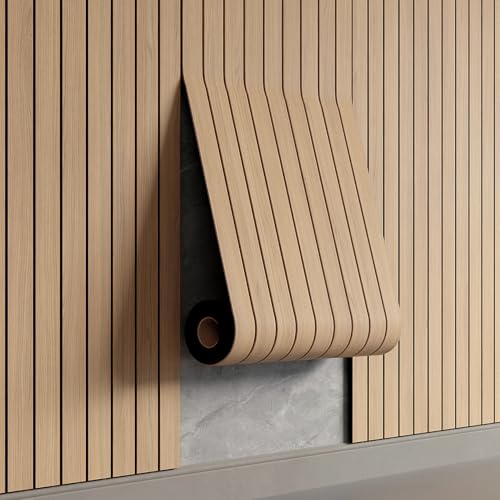
Effortless Peel & Stick Installation--Enjoy hassle-free setup with our self-adhesive PVC slat panels! Just measure, peel off the backing, and press onto any clean, flat surface—no tools or expertise needed. Perfect for DIY beginners and quick home makeovers.

Superior Acoustic Performance: It is designed to provide excellent noise-cancellation capabilities, making it ideal for use in homes, offices, studios, and other spaces where acoustic quality is a priority
2. Lima Wood Slat Wall Panels

Pre-made Lima panels ship in boxes of 2, each panel 46 inches by 20 11/16 inches, with oak veneer over MDF. Two box sizes cover either 46 inches by 41 3/8 inches or 94 1/2 inches by 23 3/4 inches, running $153 to $209 per box depending on which you need.
Glue and screws mount them; the backing is already figured out.
The light tone reads Scandinavian, not rustic. One buyer paired hers with acoustic panels behind the slats and called the sound difference immediate.
Best for: renters who want the look without the tool collection, or anyone covering a large wall fast.

Stylish Design & Simple Installation: Elevate your space with these modern wall panels, featuring clean lines and beautiful wood grain finishes. Installation is quick and easy on any wall or ceiling using just glue or screws, making your accent wall project effortlessly stylish.

Modern and Elegant Design - The wood slat wall panels have been carefully designed to effortlessly transform any space, enhancing the surroundings both visually and acoustically. The wood panels help to create an environment that is not only quiet but beautifully contemporary, soothing and relaxing. Furthermore, our slat wall panels can be installed horizontally or vertically and cut to any shape allowing for creativity and a unique look to fit your aesthetics.

High-Quality Wall Panels: Our acoustic panel set is crafted with high-density polyester fiber, premium medium-density fiberboard, and a solid wood veneer. This combination provides an elegant look, superior sound damping, and excellent sound deadening, significantly improving room acoustics
3. Vertical Slat Wall in Entryway
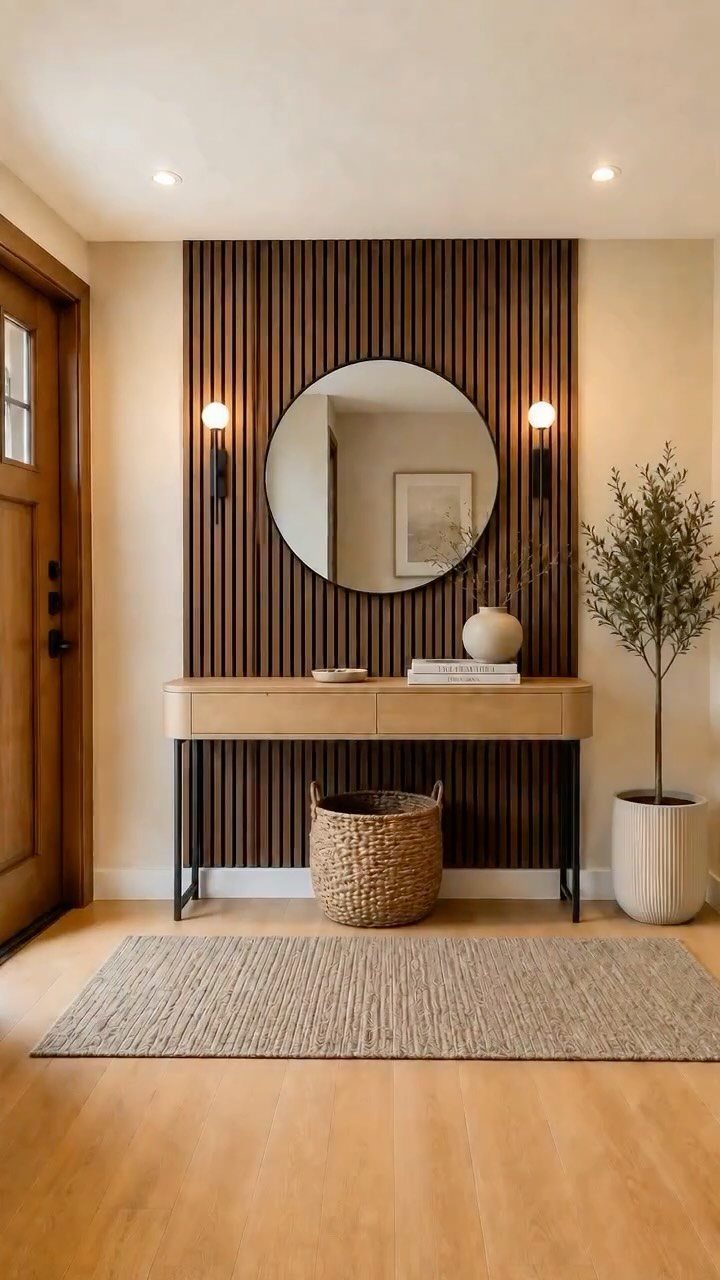
Vertical slats pull the eye up, which matters in entryways where ceilings feel low and first impressions happen fast.
The dark stain absorbs light rather than reflecting it back at you, so the wall recedes while the mirror and console read as the objects.
Two sconces flank the round mirror at roughly eye level, a placement that works because the slats provide texture without competing.
Best for: a foyer where you need storage below and calm above.

Modern and Elegant Design - The wood slat wall panels have been carefully designed to effortlessly transform any space, enhancing the surroundings both visually and acoustically. The wood panels help to create an environment that is not only quiet but beautifully contemporary, soothing and relaxing. Furthermore, our slat wall panels can be installed horizontally or vertically and cut to any shape allowing for creativity and a unique look to fit your aesthetics.

3D Wood Slat Wall Panels: Go beyond a flat wall! Our 3D wood slat design adds visual interest and depth to any room. The ideal wall decor solution for creating a stunning accent wall, while also helping to soften ambient noise.
Modern and Elegant Design - The wood slat wall panels have been carefully designed to effortlessly transform any space, enhancing the surroundings both visually and acoustically. The wood panels help to create an environment that is not only quiet but beautifully contemporary, soothing and relaxing. Furthermore, our slat wall panels can be installed horizontally or vertically and cut to any shape allowing for creativity and a unique look to fit your aesthetics.
4. Black Wood Slat Wall

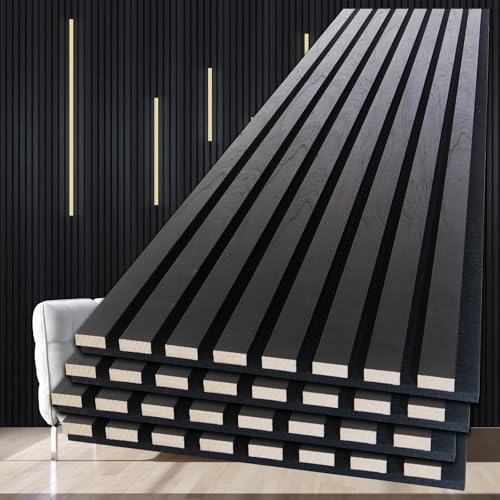
Black slats around a fireplace or TV read as intentional, not accidental, because the color commits fully. The black wall sits against white plaster and light wood floors; the contrast is what makes it livable rather than cave-like.
A jute rug in front softens the edge.
The same 1×2 construction from the DIY entry works here, just stained or painted matte black. One designer used this exact treatment on a retired fireplace surround, turning a dead feature into the room’s center of gravity.
Best for: south-facing rooms with daylight to spare, or anyone whose furniture palette runs pale.

[MATERIALS]: The wall planks are made of laminated wood plus pine with authentic grains and knots. This process delivers unmatched stability that resists warping and cupping. Each plank showcases genuine wood grain, rich pine scent, and unique character.

EXCEPTIONAL ACOUSTIC PERFORMANCE - Our wall wood panels, with a high 1750gsm felt density, significantly outperform standard 1350gsm options in sound absorption and noise reduction, creating a peaceful and acoustically optimized environment.

Real Wood Wall Planks: 100% Real Barn Wood Wall Planks With Natural Knots and Dents, the Surface Of Wood Shiplap Planks Is Processed With High Temperature Carbonization, the Real Wood Wall Shiplap Planks Is Non-Toxic, Sterilized and More Safe For Children, Voc Free Process Ensures These Stick on Shiplap Planks For Walls Are Safe To Use In Home
5. Mid-Century Walnut Paneling

Mid-century walnut paneling runs wider than slats, more plank than strip, but the vertical grain still draws the eye up the wall.
It holds a single large landscape print and a paper lantern, nothing else; the wood itself is the pattern. A blue sofa and curved dining chairs soften the linearity.
This is the warmest option here. It costs more than painted slats and takes longer to install, but it ages into the house rather than reading as a weekend project.
Best for: living rooms where you want the wall to feel like architecture, not decoration.
Effortless Peel & Stick Installation--Enjoy hassle-free setup with our self-adhesive PVC slat panels! Just measure, peel off the backing, and press onto any clean, flat surface—no tools or expertise needed. Perfect for DIY beginners and quick home makeovers.

High-Quality Wall Panels: Our acoustic panel set is crafted with high-density polyester fiber, premium medium-density fiberboard, and a solid wood veneer. This combination provides an elegant look, superior sound damping, and excellent sound deadening, significantly improving room acoustics

Adds Warmth, Texture & Character** – Instantly elevate your space with sleek slatted panels that bring depth and style to living rooms, bedrooms, offices, and feature walls
Installation Tips
Curved surfaces, alcoves, and ceiling returns are all possible with the same panels; the backing flexes enough to follow a gentle arc.

Superior Acoustic Performance: It is designed to provide excellent noise-cancellation capabilities, making it ideal for use in homes, offices, studios, and other spaces where acoustic quality is a priority

Modern and Elegant Design - The wood slat wall panels have been carefully designed to effortlessly transform any space, enhancing the surroundings both visually and acoustically. The wood panels help to create an environment that is not only quiet but beautifully contemporary, soothing and relaxing. Furthermore, our slat wall panels can be installed horizontally or vertically and cut to any shape allowing for creativity and a unique look to fit your aesthetics.
Modern and Elegant Design - The wood slat wall panels have been carefully designed to effortlessly transform any space, enhancing the surroundings both visually and acoustically. The wood panels help to create an environment that is not only quiet but beautifully contemporary, soothing and relaxing. Furthermore, our slat wall panels can be installed horizontally or vertically and cut to any shape allowing for creativity and a unique look to fit your aesthetics.
Material Choices
1×2 common boards, usually pine, stain well and cost the least. Poplar or oak step up the grain smoothness for not much more if your wall is the focal point.
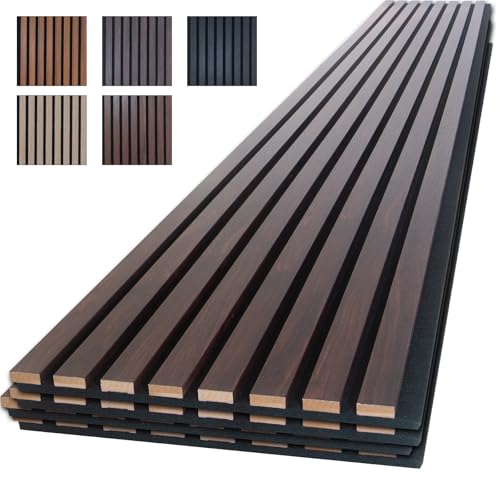
Pre-made panels use oak veneer over MDF, which paints evenly but swells if water sits on it.
The acoustic backing in some panels is recycled felt rated NRC 0.5; it does not block sound between rooms, but it quiets echo inside the space.
I would add it behind a slat wall in a dining area or anywhere voices bounce off hard floors.

High-Quality PVC Material - Made from high-grade PVC, Art3d panels combining the benefits of being sturdy and lightweight for easy installation and long-time use. Also they are waterproof and paintable, allowing for customization to match any interior design

【Wood Grain Contact Paper】The grey/balck wood slat contact paper is designed with a wood grain pattern, which restores the color and texture of the original wood, and it does not need to find repetitive points to align when installing, so it matches directly. Wood wallpaper peel and stick is also not easy to fade, durable, good for decorating your home.

PACKING QUANTITY: Come in box of 12 panels which cover 32 square feet, individual size is 19.7” X 19.7”
Design Versatility
Vertical slats against concrete and steel read as warmth without softness; the same wall in a minimalist kitchen keeps the prep surfaces from feeling cold. In an entryway, the lines lift a low ceiling visually.
The wood itself can be the pattern, or it can recede behind a mirror and sconces. Black slats against white plaster work because the contrast is total; walnut plank paneling works because the grain is the only ornament needed.
I would pick slats for a weekend change and wider plank paneling when the wall needs to read as original to the house.

【Superior Sound Dampening】- Art3d wood wall panels are engineered to significantly minimize noise levels in any setting. Crafted from high-density polyester fiber, these panels absorb sound waves, enhancing acoustics and fostering a more serene and comfortable environment

🪵 Authentic Reclaimed Barnwood: Made from 100% authentic, real weathered wood, reclaimed in Oklahoma, USA for true rustic character.
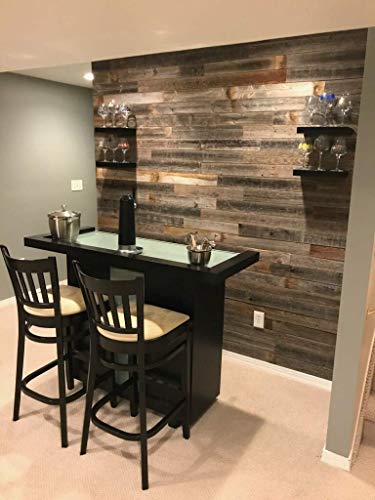
RECLAIMED WOOD ACCENT: Real reclaimed and recycled wood, naturally-weathered wood paneling adds a beautiful, rustic accent to your walls
Frequently Asked Questions
Is wood panelling outdated in 2026?
Wood paneling reads as dated only when it looks like leftover decor from a past decade; treated as intentional architecture, it holds up.
Vertical slat walls, black slat fireplaces, and mid-century walnut paneling all read as current because they add texture and pull the eye upward.
Clean lines and a stain or paint that belongs to the room’s own palette separate the look from the orange plywood people remember from decades past.
How do I make a DIY vertical wood slat wall?
Stain 1×2 boards to the color you want, then nail them across two horizontal boards that stay hidden behind the slats. The project takes about a Saturday and costs less than pre-made panels.
What type of wood is best for accent walls?
1×2 boards work for DIY slat walls, oak veneer over MDF comes on pre-made Lima panels, and walnut suits mid-century paneling.
Oak and walnut read as warm and natural; MDF with veneer keeps cost down and works well for large, flat panels. Stain or paint matte black on ordinary 1x2s if you want drama on a budget.