The ideas below run from slat walls that need furring strips and a weight check to felt panels you cut with a utility knife, so the deciding factor is how much of the room you own and how long you plan to stay.
A panel on casters leaves no holes and rolls flat against the wall; a full grid of slats demands a ceiling you can anchor baffles into and a doorway wide enough for a 60" modular section.
1. Acoustic Slat Walls
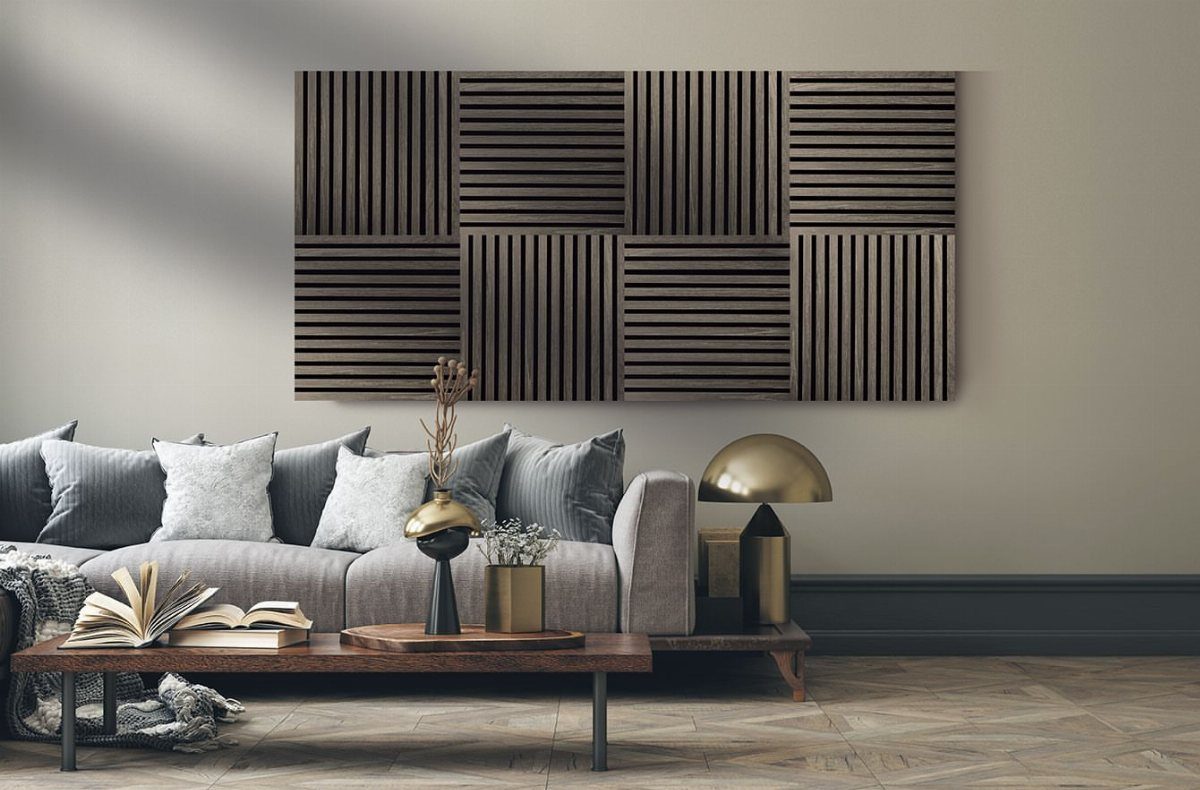
Wood slats hung in alternating directions turn a flat wall into something that catches sound between the gaps while the eye reads it as architecture.
I have seen these run behind a television wall in grey oak against pale flooring, and the grain does the work of art without competing with the screen. Vertical strips pull the ceiling higher; horizontal ones widen a narrow room.
You can mount them on the ceiling too if you want the sound to die overhead rather than bounce back at you.
The spacing between slats matters more than the wood species itself, and a narrow gap is what starts the absorption working.
I would check whether your wall can take the weight of a full grid, or plan for furring strips behind it.

High-Quality Wall Panels: Our acoustic panel set is crafted with high-density polyester fiber, premium medium-density fiberboard, and a solid wood veneer. This combination provides an elegant look, superior sound damping, and excellent sound deadening, significantly improving room acoustics

Stylish Design & Simple Installation: Elevate your space with these modern wall panels, featuring clean lines and beautiful wood grain finishes. Installation is quick and easy on any wall or ceiling using just glue or screws, making your accent wall project effortlessly stylish.

Superior Acoustic Performance: It is designed to provide excellent noise-cancellation capabilities, making it ideal for use in homes, offices, studios, and other spaces where acoustic quality is a priority
2. Geometric Panels
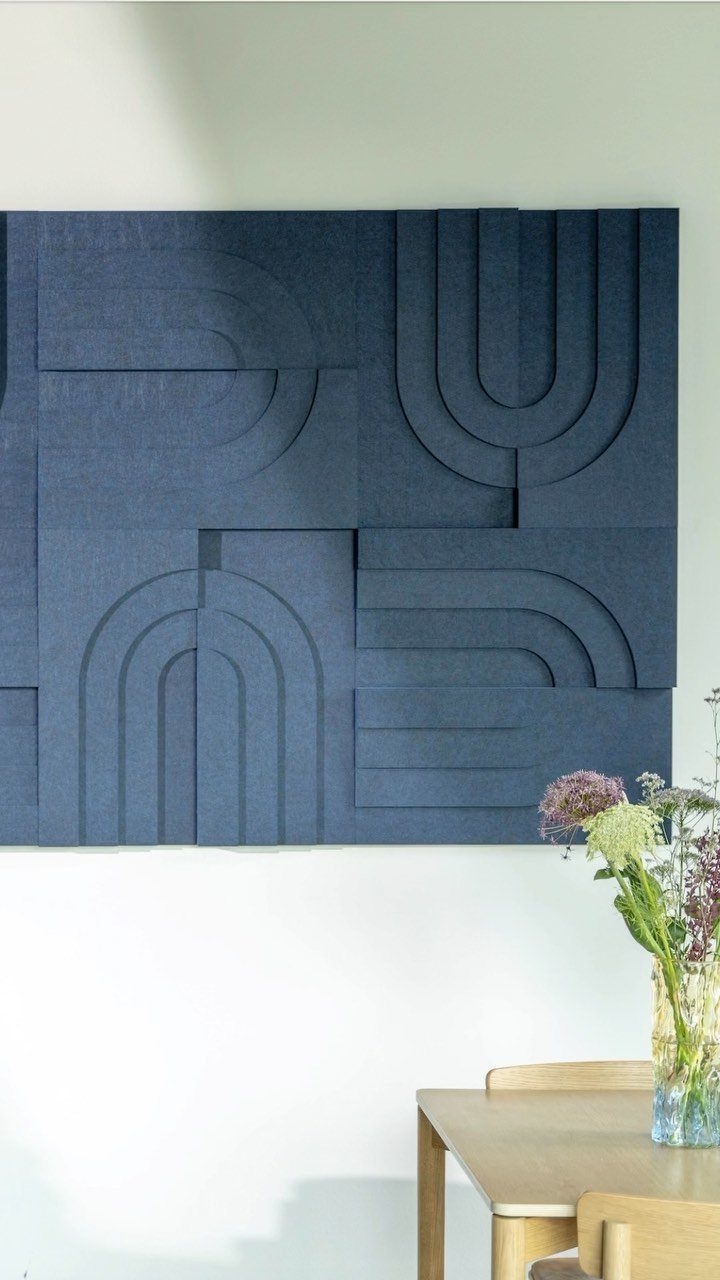
A navy panel with raised arches turns soundproofing into the thing people notice first when they walk in. Shapes like triangles or hexagons break up flat surfaces so sound scatters instead of echoing back.
The color choice changes what the room feels like: a charcoal or soft grey disappears into a professional space, while orange or cobalt makes the panels the point.
I would pick the boldest color for a room that already has good natural light, since deep tones can read as holes in a dim corner.
For a home office on video calls, the 3D relief reads as intentional design rather than desperation. Check whether your supplier cuts to fit around outlets or if you are trimming the shapes yourself.

Real 3D Design: Diamond pattern with 1 inch raise design makes our wall panels more eye-catching. A box comes in 33 tiles, which covers 32.Sq.Ft.

Improved Sound Quality: Our wall panels can easily and effectively reduce reverberation, echo, improve sound quality and enhance speech clarity in any room
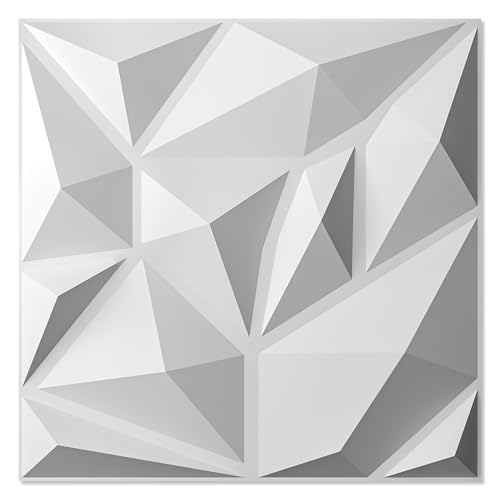
📌 High-Quality 3D Wall Panels: Lightweight, waterproof PVC panels for a modern, textured look, ideal for living room or interior wall decor.
3. Hanging Baffles

Blue triangles hung overhead with LED strips threaded through them solve the particular problem of a ceiling so high that wall panels never catch the sound before it bounces. Suspended baffles drop the absorption into the path of the noise.
I have watched these work in a converted warehouse office where conversation bled across the floor: the vertical panels created zones without building walls.
The depth they add matters; a flat cloud panel overhead does less than one with some thickness to it. Arranging them in clusters over work areas rather than spreading them even helps more for the same material cost.
You will need ceiling anchors rated for the weight and any sway. In a room with a low ceiling, these feel oppressive and wall panels make more sense.

【SPECIFICATION】 : Size - 16 x 12 x 0.5 inches, pack of 6; Covering 8 square feet; Weight - 0.46 lbs per panel; Density - 9.4lb/ft3; Material - 100% Polyester Fiber

Packaging: Comes with 10 panels, covering a total of 77.35 square feet. Each Olanglab Accent Wall Panel measures 47" x 23" x 0.31".

Modern and Elegant Design - Yuzzy wood slat wall panel brings an elegant architectural detail to your room. You've seen it in high-end homes and hotels, where a wall with vertical strips of wood plays with light and shadow, giving a room an organic vibe, while reducing echo and improving your acoustics.
4. 3D Wave Panels

A wavy wall of slats in black, tan, and cream breaks up sound by breaking up the flat plane it would otherwise hit straight on.
The undulation scatters frequencies differently at each point along the curve, which is why these work in rooms where one flat panel is not enough.
I would measure the wall behind where you sit and figure whether one large panel or several smaller ones read better: the single piece is quieter visually, but modular pieces let you move or expand later.
The depth of the wave changes the absorption range; shallow waves handle higher frequencies, deeper ones catch more bass. Check what your actual problem is before ordering.
These read as art installation, so they suit a room where you want the treatment to be visible and talked about rather than hidden.

Tailored Fit for Wood Slat: including 2 wall shelves for wood slat acoustic panels and 6 expansion screws, designed specifically for wood slat acoustic panels, these shelves slide securely into panel channels using a clip-in groove mount, offering a stable wall shelf solution that preserves the integrity of your sound-absorbing walls

【Professional-Grade Sound Absorption】Engineered with 1750gsm high-density acoustical polyesterfiber and wood materials, our acoustic wall panels deliver industry-leading sound absorbing (NRC 0.92+). Create private zones in studios, or bedrooms, and protect your privacy to the greatest extent.

Non Damaging Design for Wood Slat Acoustic Panels: the acoustic panel wall Shelf is designed for wood slat acoustic panels only, specifically engineered to work with panels featuring a stapled felt backing and a slatted groove system, it securely clips into the panel's groove, creating a stable and reliable base for mounting without a single drill hole, ideal for panels, wood slat wall systems, and modern soundproof wall designs
5. Fabric Wrapped Corner Panels
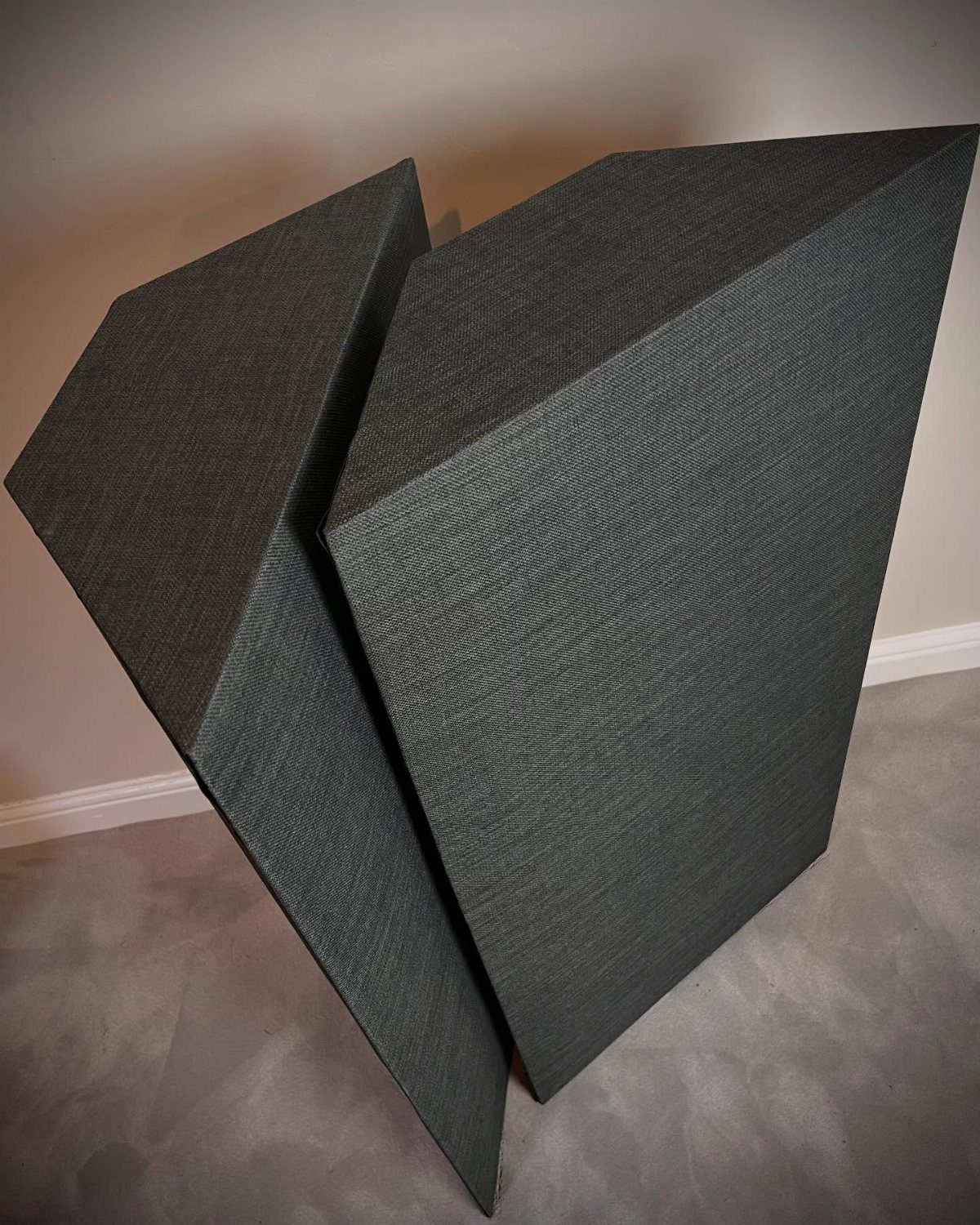
Grey fabric panels leaned into a corner catch sound on both faces while taking up no wall space you might need for shelves or windows.
The fabric wrap matters for what the room feels like: a tight weave looks more finished on camera, while a looser texture absorbs more aggressively.
I would pick the color last, after deciding whether these are permanent or something you shift when the room changes use.
Printed fabric stretched over a frame turns the panel into whatever image you want; felt layers cut and stacked make it sculptural.
Check that the panels are dense enough to stand on their own without brackets, or plan for discreet L-brackets at the base.

Modern and Elegant Design - The wood slat wall panels have been carefully designed to effortlessly transform any space, enhancing the surroundings both visually and acoustically. The wood panels help to create an environment that is not only quiet but beautifully contemporary, soothing and relaxing. Furthermore, our slat wall panels can be installed horizontally or vertically and cut to any shape allowing for creativity and a unique look to fit your aesthetics.

High-Quality Wall Panels: Our acoustic panel set is crafted with high-density polyester fiber, premium medium-density fiberboard, and a solid wood veneer. This combination provides an elegant look, superior sound damping, and excellent sound deadening, significantly improving room acoustics

Superior Acoustic Performance: It is designed to provide excellent noise-cancellation capabilities, making it ideal for use in homes, offices, studios, and other spaces where acoustic quality is a priority
6. Mobile Acoustic Panels on Wheels
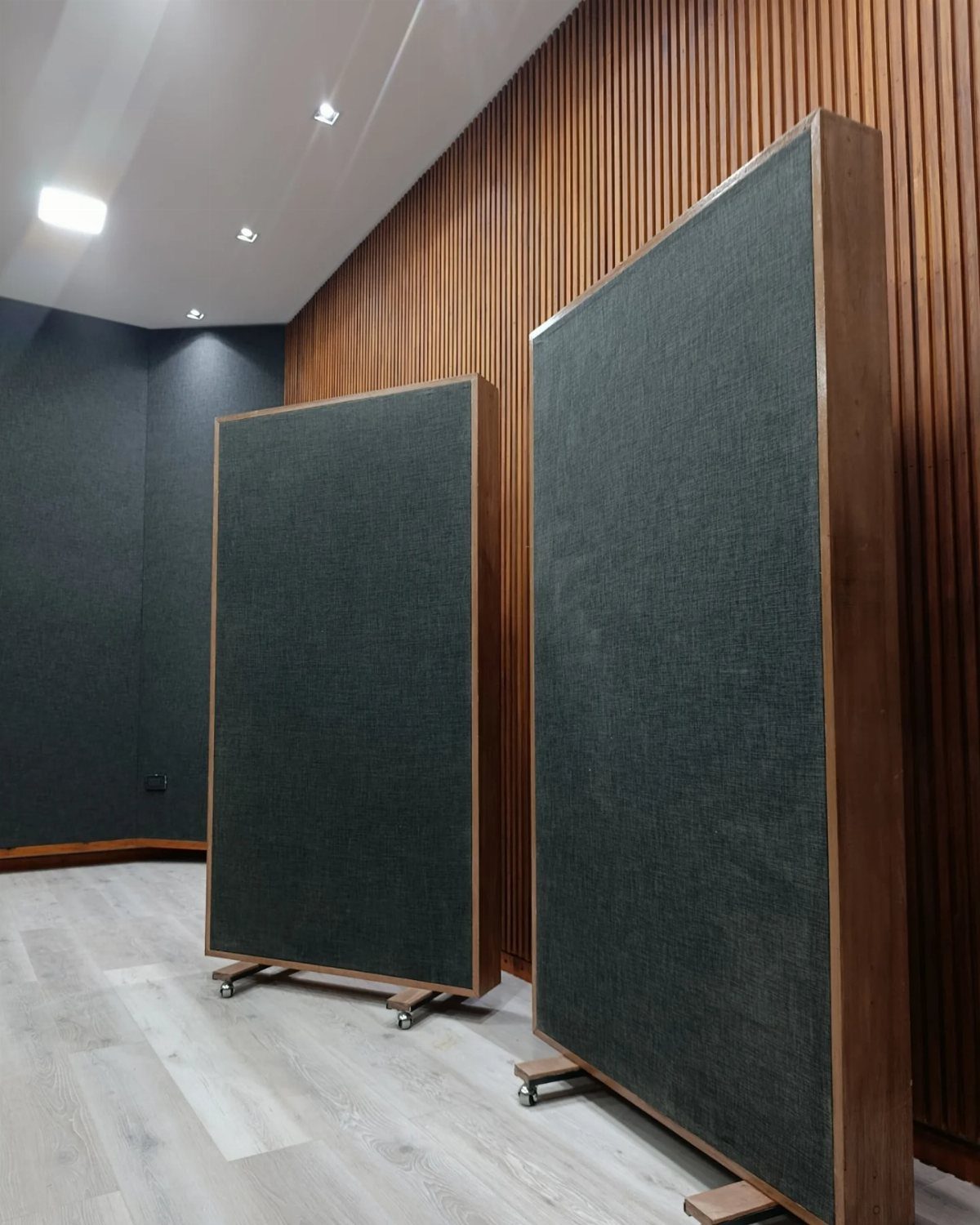
Panels on casters let you roll the quiet where you need it and store it flat against a wall when you do not.
A wooden frame around the fabric face protects the edges from the knocking around that freestanding pieces take.
I have seen these used in a recording studio where the best place for vocals moved depending on who was in the room and what instrument sat where.
The weight of the panel and the quality of the wheels are the tradeoff: light panels with cheap casters wander on uneven floors, heavy ones with good wheels need a clear path to roll.
For a renter, this is the treatment that leaves no holes. Check the frame depth against your doorways if you plan to move them between rooms.

Real 3D Design: Diamond pattern with 1 inch raise design makes our wall panels more eye-catching. A box comes in 33 tiles, which covers 32.Sq.Ft.

【Superior Sound Dampening】Art3d wood wall panels are engineered to significantly minimize noise levels in any setting. Crafted from high-density polyester fiber, these panels absorb sound waves, enhancing acoustics and fostering a more serene and comfortable environment

Modern 3D Geometric Design - Upgrade your space instantly with stylish 3D wall panels featuring a clean geometric texture. Adds depth, dimension, and a high-end look to plain interior walls
7. Patterned Slit Felt Wall Panels
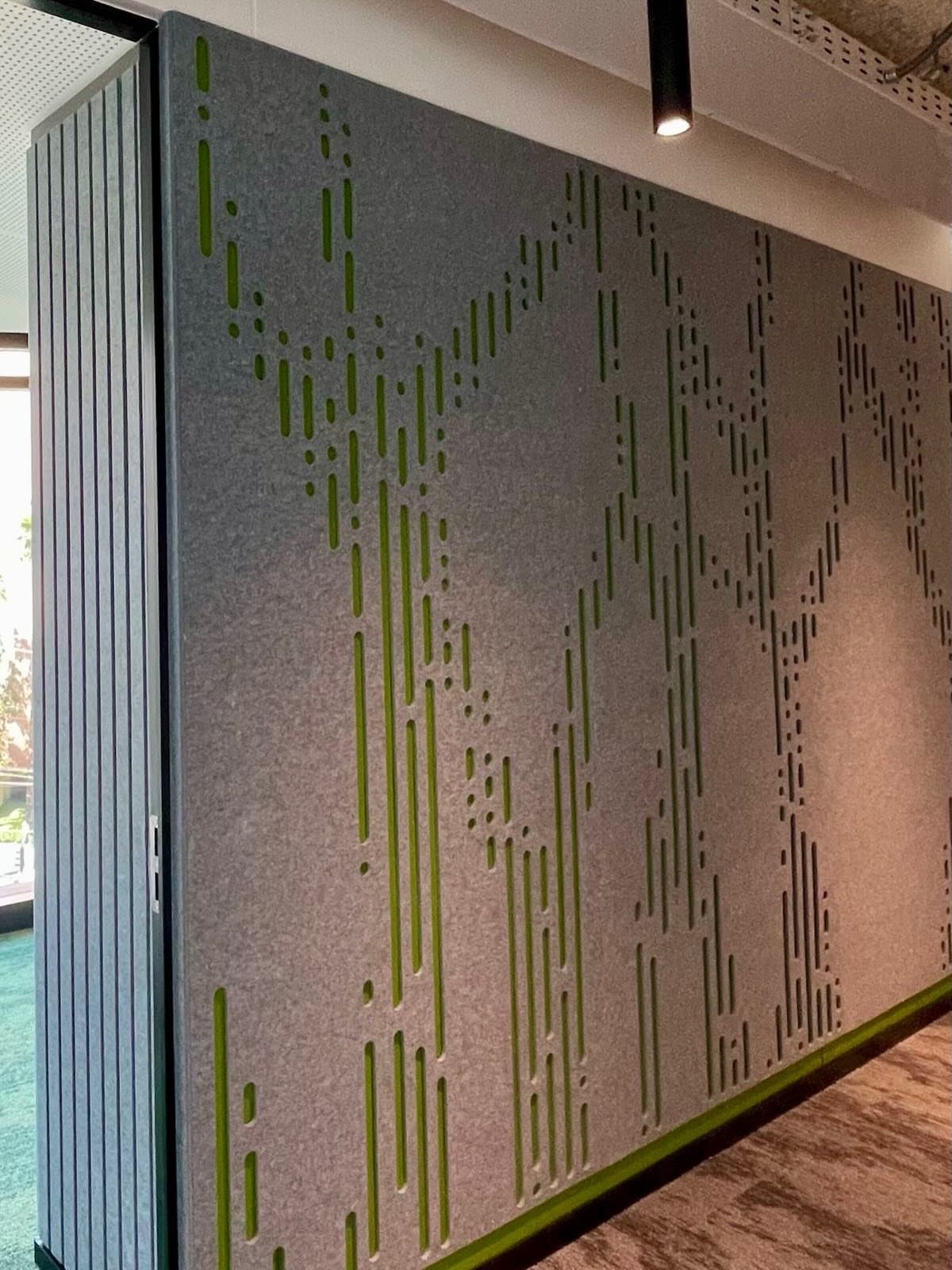
Patterned slit felt panels give you acoustic control without the industrial look of raw foam or plain fabric.
The layered cutouts let you pick a contrast color that shows through, so the panel reads as wall art first and sound treatment second.
PET fiberboard or dense felt both work; the stiffer the material, the cleaner the slit edges cut.
A CNC router or laser cutter handles the pattern, though a steady hand with a utility knife and metal straightedge gets you there on a single panel.
Mount them with impaling clips or Z-bars so the panel floats slightly off the wall; that air gap behind improves low-frequency absorption more than the material alone.
These suit renters and first-home owners who need one wall to quiet down a live room or home office. They do not block sound from traveling through walls; they only tame echo inside the space they face.
For a nursery or podcast corner where you want calm without clinical looks, I’d pick this over slat walls; the pattern gives you more color play and less carpentry.
Cost lands higher than raw panels, lower than custom-printed acoustic art.

Superior Soundproofing: Constructed with high-density polyester fiber material, our panels excel in sound absorption, effectively reducing unwanted noise and improving sound quality.
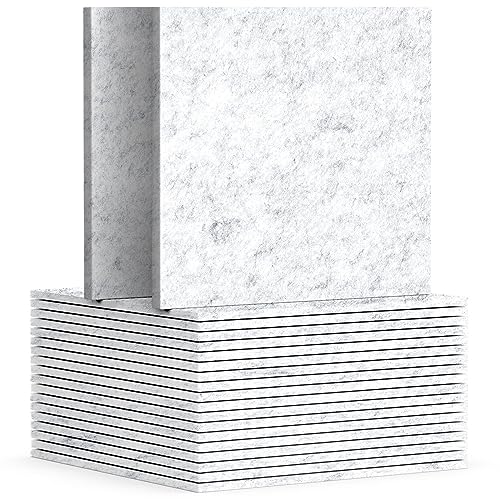
【SPECIFICATION】: Size - 12 x 12 x 0.32 inches, pack of 20; Coverage - 20 square feet; Weight - 0.19 lbs per panel; Density - 7.8lb/ft3; Material - 100% Polyester Fiber

Superior Soundproofing: Constructed with high-density polyester fiber material, our panels excel in sound absorption, effectively reducing unwanted noise and improving sound quality.
Acoustic Panel Benefits
Acoustic panels cut the background hum that makes concentration harder than it needs to be.
In a meeting room, the same absorption stops voices from slapping off walls, so speech comes through clearly on the far end of a video call or the far side of a table.
The visual side matters too: a wall that reads as intentional design signals that someone planned the space, which changes how clients read the room and how employees feel about showing up in it.
I would treat the professional look as a real benefit, not a side effect, when I am choosing between a plain panel and one with some surface interest.

【Professional-Grade Sound Absorption】Engineered with 1750gsm high-density acoustical polyesterfiber and wood materials, our acoustic wall panels deliver industry-leading sound absorbing (NRC 0.92+). Create private zones in studios, or bedrooms, and protect your privacy to the greatest extent.

Tailored Fit for Wood Slat: including 2 wall shelves for wood slat acoustic panels and 6 expansion screws, designed specifically for wood slat acoustic panels, these shelves slide securely into panel channels using a clip-in groove mount, offering a stable wall shelf solution that preserves the integrity of your sound-absorbing walls

EXCEPTIONAL ACOUSTIC PERFORMANCE - Our wall wood panels, with a high 1750gsm felt density, significantly outperform standard 1350gsm options in sound absorption and noise reduction, creating a peaceful and acoustically optimized environment.
Installation Tips
Mounting with screws or a rail system leaves you the option to move the panel later, which matters if you rent or if the room’s use shifts.
Adhesive holds fine on a permanent wall but can tear surface material when you pull it free, and the panel itself may not survive.
For a slat wall or anything with weight, I would find the studs or add furring strips rather than trust drywall anchors alone.

Modern and Elegant Design - The wood slat wall panels have been carefully designed to effortlessly transform any space, enhancing the surroundings both visually and acoustically. The wood panels help to create an environment that is not only quiet but beautifully contemporary, soothing and relaxing. Furthermore, our slat wall panels can be installed horizontally or vertically and cut to any shape allowing for creativity and a unique look to fit your aesthetics.
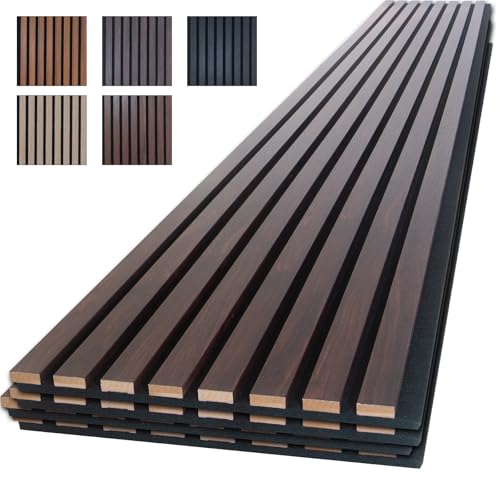
Modern and Elegant Design - The wood slat wall panels have been carefully designed to effortlessly transform any space, enhancing the surroundings both visually and acoustically. The wood panels help to create an environment that is not only quiet but beautifully contemporary, soothing and relaxing. Furthermore, our slat wall panels can be installed horizontally or vertically and cut to any shape allowing for creativity and a unique look to fit your aesthetics.

【Superior Sound Absorption】: Designed with a 0.35" MDF board and a 0.35" high-density polyester fiber backing, these wood slat acoustic panels offer enhanced sound control through a balanced dual-layer structure. The thicker MDF layer helps improve sound blocking and structural stability, while the dense 0.35" felt backing effectively absorbs echoes and reduces noise reflection. Made from non-toxic, eco-friendly materials, ideal for creating a quieter, more comfortable space.
Material Considerations
Fabric and felt read softer and more matte than smooth materials like acrylic or printed film, which changes how a color sits in a room. A red on fabric calms down; the same red on a glossy surface shouts.
That softness suits spaces where you want the wall to recede, but it also means fine details and small text lose sharpness.
I would design for large shapes, blocks of color, or bold patterns on textile panels rather than photographic detail.
Wood slats bring grain and warmth that plain fabric cannot, though they absorb less at high frequencies unless you leave the gaps open to insulation behind.

🔇【Upgraded Sound Absorption Performance】You may be worrying- how to choose acoustic panels with good sound proof performance among so many types of sound proof foam panels.However,you can choose us without hesitation.our acoustic panels can effectively abosorb unwanted sound,such as echo,standing wave and high noise.Their Sound abosrbtion coefficient is 0.95, which meet most acoustic treatment need. You would not regret after purchasing them home.

🔇【Upgraded Sound Absorption Performance】You may be worrying- how to choose acoustic panels with good sound proof performance among so many types of sound proof foam panels.However,you can choose us without hesitation.our acoustic panels can effectively abosorb unwanted sound,such as echo,standing wave and high noise.Their Sound abosrbtion coefficient is 0.95, which meet most acoustic treatment need. You would not regret after purchasing them home.
Customization Options
Most suppliers cut to a requested dimension, though standard sizes cost less and ship faster.
For a wall with outlets or a corner that is not square, I would measure the obstruction and ask whether they notch it or whether I am trimming on site.
Color choice changes what the panel does in the room: a tone close to the wall behind it lets the texture read without the shape dominating, while a strong contrast makes the panel the focal point.
I would settle the size and mount style before getting attached to a color, since a custom dye lot may not match a later addition.
Frequently Asked Questions
How to create your own acoustic panels?
A utility knife and metal straightedge get you through a single felt panel with slits, though a CNC router or laser cutter handles repeating patterns cleaner.
A full grid gets heavy fast, so either confirm your wall can carry the load or plan to add furring strips as a backing frame.
What is the ideal thickness for acoustic panels?
PET panels commonly ship at 0.75 inches, and most stock sizes run thin enough that you will not notice the space they take.
Thickness decides which frequencies get caught; thin boards or shallow waves soak up higher pitches, while deeper builds pull in more bass.
For a room where echo is the problem rather than rumble, standard thickness usually does the job without eating into your floor space.
What are some popular designs for acoustic wall panels?
Wood slats flipped in alternating directions, geometric builds with raised arches or hexagons, layered 3D waves in different colors, and patterned slit felt all look like deliberate design choices before they read as acoustic treatment.
Fabric-wrapped panels let you stretch printed fabric over a frame for whatever image you want.
Hanging baffles work overhead in tall spaces, and mobile panels on casters suit renters who need to roll the quiet where it is needed and store it flat after.
What are some common problems with acoustic panels?
Panels absorb echo in the room they face, but they do not block sound through walls, so treating your side will not quiet the neighbor’s television.
Bold colors or deep tones can disappear into shadow in a dim corner, so I would save the strongest choice for a space with enough natural light to show it off.
Light freestanding panels on cheap casters drift on uneven floors, while heavy builds need you to measure doorways before you plan to roll them anywhere.
What are the best acoustic panels for a home office?
Fabric-wrapped panels disappear on camera while softening the hard walls that make video calls sound like you are in a bathroom.
Geometric panels with 3D relief look intentional on a video call rather than like a last resort, and wood slats behind your desk add texture without fighting your face for attention on screen.
In a room with a tall ceiling, hanging baffles drop absorption into the noise path before it can bounce back down at you.
How do professional soundproofing panels help productivity?
They cut echo and background noise so your brain is not working overtime to separate your own thoughts from the reflections off hard walls.
In open offices this means conversation across the floor bleeds less; in a home office it means your voice on calls sounds present rather than hollow.
The difference is focus: a quieter room lets you work longer without the fatigue that comes from constant low-level noise processing.
Are hanging acoustic baffles good for tall ceilings?
Yes, they solve the particular problem of a ceiling so high that wall panels never catch the sound before it bounces.
Suspended baffles put absorption directly in the noise path, and clustering them over work areas rather than spacing them even gets more result from the same material.
In a low-ceilinged room they feel oppressive overhead, so measure before ordering; for a converted warehouse or loft with generous height, they are usually the right call.