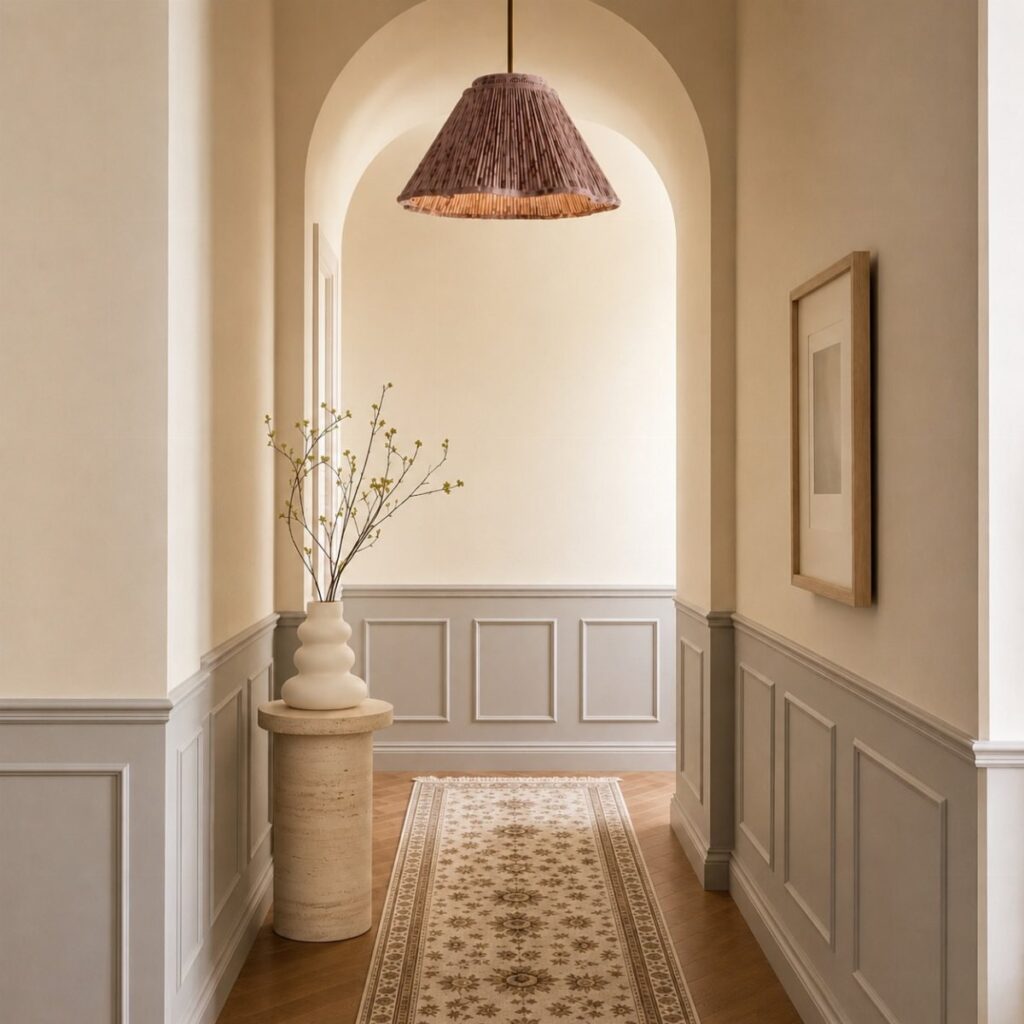
These chair rail hallway ideas run from painter’s tape tricks to full wainscoting with a nail gun and miter cuts, so the deciding factor is how much wall you are willing to own: renters who patch holes when they leave should look toward paint-only fixes, while first-home buyers can cut rail for a staircase rake knowing they will live with the joint.
1. Paneling Below Chair Rail

Wainscoting below the rail turns a plain hallway into something that reads as finished millwork rather than a strip of trim floating on the wall.
I like picture-frame molding for this because it breaks the lower wall into panels without the depth of full beadboard, which can feel busy in a narrow space.
Paint the panels and rail the same white as your baseboards so the shadow lines do the work, not the color contrast.
A hallway staircase needs the paneling to follow the angle of the stairs, so cut the rail with a miter where the rake meets the landing run.
That joint is the fussy part; everything else is straight runs and a nail gun.

Includes 3 pre-cut 20"x27" wall molding frames and 2 chair rail trim pieces, Covers 78.7"W x 39.9"H wall area (6.5 ft wide). All pieces feature a peel-and-stick design for easy installation

DIY Installation Made Easy: Cut, peel, and stick in just 3 simple steps. No special tools required. Effortless installation for a quick and hassle-free experience.

Effortless Installation — Experience the simplicity of our 3-step installation process: simply cut, peel, and stick. It's a swift, hassle-free process.
2. Contrasting Chair Rail Against Darker Walls

A white chair rail against chocolate brown walls does the same job as a picture frame mat: it gives your eye a place to rest between two heavy fields.
The rail, baseboards, and any door casing should share one white so the line reads as architecture, not an afterthought. I have seen this work with dusty rose too, though the contrast is softer.
The rail needs to project enough to catch light; a flat 1-inch strip disappears against dark paint. If your walls are already dark, this is a weekend fix that needs only painter’s tape and a steady hand on the brush.
A rail with real dimension reads as deliberate structure rather than leftover trim.

Pre-Cut & Mitered Molding Strips to Build 4 Picture Frames: This kit includes pre-cut wall molding strips with precision mitered corners. The long and short pieces are designed to be assembled into four 20" x 20" decorative picture frames for wall paneling and wainscoting projects

High Quality Material - These molding panels are made of polystyrene material, which is hard and durable, lightweight, odorless, non-warping, and non-cracking. The quality is absolutely superior to that of foam molding panels.

Wall Molding Kit: The package includes 24 pcs wall molding (24in-14 pcs, 54in-6 pcs, 48in-4 pcs), which can be combined into 6 frames, allowing you to easily create a stylish accent wall. The 6-frame layout shown is designed for a wall measuring approximately 10 feet high by 11 feet wide. Please measure your wall and plan the layout before installation.
3. Staircase Chair Rail

A chair rail that stops at the stairwell looks like you ran out of material.
Carry it up the rake of the stairs, keeping the same height above each tread, and it ties the hall to the upper landing as one continuous space.
The angle cut where the rail meets the newel post is the detail that separates a finished job from a handyman special; I cut long and sneak up to the fit.
Wainscoting below the rail on the stair wall adds the same protection it gives in a dining room, since vacuum handles and moving boxes scrape there just as chairs do.
Check whether your balusters and newel post profile match the rail style; Colonial with Colonial, plain with plain. A mismatch at the junction is what the eye catches first.

Unfinished not stained solid hardwood. Natural color may vary from piece to piece.

Product Size: the package includes 1 roll of peel and stick chair rail panel molding, measuring about 19.7 ft x 1.06 inches/ 6 m x 2.7 cm, which provides you with adequate length to cover large areas; Additionally, its width will well define edge to most applications, enhancing your home decor with minimal effort

PRECISION ANGLE CONTROL: Effortlessly achieve precise angle adjustments from a full +90° to -90°, featuring 13 positive stop positions that ensure fast, repeatable setups for perfect miter, and square cuts with your track saw
4. Light Blue Hallway with White Chair Rail
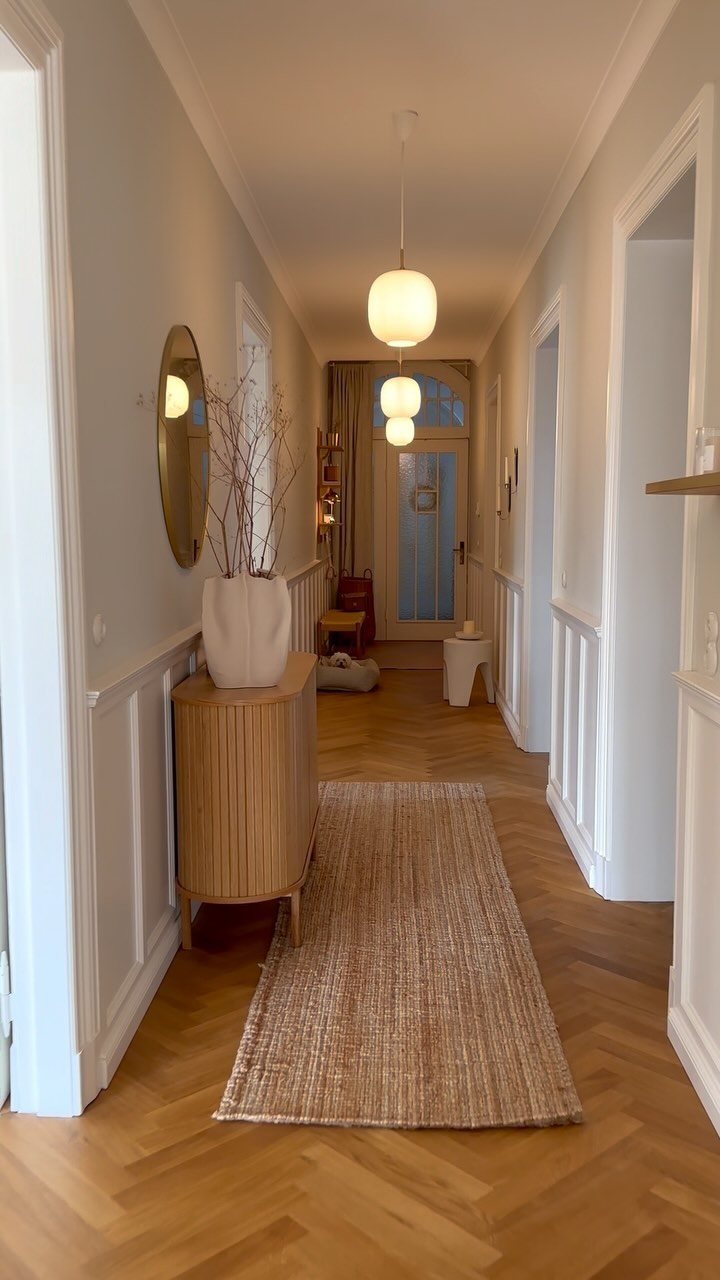
Soft blue above crisp white wainscoting is the combination I would point a first-time homeowner toward when they want period character without the formality of a darker palette.
The rail does not need to stand out here; paint it the same white as the panels and let the color division do the work.
I prefer eggshell on the upper wall and semigloss on the trim so the sheen variation adds depth without a third color.
A hallway this pale reads wider than it is, which matters in old houses where the passage is barely shoulder-width.
Texture on the floor keeps a pale hallway from feeling too polite; a herringbone pattern or a jute runner both do the work.
Add your own rough element, a woven basket or an unframed mirror, so the space does not end up looking like a rental staging.

Self-Adhesive and Flexible Design: Our flexible molding trim or wall panel made of high quality PVC material. The surface is spray-painted, it is moisture-proof, anti-corrosion, oil-proof, dust-proof, waterproof, non-toxic and odorless, easy to clean. Self adhesive molding trim can be attached to almost any smooth surface. Flexible materials can meet our requirements for different shapes

【Extra Long Size】Measuring 23ft x 1.1" in length, our peel and stick wall molding offers perfect coverage for various applications. The ultra-soft material cuts easily with scissors, allowing you to customize the perfect fit for any project - whether you need short sections for cabinet edges or long runs for wall applications.

TPE Material: Made of TPE material, soft, flexible, reliable and durable, lighter than traditional PVC molding strips, less odour, not easy to peel off, fade or deform after installation, stand the test of time
5. Terracotta Hallway with Chair Rail

Terracotta on the upper walls with matching wainscoting below is a warmer move than the usual white-and-color split, and it suits a hall that gets good natural light.
In a darker passage the color would advance and feel enclosing; here the tone reads as sun-warmed plaster. The built-in bench painted dark anchors the scheme so it does not float away into pumpkin spice territory.
I would check my flooring before committing: light wood keeps terracotta from going heavy, and a dark floor would shift the whole mood toward Spanish Revival.
If your floor is already dark, consider painting the wainscoting white after all, and let the upper wall carry the color alone.

【Double Silencer Steel Nail Gun】our manual nail gun tool is light and it’s convenience for you to carry and handle in various different scenes and comes with double muffler as it’s designed with thickened steel silencer reduces noise and is safer

Long life maintenance-free motor to keep from staining the work surface

5 Gear Adjusted: concrete nailer gun adjusted by removing screws and according to different construction intensity requirements; Gear 1 can penetrate 3 mm steel plates; gear 2 can use in DIY ceilings, mounting brackets, door and window monitoring etc
6. Monochromatic Grey Hallway Chair Rail

Painting the rail, wainscoting, and upper wall in close greys is the modern move Maria Viola-Kuttruff described when she talked about making the division less conspicuous.
I would use the same paint in different sheens rather than two cans: matte above, eggshell on the rail, semigloss on the panels so light moves across them differently.
Polished tile floors echo the grey and keep the hall from feeling like a painted box, though a runner would soften the acoustics if the space sounds hard.
Effortless Installation — Experience the simplicity of our 3-step installation process: simply cut, peel, and stick. It's a swift, hassle-free process.
DIY Installation Made Easy: Cut, peel, and stick in just 3 simple steps. No special tools required. Effortless installation for a quick and hassle-free experience.

Generous Size: the package includes 1 roll of peel and stick chair rail panel molding, measuring about 32.8 ft x 2.36 inches/ 10 m x 6 cm, which provides you with adequate length to cover large areas; Additionally, its width adds a delicate and well defined edge to most applications, enhancing your decor with minimal effort
7. Floral Wallpaper Above Chair Rail

Floral wallpaper above a chair rail works best when the lower half grounds it. Pink wainscoting handles the lower half, but a plain painted wall in one of the paper’s colors works just as well.
I would match the chair rail to the lower color, not the paper. The molding reads as part of the wall that way, and the pattern gets the attention.
Victorian-style rails with beads or ogees suit this look; the extra carving holds its own against busy print. Install the rail first, then hang paper and trim the edge cleanly before the molding covers it.
The rail should not be the only thing holding that edge down.
This idea suits renters less. Wallpaper comes down, but the time and cost add up for a temporary stay.
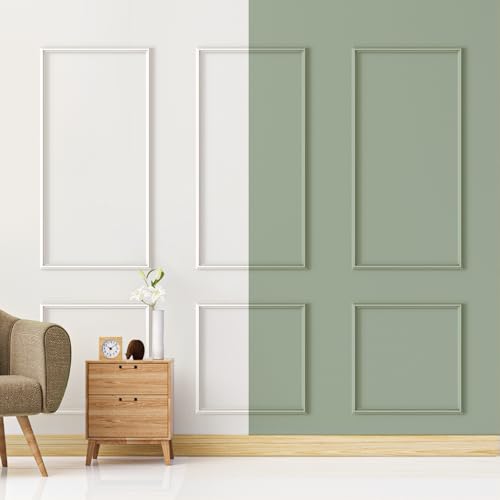
[Transformative Interior Decoration]: Our pre-made wall moulding kit effortlessly adds depth and character to your wall, blending contemporary minimalism with classic design. Elevate your interior wall with timeless elegance

Effortless Peel and Stick Installation: Transform your space in minutes with our wall molding peel and stick design. Simply peel and stick to any clean, smooth surface. Perfect for DIY enthusiasts who want professional-looking wainscoting without the hassle of traditional wall trim molding peel and stick installation.

Wall Molding Kit: you will receive 6 sets of pre-cut peel and stick molding for walls, which can be easily matched and connected to give a sophisticated look to a door or wall, meeting your various decoration needs
8. Striped Lower Wall with Colored Chair Rail

Vertical stripes below a chair rail pull the eye up, which helps in a narrow hallway that feels closed in. A light blue rail can pick up one stripe color and leave the others to do the pattern work.
Painted stripes need only tape and leftover wall paint, so the lower half stays cheap. Vertical takes longer than horizontal; every line must be plumb or it shows.
I would mark with a level, tape, then paint the base color over the tape edge to seal it before the stripe color goes on.
The rail color should match either the stripe or the field, not sit as a third tone. Matching the stripe unifies the lower half; matching the field separates the elements more sharply.
Best for a hallway with good natural light. Stripes in dim spaces can look like a mistake you meant to fix.

Dimensions: 4-3/8 in. Height x -5/8 in. Projection x 3 in. Repeat x 94-1/2 in. Length

INCLUDES: (2) Jig and Fixture Bar with a set of 10-32 nylon adjustment screws (mounting hardware)

This Miter Bar is made of high-quality anodized aluminum, it is of strong strength and long durability, good insulation performance and long service life.
Chair Rail Styles and Materials
Wood chair rails take paint crisply and hold detail well, but MDF costs less and arrives pre-primed if you are painting anyway.
PVC suits bathrooms and laundry passages where moisture warps real fiber; it will not take stain, so keep it to painted jobs.
A traditional profile with ogees or beads reads best against a paneled lower wall when it projects enough to cast its own shadow.
A heavy Colonial profile in a standard hall can feel like crown molding got lost on its way up.
DIY Installation Made Easy: Cut, peel, and stick in just 3 simple steps. No special tools required. Effortless installation for a quick and hassle-free experience.

Product Size: the package includes 1 roll of peel and stick chair rail panel molding, measuring about 19.7 ft x 2.36 inches/ 6 m x 6 cm, which provides you with adequate length to cover large areas; Additionally, its width will well define edge to most applications, enhancing your home decor with minimal effort

【Long lifespan】Wall decoration molding trim is made of excellent TPE material, which are soft, elastic and reliable. It can be used for a long time and not easy to detach or fade after installation
Functionality of Chair Rails
A chair rail that does not project past the wall surface will not stop a vacuum handle or a moving box corner.
The practical height is where your chairs actually hit, though hallways with no chairs give you more freedom to choose.
I would still place it where a seated person’s shoulder would clear, since that proportion looks right even when protection is not the point.
The rail divides the wall for paint or paper, but it also gives the eye a horizontal anchor that makes a long passage feel less tunnel-like.
A washable lower finish matters more than the rail itself; scuffs still happen below the molding. Semigloss paint or paneling there saves the drywall from repeated touch-ups.

2-IN-1 PNEUMATIC BRAD NAILER & STAPLER — Fires both 18GA brad nails (5/8"–2") and 1/4" crown staples (5/8"–1-5/8") with one tool. Quick-swap between nailing and stapling for trim, molding, upholstery, and furniture — no need to own two separate guns.

[2 in 1 Brad Nailer/ Staple Gun] KITLUCK nail gun& staple gun support 5/8in, 3/4in,1in, 1-1/4in straight 18 Gauge nails and 3/4in narrow crown staples, one click to switch the nail groove, no tool adjustment, and adapt to different material thicknesses, making it ideal for many projects.

Package Includes: 1x concrete nail tool, 150 pcsx round nails, 50 pcsx threaded nails, full set of replacement parts, 1x plastic case, 1x gloves, 1x goggles, 1x rubber earplugs, 1x brush, and 1x instruction manual. Wear earplugs, goggles and gloves when using the wall fastening tool
Installation Tips
Mark the rail height with a level, not by trusting the floor. Old hallways slope, and a rail that follows the floor looks drunk.
For picture-frame panels below, measure the open wall between corners and door casings, then divide by your panel count so the gaps stay even.
A 4-foot level keeps the panel sides plumb; a short level multiplies your error across the wall. Adhesive paneling kits exist, but I would still nail the rail itself so the line stays straight when temperature swings flex the adhesive.
Cut the rail long for angled stair joints and shave to fit; the reverse leaves you short and buying another stick.
Current Trends
Chair rails are back in rooms that skipped them for decades, partly because a thin strip with one paint color feels current again.
The modern take pairs a thin, plain rail with same-color paint above and below so the line reads as subtle architecture rather than period costume.
Transitional spaces split the difference: a moderate profile with wallpaper below and a quiet color above, or the reverse. What reads as current is the restraint, not the rail itself.
A heavy Victorian profile with busy paper and contrasting paint still works, but it announces itself as a choice about the past, not the present.
I would pick the thin strip and single color for a hall I planned to live with long-term, and save the bolder combinations for a space where I wanted the wall to be the conversation.
Chair railing is still in style! Trim molding is seeing a major resurgence today.
Frequently Asked Questions
Is chair railing still in style?
Chair railing never really left, though the way people use it has shifted. Trim molding is back in a big way right now, especially the quiet kind: single-tone paint, clean panel lines, nothing fussy.
A busy white profile cutting across two clashing colors will read 1990s fast, but keep the contrast low or paint the rail to disappear into the wall and it feels current.
What can I use instead of a chair rail?
Paint can create a visual break similar to a chair rail; a break in wall paint at a consistent height adds the same horizontal division without the molding.
Paneling or wainscoting gets you there too, adding millwork that finishes a room and dials up the formality where that matters. Wallpaper, especially a woven natural fiber paper, also adds texture and interest if you would rather not install trim.
Does a chair rail make a room look bigger or smaller?
A chair rail can make a room feel smaller if it breaks the wall into two strong, unrelated colors, since the eye reads the division as a cut in height.
The modern approach is to paint the rail the same color as the wall, or in close hues to the upper wall and wainscoting, so the molding adds layering and texture without a strong visual split.
A pale blue hallway with white chair rail and wainscoting, for example, reads wider than it is because the light upper color keeps the eye moving.