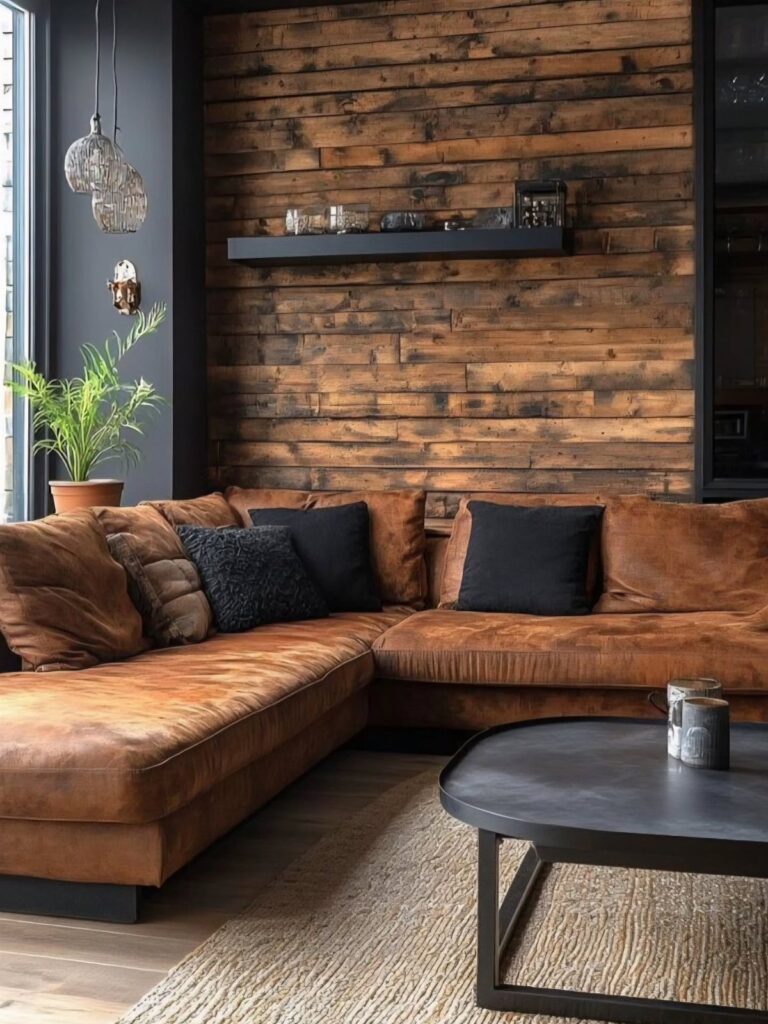
A rustic accent wall can run from thrifted frames to a full weekend with a jigsaw and reclaimed barn wood.
The deciding factor is how long you plan to stay in the place: renters need peel-and-stick options, owners can invest in the real thing.
A sectional facing the door is the exact scenario that calls for one of these, and the slat spacing that lets wall color peek through shows up more than once.
1. Reclaimed Wood Plank Accent Wall
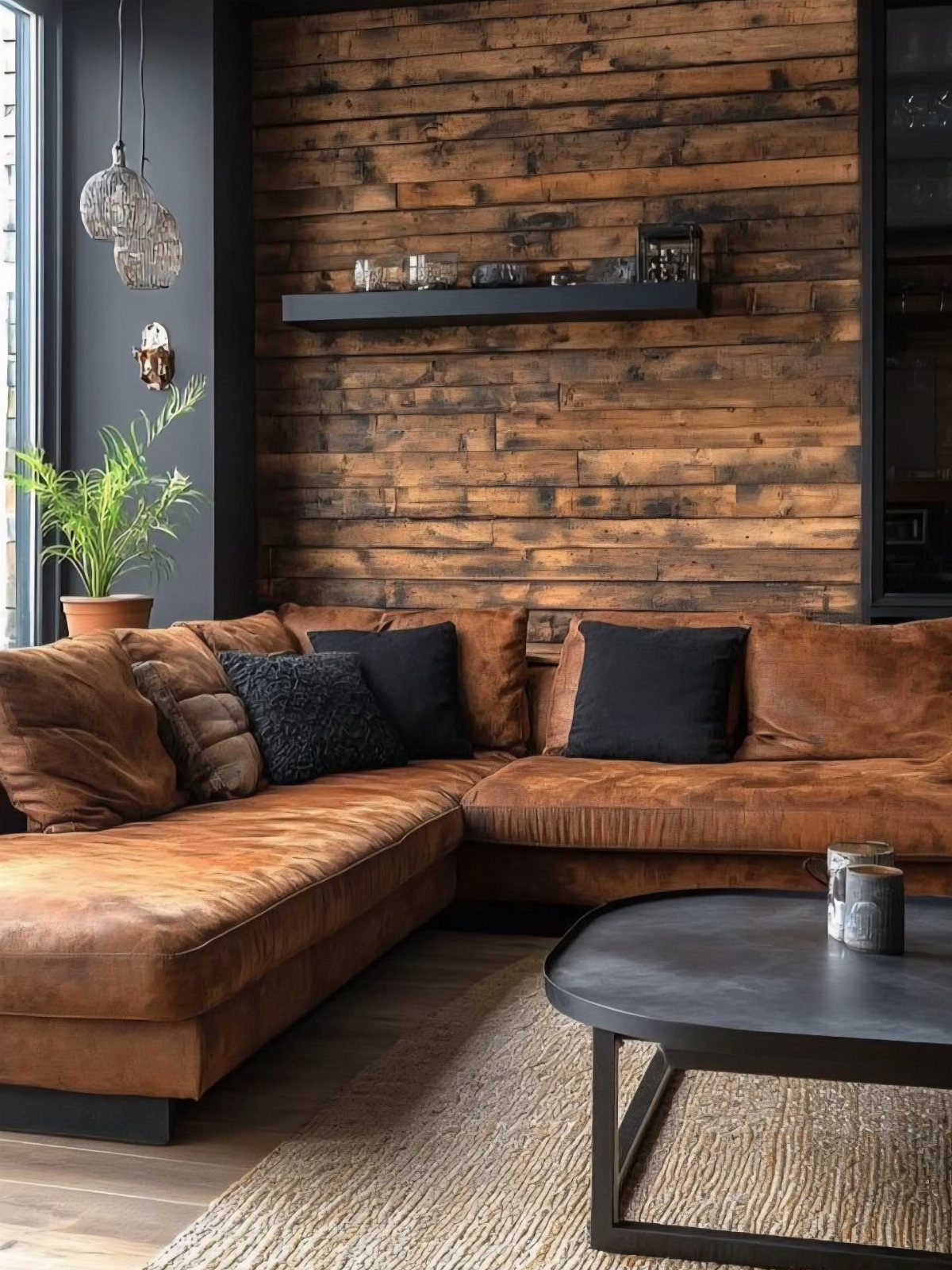
Reclaimed wood gives a wall the kind of texture that reads as history, not decoration. Mixing board widths and letting the tones stay uneven keeps it from turning into paneling from a big-box store.
Salvaged barn wood carries knots, nail holes, and color shifts that new lumber can’t fake. Local salvage yards are the first place I’d check, though shipping from specialized suppliers works if you’re rural.
A clear sealant keeps the weathered look intact without glossing it over.
This one asks for patience in sourcing and a willingness to spend more than MDF. A wall that actually feels lived-in, not styled to look that way.
I’d steer a renter toward peel-and-stick reclaimed veneer instead; this version belongs to someone staying put.

【REAL WOOD】– Made of 100% dried fir wood imitating vintage reclaimed barnwood appearance for interior finish. The colors will vary from browns to grays depending on the batch.

RECLAIMED WOOD ACCENT: Real reclaimed and recycled wood, naturally-weathered wood paneling adds a beautiful, rustic accent to your walls

Real Wood Wall Planks: 100% Real Barn Wood Wall Planks With Natural Knots and Dents, the Surface Of Wood Shiplap Planks Is Processed With High Temperature Carbonization, the Real Wood Wall Shiplap Planks Is Non-Toxic, Sterilized and More Safe For Children, Voc Free Process Ensures These Stick on Shiplap Planks For Walls Are Safe To Use In Home
2. Shiplap with Contrasting Paint
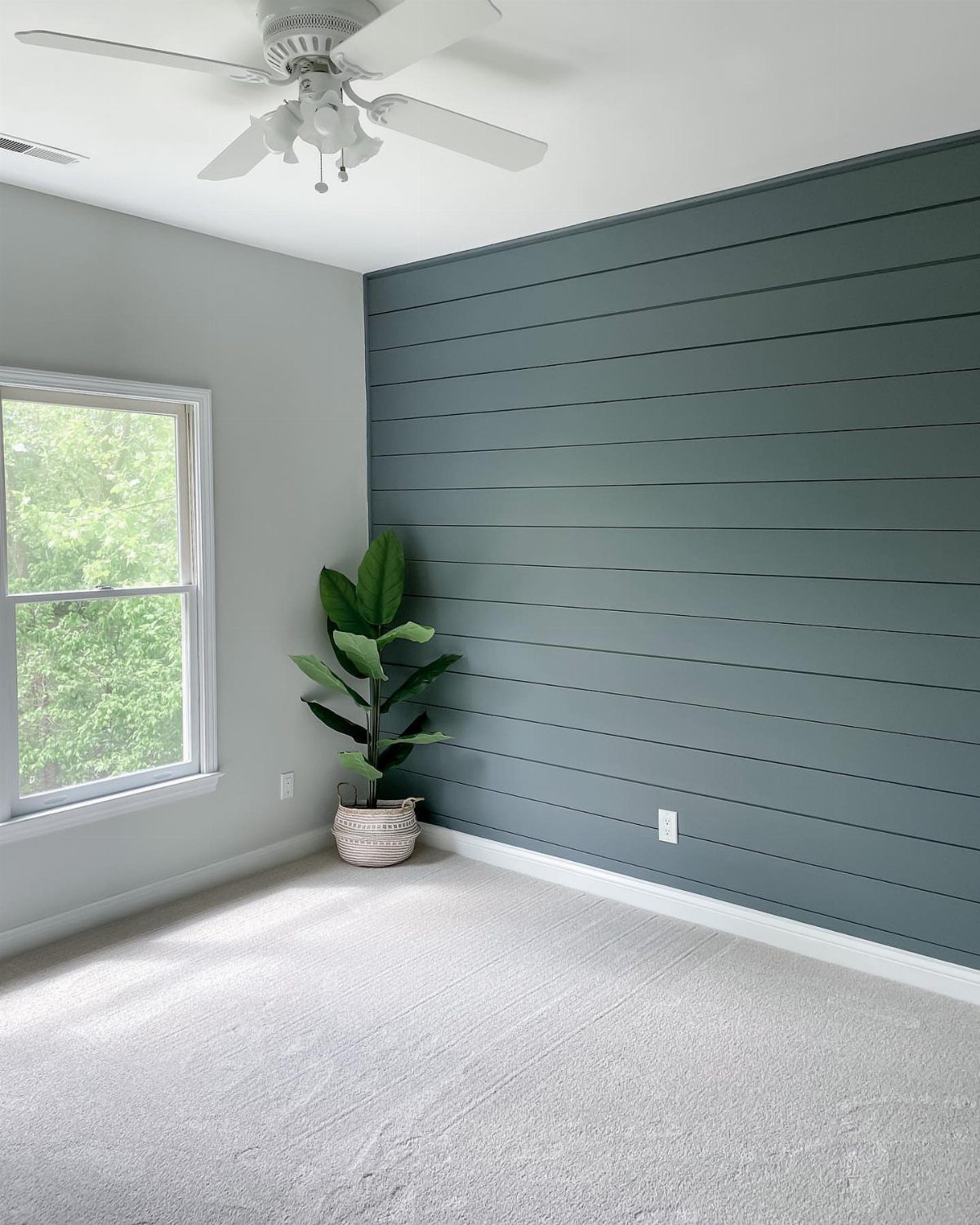
Shiplap’s horizontal grooves give a wall shadow lines even in flat paint, which is why the bold color choice works without overwhelming. Navy or hunter green keeps the texture readable; black risks losing the gaps entirely in low light.
MDF shiplap cuts the cost way down and paints smoothly, though I’d skip it for bathrooms or anywhere steam gathers. Real wood holds up better and takes stain if you pivot later.
The boards run quick to install, a weekend with a nail gun and a level.
This suits someone who wants the farmhouse familiarity with a sharper edge. White shiplap feels done to me now; the contrasting wall beside it needs to stay quiet, a soft gray or warm off-white, so the two don’t compete.


REAL WOOD – Made of 100% dried fir wood imitating vintage reclaimed barnwood appearance for interior finish. The colors will vary from browns to grays depending on the batch.

【LIFELIKE TEXTURE】– This wood wallpaper is made from real wood scans, capturing the natural walnut grain in detail. Its subtle tactile texture adds depth and authenticity, while the organic grain and lightly aged vintage look highlight the warmth of real wood.
3. Exposed Brick Accent Wall
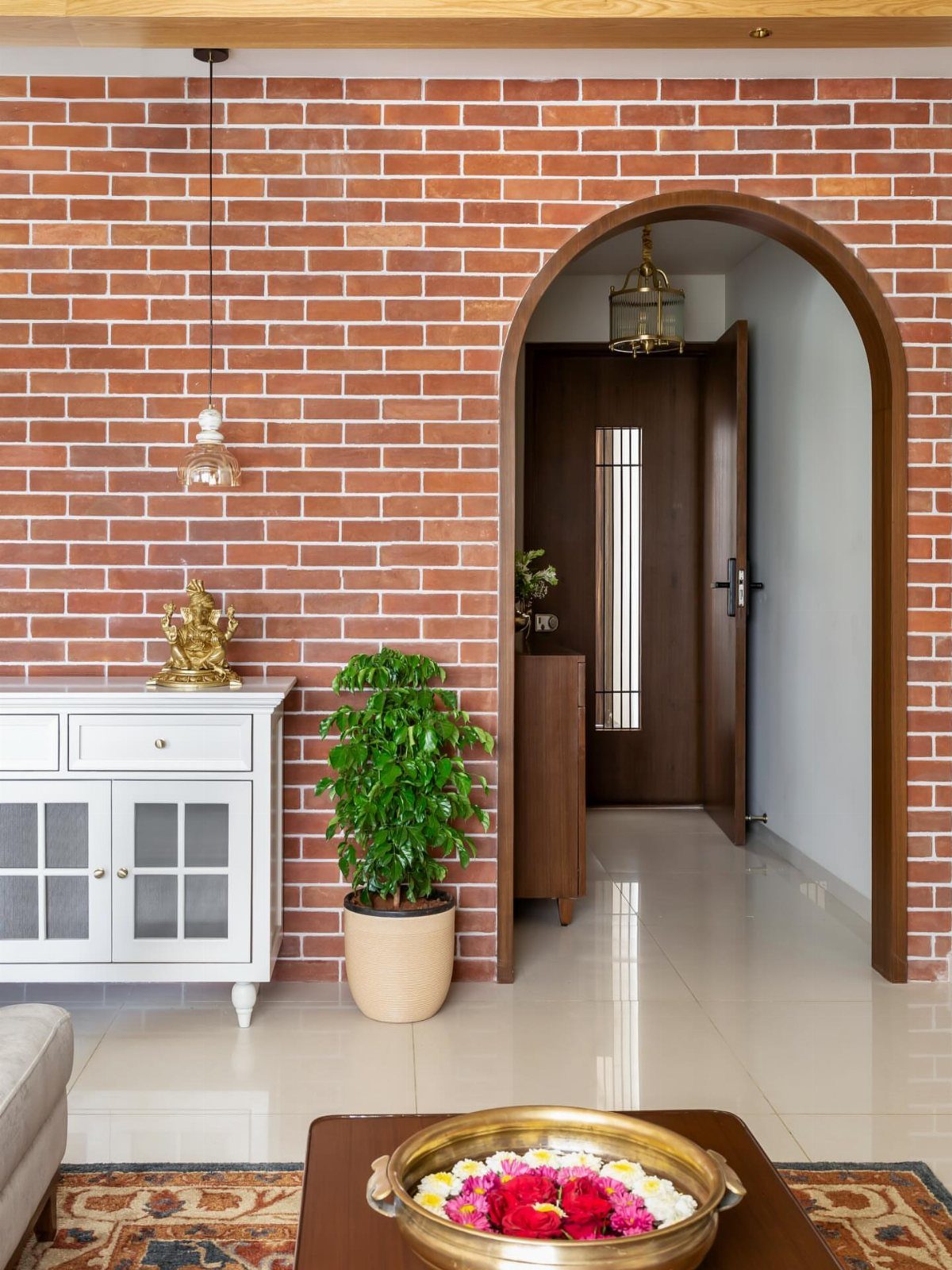
Brick carries weight that wallpaper or paint never touches. Real exposed brick is ideal when you’ve got it, but most of us are working with drywall and a dream.
Faux brick paneling has improved enough to fool a glance, and it installs with construction adhesive and a few screws.
Brick frames an opening beautifully; carry that idea to a fireplace surround or a kitchen backsplash if a full wall feels like too much. Sealant matters here too, especially on real brick that can shed dust.
This one trades the warmth of wood for something cooler and more urban. A soft rug and rounded furniture keep it from going full warehouse.
I’d pick this for a loft or a room that needs grounding, not a space already short on light.

ALL SEASON PAINT & PRIMER-IN-ONE: Cascadia XL is a 100% Acrylic Latex Paint & Primer-in-One with advanced technology for rain protection and a superior finish

Extremely durable interior paint ideal for use on properly prepared interior walls, ceilings or trim composed of new or previously painted drywall, plaster, masonry, wood and metal

ALL SEASON PAINT & PRIMER-IN-ONE: Cascadia XL is a 100% Acrylic Latex Paint & Primer-in-One with advanced technology for rain protection and a superior finish
4. Rustic Gallery Wall
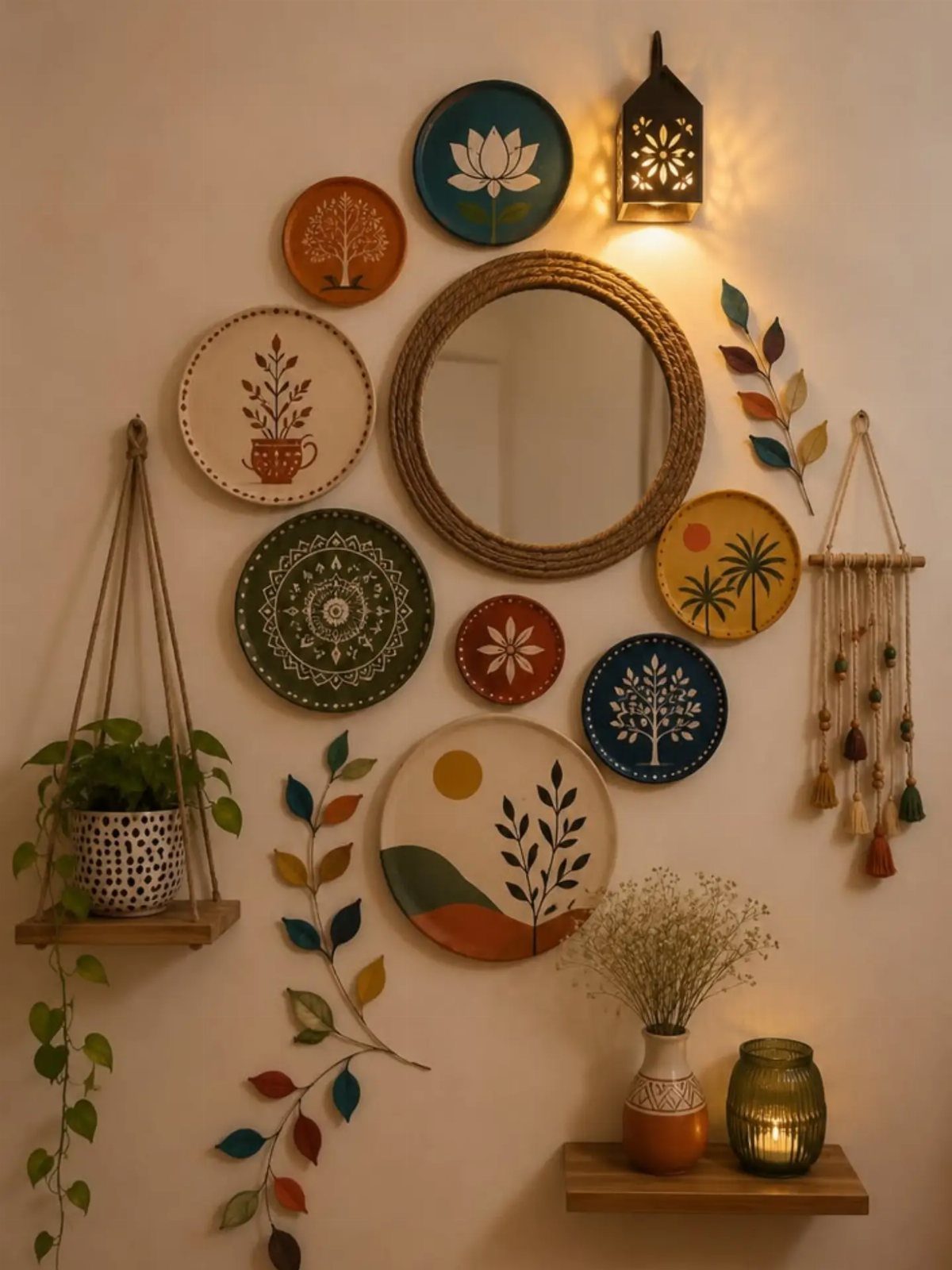
A gallery wall lives or dies by its frame mix, and reclaimed wood frames give even new prints the patina of found objects. Plates and macrame push it toward collected-over-time rather than bought-in-a-day.
I start with one anchor piece, the mirror or a larger frame, and build outward without measuring gaps. Uniform spacing reads as gallery; uneven spacing reads as yours.
Black-and-white photos against warmer frames keep the palette from drifting into chaos.
This is the cheapest entry on the list and the most forgiving of mistakes. A nail hole in the wrong place disappears under the next arrangement.
I’d recommend it for anyone in a rental or still figuring out their taste; nothing here is permanent.

Molding and Paneling: Perfect for molding and paneling projects where bracing or fasteners are traditionally used

Umedol 3D Wall Panels Stick and Peel : Pack of 40, our wall panels for interior wall decor measure 11.8 inches * 11.8 inches, simple and modern style, very suitable for your choice.

3D faux brick wall panels are made of high quality PE foam.Tasteless, non-toxic, formaldehyde free, no release of harmful substances.The surface is waterproof and dustproof, easy to clean.
5. Geometric Wood Slat Accent Wall
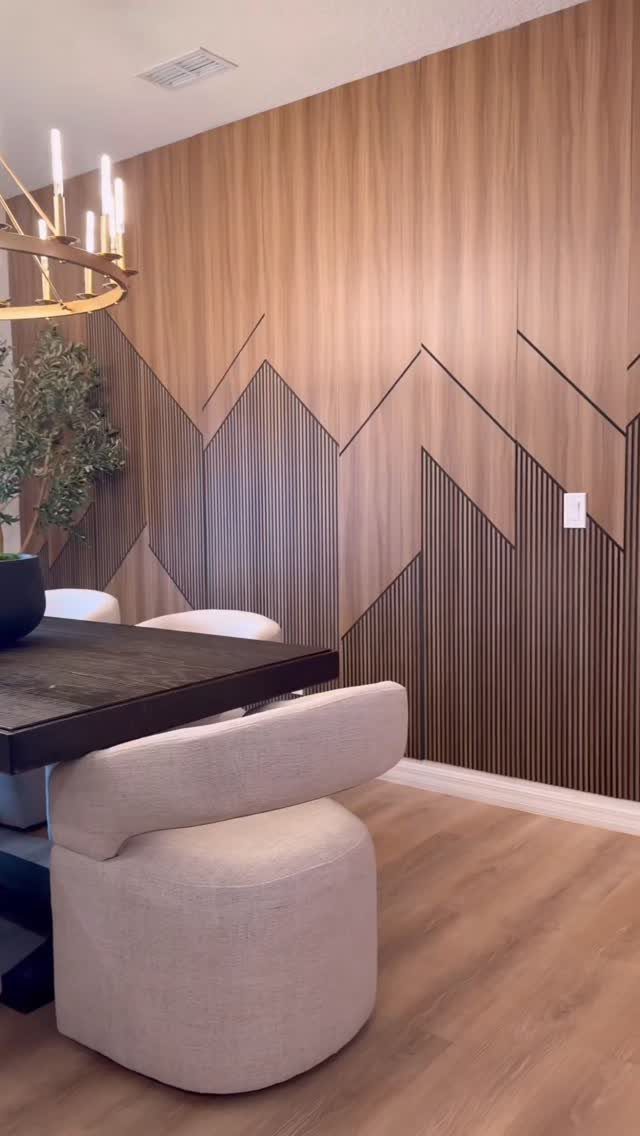
The mountain peak arrangement turns vertical slats into topography, which is cleverer than straight stripes. Slats of varying heights create the silhouette; a jigsaw and a printed template get you there without guessing.
Pine or poplar slats keep the cost down, and a dark stain against lighter walls sharpens the geometry. The dining room setting makes sense, this wants a wall you approach, not one you pass.
Spacing the slats slightly lets the wall color peek through and adds depth that solid panels miss.
This one demands more planning than the others. I’d sketch it full-scale on paper first.
The modern edge suits someone who likes rustic material but not rustic clutter; it reads as designed, not inherited.

Minimizes Brick Dust and Makes Brick Walls Easier to Clean


ALL-IN-ONE BRICK FIREPLACE PAINT KIT: A complete DIY fireplace makeover kit with a multi-tone painting system that keeps the natural texture of your brick. Includes 2 base coat sealers, 3 color layers and a glaze layer, plus a paint tray, painters tape, paint brush, 3 rollers with a roller brush, a texturizing sea sponge and easy step-by-step instructions.
6. Vertical Wood Slat Accent Wall
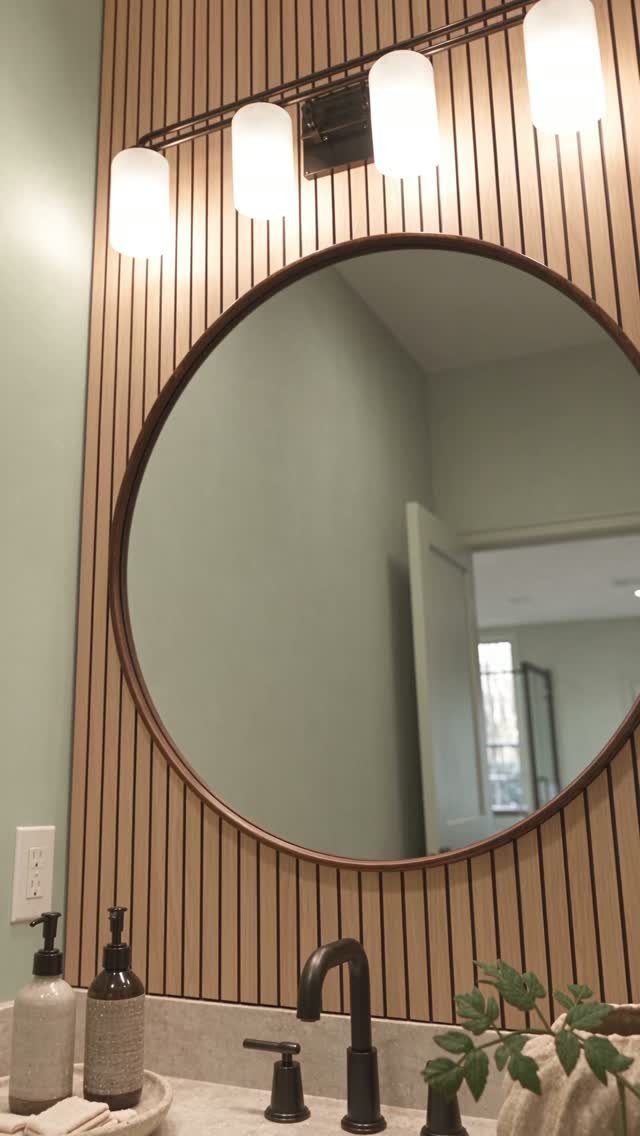
Vertical slats draw the eye up, which matters in a bathroom where every inch of height helps. Natural wood stays quiet enough to live with daily, unlike a busier pattern that would tire fast in a small room.
MDF with a wood veneer keeps this affordable and bathroom-appropriate if you seal it well. Slight spacing between slats creates shadow that shifts through the day; too tight and it reads as solid paneling.
A round mirror breaks the lines, which is why that pairing works.
I’d pick this for a powder room or a guest bath over a primary; the upkeep of dusting between slats adds up. For a renter, vertical peel-and-stick strips exist now, though the real thing still looks it.

🪵 Authentic Reclaimed Barnwood: Made from 100% authentic, real weathered wood, reclaimed in Oklahoma, USA for true rustic character.

DIY a One-of-a-Kind Rustic Look For Your Home Using Our Whitewashed Reclaimed Wall Planks. Each 100% Reclaimed in the U.S. Each Wood Panel is Slightly Unique, Giving You an Authentic Vintage Look For Your Project,

Authentic American Barnwood planks are 100% reclaimed barnwood. It can be used in many ways when decorating your home, office, restaurant, or business.
Benefits of Wood Accent Walls
Wood accent walls do practical work beyond looking right. In an open floor plan, a single plank wall marks where the living room ends and the dining area begins without building anything permanent.
The texture breaks up flat drywall enough to catch sound, which keeps a long room from echoing every conversation.
A coat of paint still lets the grain show through, and you get to choose the exact mood. Charcoal or sage green reads as intentional, not leftover from another era.
This one works best when the room already feels warm but needs something heavier to ground it.

𝐓𝐡𝐢𝐜𝐤 𝐖𝐨𝐨𝐝 𝐂𝐨𝐧𝐭𝐚𝐜𝐭 𝐏𝐚𝐩𝐞𝐫: This wood grain contact paper is made of high quality vinyl, durable, 0.3mm thick, 15.7 inches wide x 118 inches long, covers 13 square feet each roll. Matt and smooth finish, rustic wood grain patterns to add warmth and character to any room, transitional, farmhouse, or modern decor

Pattern Design: Classic timeless colors and textures,real and retro wood grain pattern design,the pattern does not have stitching problems, you can stitch at will
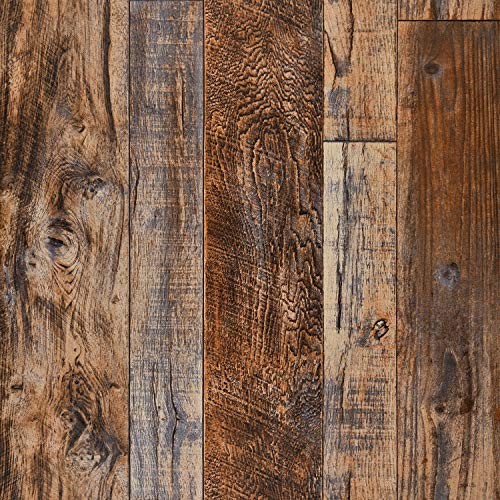
🌴WOOD WALLPAPER FEATURES: Wood contact paper is easy to stick and remove. Realistic vintage wood texture wallpaper. Decorating your rooms or cafes without spending too much time and money.
Sourcing Materials
Salvage yards are my first stop for real reclaimed board. The stock turns over fast, so checking back every few weeks matters more than luck.
Peel-and-stick veneer has gotten good enough to pass at a glance. The price per square foot runs higher than basic boards, though you skip buying tools and the weekend of cutting and nailing.
I’d only commit to it on a wall that’s already smooth; textured drywall defeats the adhesive and the panels end up curling at the edges.

WATER-BASED & LOW ODOR Water-Based Interior Paint – Low-odor formula designed for everyday indoor painting and refresh projects. Creates a comfortable application experience while providing a clean matte finish for interior walls and ceilings.

DURABLE FINISH: Ensures a long-lasting finish that stands the test of time. Ideal for interior walls, ceilings, bedrooms, dining rooms, family rooms, bathrooms, kitchens, hallways and offices.
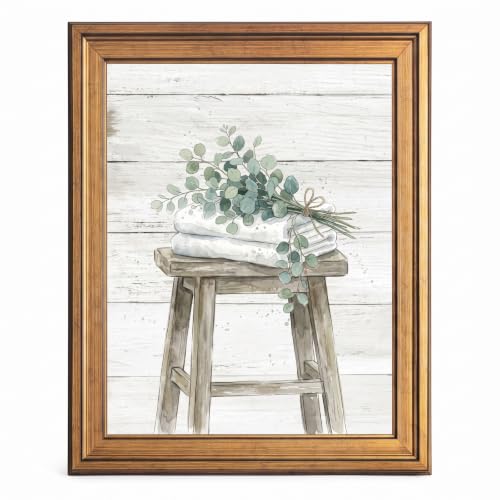
Quality Material: This premium canvas is printed with high-definition technology to capture every detail of the eucalyptus leaves and rustic wooden stool textures.
Installation Tips
A clean wall matters more for peel-and-stick than the panels let on. Wipe down with a degreaser, not just soap, and let it dry overnight.
Any dust or texture left behind becomes a bubble you live with.
Shiplap goes faster than it looks. I’d still check each row before the next goes up, since errors stack.

The 3d brick wall panel is made of high-quality PE foam, tasteless, non-toxic, soft and elastic.

The 3D faux stone wall panel is made of high-quality PE foam, non-toxic, odorless, soft and elastic.

FAUX STONE WALL PANEL FOAM: 3D faux brick wall panels are made of high quality PE foam which is waterproof, dustproof and easy to wipe to remove stains. The thickness is 7mm, soft and flexible
Cost Considerations
The trade is time and tools: no saw, no compressor, no patching nail holes later.
On a full wall that runs wide, the total lands somewhere between a cheap mattress and a decent one, while reclaimed lumber asks its own price in gas, time, and luck.
Reclaimed wood has no fixed price. Salvage yards price by the board or by the batch, and the character you’re paying for, nail holes and stains, is also what makes it harder to work with.
I’d budget extra for blades that hit metal, and for the hour spent pulling old fasteners.

Wall Protection: Designed to cover and shield the top of walls, helping reduce direct rainwater runoff and exposure to the wall surface. the coping cap provides a finished edge while helping keep wall tops cleaner and better protected from the elements

Wall Protection: Designed to cover and shield the top of walls, helping reduce direct rainwater runoff and exposure to the wall surface. the coping cap provides a finished edge while helping keep wall tops cleaner and better protected from the elements
Wall Protection: Designed to cover and shield the top of walls, helping reduce direct rainwater runoff and exposure to the wall surface. the coping cap provides a finished edge while helping keep wall tops cleaner and better protected from the elements
Frequently Asked Questions
Are accent walls outdated in 2026?
No. Accent walls still work when they add real character through texture or material, not just a different paint color.
The ideas that survive are the ones that do something a flat wall can’t: reclaimed wood with actual history, shiplap with shadow lines, slats that shift light through the day.
A bold color alone feels tired; a wall with physical depth does not.
What is the rule for accent walls?
An accent wall should anchor a room where the eye already lands, not force a new focal point. Behind a sofa, at a fireplace, or across from the entry: those are natural stops.
The safest rule is one accent wall per room, and it should be the wall your eye lands on first, usually the one with the bed’s headboard, the fireplace, or the sofa.
Reclaimed wood behind seating, brick framing an opening, vertical slats in a bathroom you approach head-on. Pick the wall that matters, then give it weight.