A rag rug can take a weekend or stretch across several evenings depending on whether you braid, crochet, weave or sew the strips, and how big you want it.
1. Braided Rag Rug
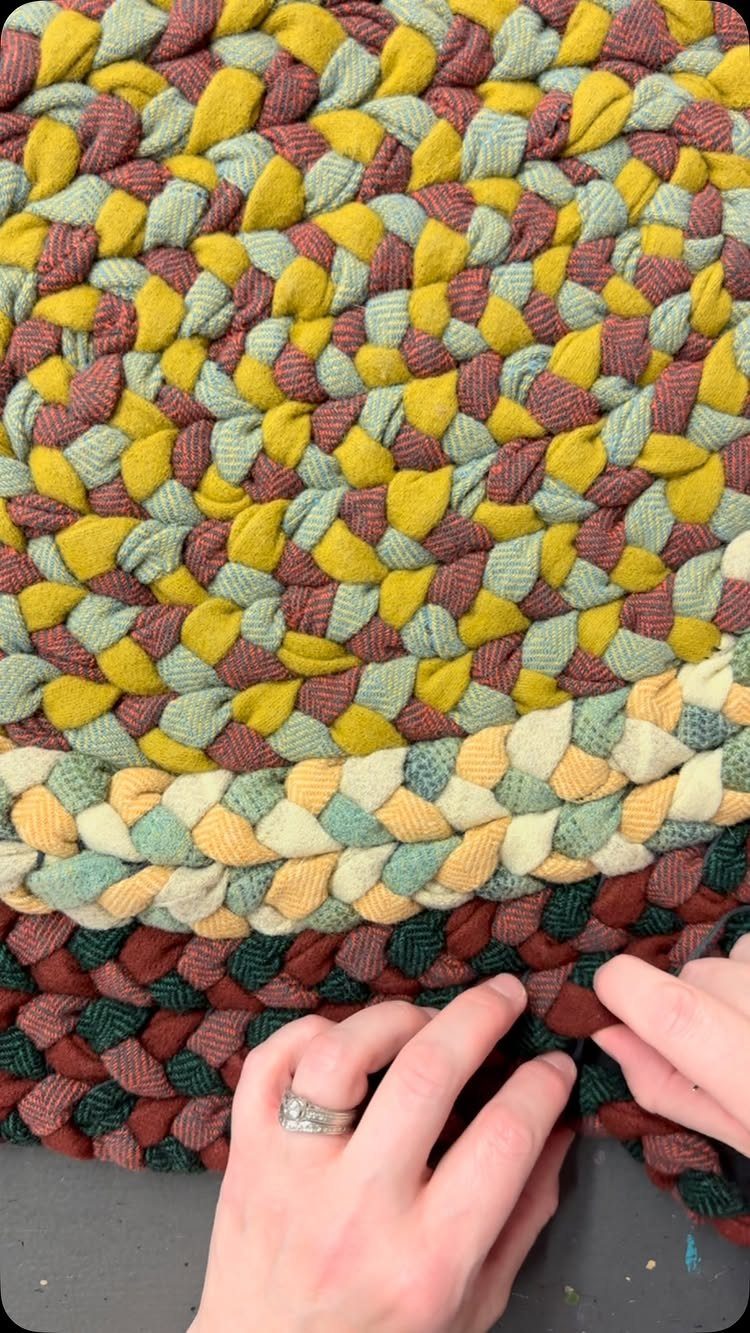
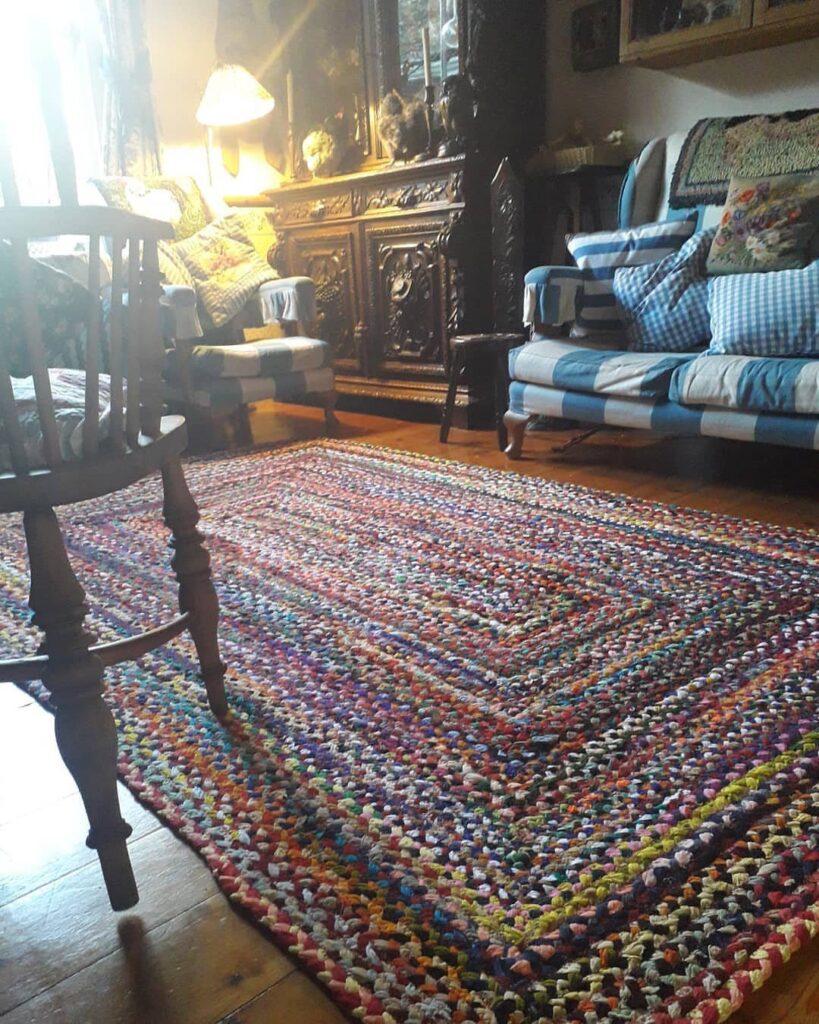
Fabric strips are braided like you would braid hair, then coiled flat and sewn or laced together at the edges to hold the spiral in place.
This technique needs no tools beyond scissors and a needle, and it moves slowly enough for children to help with the braiding.
The width of your strips sets how thick the braid turns out. I cut mine wide enough that the finished braid has body to lie flat without flopping.
You can mix colors in each braid or keep each strand to one color family. Either way, the coil builds outward from the center, so you control the size by stopping when the rug reaches the dimensions you want.
2. Crochet Rag Rug
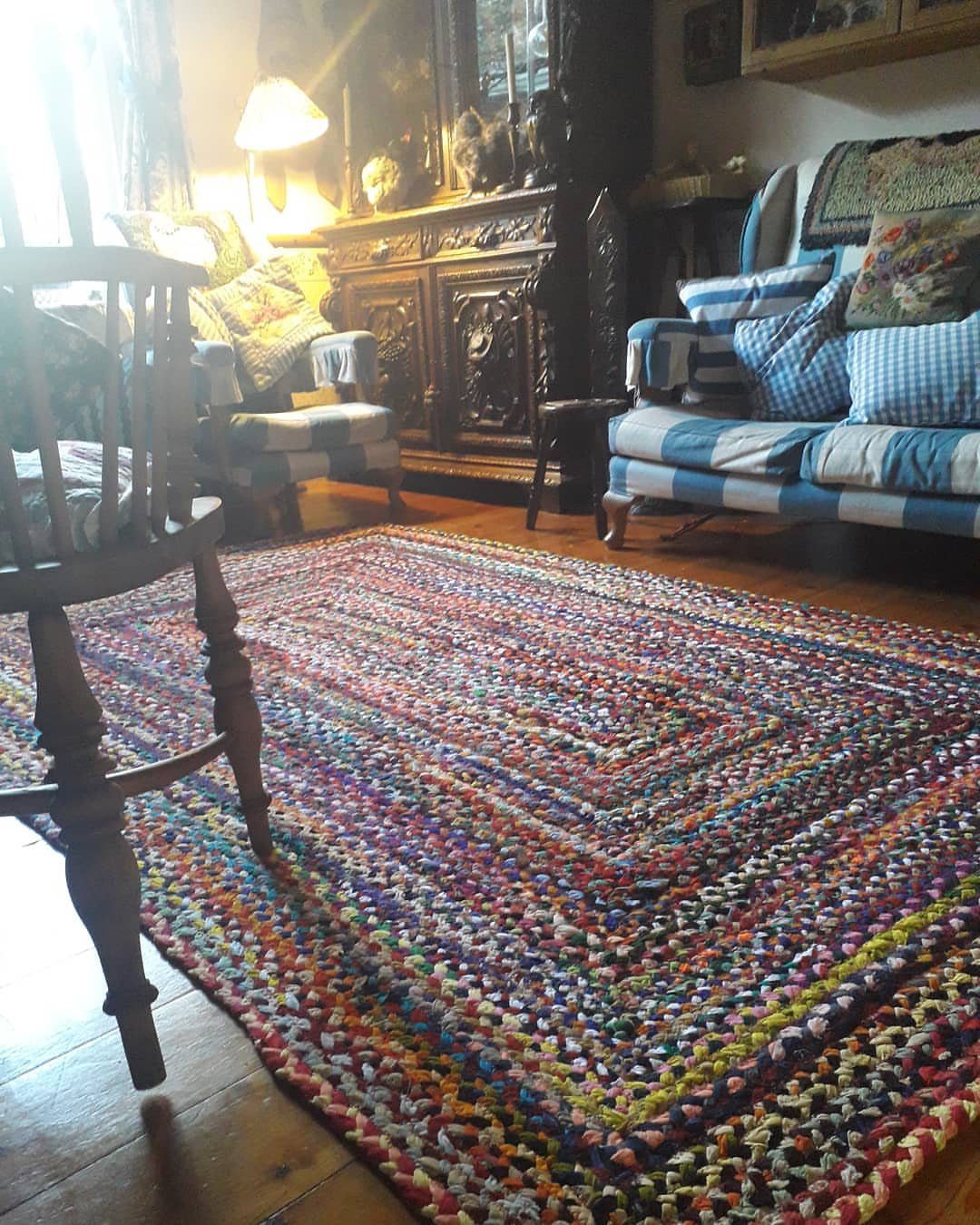
A large crochet hook and fabric strips worked in rows build this rug faster than most yarn projects. You need a hook large enough to grip the fabric without splitting it.
Single crochet stitches work well because they hold the strips close together and the rug stays dense underfoot. The rows grow in whatever shape you chain to start: oval, round, or rectangular.
Fabric weight matters here.
Lightweight cotton sheeting crochets smoothly, but heavy denim bunches and fights the hook. I stick to t-shirts and bed linens for this method.
The finished size depends on how much fabric you have. A twin flat sheet makes a small bath mat; several shirts and a few yards of scrap fabric will get you to a 3 foot round.
3. Woven Rag Rug
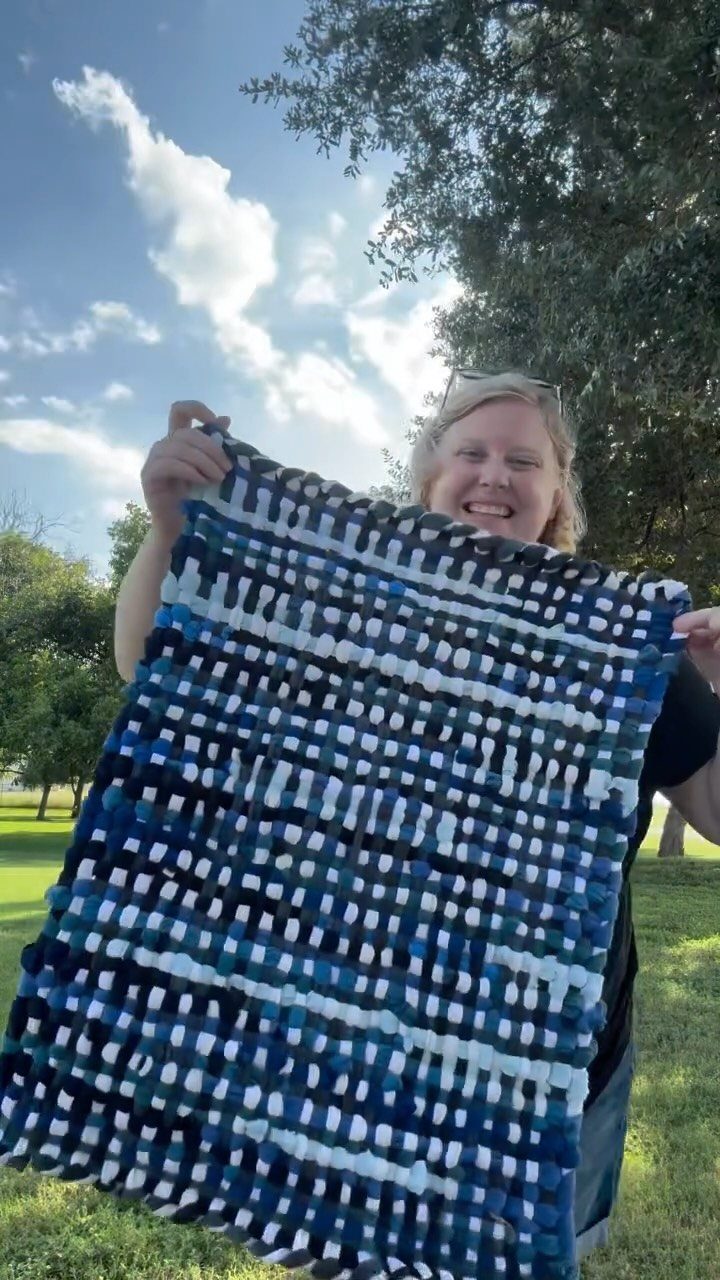
Strips of fabric are woven over and under warp threads stretched on a simple frame or lap loom. The warp can be cotton twine or more fabric strips, and the weaving itself is the same over-under pattern used in basket-making.
A rigid heddle loom speeds this up if you have one, but a homemade frame built from scrap lumber works just as well. The frame needs to be a few inches larger than the rug you want.
The tighter you pack the weft strips as you weave, the denser the rug. I push each new row down with a wide-toothed comb to keep the fabric from buckling.
This method uses fabric efficiently because there is no waste from cutting curves or circles, and the edges stay straight without extra finishing.
4. Amish Knot Rug
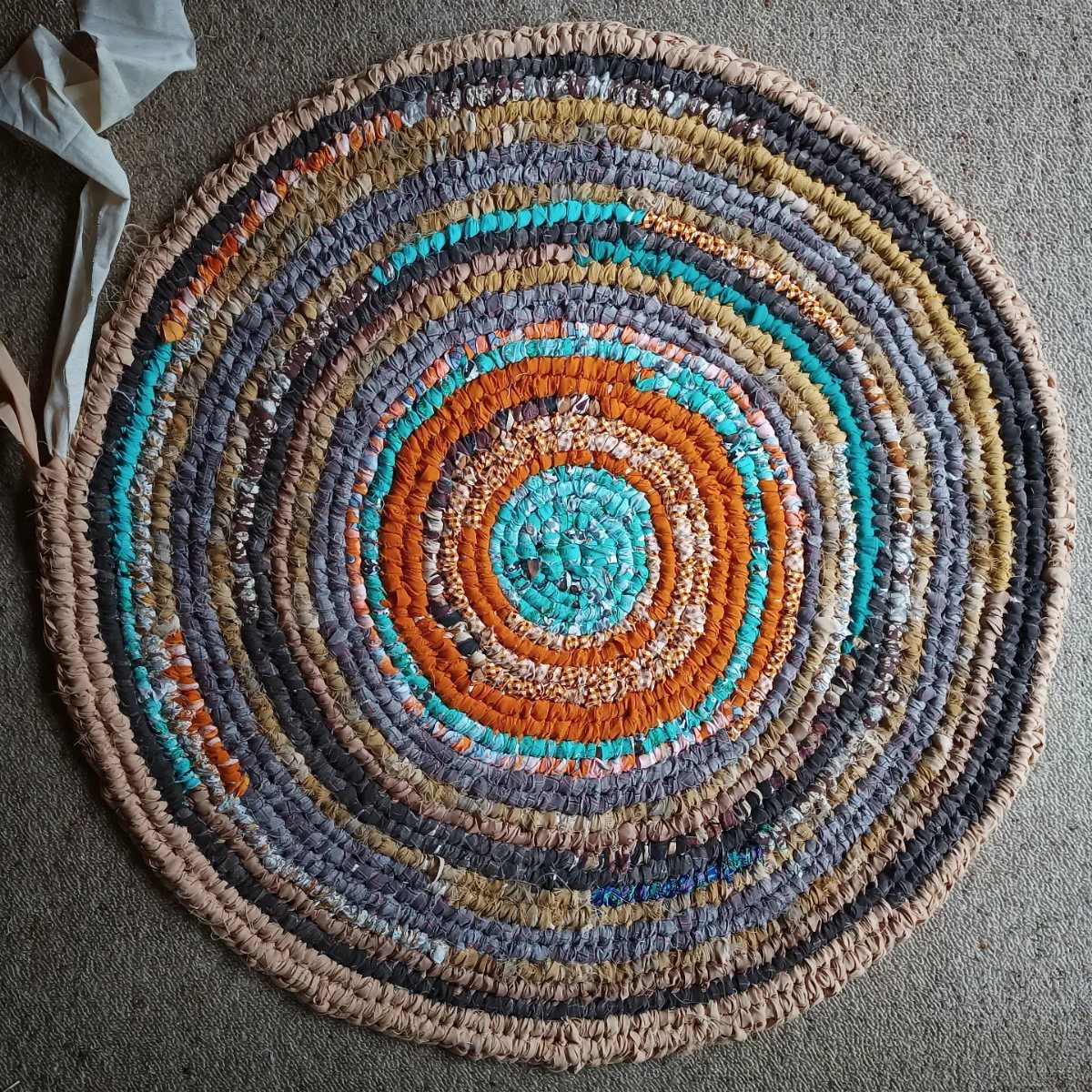
A special knotting technique forms this rug in a spiral, with each fabric strip knotted around the previous round.
The first few circles are the trickiest because the center needs to stay flat and tight, but once you have enough rounds done the pattern holds itself in place.
The knots sit close together, so the rug ends up thick and durable. You can make this without sewing, which means no machine and no needle threading.
Fabric strips about 1 inch wide knot cleanly without too much bulk. Wider strips make the rug grow faster but the knots get harder to tighten evenly.
The round shape works well beside a bed or under a small table, and you stop adding rows when the diameter feels right.
5. Rag Rug Wall Hanging
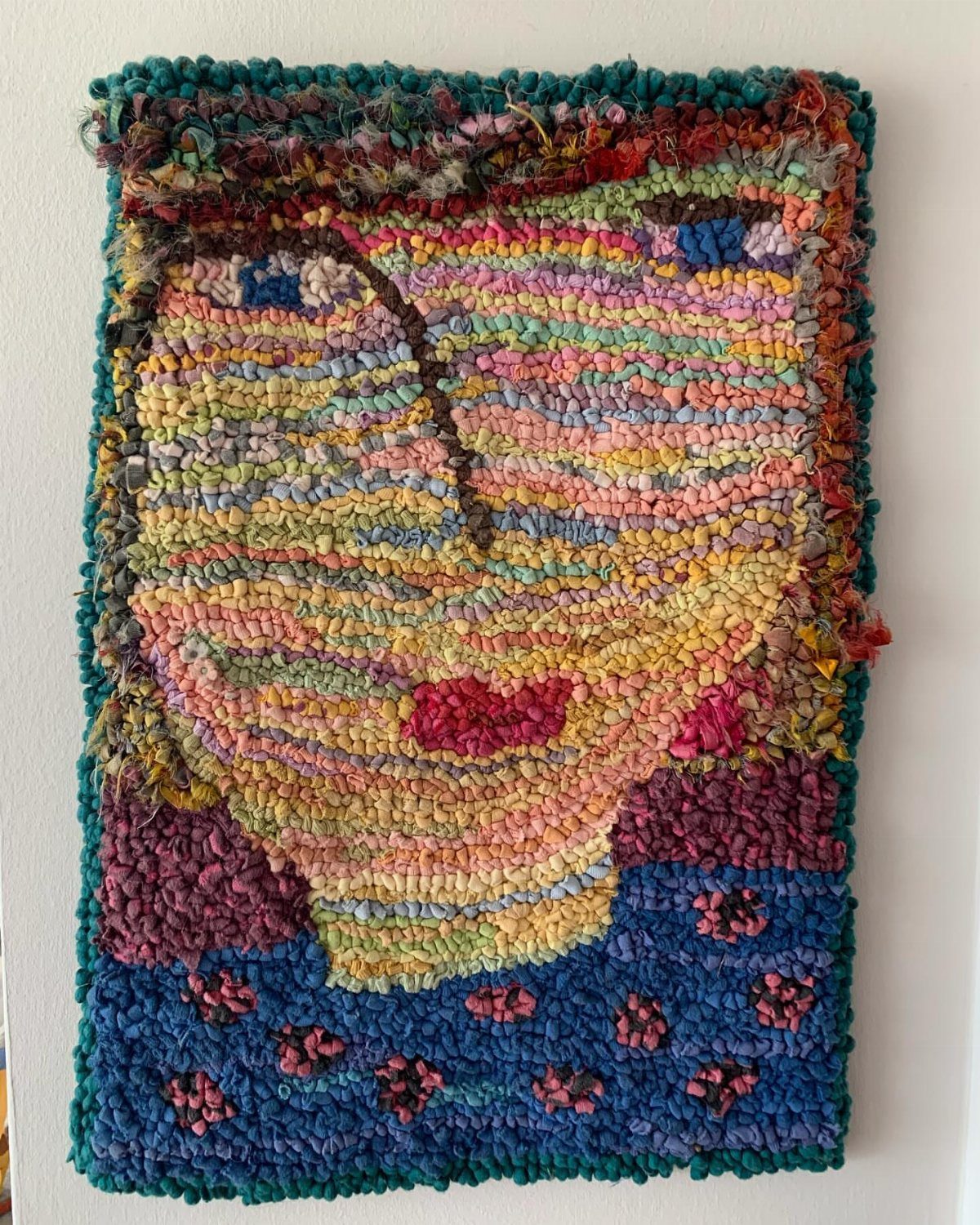
A rug pattern can hang on the wall instead of going on the floor, which saves it from foot traffic and lets you use lighter fabrics that would wear out underfoot.
The woven face in this one makes it more art than utility, but any rag rug technique works as a wall piece if the back is finished cleanly.
Hanging hardware can be as simple as a dowel rod slipped through a fabric sleeve sewn to the back, or small loops attached at the top corners.
The weight of the fabric usually keeps it flat against the wall without stretching.
This suits smaller projects because you can complete a wall hanging in a weekend without needing as much fabric as a floor rug requires. A few shirts and some contrast fabric will cover a wall hanging.
6. Sewn Jelly Roll Rag Rug
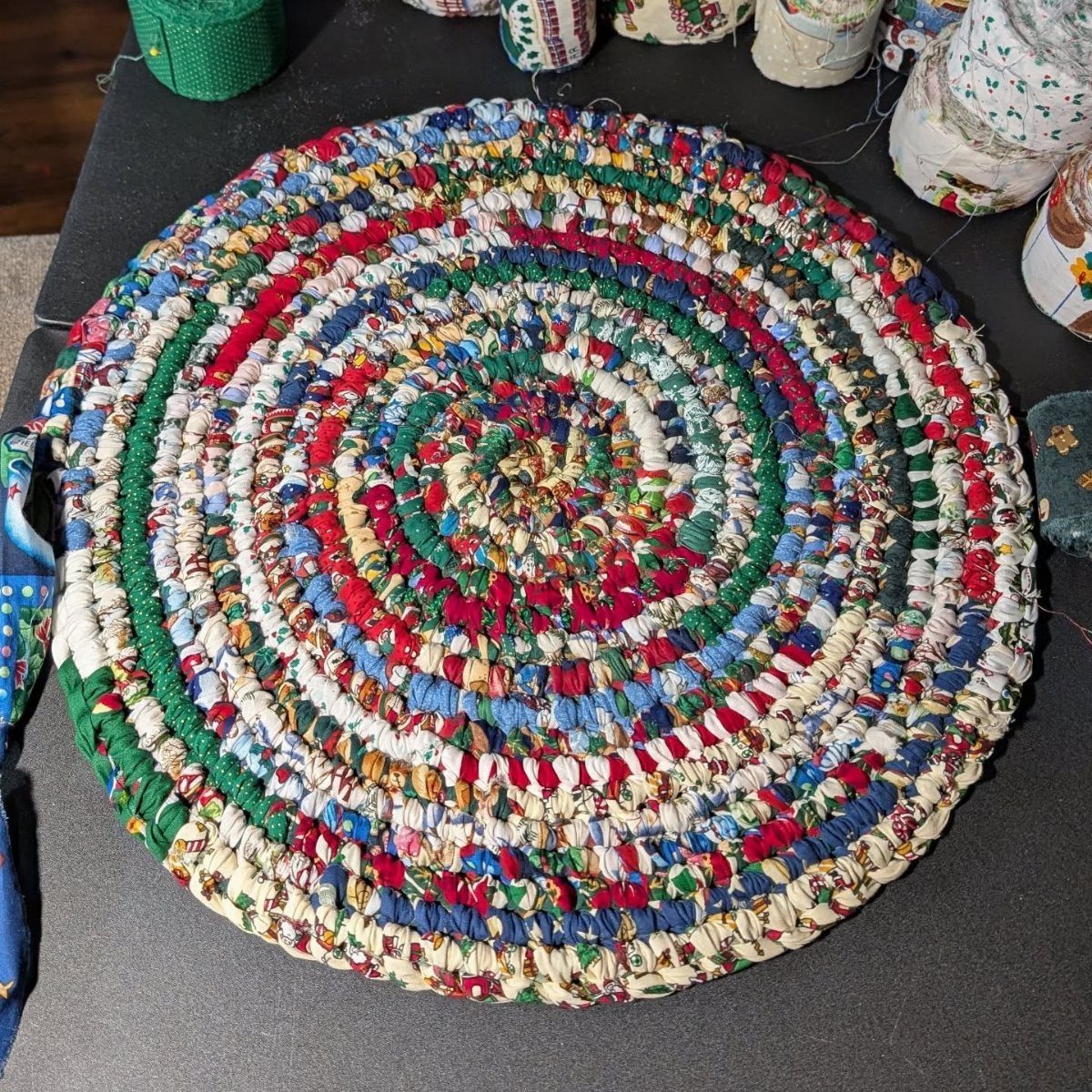
Fabric strips are rolled tightly into a coil, then sewn in a spiral with the stitches catching the edge of each row to the one before it.
The jelly roll name comes from the tight spiral that resembles a rolled cake, and the method works on a sewing machine or with hand stitching if you have the patience.
The coil stays flat as long as you sew close to the previous row and keep tension even. If the rug starts to cup or buckle, you are pulling too tight or leaving gaps between rows.
Fabric width can vary, but strips cut wide enough roll into a coil that is easy to handle and sews smoothly. Thinner strips make a denser rug but take longer to build up the diameter.
This method uses up scraps efficiently because you can add new strips by sewing them end to end as you coil, so there is no set length required to start.
7. Rainbow Strip Rag Rug
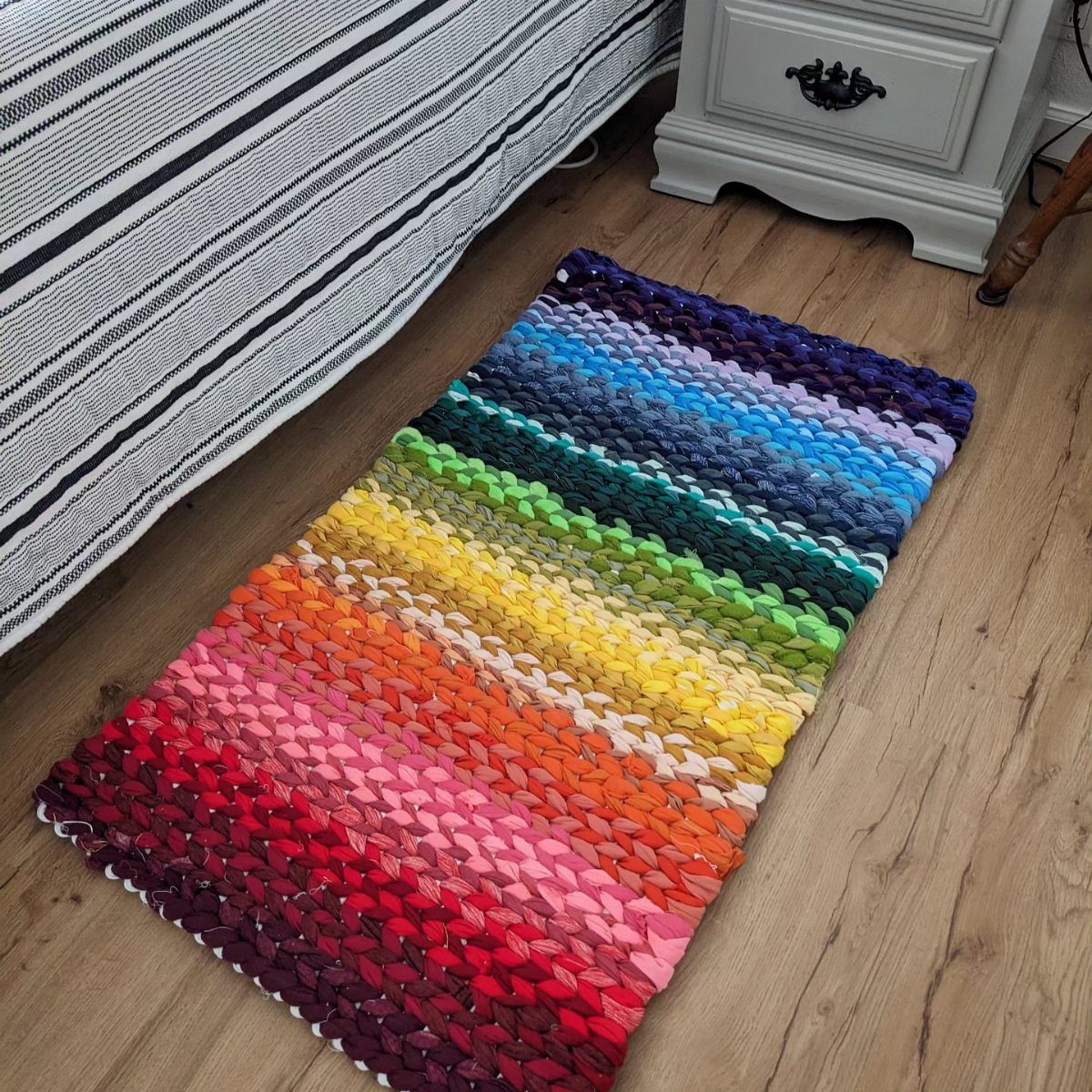
Bright fabric strips in rainbow order run the length of this rectangular rug, and the color sequence gives the pattern without mixing or matching scraps.
You need enough of each color to span the full length, which means planning your fabric collection or dyeing pieces to fill gaps.
Any of the woven or sewn methods work here, but the strips stay in their color order instead of being used at random. The effect reads cleanest when the width of each color band stays consistent.
This suits a room where the rug is the only color accent, and it uses up fabric that might not work together in a scrappier mix.
8. Circular Floral Rag Rug
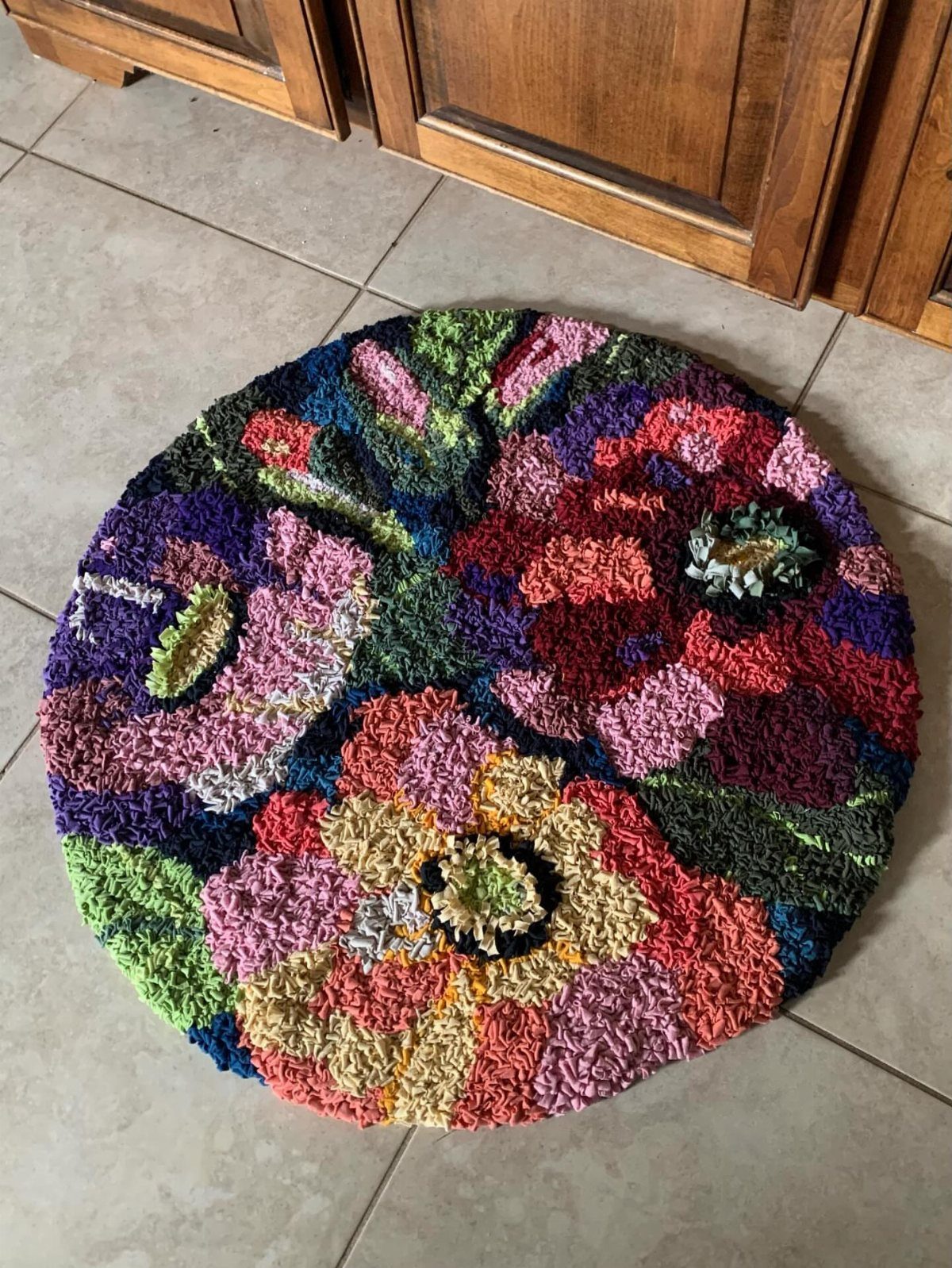
Floral prints cut into strips and coiled or sewn in a round shape give this rug its pattern without needing to arrange individual petals or appliqué pieces.
The prints do the visual work, and the construction can be as simple as a jelly roll spiral or a braided coil.
Mixing several floral fabrics keeps the surface busy enough that wear and stains blend in. I would stick to similar scale prints so no single fabric dominates the circle.
This method lets you use up worn floral sheets or curtains that still have good fabric between the damaged areas.
Choosing and Preparing Fabric
Old clothes and bed linens work best because the fabric is already softened from washing, and you can cut freely without buying anything new.
T-shirts and cotton sheets make rugs soft enough for bare feet, while towels or heavier cotton add thickness that holds up in high-traffic spots.
Mixing fabric types in one rug gives you stripes or a patchwork effect, but stick to weights that are close to each other if you plan to braid. Lightweight cotton next to thick toweling pulls unevenly and the braid twists.
Curtains and worn bedding often have enough good fabric left after you cut around stains or holes, and the yardage adds up faster than piecing together small clothing scraps.
Sort by weight first, then by color if you want control over the pattern.
Keeping Braided Rugs Flat
A braid that lies flat on the table needs to stay flat when you coil it. Hold the braid loosely as you spiral it, and avoid pulling the thread tight when you stitch one row to the next.
Run your needle under the loops along the braid’s edge rather than piercing the cloth. Piercing the fabric pulls it and distorts the shape, and the stitches show more.
Adding new fabric to more than one strand at the same spot creates a thick lump that the coil has to bend around, and the rug will ripple at that point.
Stagger the joins so each strand gets a new piece at a different place in the braid.
Keep strips short enough that they move easily through your hands while braiding.
Using Color and Fabric Variety
Sorting fabrics by color before you cut lets you build stripes, keep each braid to one hue, or mix randomly depending on how controlled the finished pattern should be.
Checks and prints read as texture once the fabric is cut into strips, so they work in the same rug as solids without clashing.
Switching fabric types instead of colors gives you textural stripes. A few rounds of t-shirt cotton followed by a round of flannel or toweling changes the surface without changing the palette.
A bohemian mix works when you use every color and print without sorting, and the variety keeps any one fabric from standing out.
Frequently Asked Questions
How to make a handmade rug?
Cut fabric into strips about 1 inch wide, then braid them like hair and coil the braid flat in a spiral, stitching each row to the previous one as you go.
Keep the stitches loose and stagger where you join new fabric so the rug lies flat.
One twin sheet yields enough fabric for a small bathroom mat, while a larger round rug takes closer to half a dozen old tees plus whatever cotton yardage you have in the scrap bin.
What is the best type of loom for weaving rag rugs?
If you have a rigid heddle loom, it cuts hours off the project, but a simple wood frame made from 2x2s does the same job for free.
Build the frame 4 to 6 inches wider and taller than your finished rug, then run your warp strings down the length at 1 inch intervals. Either option lets you weave fabric strips over and under in the same pattern used for basket-making.