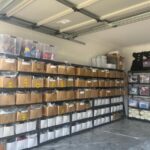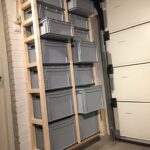

Garage bin storage is a system that uses containers and shelving to keep tools, seasonal items, and equipment organized along walls, overhead, or on freestanding racks.
Most people cut about a third of what they planned to store once they sort through what they actually use, which changes how much shelving or floor space the setup needs.
Wall-mounted wire systems like Elfa Garage+ and overhead racks claim vertical space without blocking the floor.
1. What Needs Storing and How Much Space You Have
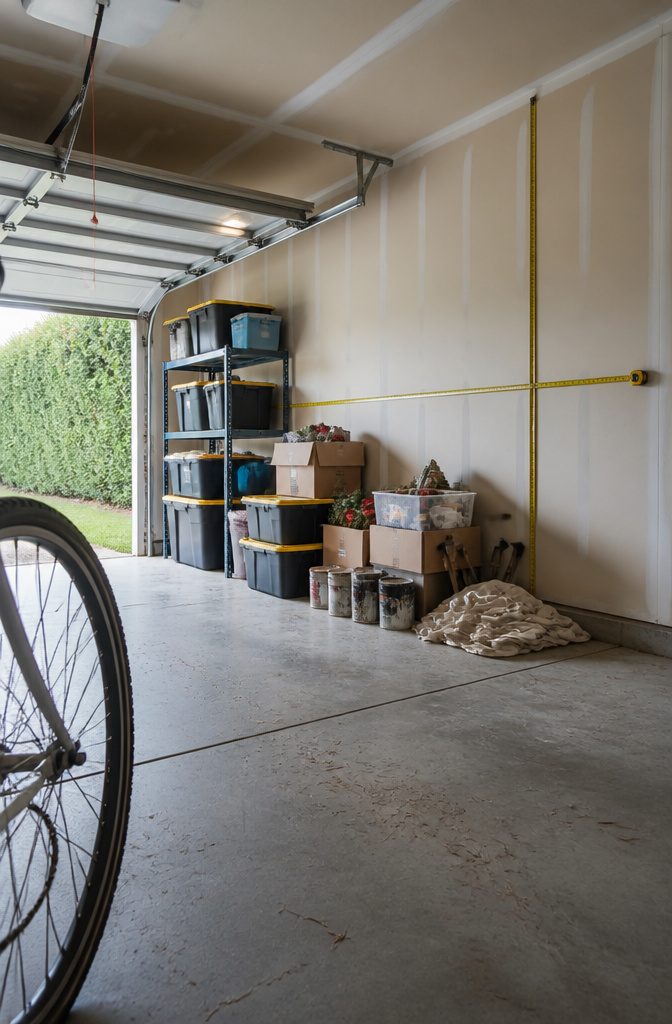
The belongings themselves decide the system. Before you touch a single shelf or bin, you need to know what you’re keeping and what volume it actually takes up.
Decluttering is the real first step, and most people cut about a third of what they thought they’d store once they pull it all out and sort it.
Seasonal decorations that haven’t left their boxes in years, duplicate tools, dried-up paint cans, these leave the garage before you design anything around them.
Measure the wall runs and ceiling height next, because vertical space is where garage storage wins or loses.
A ten-foot wall with eight-foot clearance holds twice what a cramped seven-foot corner does, and that shapes whether you go with floor bins, wall-mounted racks, or overhead platforms.
Budget matters here too, since a full wall of steel shelving runs $200 to $400 depending on depth and load rating, while stackable bins alone can stay under $100 if floor space allows it.
2. Group Belongings Into Zones by Category and Use
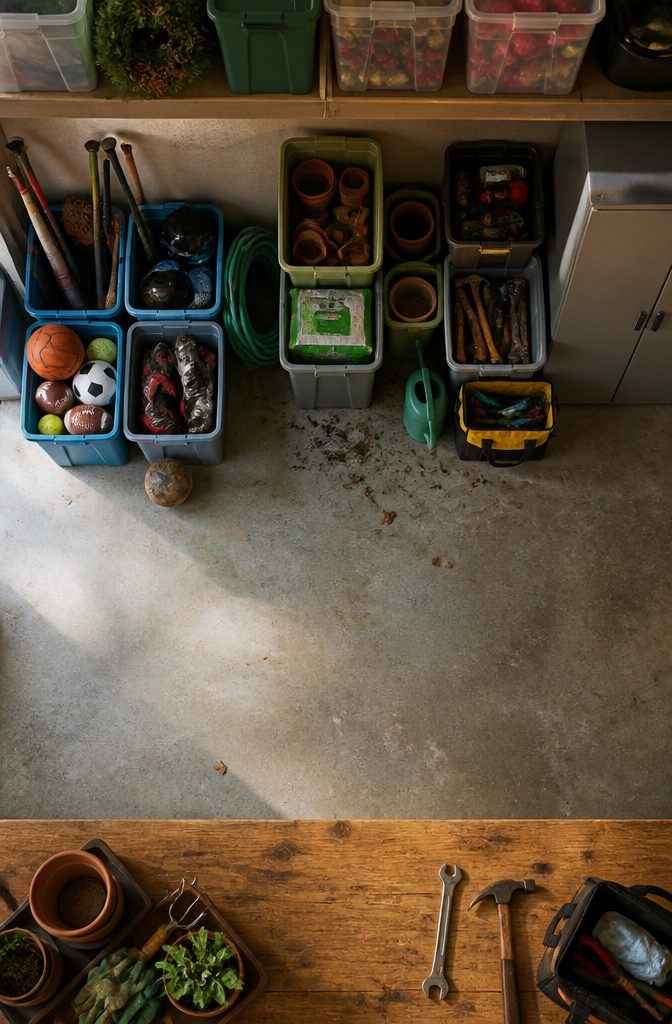
I start by grouping similar items together so they share the same zone. Sports gear stays in one area, gardening supplies in another, tools in a third.
The logic behind this is speed: when everything related to a single task lives in the same few feet of wall or floor, you grab what you need in one trip instead of circling the garage three times.
Frequency matters as much as category.
Items I reach for weekly belong at eye level or lower, visible without moving anything else. Open bins work well here because the contents stay in view and you can pull one thing without unpacking the whole stack.
Seasonal belongings, like holiday decorations, go on higher shelves. You might touch them twice a year, so giving them prime real estate wastes the space you actually use.
The Container Store recommends creating storage zones based on both category and how often you use what is inside.
I follow that because it turns the garage into a system rather than a pile. Each zone has a purpose, and that purpose decides where it sits and how accessible it needs to be.
3. Choose Storage Types Suited to the Items and Space
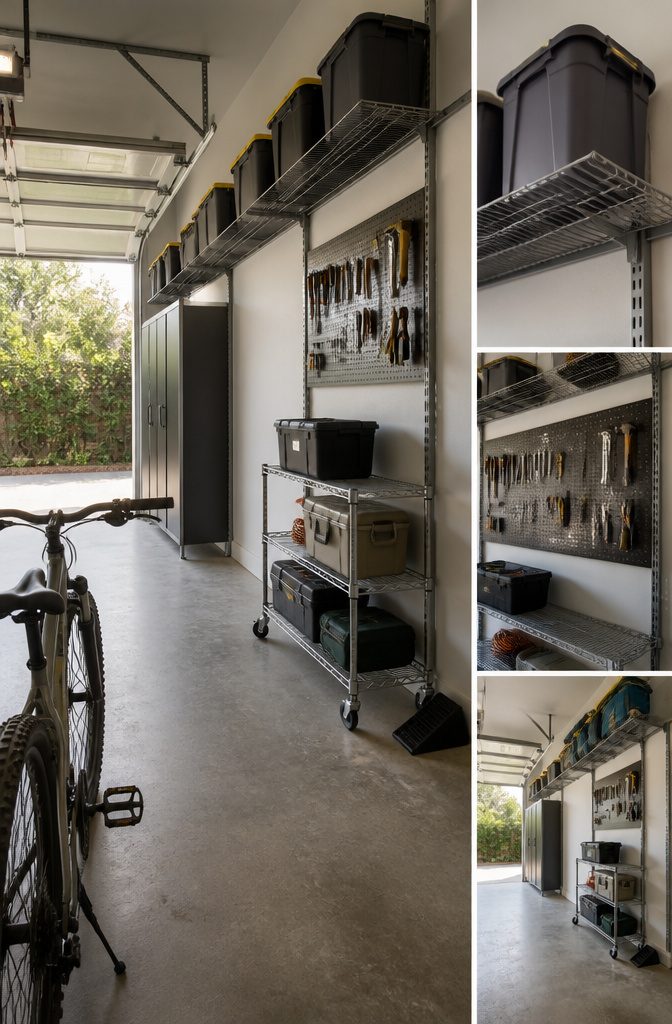
Storage breaks down into a few families that work differently in real life.
Wall-mounted wire shelving grabs vertical space without eating floor room, and the Elfa Garage+ system offers that option in a matte gray finish you can tailor to the dimensions you measured.
Freestanding shelves and rolling shelves give you flexibility if the walls are already spoken for or you rent and can’t drill.
InterMetro and Metro Commercial units accept casters, turning fixed storage into something you can wheel out when you need access behind it.
Overhead racks take the ceiling zone most people ignore, which works well for bins you open twice a year. Cabinets close off the mess if your garage faces the street or doubles as a workspace you want to look finished.
For tools, pegboards let you see everything at a glance, tool chests keep the expensive kit secure, and hooks or wall racks hold the long-handled things that tip bins over when you try to cram them in.
Pick based on what you stored in step one and how often your hand needs to reach it.
4. Place Items for Access Based on How Often You Reach for Them
Place Items for Access Based on How Often You Reach for Them
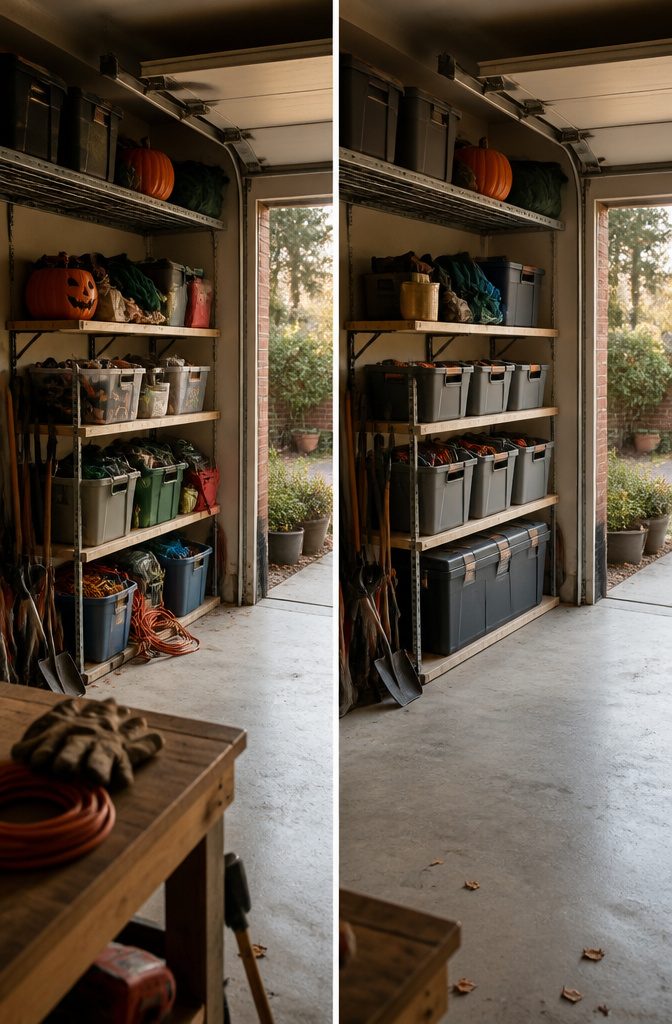
The bin you grabbed three times this week belongs at eye level or lower. The inflatable pool float you touched once in July can live up high.
Frequently used items sit where you can see them and reach them without a step stool, while seasonal decorations and holiday bins occupy higher shelves or the back corners of overhead racks.
I think about this every time I reorganize a garage: the work gloves and extension cords that move daily deserve prime real estate, and pushing them behind boxes of Christmas lights just to fill space low down guarantees you’ll be climbing and shifting things every weekend.
Open bins help here. You can spot what you need at a glance instead of pulling down three identical totes to find the one with the gardening tools.
The higher shelves and far reaches are for what cycles in once or twice a year. That’s where the pumpkin decor and the camping gear that only sees summer weekends belong, not the drill bits you use most Saturdays.
5. Label Containers and Use Dividers to Keep Small Items Separate
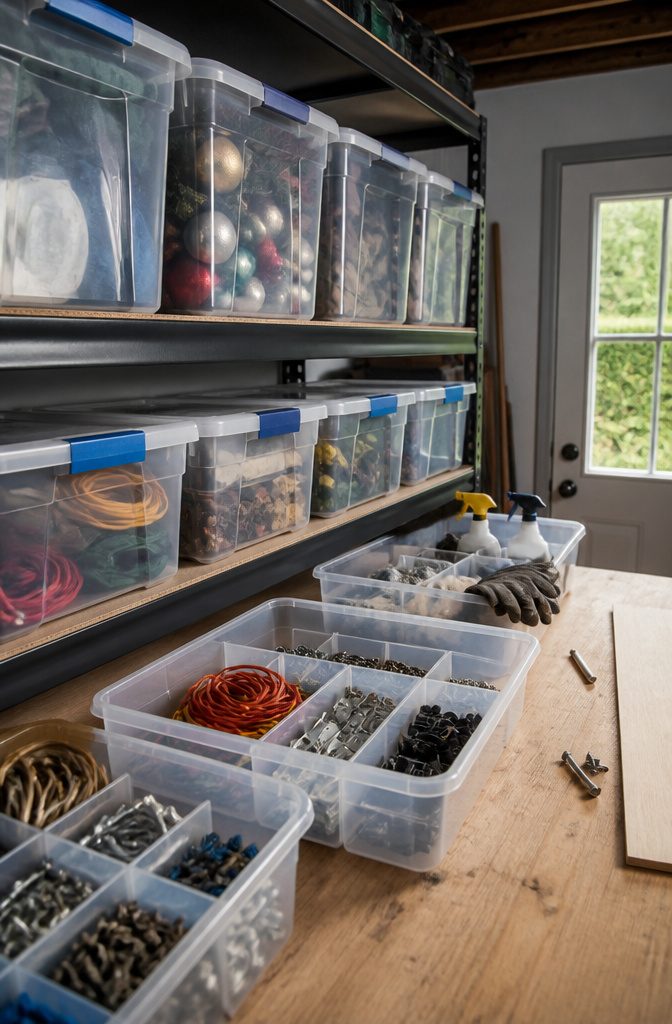
Label every storage tote, even clear ones, so you can identify what’s inside without pulling the whole bin down.
A clear or translucent container lets you see contents at a glance, but a label still saves time when you’re scanning a shelf full of similar-looking totes.
I write category and a short list on painter’s tape and stick it to the front lip of each bin.
For small items that tend to migrate, add interior dividers to keep hardware, extension cords, and fasteners from mixing into a single jumble. You can buy plastic divider trays or cut your own from scrap plywood.
Open bins work better for things you reach for weekly: work gloves, rags, spray bottles. Protective totes with lids belong on higher shelves and hold seasonal decorations or camping gear you only pull out a few times a year.
You want to open a bin and see what you need in two seconds, not dig through three layers of unrelated items.
DIY Installation or Professional Help for Larger Projects
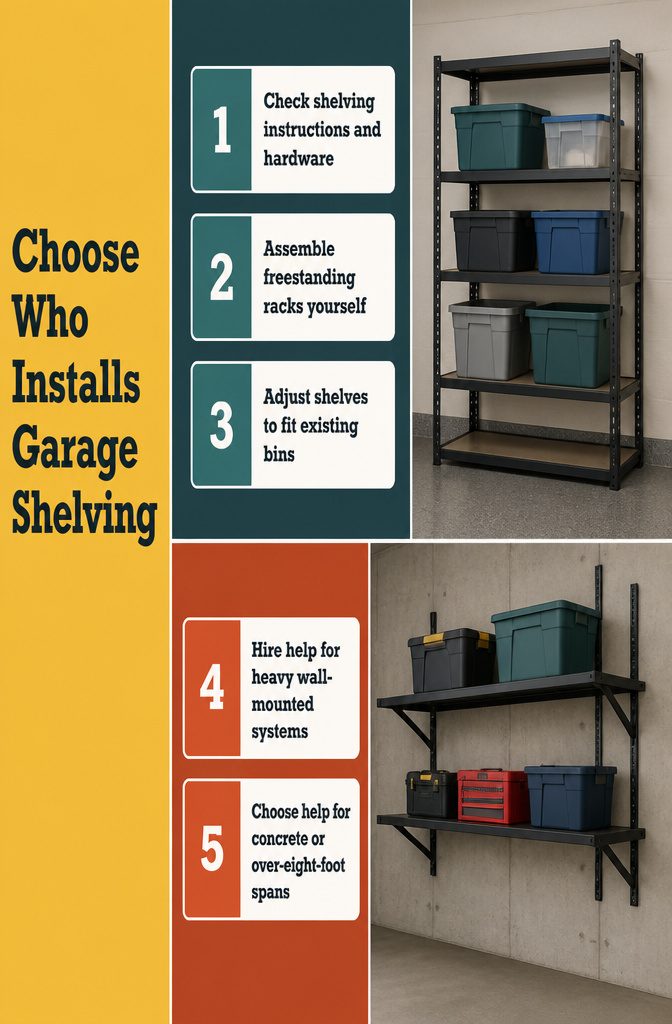
Most shelving units designed for garage bin storage arrive with clear instructions and all the hardware needed for a homeowner to handle the setup in an afternoon.
I like that this keeps costs down and gives you control over exactly how things get placed, especially when the garage layout has quirks that only you know.
Basic metal shelving and freestanding rack systems are straightforward: the posts snap or bolt together, and you can adjust shelf height as you go to fit the bins you already own.
Professional installation becomes worth considering when the project involves wall-mounted heavy-duty systems, especially those anchored into concrete or spanning more than eight feet.
A contractor can locate studs or use masonry anchors correctly, which matters when you’re stacking deep bins full of tools or seasonal gear.
If you prefer not to handle the assembly yourself, most big-box stores and specialty storage companies offer installation services at an hourly rate or as an add-on to the purchase.
For step-by-step guidance, the linked instructions page on this site walks through assembly details and mounting options for common garage shelving types.
Clean Shelving With a Damp Cloth as Needed
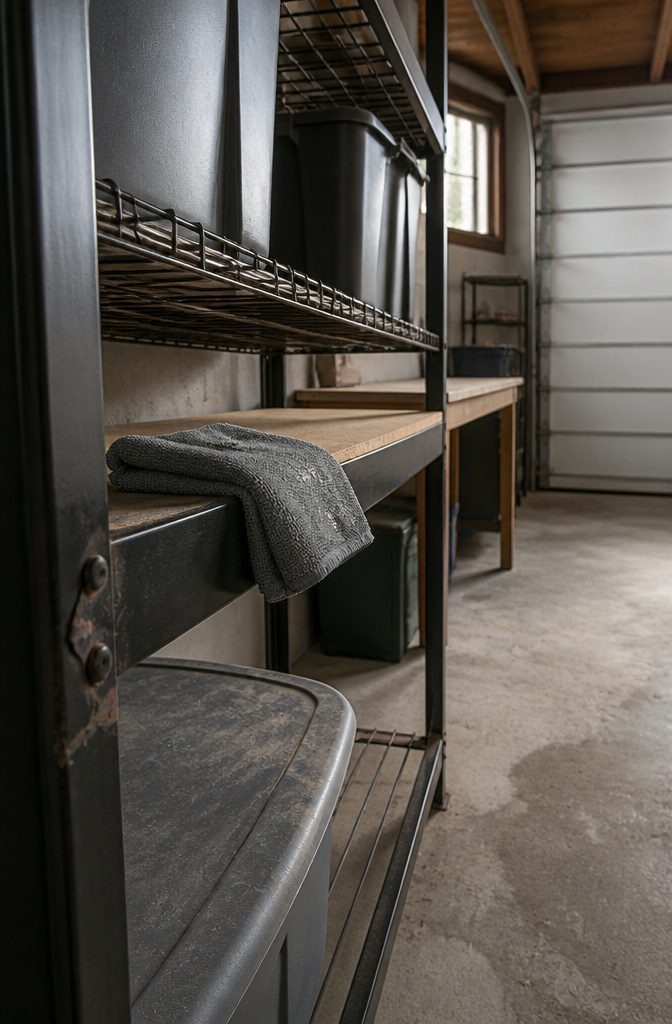
Wiping down your shelves with a damp cloth to clear away dust and grime handles most routine cleaning, though the specifics shift with the material.
Metal shelving tolerates water better than particle board or certain finishes, and wire racks dry faster than solid surfaces.
I check the product details before I soak anything down, since some coatings or laminates can lift or stain if too much moisture sits on them.
When care instructions aren’t printed on the unit itself, customer service lines usually have them filed by model.
A quick wipe every few months keeps buildup from hardening into something that needs a scraper, and it catches rust or finish wear before it spreads.
The cloth should be damp, not dripping, so water doesn’t pool in joints or seams where it can’t evaporate quickly.
Frequently Asked Questions
What types of garage storage shelves are available?
Wall-mounted wire shelving, freestanding shelves, rolling shelves, overhead storage racks, and garage cabinets cover most garage bin storage needs.
Wall-mounted options like the Elfa Garage+ system grab vertical space without using floor area, while freestanding and rolling units work well if you rent or need flexibility.
Overhead racks handle seasonal bins you open twice a year, and cabinets close off the mess if the garage faces the street.
What kinds of tool organizers are available for garages?
Heavy-duty shelves and tool chests hold bulky power tools, hooks and wall racks store long-handled items like shovels and rakes, and pegboards keep smaller hand tools visible and within reach.
Tool chests keep expensive kits secure, while pegboards let you see everything at a glance above a workbench.
How can I determine the best storage solution for my garage?
Start by sorting what you’re keeping and measuring your wall runs and ceiling height, since vertical space decides whether you need floor bins, wall-mounted racks, or overhead platforms.
Declutter first; most people cut about a third of what they thought they’d store once they pull it all out. Budget shapes the choice too, with steel shelving running $200 to $400 and stackable bins staying under $100 if floor space allows.
Can I install garage shelving myself, or do I need professional help?
Most shelving units arrive with clear instructions and hardware for a homeowner to handle setup in an afternoon, which keeps costs down and lets you control placement.
Professional installation becomes worth considering when the project involves wall-mounted heavy-duty systems anchored into concrete or spanning more than 8 feet, especially since a contractor can locate studs or use masonry anchors correctly.
Where can I find assembly instructions for garage storage products?
The linked instructions page on this site walks through assembly details and mounting options for common garage shelving types. Most units designed for garage bin storage include all hardware and clear instructions for DIY setup.
Are garage organization systems customizable?
Elfa Garage+ wall shelving can be tailored to your garage dimensions and combined from adjustable shelving, modular cabinets, pegboards, and other components.
This lets you adjust shelf height as you go to fit the bins you already own and place storage exactly where your layout needs it.
What are the best tips for organizing a garage?
Declutter before you design anything around your belongings, then group similar items into zones so sports gear, gardening supplies, and tools each occupy their own area.
Place frequently used items at eye level or lower in open bins, put seasonal decorations on higher shelves, and label every container even if it’s clear.
Add interior dividers to keep small items like hardware and extension cords from mixing into a single jumble.
How do I clean and maintain garage shelving?
Wiping down your shelves with a damp cloth to clear away dust and grime handles most routine cleaning, though metal shelving tolerates water better than particle board or certain finishes.
The cloth should be damp, not dripping, so water doesn’t pool in joints or seams where it can’t evaporate quickly.
A quick wipe every few months keeps buildup from hardening into something that needs a scraper and catches rust or finish wear before it spreads.