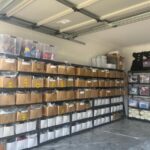
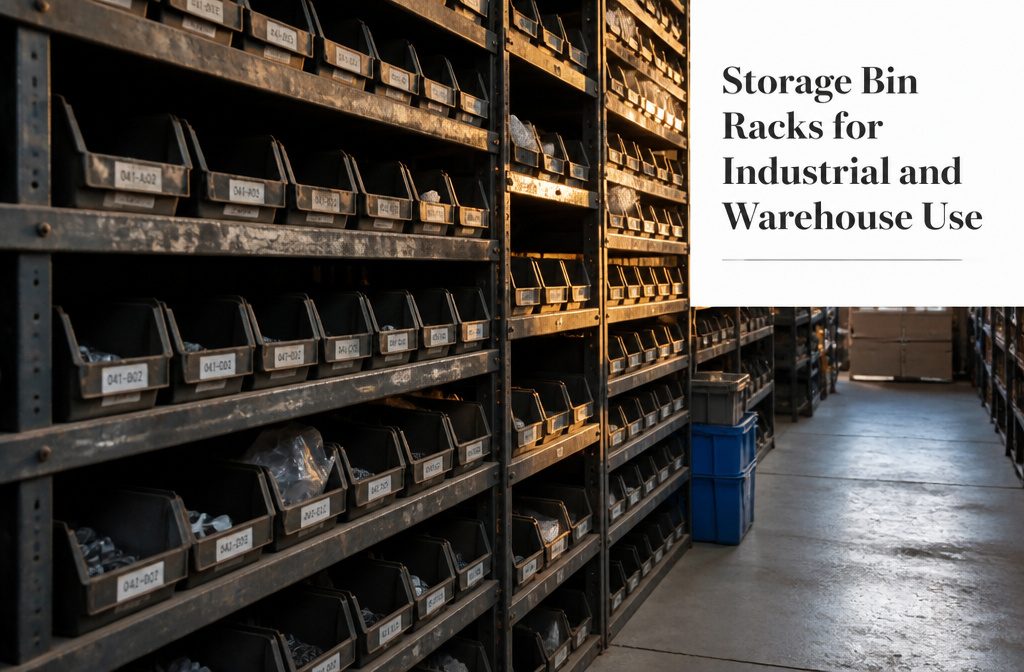
Storage bin racks are shelving systems designed to hold small plastic or metal bins, each containing a different part, tool, or supply.
Steel units handle more weight than polypropylene, but plastic shelving resists corrosion in humid environments where metal would rust.
Cold-rolled steel enclosed bin shelving runs as narrow as 34 inches wide while packing 15 shelves into a 68⅜-inch height, fitting tight aisles without sacrificing vertical capacity.
What Storage Bin Racks Are For
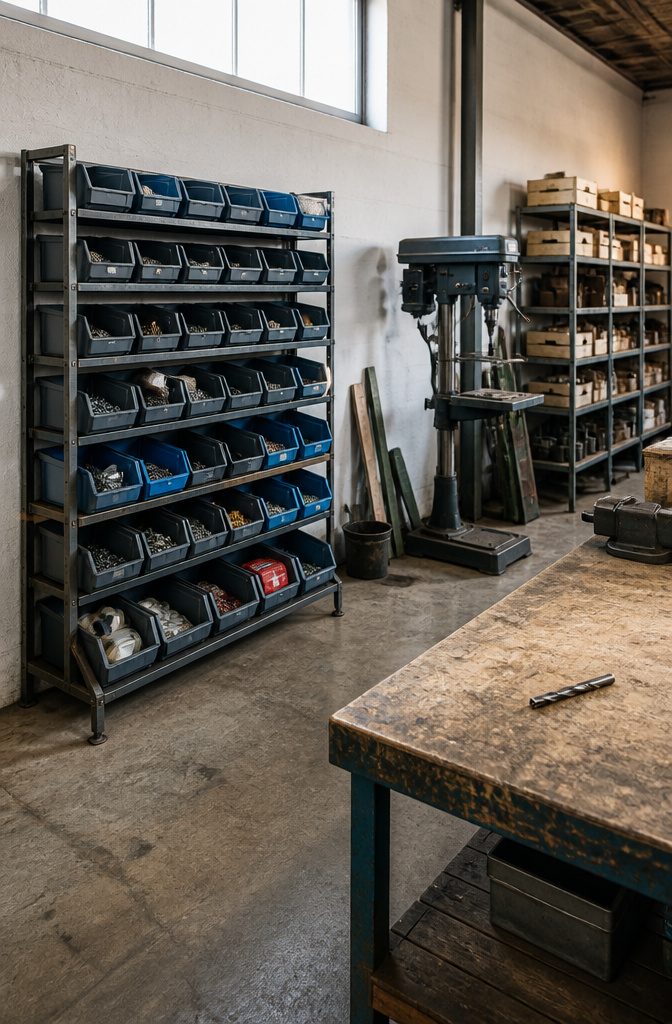
Storage bin racks organize small parts, tools, and supplies in workshops, warehouses, and offices by giving each category a visible, contained place. The system keeps fasteners separate from electrical components, labels from packing tape, first-aid stock from printer cartridges.
Without designated spots, items migrate across benches and into drawers where they slow down the next task and create trip hazards when someone pulls the wrong box.
The racks make inventory audits faster. You can see at a glance when bins run low, which cuts emergency orders and the downtime that follows.
Metal or plastic construction handles everything from hand tools to medical supplies, and the shelving adjusts to fit bins of different depths.
Mechanics use them for parts sorted by size, schools for textbooks by grade level, medical facilities for sterile supplies that need to stay separated and traceable.
Cost savings come from two directions. Fewer lost parts means fewer reorders, and faster retrieval means less labor spent hunting.
A workshop that used to burn fifteen minutes per shift looking for the right drill bit gets that time back when the bit lives in a labeled bin on a rack near the drill press.
Steel Bin Shelving
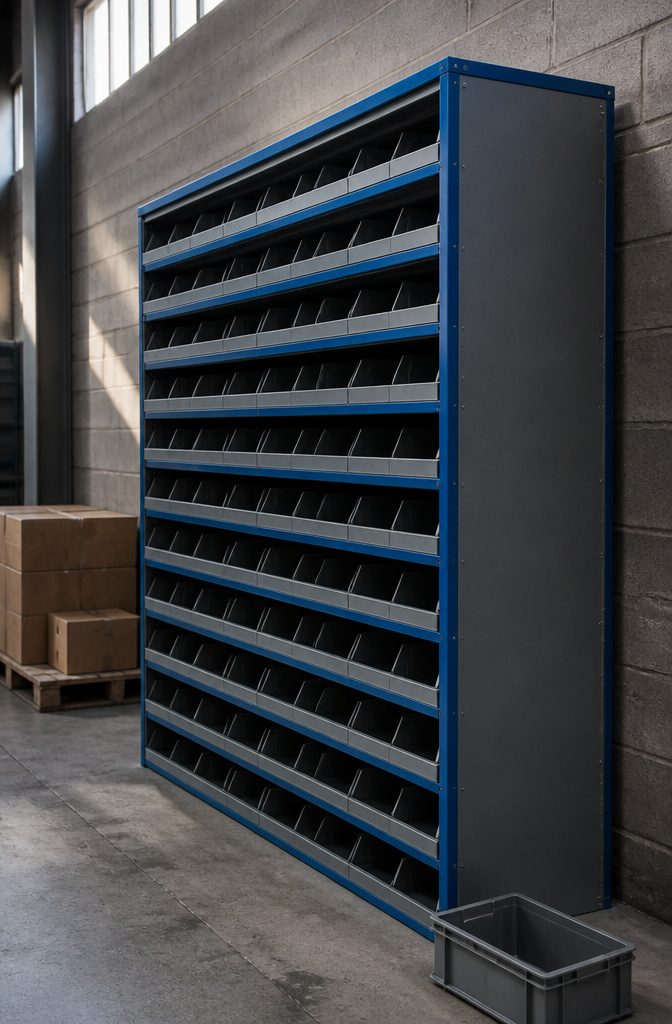
Steel construction runs through most of these systems because it handles weight and repetition without flexing.
Cold-rolled steel enclosed bin shelving comes in configurations like 12¼ inches deep by 68⅜ inches high by 34 inches wide with 15 shelves, which packs a lot of vertical capacity into a narrow footprint.
Gray and blue powder-coated steel units in 36 by 39 by 12 inches with seven shelves are typical for medium-density storage where you need visibility and access from one side.
Steel bench pick racks sit at waist height and let someone pull parts without reaching overhead. Mobile pick racks put the same steel shelving on casters so the whole unit rolls to wherever assembly or packing happens that day.
Double-sided formats open from both faces, which works when aisles run between rows and you want every linear foot carrying bins on two planes.
I prefer enclosed steel for anything small enough to fall through, and open wire or perforated steel when airflow or visibility matters more than containment.
Plastic and Polypropylene Bin Shelving
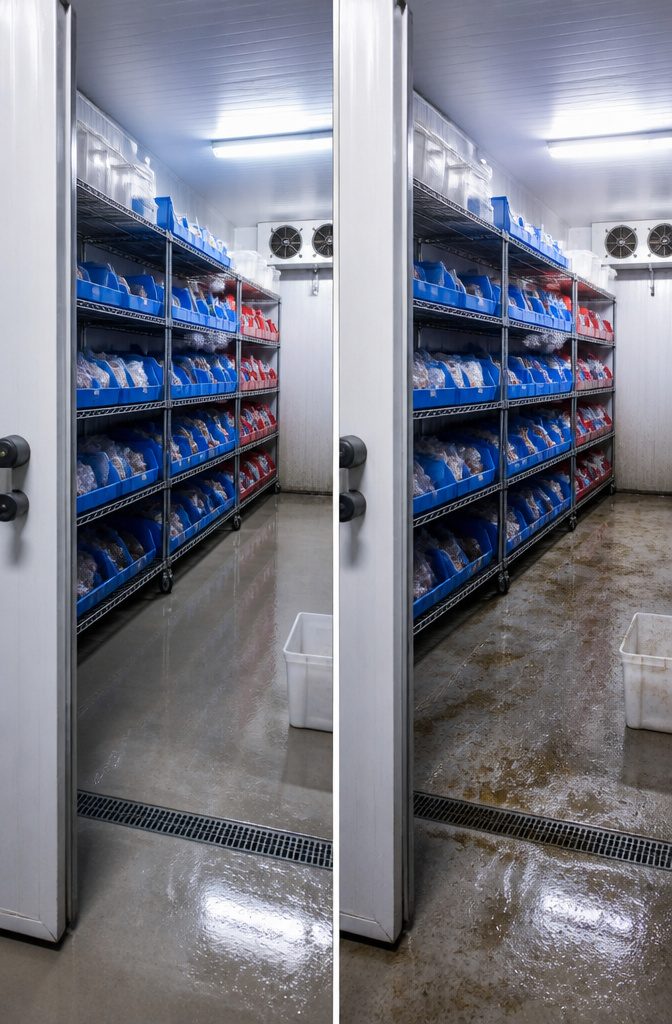
Plastic and Polypropylene Bin Shelving
Plastic shelving gets chosen when the space stays humid or when chemicals rule out steel.
Heavy-duty injection-molded polypropylene shelf bins paired with wire shelf units hold up in wet shops, food prep areas, and cold storage where condensation would rust metal frames fast.
The polypropylene bins themselves resist most solvents and detergents, and the wire shelves drain instead of trapping moisture.
A plastic pick rack at 12 inches deep by 60 inches high by 36 inches wide holds 8 shelves in red, compact enough for a parts counter or a tight aisle.
Polypropylene bin shelving at 12 inches deep by 74 inches high by 36 inches wide gives you 9 shelves in blue, adding vertical reach where floor space runs short.
Both configurations work with the same injection-molded bins, so you can standardize the containers across different rack heights.
Weight capacity drops compared to steel, but for small parts and light stock that difference rarely matters.
The real trade is durability: plastic racks cost less up front and never corrode, but steel outlasts them in high-traffic zones where carts bump frames daily.
Wall-Mounted Storage Units
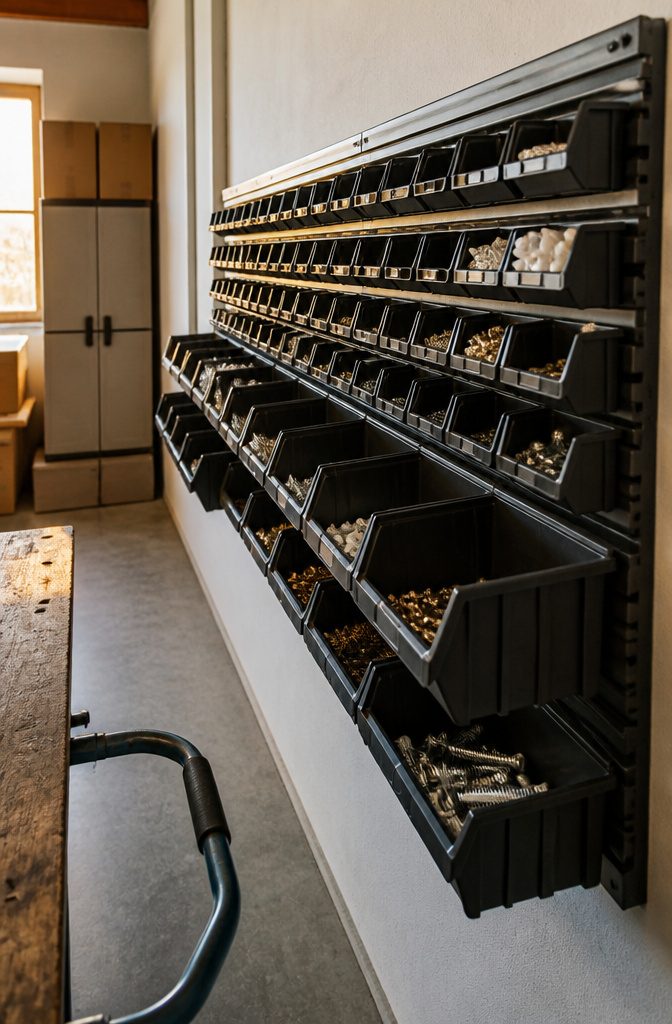
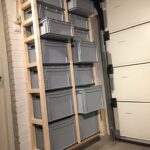
Wall-mounted storage units with bins solve one specific problem better than anything else: they get parts off the floor without stealing a footprint.
In a tight workshop or narrow storeroom where every square foot counts, a wall rail system mounts flush against vertical space you’re already ignoring and leaves the floor clear for carts, pallets or people.
These units ship as a panel or rail with a grid of bins that hang or clip in. Bin sizes range from compact drawer-scale compartments up to deep tubs that hold bulk hardware.
The wall panel carries the weight, so you’re limited by what your studs or masonry can support rather than by what a freestanding rack can carry without tipping.
I’d pick wall-mounted over freestanding when the aisle is under five feet wide, when bins need to sit at arm height rather than stacked to the ceiling, or when you’re organizing a single workbench and don’t want a tower rack blocking sightlines.
You get stability, but once the rail is anchored, it stays. Freestanding racks roll wherever the work moves next.
Bench and Tabletop Racks
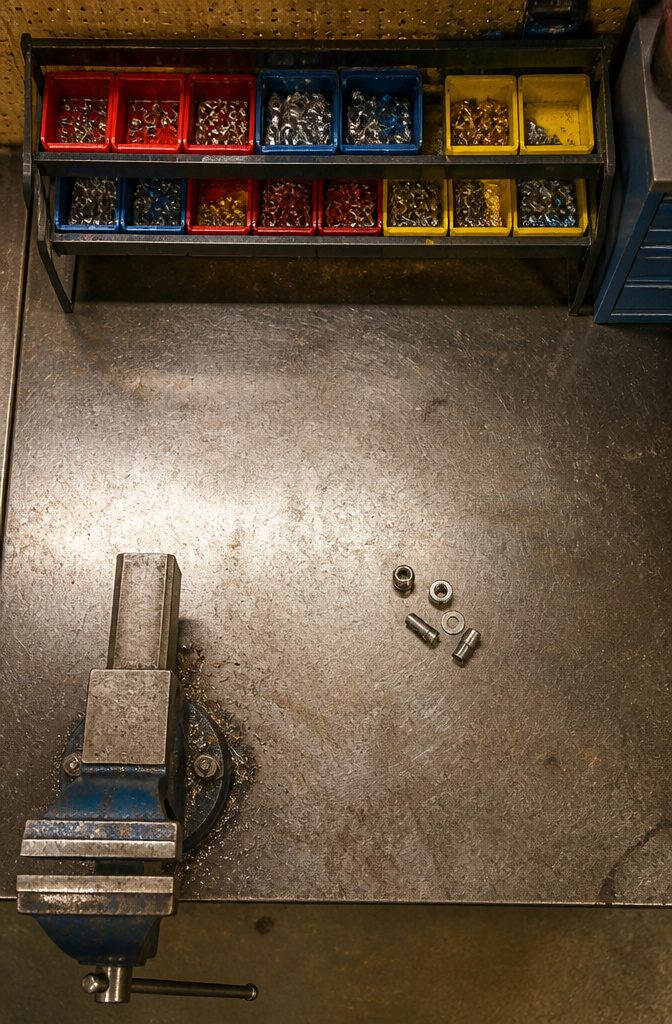
Smaller racks fit spaces where full-height shelving would block a workflow or simply won’t fit.
Bench pick racks anchor an assembly station or a packing line when the person working needs bins at arm level and the floor clear underneath for a cart or stool.
Steel frames in these formats typically run shallow, somewhere around 12 inches deep, so they hold bins without taking up the whole table surface. Height stays below 30 inches to leave sight lines open across a shared workspace.
Tabletop units sit on an existing bench or counter and hold the small parts that turn over fastest. A steel-frame rack holding 15 removable bins keeps fasteners or fittings sorted without committing a wall bay or floor footprint to them.
The bins lift out for refill or transport, which matters when inventory gets pulled and replenished bin by bin rather than restocked in place.
Drawer-style systems pack more divisions into less horizontal space. A 30-drawer cabinet organizes electronic components, gaskets, or label stock in a volume that would otherwise require three shelves of open bins.
Drawers add one extra motion to open, so they suit parts pulled once per task rather than continuously during assembly.
Where These Racks Get Used
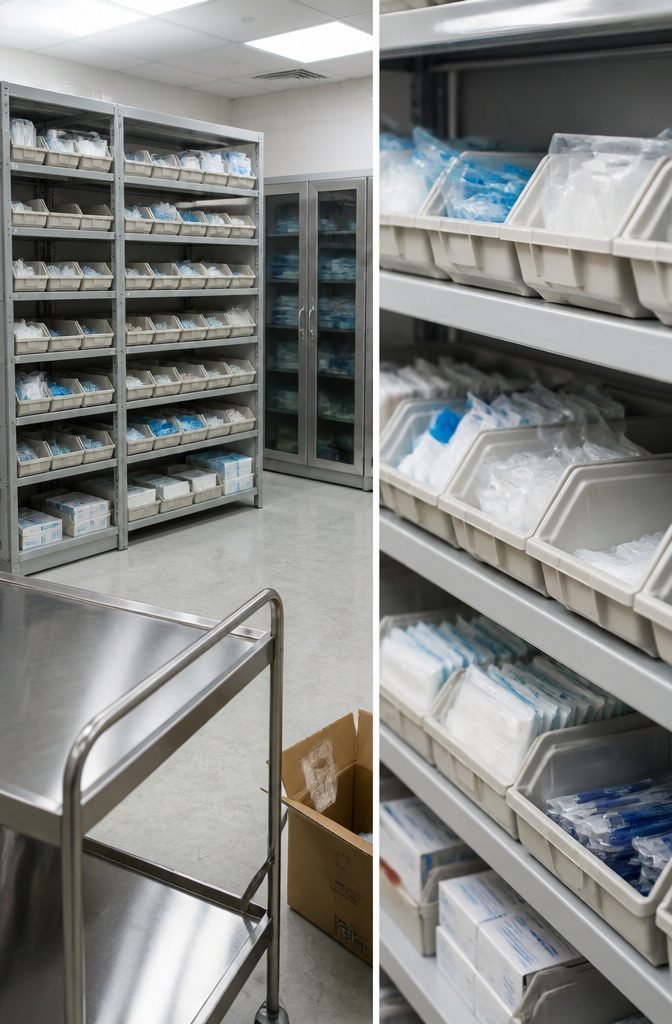
Storage bin racks work in any setting where you need to see hundreds of small parts at a glance.
I’ve looked at how different industries use them, and the pattern is the same: better inventory control and fewer lost minutes hunting for one bolt or one bandage.
Common uses include:
- Mechanics organizing tools or parts — sockets, fasteners, fittings and specialty bits stay sorted by size or thread pitch, and bin shelving lets you label each compartment so nothing gets mixed back together
- Medical facilities storing supplies — gloves, syringes, dressings and sterile packs fit in shallow bins that make counts fast and restocking obvious
- Offices filing documents — forms, printed materials and reference binders sit in open bins rather than closed drawers, cutting the time it takes to grab what you need
- Schools storing textbooks — classroom sets stay separated by grade or subject, and teachers can see at a glance when a batch is checked out or running low
How Organization Improves Inventory Control
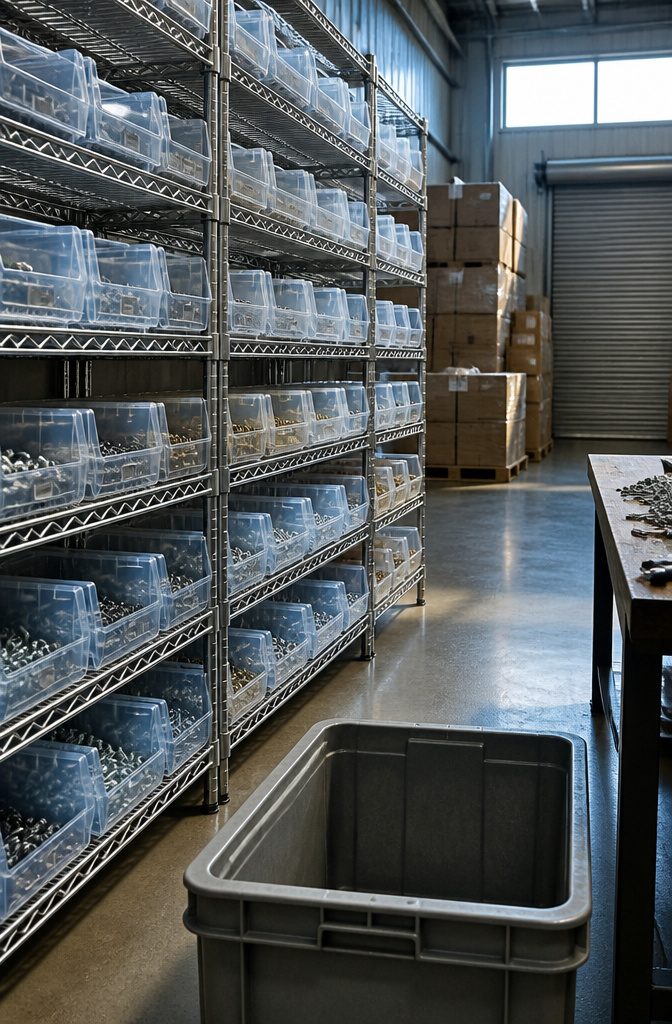
Organized bin shelving cuts the time you spend hunting for parts, and that time adds up over a week.
When small hardware, fasteners, and components sit in labeled bins on wire shelf units, anyone on the floor can locate what they need in seconds rather than digging through unsorted boxes or cabinets. That speed compounds across shifts.
Wire shelf units paired with heavy-duty injection-molded polypropylene shelf bins give you a system that holds up under repeated handling and keeps contents visible.
The bins snap into place, so they stay put when someone pulls parts out. Each bin holds one SKU, which means no mixed inventory and no counting mistakes when you reorder.
Better visibility means fewer duplicate orders. When bins are labeled and quantities are easy to check at a glance, you avoid reordering parts you already have sitting three shelves down.
Storage bin shelving also reduces distractions and keeps walkways clear, which translates to fewer accidents and safer movement through the workspace. The cost savings show up in both inventory accuracy and reduced downtime.
Frequently Asked Questions
What are storage bin racks used for?
Storage bin racks organize small parts, tools, and supplies by giving each category a visible, contained spot in workshops, warehouses, and offices.
They keep fasteners separate from electrical components, labels from packing tape, and first-aid stock from printer cartridges so you can find what you need without hunting through unsorted boxes. Faster retrieval cuts labor time, and better visibility reduces duplicate orders.
What types of storage bin racks are available?
Storage bin racks come in steel, plastic, and polypropylene construction, each suited to different conditions.
Steel handles weight and repetition without flexing, plastic and polypropylene resist humidity and chemicals, and both are available in freestanding, mobile, wall-mounted, bench, and tabletop formats.
Configurations include enclosed shelving, open wire units, single-sided pick racks, and double-sided formats that open from both faces.
What industries use storage bin racks?
Mechanics use bin racks to sort tools and parts by size or thread pitch, medical facilities store gloves and sterile packs in shallow bins for fast counts, offices file forms and binders in open bins instead of closed drawers, and schools separate textbooks by grade or subject.
Any setting where you need to see hundreds of small parts at a glance benefits from bin shelving.