
A wood fence can be weekend-simple or built to last decades, and the ideas below cover both ends, from split rails you set yourself to board-on-board with mid-span stiffeners that take real precision.
The right choice depends on whether you need to block a sightline, mark a boundary, or let wind through.
Post spacing and alignment change depending on which direction your boards run, and both horizontal and vertical styles are in the list below.
1. Picket Fence

A picket fence marks where your yard begins without walling it off from the street. You get curb appeal and a clear boundary, not a fortress.
Paint color is the first real choice. White reads traditional, but any color works; I would test a sample board against your siding before committing, since wood grain and moisture change how stain sits.
Height stays low enough to chat over, which means this is for pets and definition, not for keeping anything private. If you need privacy too, pair it with hedges or skip this style entirely.
Front yards and cottage gardens suit it best. Backyards and corner lots usually want something taller.

PET & CHILD SAFE: Create a safe outdoor play area for fur babies and children. Rest assured that this fence will create a sturdy barrier to protect your family. PERMANENT &...
2. Split Rail Fence
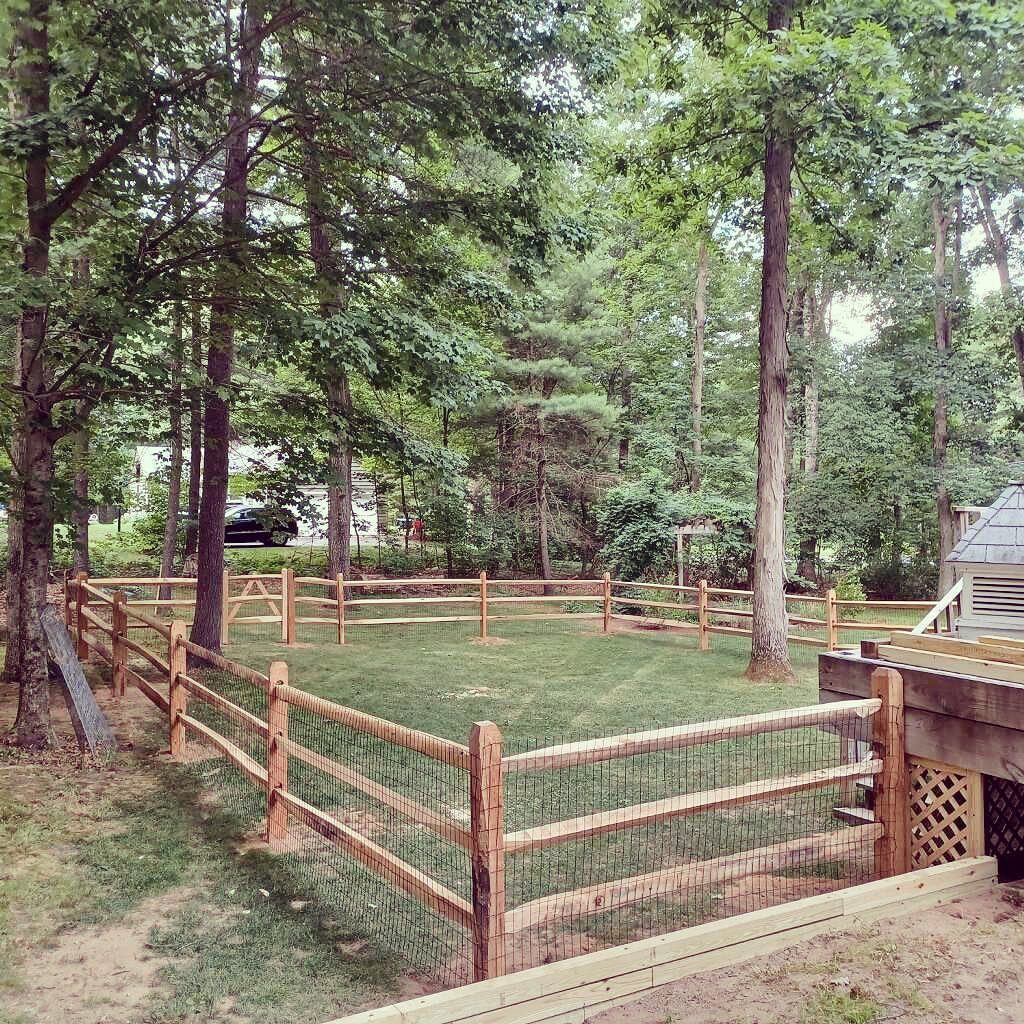
Split rail fencing belongs on larger plots where the land itself is the view.
Two or three rough-cut horizontal rails span between vertical posts, and that is the whole structure; no boards, no solid face, just the outline of a boundary.
Without mesh, this is purely decorative marking; livestock will lean through, and small animals pass under.
Installation is straightforward enough that many owners handle it themselves in a weekend. Cedar or black locust last longest; pine saves money upfront but softens faster.
For farms, ranches, or any property measured in acres rather than feet, this is often the right call. Suburban lots usually look better with something tighter to the ground.

Premium Quality: Eapele railing bracket is made of high-quality nylon has high hardness, is not easy to break or bend, is corrosion-resistant, and can withstand wind and rain for years of indoor & outdoor use

Premium Quality: Eapele railing bracket is made of high-quality nylon has high hardness, is not easy to break or bend, is corrosion-resistant, and can withstand wind and rain for years of indoor & outdoor use

Vinyl post skirt is made of low-maintenance vinyl, waterproof, No fading, No wrap or Yellowing Resins
3. Horizontal Wood Fence
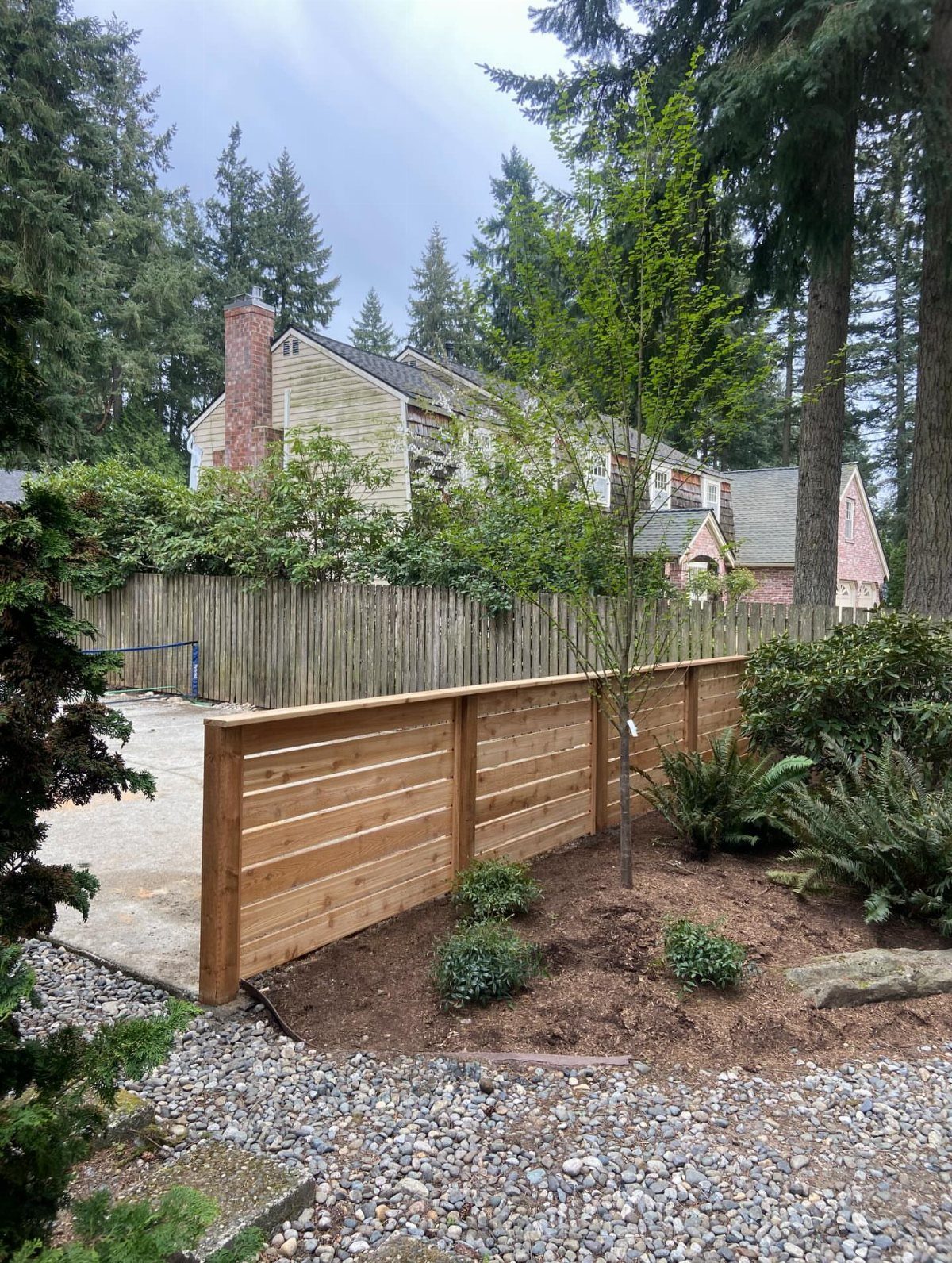
Horizontal boards read modern because the lines run the way your eye moves across a yard. Cedar or redwood handle the span best; their density keeps boards from curling where cheaper pine will cup and gap within two seasons.
The structure needs extra thought. Vertical boards hang from a top rail; horizontal ones act like shelves loaded with their own weight.
Posts need closer spacing, and fasteners must hit dead center or the board bows. I would not attempt this without a laser level and a patient Saturday.
Gaps between boards are your privacy dial. Tight spacing blocks sightlines but traps wind; narrow gaps let air through and still read as solid from a few feet away.
Contemporary homes and clean-lined gardens are the natural fit. Traditional colonials usually fight the look.
INCLUDES: (2) Featherboards with Threaded 5 Star Knobs, T-Bolts, and Miter Slot Brackets

TRUE ALL-ALUMINUM — BUILT FOR LONG-TERM VALUE: Ordinary steel or mixed-metal products can be progressing from surface corrosion to rust-through—often reported online within 0.5–2 years. So this is not simply about cosmetic maintenance—removing rust and repainting the surface. Once corrosion progresses to rust-through, the metal itself has deteriorated, potentially compromising the structural integrity and eventually requiring replacement of the affected component or structure. LukLoy post is built with a true all-aluminum structure for lasting outdoor over 30 years. it resists weathering, fading, and everyday exposure with less maintenance — a smarter long-term investment for your home.

Strong Black Gate Frame
4. Decorative Post Caps

Post caps do two jobs: they finish the fence visually and they keep rainwater from pooling on end grain, which is where rot starts.
Black caps fitted with lights are one option; solar caps are common now and save running wire.
Style ranges are wider than most buyers check. Flat caps read modern, ball or acorn shapes read traditional, copper starts bright and weathers to green.
I would match the cap to the fence’s personality, not the house; a rustic fence with slick metal caps looks confused.
Cost is low enough that this is an easy upgrade mid-project or years later.
If your posts are already standing, measure the actual width; lumber posts are rarely the listed size exact, and a loose cap blows off in the first storm. Pressure-treated posts need a season to dry before caps seal well.

EASY ORDERING: Everything you need for your fence project is in the box except for the final post. Only ONE additional post, BL19112, is required for the end of your project. A gate is available by searching BL19111.

STYLISH NATURAL WOOD: This FSC certified wood screen is made with real wood meaning no two boards have the same grain color, finish, or wood knots differing it from vinyl outdoor privacy fence screen panels.

Complete Kit with Heavy Duty Posts: This 6ft tall privacy fence gate comes as a full, ready-to-install set, including 2 rust-resistant aluminum posts, a lockable handle, caster wheel, and all mounting hardware. No extra purchases needed, perfect for quick backyard, garden, or pool area installation
5. Lattice Top Fence
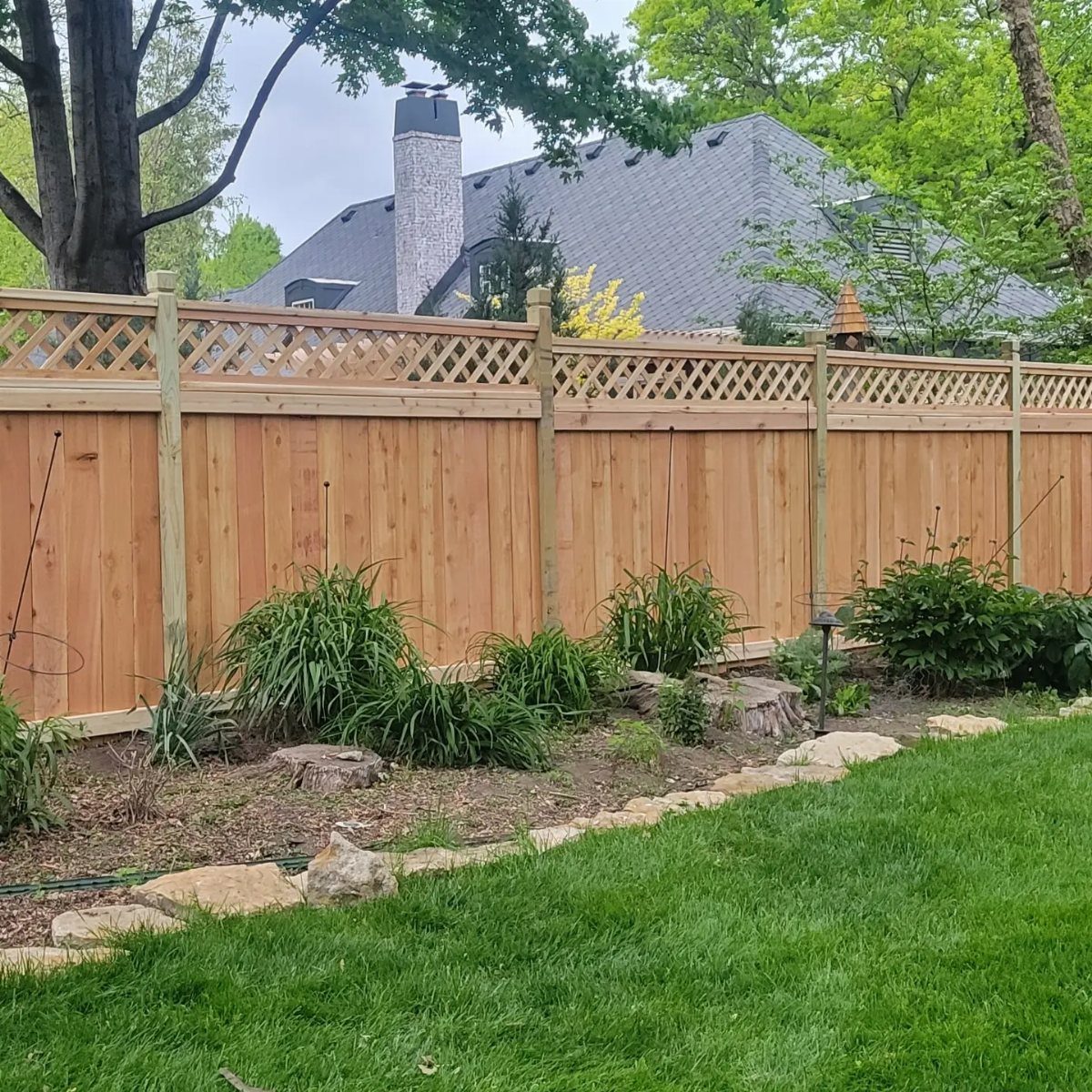
Solid boards to shoulder height, then lattice open to the sky: that split personality is what makes this fence type useful.
The lower half blocks the view from passing cars; the upper half lets light through and gives vines something to climb.
Clematis, jasmine, or even hardy kiwi will weave through diagonal lattice within two growing seasons. I would plant on the neighbor’s side too if the fence is shared; growth from both directions fills faster and looks fuller.
Square lattice is the alternative if diagonal reads too cottage-garden for your taste.
Airflow matters more than it seems. A tall solid fence in a hot climate creates a dead air pocket that can cook plants against it.
The lattice gap breaks that. This style suits garden borders and backyards where you want privacy without a wall.
Fully exposed sites with constant wind may need something sturdier; the lattice catches gusts that solid boards would shed.

low carbon steel material, powder coating surface treatment

Inner Width:1-1/2";Works with 2″ x 4″ wood railings

Low carbon steel , hot-dip galvanized surface treatment, wear resistance, corrosion resistance
6. Shadowbox Fence
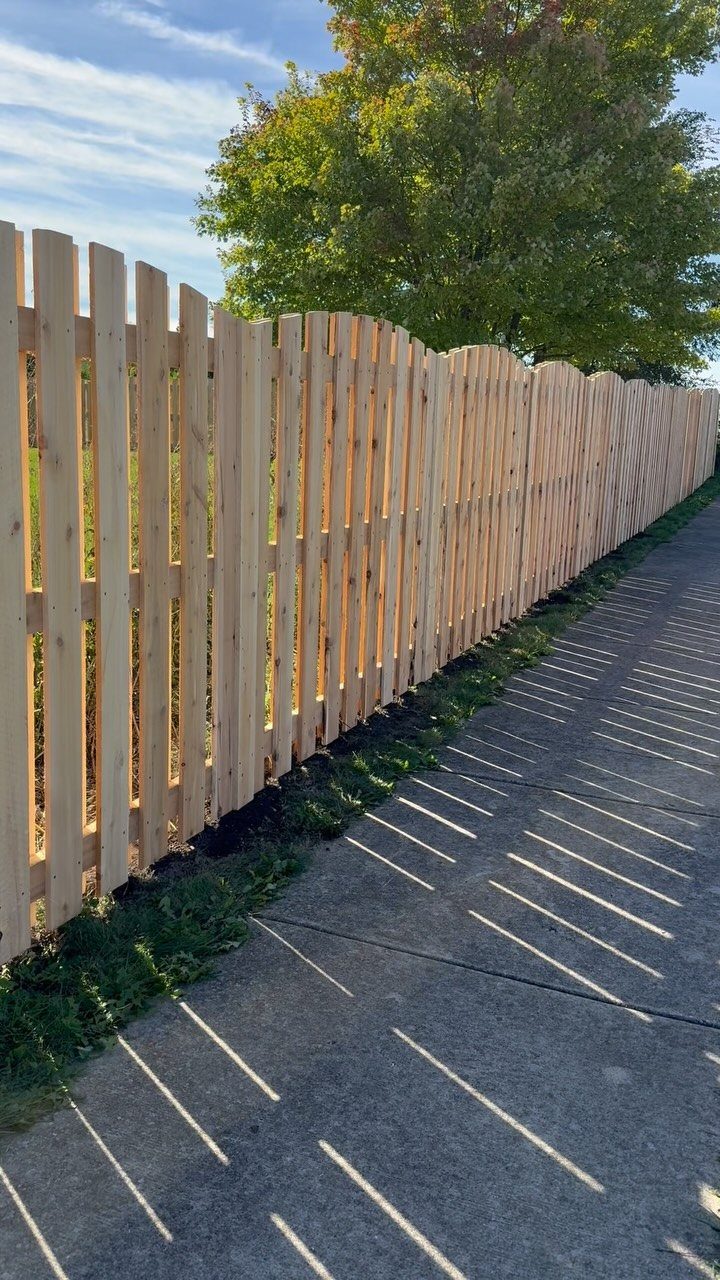
Shadowbox construction puts boards on both sides of the rail, staggered so each gap faces a board on the opposite side.
The result looks the same from either yard, which matters when you share the fence line with a neighbor who has different taste.
Wind passes through the gaps instead of pushing the whole panel like a sail. Coastal areas and open plains benefit most; I have seen solid fences lean or heave in spring gusts that a shadowbox would have shrugged off.
Cedar holds up longest in wet climates, pressure-treated pine is the budget stand-in.
Privacy is partial, not total. Someone standing directly at the fence sees through; step back 3 feet and the sightline closes.
That is the trade. If you need true screening, add a hedge inside the line or choose board-on-board instead.
For shared boundaries and breezy sites, this is the compromise that keeps peace on both sides and posts in the ground.

Wood fence pickets--made from material, suitable for courtyard, garden, restaurants, hotels, guesthouses and other places,fence panels

DIMENSIONS: Each panel measures 24" W x 24" H. One box comes with 6 total linear feet of white vinyl picket fence for your garden.
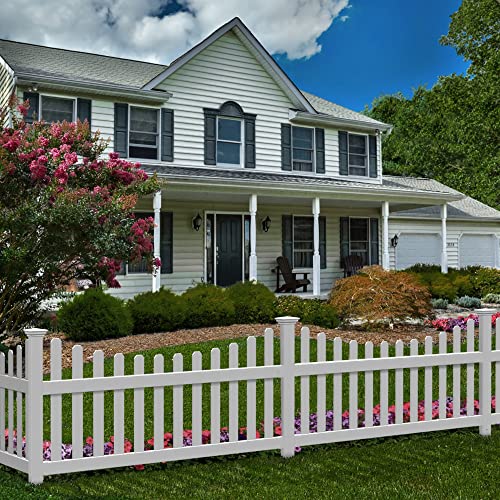
PET & CHILD SAFE: Create a safe outdoor play area for fur babies and children. Rest assured that this fence will create a sturdy barrier to protect your family.
7. Trellis Fence

A trellis fence gives climbing plants something to grip while still letting light through.
I like it best as an add-on rather than a full perimeter: bolt mesh or wire panels to the inside face of an existing fence and train ivy, clematis, or jasmine up from the ground.
The plants fill in over 2 or 3 growing seasons and soften a solid wall without blocking your own view out.
You give up some sightlines for the plant support a trellis gives back. Snoopers can see through bare mesh, and even full-grown cover leaves gaps in winter.
A single-sided trellis fixes this: mount the frame on your side of the property line so neighbors see wood or vinyl, while you keep the lattice and the greenery facing in.

Premium Quality: Eapele railing bracket is made of high-quality nylon has high hardness, is not easy to break or bend, is corrosion-resistant, and can withstand wind and rain for years of indoor & outdoor use.

Premium Quality: Eapele railing bracket is made of high-quality nylon has high hardness, is not easy to break or bend, is corrosion-resistant, and can withstand wind and rain for years of indoor & outdoor use

The package includes 8 pack vinyl post skirts, offering ample quantity to meet your daily use and replacement needs. These skirts are designed to be installed at the base of vinyl stair rails to conceal connection parts, helping the entire handrail system maintain a neat and beautiful appearance.
8. Board-on-Board Fence
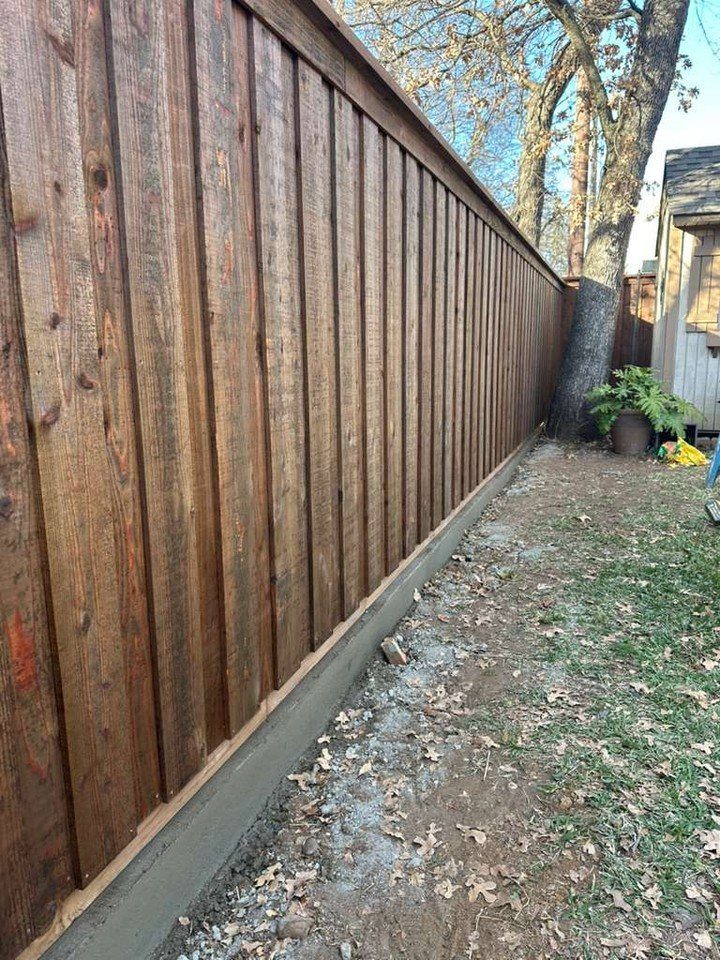
Overlapping vertical boards block every sightline and most sound, which is why I put board-on-board fencing along the property line at my last place.
Each board covers the gap between the pair in front of it, so there is no straight path through even as the wood shrinks and swells.
The weight adds up fast. I used pressure-treated boards on wide centers and still needed mid-span stiffeners to keep the face flat; without them, the long span bows toward the sun after the first hot summer.
Kiln-dried lumber helps, but the real fix is keeping post spacing tight and screwing every board, not nailing.

【Heavy-Duty Surface Mount Base】Expertly engineered for concrete surface-mount installation, this Tafbrik 3-way post features a high-stability 24" vertical support. While the heavy-duty base secures firmly to concrete, the precision-cut slots are compatible with wood or composite panels (up to 0.8" thick). This reinforced, deep-welded structure ensures a rock-solid, upright fence without any digging. (Includes pre-drilled holes).

TRUE ALL-ALUMINUM — BUILT FOR LONG-TERM VALUE: Ordinary steel or mixed-metal products can be progressing from surface corrosion to rust-through—often reported online within 0.5–2 years. So this is not simply about cosmetic maintenance—removing rust and repainting the surface. Once corrosion progresses to rust-through, the metal itself has deteriorated, potentially compromising the structural integrity and eventually requiring replacement of the affected component or structure. LukLoy post is built with a true all-aluminum structure for lasting outdoor over 30 years. it resists weathering, fading, and everyday exposure with less maintenance — a smarter long-term investment for your home.

TRUE ALL-ALUMINUM — BUILT FOR LONG-TERM VALUE: Ordinary steel or mixed-metal products can be progressing from surface corrosion to rust-through—often reported online within 0.5–2 years. So this is not simply about cosmetic maintenance—removing rust and repainting the surface. Once corrosion progresses to rust-through, the metal itself has deteriorated, potentially compromising the structural integrity and eventually requiring replacement of the affected component or structure. LukLoy post is built with a true all-aluminum structure for lasting outdoor over 30 years. it resists weathering, fading, and everyday exposure with less maintenance — a smarter long-term investment for your home.
9. Wood Slats with Steel Posts
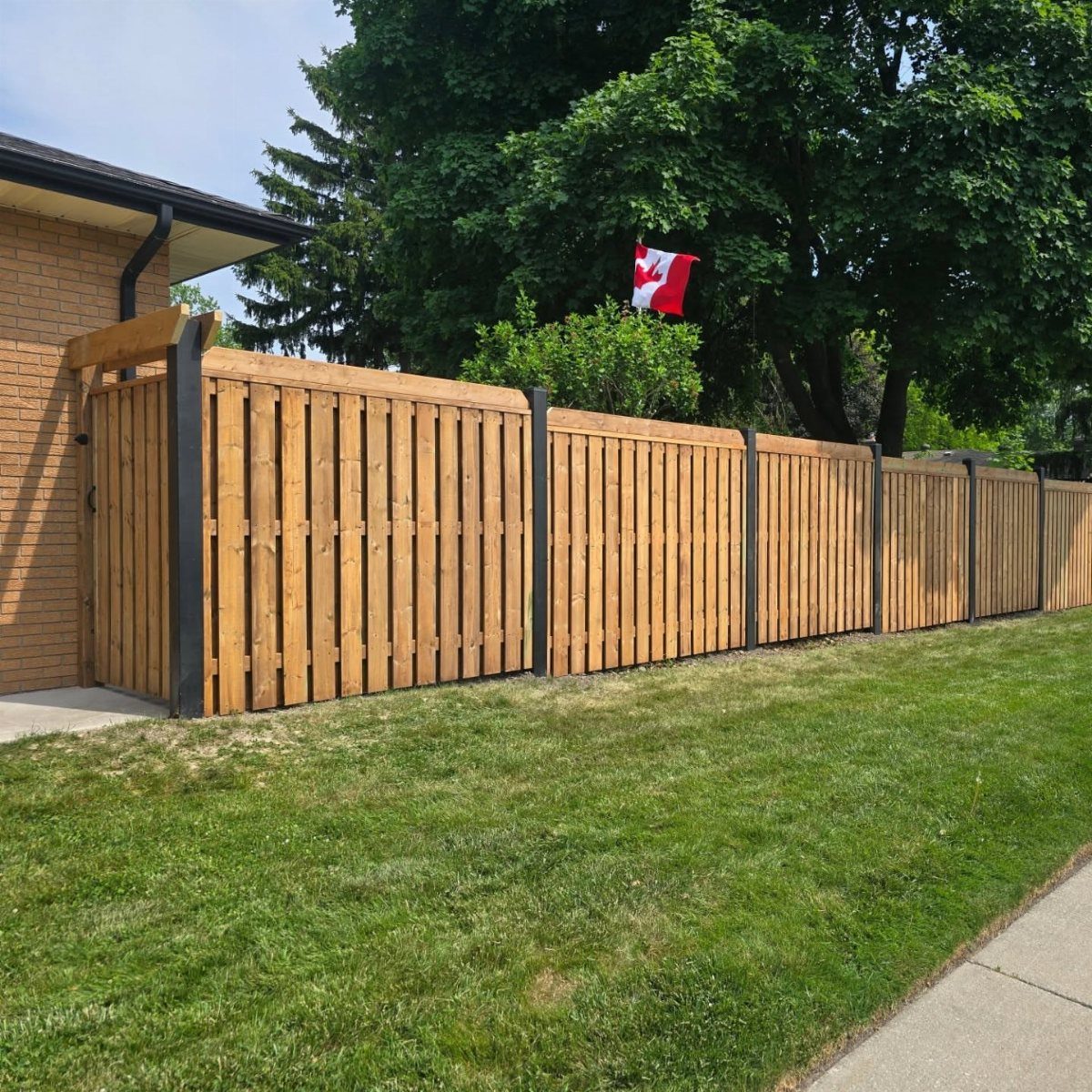
Black steel posts warm up quickly against honey-toned slats, and the combination reads as intentional rather than utilitarian.
I have seen 2×2 and 3×3 square tubing left exposed in custom channels, or set flush behind the wood with only the front face showing; either way, the metal carries the structural load so the boards stay straight.
Steel stays straight at ground level and under tension, where wood posts rot and twist over time. The look suits modern houses especially, though I think it works anywhere the architecture already mixes materials.
Cost runs higher than all-wood construction, but you save on replacement posts down the line.
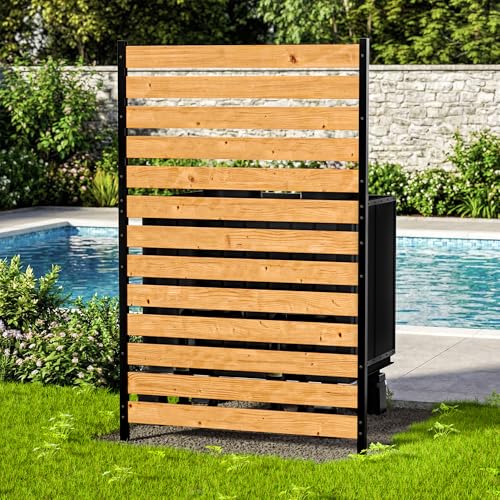
Real Wood & Aluminum Posts Our privacy fence is made with real wood, so no two boards share the same grain, color, finish, or knots—unlike vinyl outdoor privacy fence screen panels. Premium aluminum posts add strength and a refined look.

Privacy Solution: Most economical way for privacy over chain link fence, porous decorative concealment, existing cyclone wire fence, wood retaining wall, welded wire fence, chain link fence, privacy barrier around swimming pool, block nose neighbor see through, add privacy to acre back yard backdrop, front yard, patio, garden and porch; hide street, road, construction site, pet kennel pen, block surrounding noise and street view, stops dogs from barking at neighbors.

Upgrade today with the 2026 Latest Upgraded Version and enjoy fuller greenery, stronger installation, and instant privacy
10. Imperial Wooden Fence

Tight-planked imperial fencing is the choice when privacy matters more than anything else. The boards sit almost touching, sometimes beveled to shed water, and the height runs tall enough that even a tall neighbor gets no sightline over or through.
I would budget for solid cedar or redwood; cheaper species check and crack when spaced this tightly, and a smooth, unbroken face is what you are paying for.

Quality Material: Qlvily Fence brackets are made of hot-dip galvanized sheet to form a strong connection between fence railings and posts, galvanized to resist corrosion.

【Sturdy & Durable Steel】IRENPORU Deck Railing Brackets Connectors made of 304 Stainless steel, Strong and Durable for long-term use. The surface is made of powder-coated technology, which has excellent Weather & Rust Proof performance. Much better than other nylon deck railing bracket connector
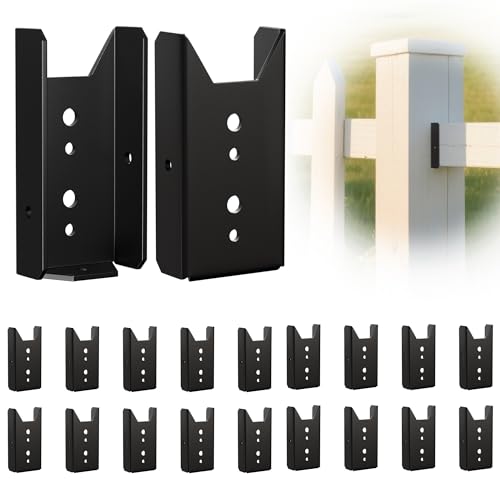
Heavy-Duty Steel Construction: Constructed from durable 1.2mm carbon steel with a sleek black powder-coated finish, this 2x4 black fence bracket combines attractive looks with superior rust resistance for long-term outdoor use. Its heavy-duty design maintains structural wholeness even under significant weight loads without bending or warping
11. Vertical Board Fencing
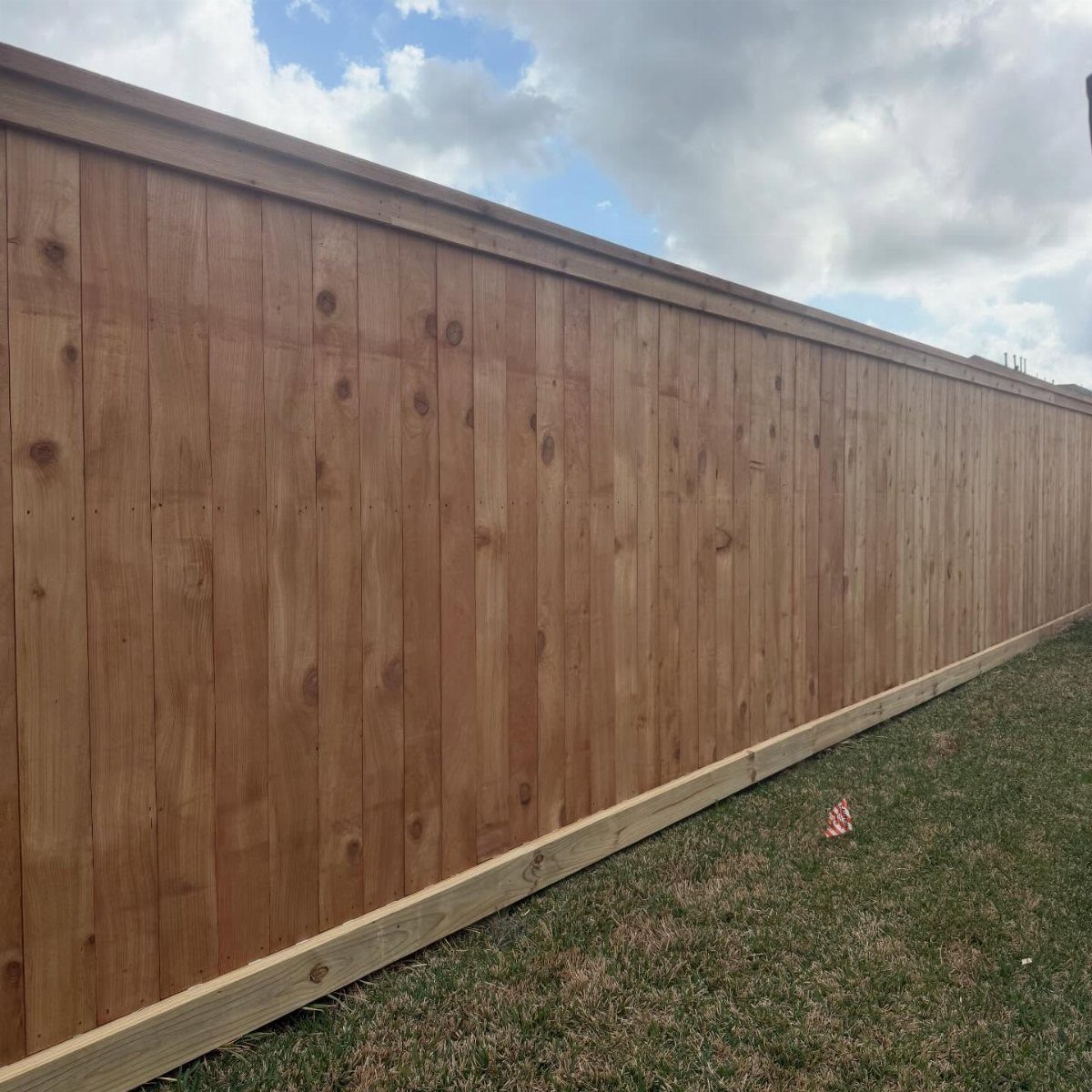
Vertical boards on horizontal rails are the simplest fence to build and the easiest to adapt. Narrow and wide boards both work on the same street, painted white, stained dark, or left to weather gray; the skeleton stays the same.
Boards hang from a top rail, so gravity works with you instead of against you.
That is why vertical fencing holds its shape longer than horizontal without extra hardware: the narrow edge faces out, the wide face is braced top and bottom, and there is no flat span for the sun to bow.
For a first fence project, this is where I would start.
12. Post & Rail Wooden Farm Fence
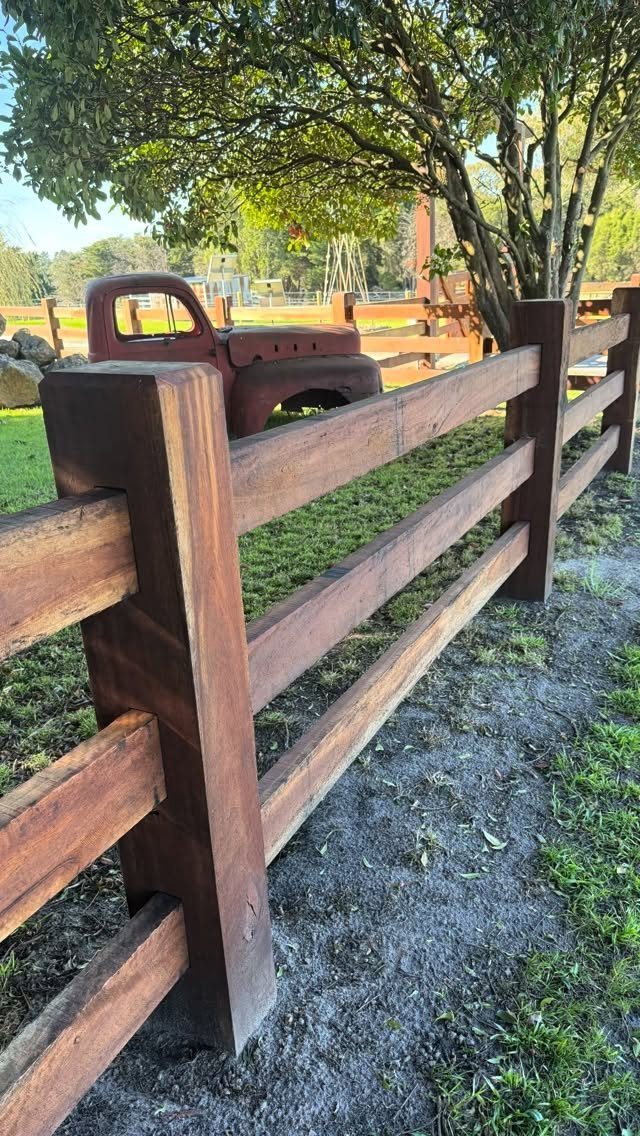
Three rough-cut rails through mortised posts will outlast any of us, and it takes about an afternoon to set a long run if the ground is level.
Split rail or sawn, the purpose is the same: mark boundaries, contain livestock, keep views open.
I would not build this for a small suburban lot. The scale wants acreage, and the gaps mean zero privacy or security.
But on a rural property, nothing else looks so settled into the land. Two-rail suits horses; three-rail keeps cattle.
Cedar or black locust lasts decades untreated, which matters when your fence line runs long.
Choosing the Right Wood Type
Cedar and redwood earn their price through natural oils that repel rot and insects without help. Pressure-treated pine is the cheaper way in, but the treatment only slows decay; it does not stop it.
For a horizontal fence, the span matters more than for vertical boards. Clear Heart Redwood and Western Red Cedar stay flat and light, and their grain takes stain evenly.
Brazilian ipe costs more upfront but dents less and carries a 40-year lifespan; I would reserve it for luxury properties where replacement is a real hassle.
Untreated pine in ground contact is a short bet. If your budget locks you into pine, keep it above the dirt line and seal every cut end; the factory treatment rarely reaches deep enough.
Maintenance Tips for Wood Fences
Seal or stain new wood within the first season, before UV opens the grain. A penetrating oil with trans-oxide UV blockers preserves the natural tone; reapply every 18 to 24 months on dense hardwoods.
If you prefer the weathered look, high-grade ipe or Clear Redwood will silver evenly over 12 to 18 months without oil. The gray is surface oxidation, not rot; structural integrity stays intact.
Never paint a horizontal fence with thick latex or varnish. Sun and seasonal movement blister film-forming finishes, and you will spend a weekend scraping what could have been a quick oiling job.
Installation Considerations
Post depth and spacing carry the fence; everything else hangs from them. For horizontal boards, 6 feet between posts is the usual span, but that flat surface loads differently than vertical boards.
A mid-span stiffener at the 3-foot center between posts locks the whole panel flat. Screw a 2×2 or 2×4 cleat to the back side and fasten every horizontal board into it.
Without the cleat, individual boards warp in opposite directions under afternoon sun, and the face starts to look like waves.
A laser level pays for itself here. Horizontal lines show every error; vertical fencing forgives more.
Cost Considerations for Wood Fencing
Custom designs and high-end species run high; straightforward vertical board on pressure-treated pine stays the budget path.
The cheapest bid rarely wins over time. A fence that needs restaining every 2 years, or posts that rot at ground level in 8, costs more than cedar or steel posts spaced right from the start.
I would rather build once with mid-grade materials and proper spacing than replace cheap posts twice.
Budget for sealing or oiling in year one, not as an afterthought. Skipped maintenance cuts the life in half, and whatever you saved upfront walks right out the door.
Frequently Asked Questions
What is the cheapest wood fence to put up?
Split rail or a plain pine picket fence will almost always cost the least to put up yourself, since both use less lumber and simpler joinery than anything with boards butted tight.
Pine saves money upfront though it softens faster than cedar or black locust. A picket fence keeps costs low because the short height uses less lumber, and split rail needs no boards at all, just rough-cut rails and posts.
What are the latest fencing trends?
Horizontal slat fencing and mixed materials like wood slats with black steel posts are currently popular. Horizontal boards feel current because they draw the eye sideways, across the full width of the yard instead of up and down.
Steel posts do the heavy lifting so the boards don’t bow, and mixing metal with wood looks deliberate rather than like you ran out of one material.
How to make a wooden fence more attractive?
Decorative post caps, stain color, and lattice or trellis add-ons all help.
A cap on the post top finishes the line and stops water from soaking into end grain; flat caps look contemporary, ball finials read classic, and copper turns that soft green after a few seasons.
Stain can shift the whole mood, though I would brush a sample board and lean it against the house for a week before deciding, since grain and dampness both shift how the color reads.