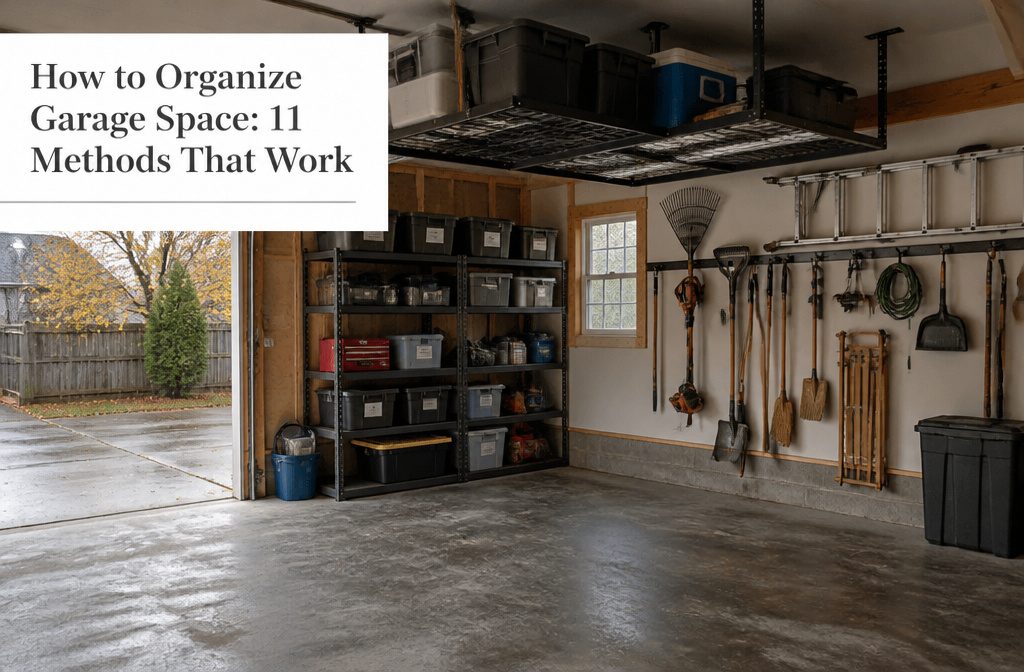
A cleared and zoned garage returns floor space for parking while keeping tools and seasonal gear accessible, and the work takes a full weekend once you commit to emptying, sorting, and installing wall or ceiling storage.
Most people skip the sorting stage and buy bins before they know what they’re keeping, which turns organization into expensive guessing.
Metal shelving holds more weight than particle board and lasts years longer, and ceiling racks need to clear both your garage door opener and the roof of your tallest vehicle.
1. Clear Out and Sort What You Have
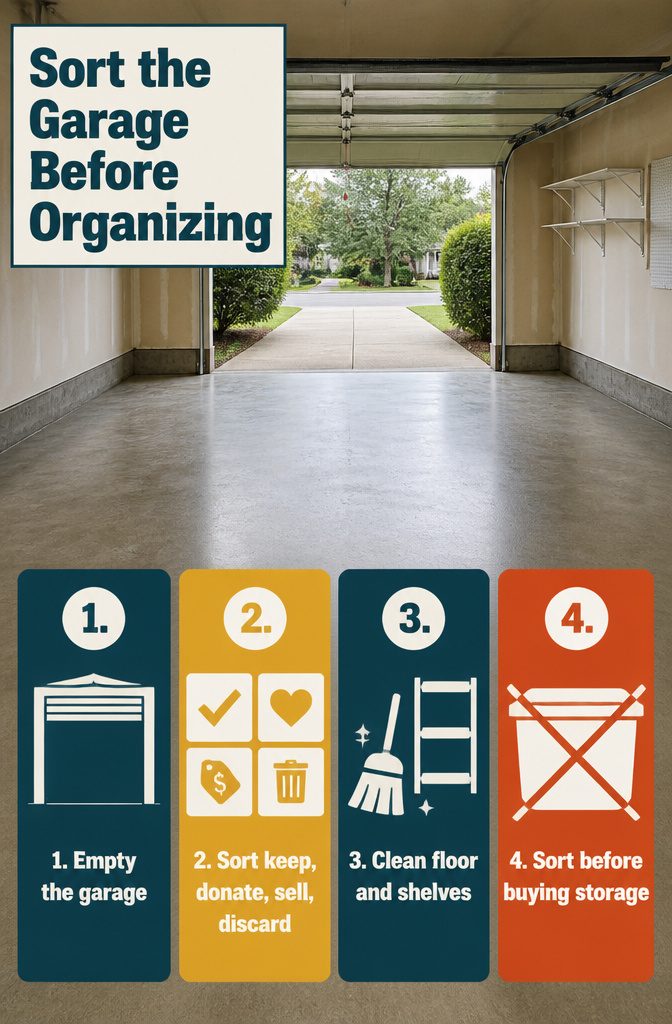
- Empty the entire garage so you can see what you own and clean the bare floor and walls. Plan a full weekend or one to two days for this, and pick dry weather if you can; everything may need to sit on the driveway while you sort.
- Sort belongings into four groups: keep, donate, sell, and discard. The four-label system forces a decision on each item and keeps the sorting quick.
- Clean the empty garage before anything goes back in. Sweep or hose the floor, wipe down shelves, and check for oil stains or pest droppings. A clean slate makes the new arrangement feel worth maintaining.
- Hold off on buying bins or shelving until sorting is done. You need to know how much you actually kept, and what shape it is, before storage makes sense.
2. Group Items and Plan Zones
Group Items and Plan Zones
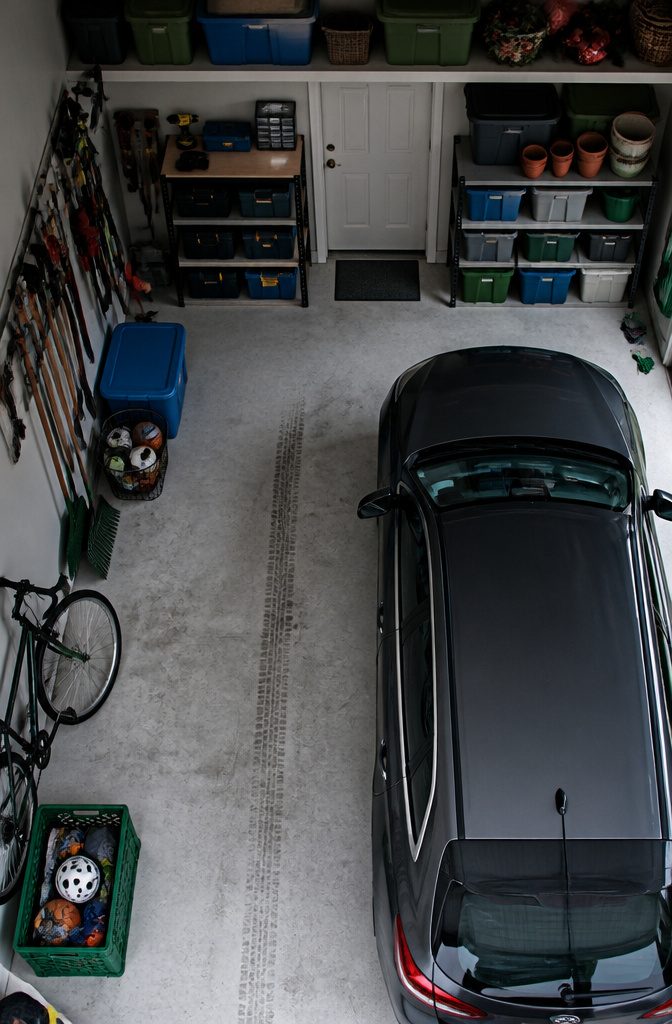
Placing similar belongings together turns the garage from a pile into a system. Tools go with tools, garden supplies with garden supplies, sports equipment in one spot, automotive supplies in another, seasonal decorations grouped by holiday.
Zoning makes routines 10x easier because you reach for everything you need in one trip instead of circling back for the pruners you left near the paint cans.
Frequency decides where each zone lives.
Items you use daily belong at eye level or within arm’s reach from the door. Seasonal decorations, backstock supplies, and keepsakes can sit on higher shelves or overhead racks where you only pull them down once or twice a year.
The lower, accessible spots are real estate you cannot afford to waste on things that stay put for months.
Categories emerge as you sort, and yours may run longer or shorter than the typical list of vehicles, bicycles, gym equipment, outdoor games, beach gear, hardware, light bulbs, and memorabilia.
Label bins and shelves as you load them so the system survives past the first week and everyone in the house knows where things return.
3. Use Wall Storage to Free Floor Space
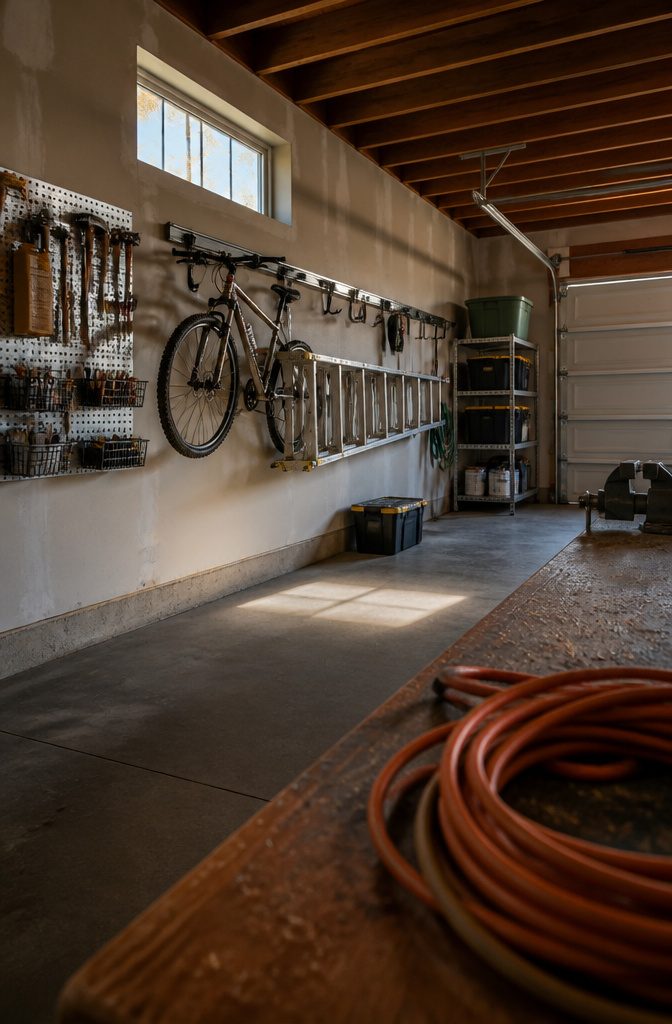
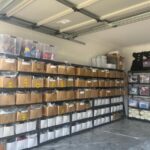
Wall-mounted systems clear the floor fast, and the variety of hardware means you can fit almost any item without stacking or leaning.
Metal shelving holds more weight than particle board and lasts longer.
The Whalen Industrial Shelving from Costco is a reliable choice for bins and paint cans. If you want wall-mounted units, the 6′ Basic Wall Shelving Unit works for medium loads, and IntroMetro Free Standing Shelves fit tight corners.
For tools and smaller gear:
- Pegboards let you hang hand tools, brackets, and baskets in plain view so nothing hides at the back of a drawer.
- Slatwall panels take more than 40 accessories, from hooks to bins, and you can reconfigure them as your needs shift.
- Track systems like Gladiator mount to studs and carry heavier items such as bikes or ladders. The Utility Track accepts hooks and clamps that slide along the rail.
- Individual hooks fit narrow gaps between doors or beside workbenches when a full track is overkill.
I go vertical whenever the floor gets tight. Hooks near the door catch bags and jackets before they land in a pile, and overhead space stays open for the next layer if you need it.
4. Use Ceiling and Overhead Storage
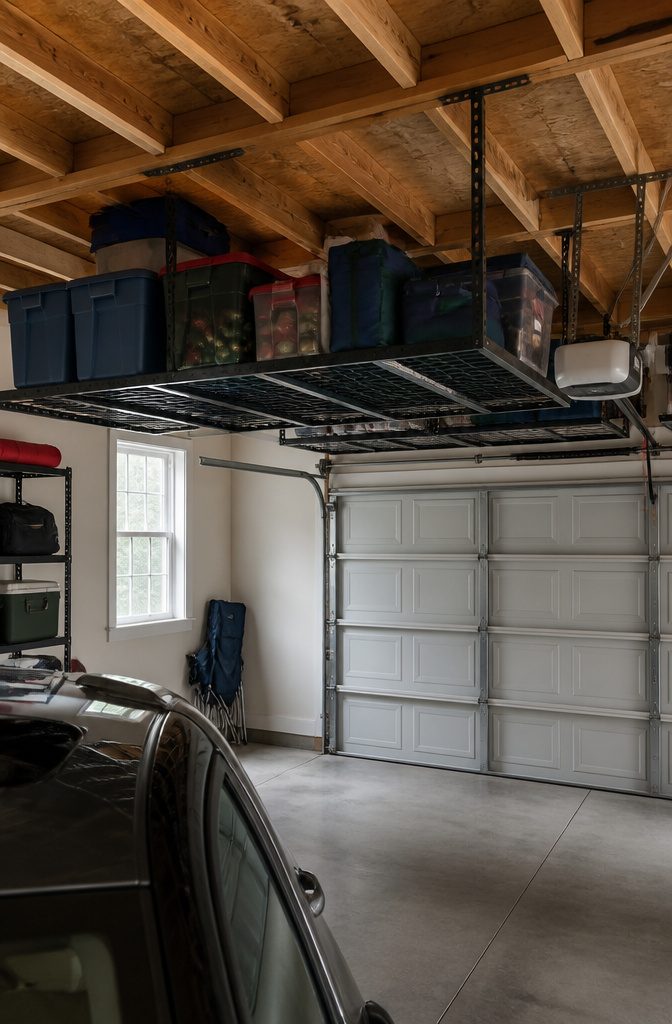
Ceiling-mounted racks turn the space above your head into storage for anything you touch once or twice a year.
Holiday decorations, camping gear, and off-season sports equipment all belong up there rather than eating into the floor or wall real estate you need for tools and daily use.
Heavy Duty Ceiling Racks hold the weight of large bins without sagging, and proper hardware anchored into ceiling joists keeps the load secure before you stack anything.
Two clearances matter before you buy or install. First, measure the space between your garage door opener and the ceiling to make sure the rack will not block the door track or interfere with the motor.
Second, check how low the loaded bins will hang once they are in place. A rack that sits too low will scrape the roof of a tall vehicle or force you to duck every time you walk underneath it.
Wire shelving works well for the space above the garage door itself, where the ceiling height usually drops. Measure that opening first so the shelf you order actually fits the span.
5. Add Cabinets to Protect and Conceal
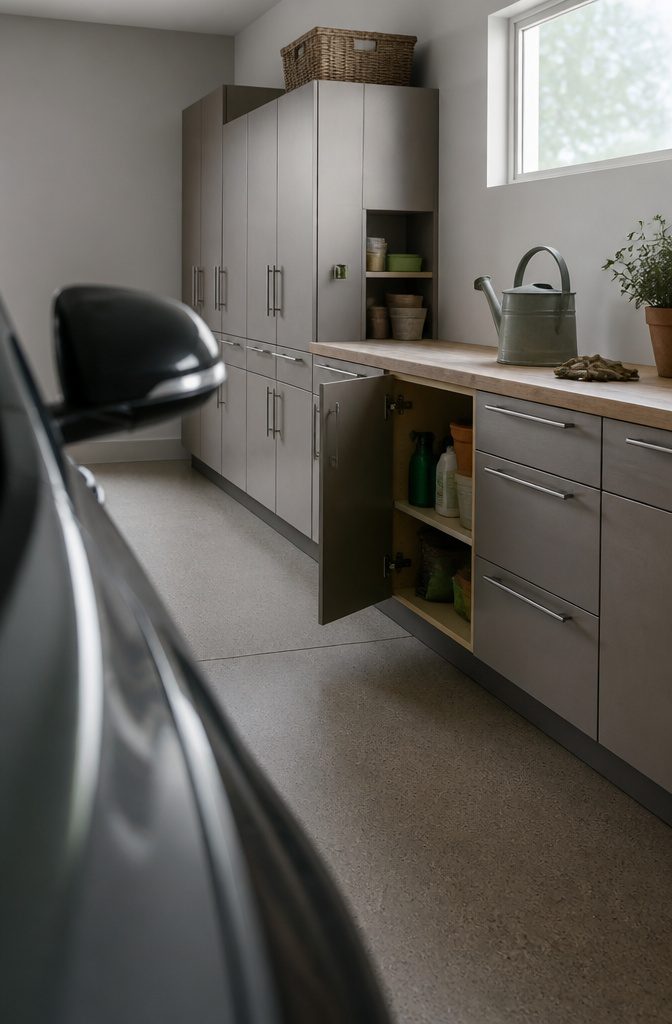
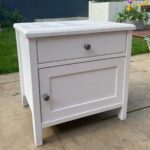
Cabinets protect tools and supplies from dust and moisture while keeping hazardous materials out of reach.
Unlike open shelving, enclosed storage conceals visual clutter and gives the garage a cleaner, more professional appearance. Lockable doors and drawers add security for valuable equipment, dangerous tools, and chemicals that need to be stored safely.
Cabinet systems accommodate tools of various sizes and can be configured around a workbench if you use the garage as a workshop.
Even without heavy-duty projects, cabinets handle the gardening supplies, exercise gear, car care products, and luggage that collect in most garages.
Anything that should stay clean or needs to be locked up belongs in a cabinet rather than on an open shelf.
For smaller garages, the Signature Shallow line offers 18-inch depth, which is shallower than most cabinet systems. That extra clearance matters when you’re trying to leave room to park vehicles indoors while still gaining functional storage along the walls.
6. Use Bins, Labels, and Drawer Organizers
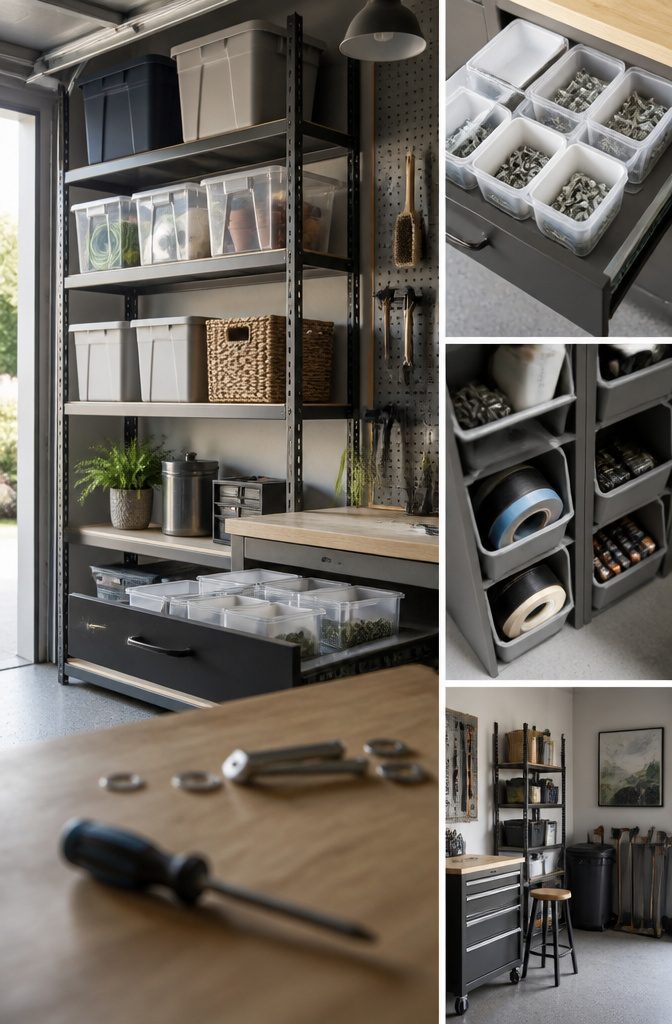
Bins and dividers turn a pile of loose parts into something you can actually find. Here’s what works:
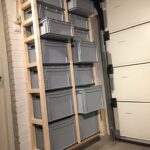
- Clear bins let you see what’s inside without opening them—the Iris Weathertight Storage Bins hold up outdoors, and Clear Storage Bins work for anything you sort by season or project. If you prefer a cleaner look, opaque bins like the Euro Commercial Crates hide the clutter, and you can color-code them by zone or label the front.
- Baskets corral oddly shaped items that don’t stack well. The Basketweave Bin sits on open shelves without looking industrial.
- Deep Clear Drawer Organizers and White Tall Cups keep small fasteners separated inside cabinet drawers—screws, washers, nuts, and bolts stay sorted instead of migrating into a single useless pile. If you don’t have drawer space, Lock-Ups mount to slatwall or pegboard and take up no counter.
- Grey Stackable Shelves double your usable drawer height when you’re organizing shallow items like tape rolls or batteries.
- Label everything as you load it. The Brother P Touch Cube Plus prints durable labels that hold up in garage humidity, and labeled bins mean everyone in the house can put things back where they belong.
7. Keep the Floor Open for Parking and Access
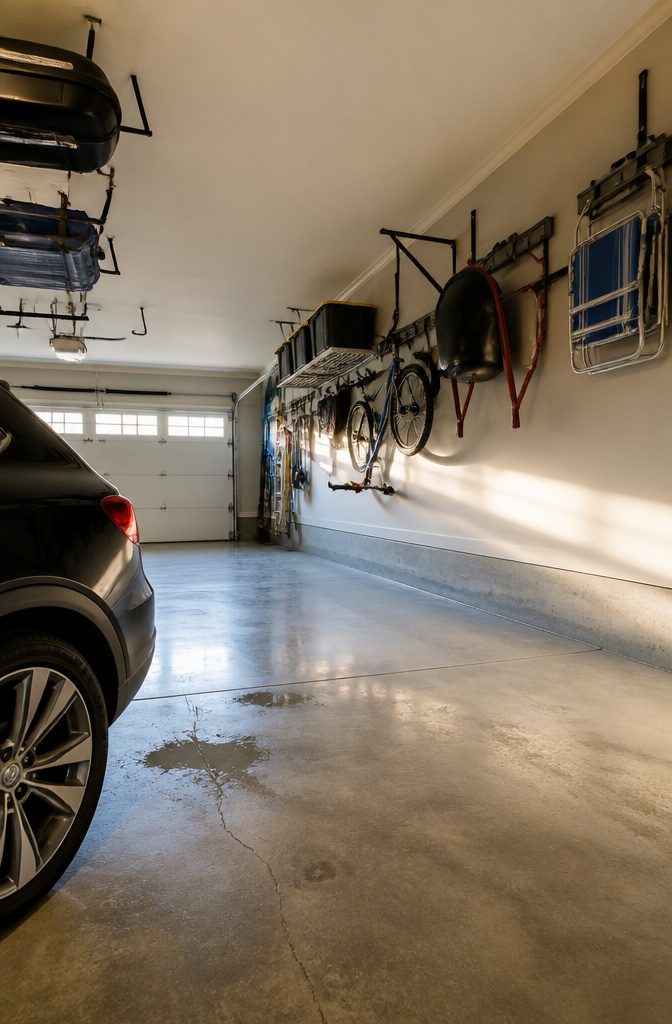
Wall and overhead storage are what let you reclaim the floor.
Move bikes, lawn chairs, roof racks, and wheelbarrows to wall-mounted racks or ceiling hooks, and suddenly the garage can hold a car again instead of turning into a shed with a door opener.
Keeping gear off the ground also protects it if water ever seeps in through a crack or a storm, which matters more than most people think about until it happens.
I prioritize metal wall systems over particle board because they hold more weight and last years longer, and I look for racks that sit high enough that you can walk or park underneath without ducking.
Overhead racks use ceiling space that would otherwise go to waste, and bike hooks pull down easily enough that the storage does not become a barrier to actually using what you own.
Clear floors make the garage feel twice as large and give you room to maneuver when you need to pull out the mower or load something into the trunk.
8. Add a Folding Work Surface
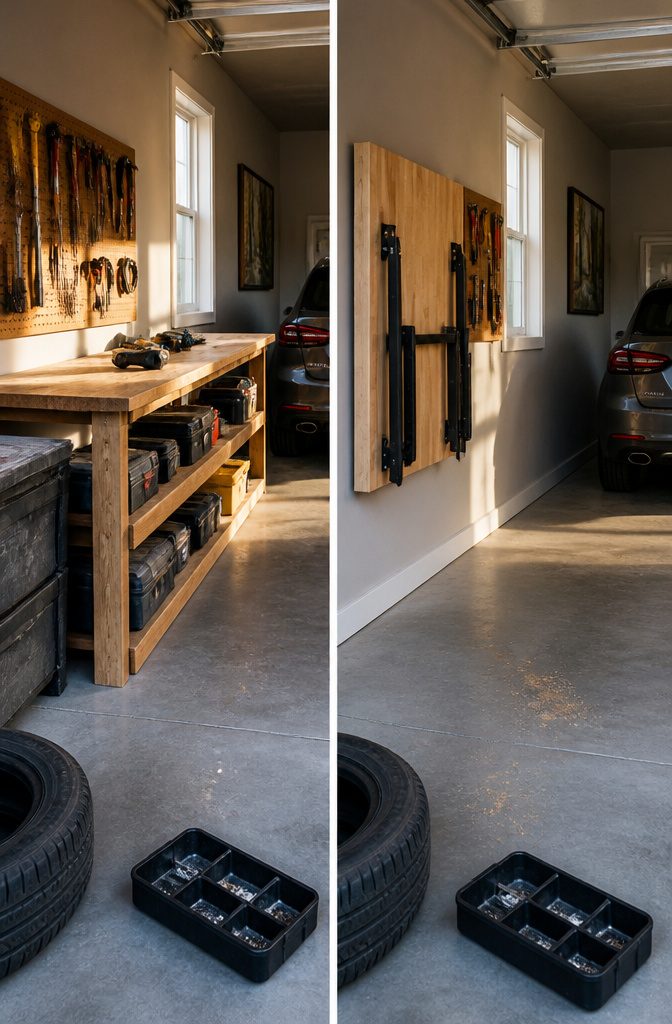
A folding workbench mounted to the wall gives you the surface you need without swallowing the space a permanent table would take.
Wall-mounted tables hinge down flat against the garage when they’re not in use, which matters when you park two cars and can’t afford to lose eighteen inches to a bench that only sees use on weekends.
When you have two vehicles in the garage, there sometimes isn’t enough room to do much else. Connect the table to the wall with hinges so you can fold the legs under and fold it up against the garage wall when you aren’t using it.
The hinge detail is what makes it work: legs fold under, the whole thing lifts, and you get your clearance back.
Collapsible benches do the same job if you’d rather not drill into studs, though they take up a corner when folded rather than disappearing entirely. You still have the workspace for repairs or assembly without blocking parking when you’re done.
9. Store Bikes and Bulky Gear on Walls or Overhead
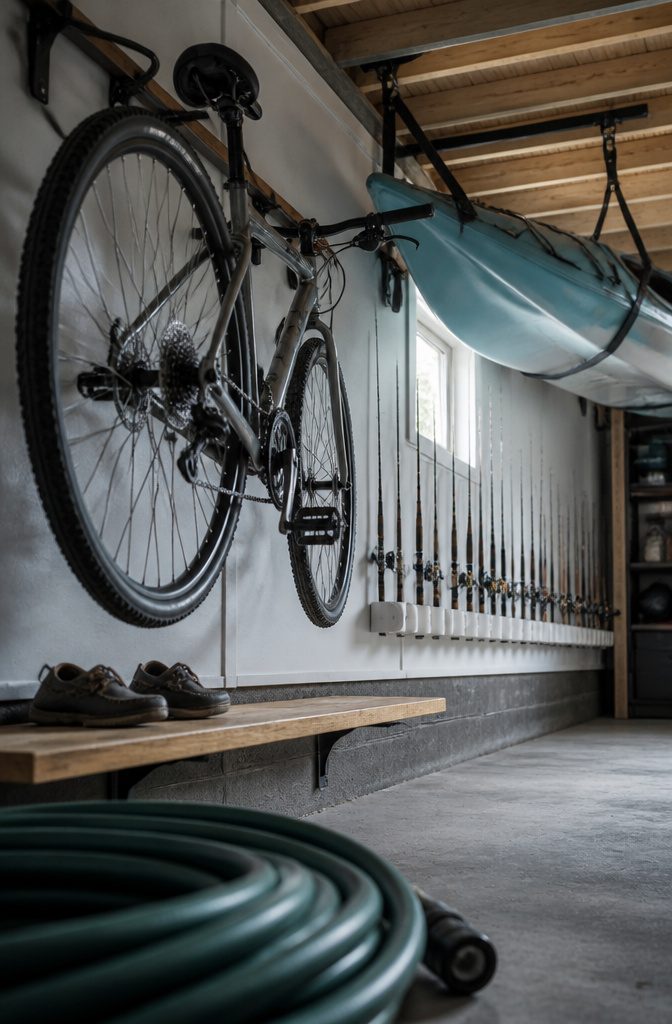
Bikes and bulky gear eat floor space fast, but wall and ceiling racks move them up and out of the way without making them harder to reach.
A horizontal wall mount holds a bike by both wheels and keeps the handlebars from catching on tools or boxes below.
Vertical racks work when wall space is tight, and ceiling hoists pull kayaks, paddle boards, or storage bins up near the joists where nothing else fits.
I like PVC pipe cut into short sections and mounted along a wall for fishing rods. Each rod slides into its own tube and stays separated, so lines don’t tangle and guides don’t snag.
Pool noodles split lengthwise and slipped over the wall studs do the same job and cost even less. Both keep rods visible and ready instead of piled in a corner where tips snap.
10. Create Stations for Frequently Used Items
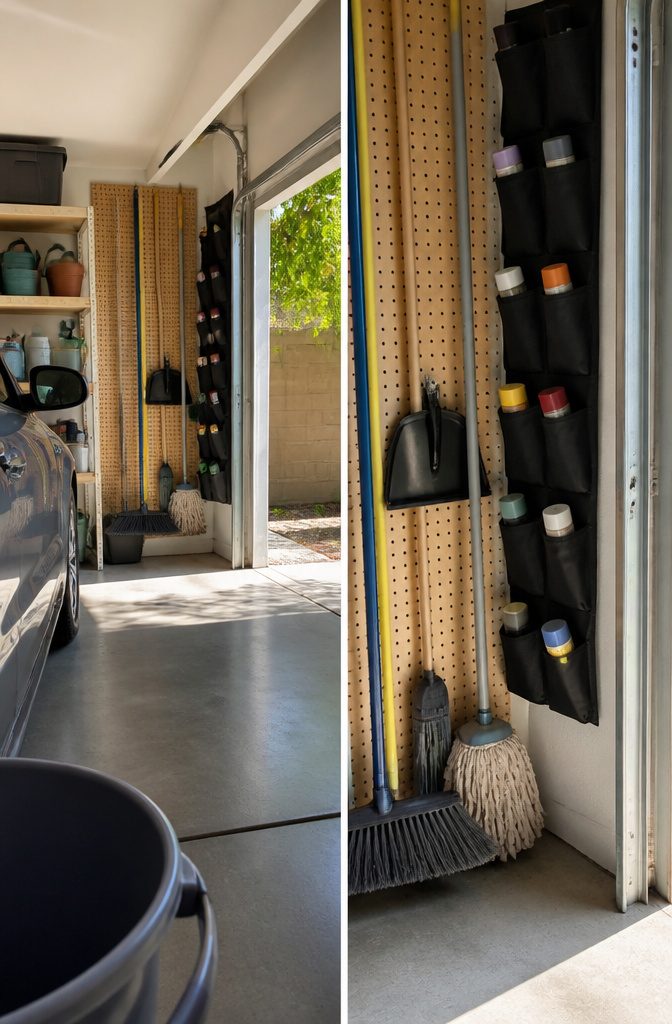
Grouping routine items into their own stations cuts down on the daily search and makes it easier to put things back where they belong.
- Set up a cleaning station for outdoor and garage tools so you’re not tracking dirt back inside. A corner of your garage or a section of pegboard can hold brooms, mops, and dustpans used only for patios, driveways, and the garage floor. Check product labels if you store cleaning solutions here; some warn against high heat or poor ventilation.
- Use corner shelves for small supplies like polish, glue, fillers, and other odds and ends that disappear on a larger shelf. Corner space is easy to overlook when you map out shelving, but it holds exactly the kind of thing you need fast and forget where you left.
- A hanging shoe organizer works for spray paint. Each pocket keeps a can upright and visible, and you can mount it on a wall or the inside of a door.
11. Use Mobile Storage for Flexible Work Areas
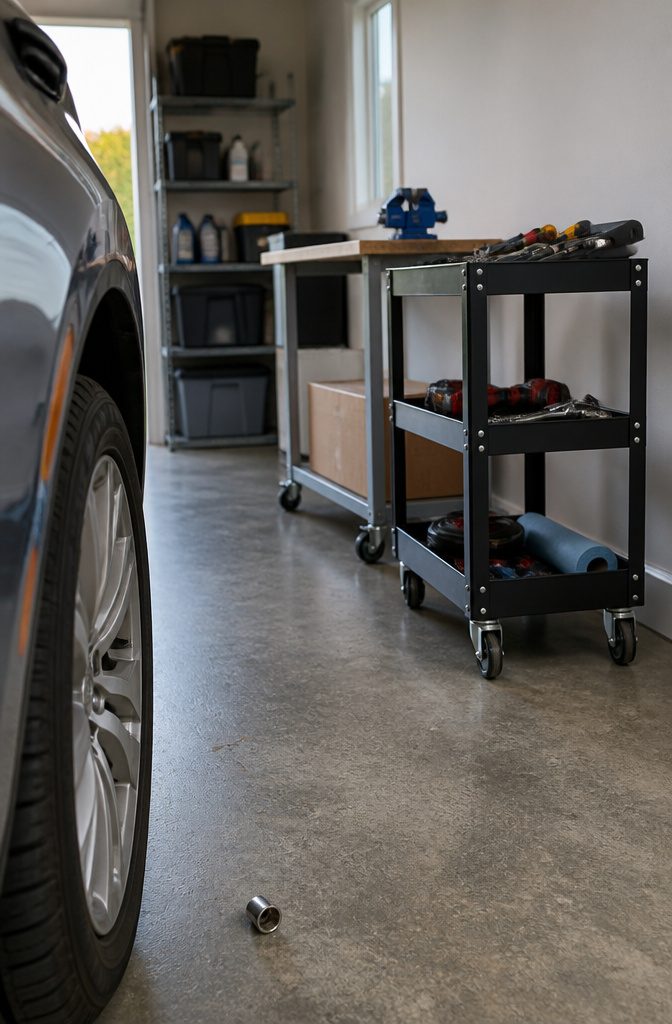
Rolling tool carts and workbenches solve the parking problem without giving up workspace. You move them where the project is, then roll them back against a wall or into a corner when the car needs to come in.
A sturdy cart keeps your most-used tools at hand no matter where in the garage you are working, and you avoid the back-and-forth trips to a fixed bench or cabinet.
Mobile cabinets work the same way. Roll them out when you need access to supplies, tuck them away when you don’t.
I find this setup fits garages where the floor serves two purposes: you need a clear path for vehicles most of the time, but you also need real work surface and organized storage when a project starts.
Fixed workbenches claim floor space whether you are using them or not. Rolling pieces give you the same function without the permanent footprint.
12. Improve Lighting and Reduce Hazards
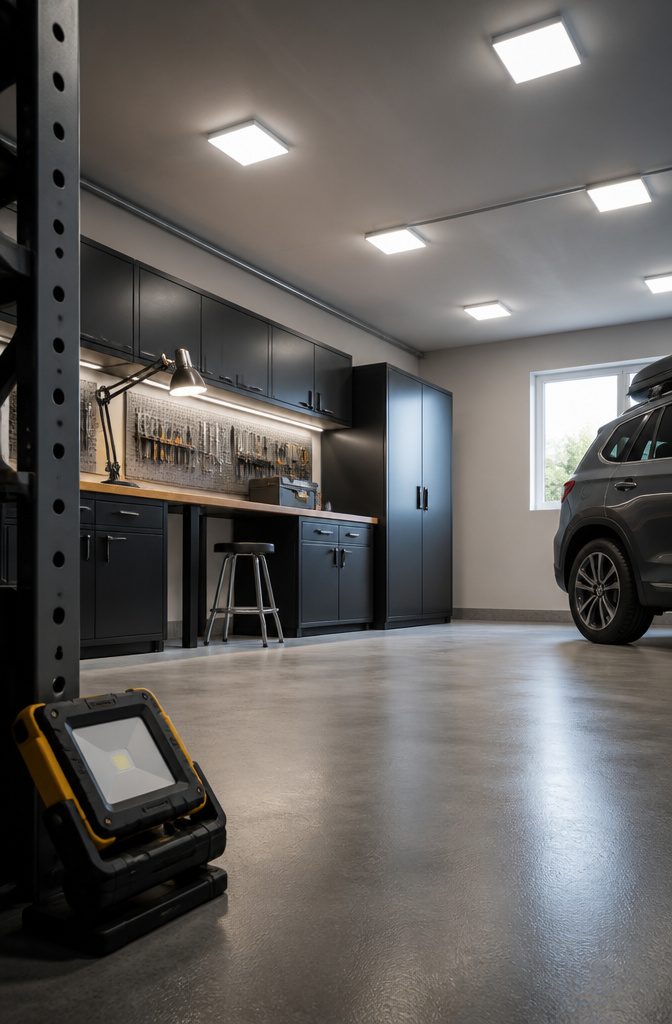
Good lighting makes the garage safer and easier to work in.
Upgrade overhead fixtures to LED for better coverage and less energy draw, spacing them evenly to cut out shadows. Add task lights where you need them: adjustable lamps over a workbench, under-cabinet strips, or clamp lights for project work.
A handheld shop light fills in when you’re digging through bins or working in tight spots. If you can swing it, a window or skylight brings natural light in and makes the space feel less like a cave.
Better visibility cuts down on accidents, but lighting alone won’t handle every hazard. Keep floors clear of trip hazards like long-handled tools leaning against walls or extension cords stretched across walkways.
Store hazardous materials in locked cabinets, especially if children are around, and make sure any space where you keep chemicals has proper ventilation.
Keep sharp tools and frequently used items at eye level where you can see them and grab them without reaching blindly. A well-lit, uncluttered floor is the baseline for a garage that actually works.
13. Return Items to Their Places and Review the System
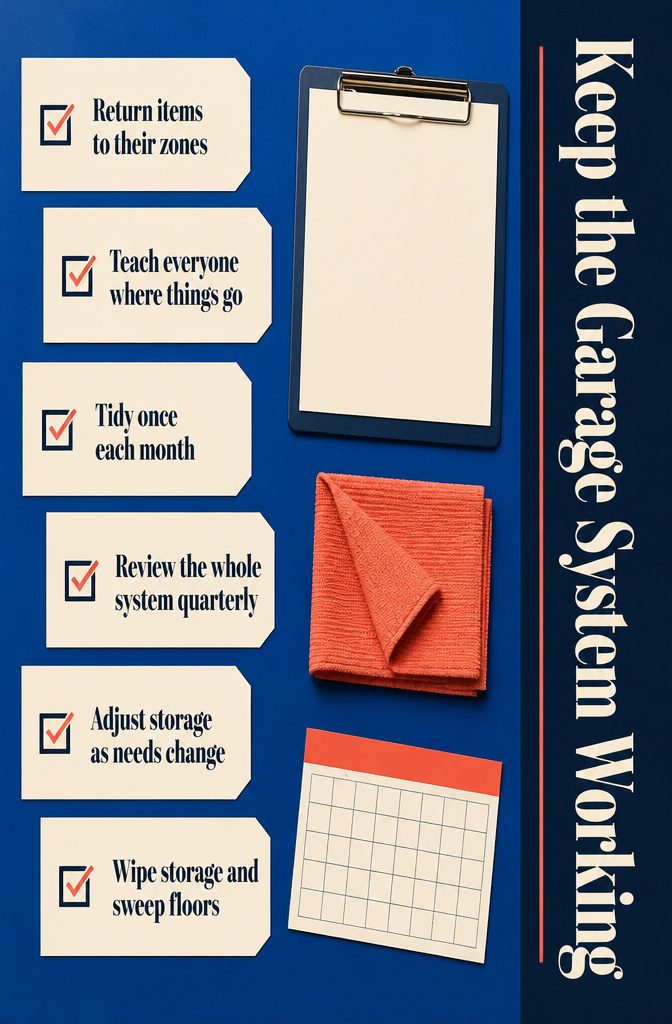
The system only stays organized if items go back where they belong. Garage Force advises teaching family members to return items to their designated spots, which prevents the slow drift back toward clutter.
Labeled bins and zones make this easier because nobody has to guess where the rake or the soccer ball lives.
Set aside time each month to tidy up and make sure everything landed in its proper place.
Then conduct a quarterly review of the whole system. The Orderly Space recommends revisiting the space quarterly or semi-annually to catch any accumulation before it gets out of hand.
During that review, adjust storage solutions as your needs change. The shelf that held paint cans in spring might need to hold garden stakes by fall, and a rigid system that cannot flex will eventually break.
Regular cleaning helps too. Wipe down storage systems and sweep floors so dust and grime do not build up on the surfaces you worked to clear.
Match the Arrangement to How You Use the Garage
Match the Arrangement to How You Use the Garage
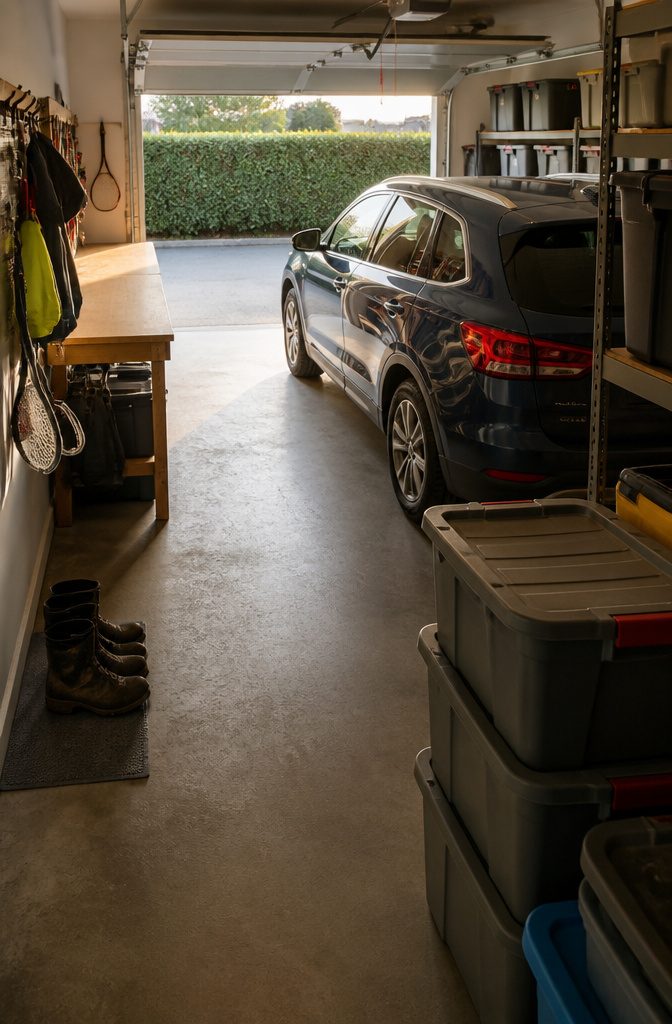
Storage placement should follow the garage’s actual job. A space that parks two cars needs wall-mounted systems that keep the floor clear.
A workshop wants tool access at arm height and a bench footprint that stays put. A garage storing seasonal bins, sports equipment, and overflow household items can dedicate more floor area to shelving because parking is not the priority.
What works depends on whether the space serves one function or several.
A garage that does double duty as storage and parking splits into zones: frequently used items go on walls near the door, bulkier storage moves to the back or overhead, and the zone closest to the vehicle stays open.
A single-purpose garage can afford denser floor storage or a more fixed layout.
I identify which activities happen in the space before placing a single shelf, because rearranging cabinets after the fact is harder than planning for the right mix upfront.
Protect Belongings From Garage Conditions
Garages swing between hot and cold, trap moisture in winter, and usually have no climate control at all. That makes them hard on anything sensitive to temperature or humidity.
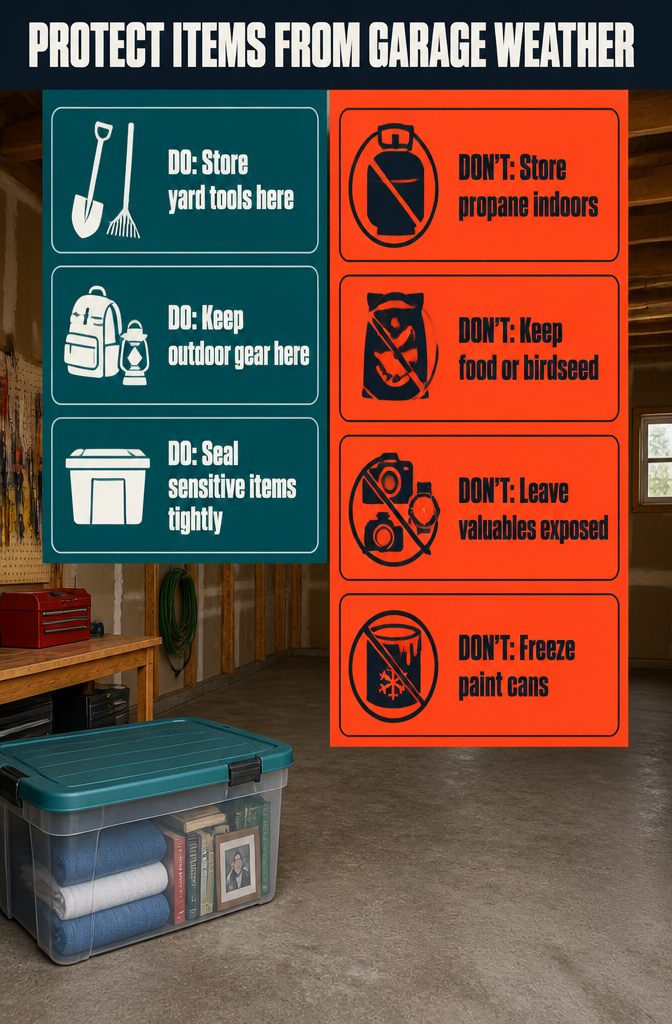
Store linens, books, photos, flammable items, and food elsewhere unless you can seal them in weathertight containers. Here’s what to keep out or protect:
- Hazardous materials and propane tanks. Store propane outside rather than in the garage.
- Anything edible. Even sealed birdseed attracts mice and other vermin.
- Valuables. Temperature and moisture swings make the garage a poor place for anything irreplaceable.
- Paint cans in an unheated garage. The freeze-thaw cycle ruins the paint.
Car supplies, yard tools, outdoor gear, and holiday decorations hold up fine. Extra linens, books, and furniture can work if they go in sealed containers, sit off the floor, or get wrapped tightly in plastic.
Check Overhead Storage Clearance and Installation
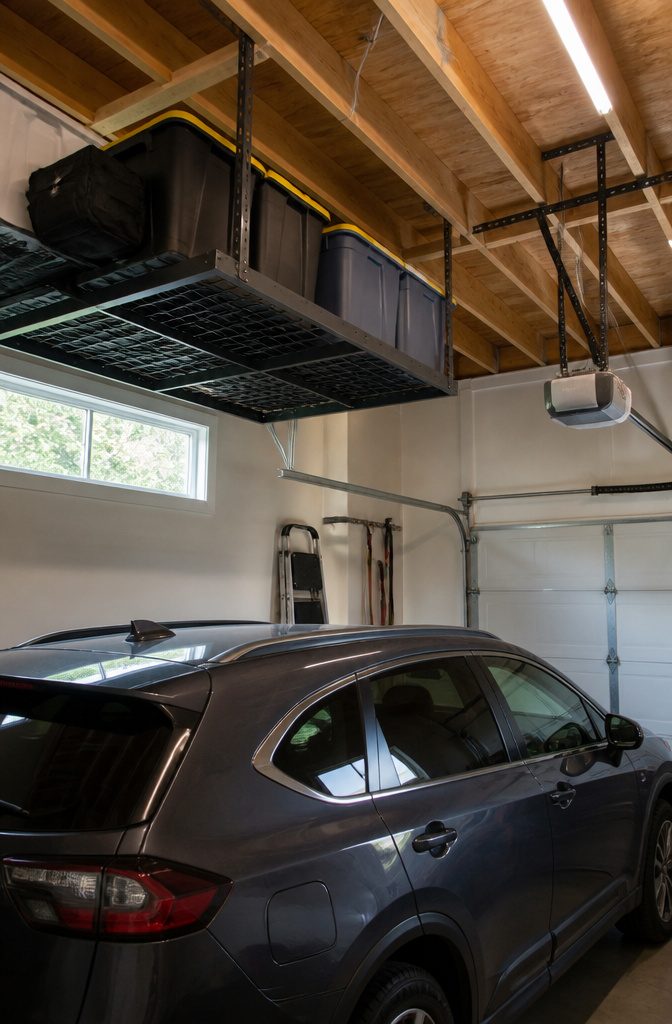
Overhead racks should sit high enough that they do not interfere with the garage-door opener and do not scrape the roof of a car when you pull in.
If you have an opener, trace its full arc of motion before you commit to a position. Ceiling-mounted storage that blocks the track or hangs into the path turns a convenience into a repair bill.
Measure the available space before you buy the rack. Wire shelving and ceiling track systems come in fixed widths, and returning the wrong size adds a week to the project.
Once you know the rack will fit, attach it with hardware rated for the load you plan to put on it. A ceiling track may promise fifty pounds per bin, but only if the lag screws actually reach a joist.
If you are uncertain about fastener choice or how to locate solid framing, call in a contractor before you hang weight overhead.
Frequently Asked Questions
What items should not be stored in a garage?
Keep hazardous materials, propane tanks, food (including birdseed that attracts rodents), valuables, and paint cans out of unheated garages.
Temperature swings and moisture damage these items, and anything edible draws pests even when sealed. Propane tanks belong outside rather than in an enclosed space.
How do I organize small items in my garage?
Use clear drawer organizers for fasteners like screws, washers, and bolts so they stay separated instead of mixing into one pile.
Bins that mount to slatwall or pegboard save counter space, and magnetic strips hold drill bits and metal parts where you can see them.
How much should I pay someone to organize my garage?
Professional organizers typically charge $50 to $150 per hour depending on location and experience, and a full garage project often takes 8 to 16 hours.
Some companies offer flat-rate packages that include labor, storage systems, and installation, which can run $1,500 to $5,000 for a two-car garage.
How do you organize a two car garage?
Mount storage on walls and overhead to keep the floor clear for parking, and group items by frequency so daily-use gear stays near the door while seasonal bins move to higher racks.
Zone the space so the areas closest to where vehicles park stay open, and use vertical systems that hold weight without eating into driving clearance.