
Storage bins work best when you sort by category first: clothing and linens you rotate by season, toys and games grouped by type, office supplies and paper in file-ready boxes, pantry staples in clear stackable containers, craft materials by project or medium, and household or outdoor gear by activity.
The deciding factor is whether you can spot what you need without unpacking three other bins to find it, which is why Target’s 28-quart and 56-quart Sterilite bins handle heavier items and books while IKEA SAMLA bins with latching lids suit lighter loads.
Clothing, Linens, and Seasonal Wear
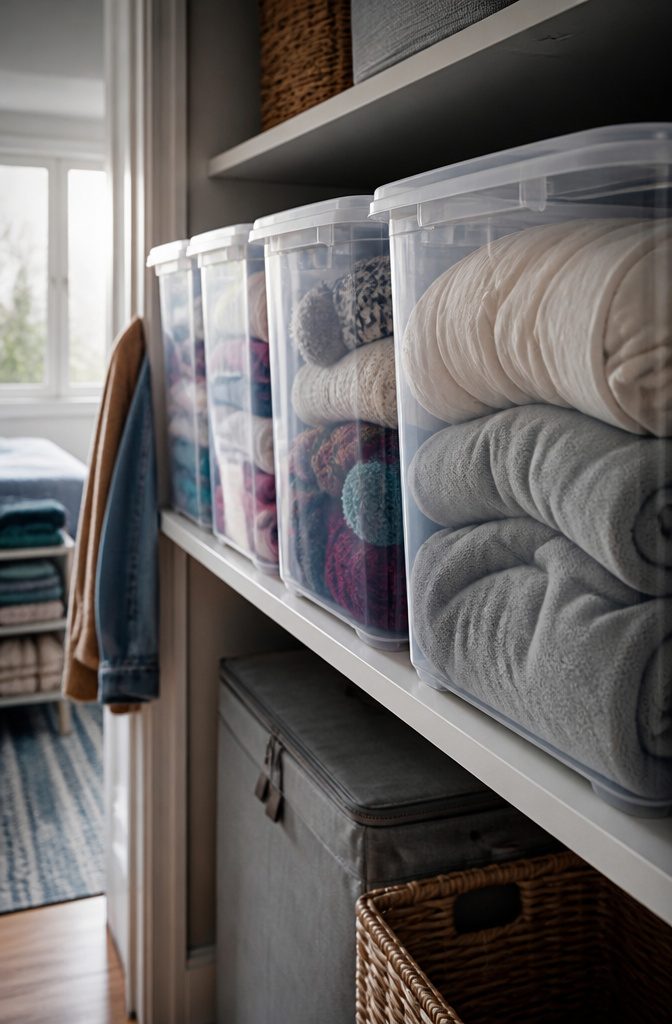
Fabric storage splits into two camps: the wearables you rotate through the year and the household textiles you swap by season or guest count.
I keep off-season sweaters, bathing suits, winter hats and gloves in bins until the calendar makes them useful again, and bedding or extra towels go the same way when they are not in active rotation.
Socks and smaller items stay more accessible in drawer organizers. IKEA SKUBB boxes work well for this: I have used them for drawer storage for over fifteen years, and they hold shape better than most soft organizers at that price.
For bulkier linens like comforters or holiday bedding sets, large 56-quart clear bins handle the volume without fighting a zipper, though they only suit lightweight loads. Fill one with down pillows or fleece throws and it stacks fine.
Fill it with heavy quilts and the handles pull through. The transparency tells you what is inside without opening anything, which matters when you are stacking four deep in a closet.
Toys, Games, and Play Supplies
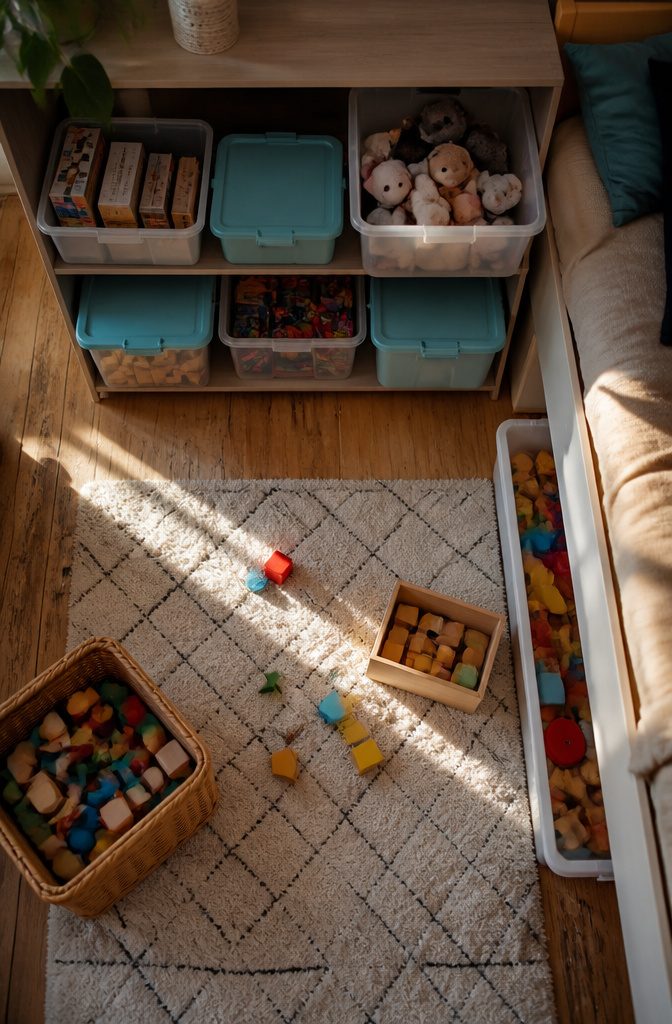
Toys are some of the easiest things to keep in storage bins because they come in so many sizes and shapes, and bins let you group them by type instead of scattering everything across the floor.
I use the smaller plastic bins with lids to corral sets on shelves: games stay together, craft sets get their own container, building sets get another.
That way the reader knows where the Lego lives and where the board games are, and cleanup actually happens.
For larger lightweight items like stuffed animals or big toys, the deep 56-quart clear bins work well. You can see what’s inside without opening every lid, and the bins stack when you need to reclaim floor space.
Small toy collections fit neatly in shallow accessory boxes, which are 7 1/2 inches by 6 1/2 inches and work as drawer dividers if the toys migrate into furniture.
Longer toys or odd-shaped pieces go into underbed boxes that run 35 1/2 inches long and keep flat things flat.
Office, Paper, and Stationery
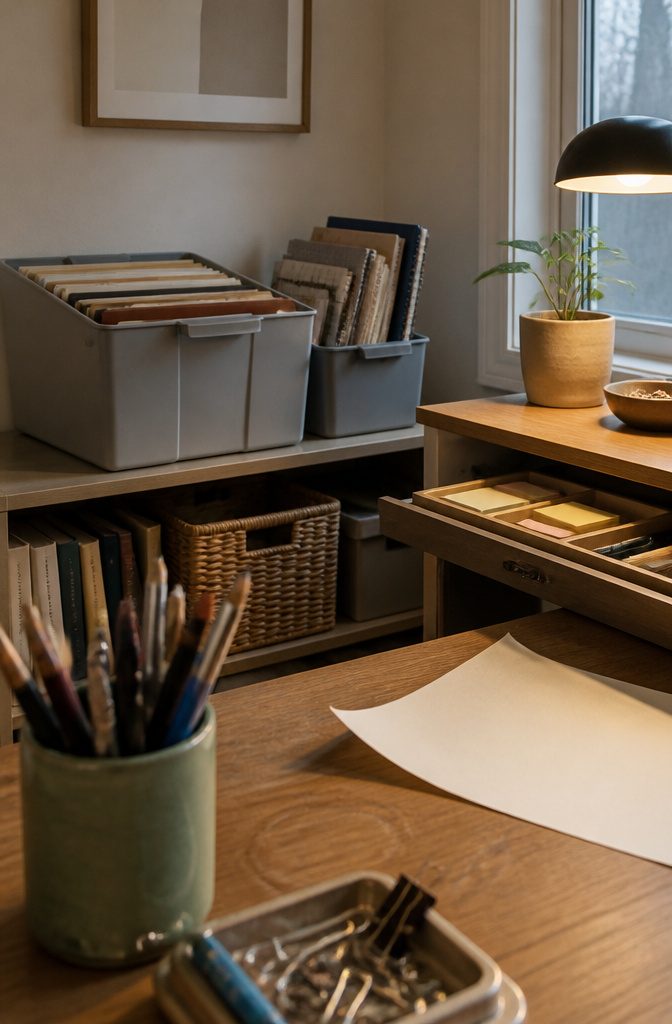
Documents and files store best in plastic file boxes with built-in ridges.
The ridges support hanging file hooks so you can slide folders back and forth without lifting the entire stack. Staples, Office Depot, and Container Store all carry them, and they beat flat-bottom bins for anything you need to reference regularly.
Books and paper weigh more than you expect once you fill a bin. I keep heavy materials in smaller containers rather than oversized ones.
A compact bin loaded with tax returns or manuals stays liftable; the same weight in a 30-gallon tote turns into a back problem. Your future self will thank you when it’s time to move or reorganize.
Writing supplies and stationery belong in desk-sized storage so pens, pencils, and notepads stay within reach. Loose paper clips and sticky notes disappear into desk drawers; a small bin corrals them where you can actually see what you have left.
Kitchen and Pantry Items
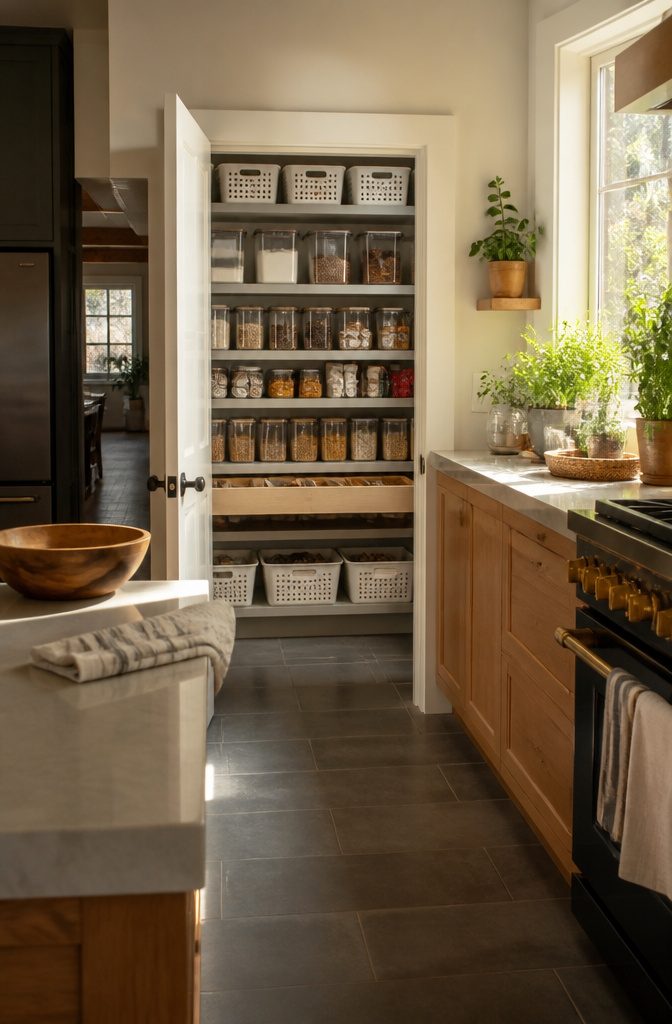
Kitchen drawers and pantry shelves work better when everyday food supplies sit in clear or stackable bins instead of loose bags and half-open boxes.
Utensils go into shallow tray-style bins in a drawer so forks stay with forks, spices line up in small canisters or acrylic stacking bins that let you see what you have at a glance, and baking supplies like flour, sugar, and chocolate chips stay fresh in wider pantry bins with lids.
Snacks get their own bin so everyone knows where to look, and tea bags and coffee pods do the same.
I use white stackable bins that have held up for more than fifteen years, which means they still nest cleanly on a pantry shelf after all that use.
Herbs stay potent longer when they are grouped together in a small container away from heat, and bulk pantry goods like rice, pasta, and oats pour cleanly from wide-mouth bins with straight sides.
Grouping by type makes restocking faster and keeps you from buying duplicates you already own.
Craft and Hobby Supplies
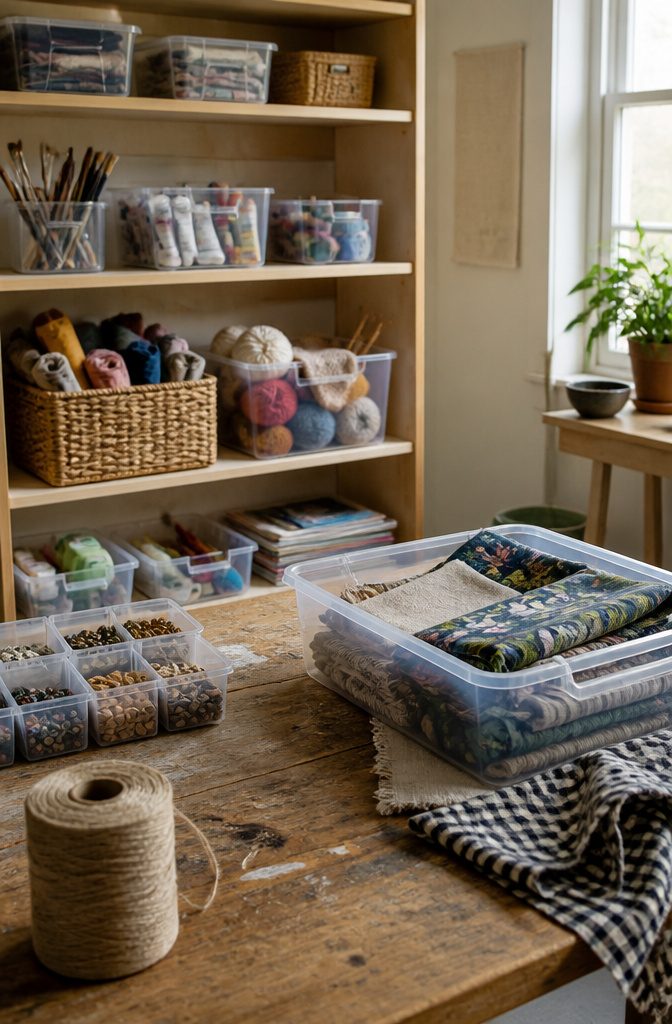
Craft materials scatter fast when they live in drawers or shopping bags, and storage bins keep everything for one project or medium in the same place.
I use clear bins for painting supplies so I can spot the right brush size or the tube of cadmium yellow without digging, and fabric in baskets where the texture and warmth suit a shelf better than hard plastic.
Knitting yarn, needles, and pattern sheets go together in one bin; scrapbooking paper, punches, and adhesive in another. You want to open exactly what you need rather than sorting through three half-empty boxes to find the right thing.
Bins also prevent damage to materials that bruise, bend, or tangle. Fabric stored loose picks up dust and creases; rolled in a bin it stays clean.
Paint tubes and brushes stay separate from solvents in adjacent containers, and small embellishments like buttons or beads get their own compartments so nothing spills into the yarn.
Household, Outdoor, and Event Gear
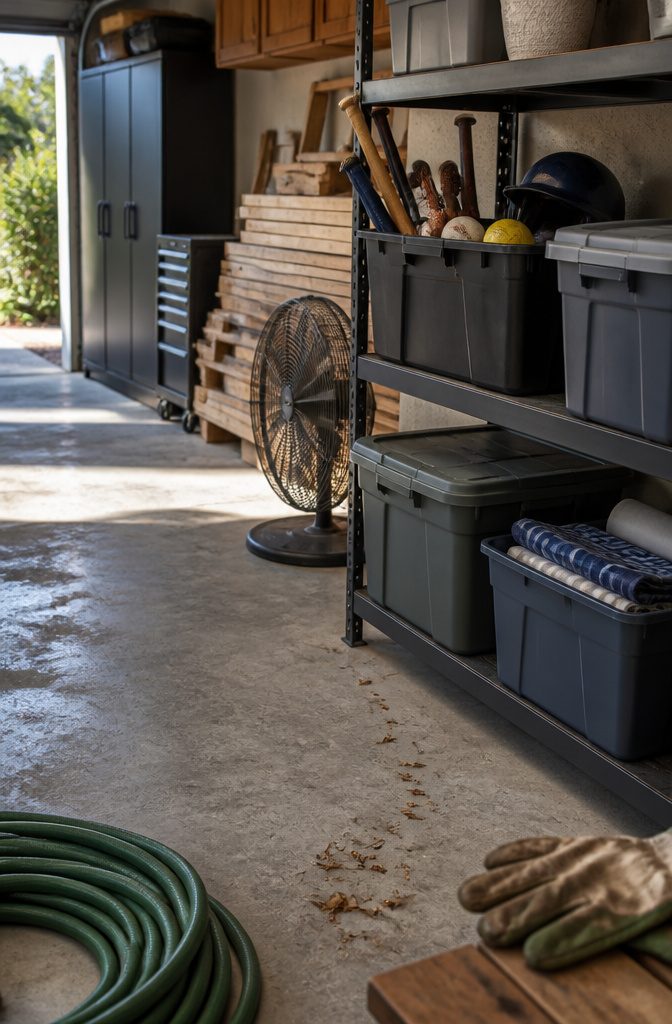
Household, Outdoor, and Event Gear
Lawn and garden equipment fits naturally in larger bins, particularly if you store hand tools, seed packets, and fertilizer together rather than scattering them across a garage or shed.
Sports equipment benefits from dedicated bins because bats, balls, gloves, and helmets stay together by season or by activity, and you know exactly where to find them when practice starts.
Event supplies stack well when you group tablecloths, paper goods, serving platters, and decorations in one container per occasion type.
Furniture and household appliances that cycle in and out of service, such as space heaters, fans, or extra seating, deserve their own bins if they fit; the alternative is leaving them loose where they collect dust.
Cleaning supplies and pet supplies both benefit from containment, though keep cleaning products away from anything fabric or absorbent, and pet gear separate from anything edible.
These categories run larger and heavier than most household storage, so bin size becomes the deciding factor in whether the system works or just creates another lifting problem.
Match the Bin to What Goes Inside
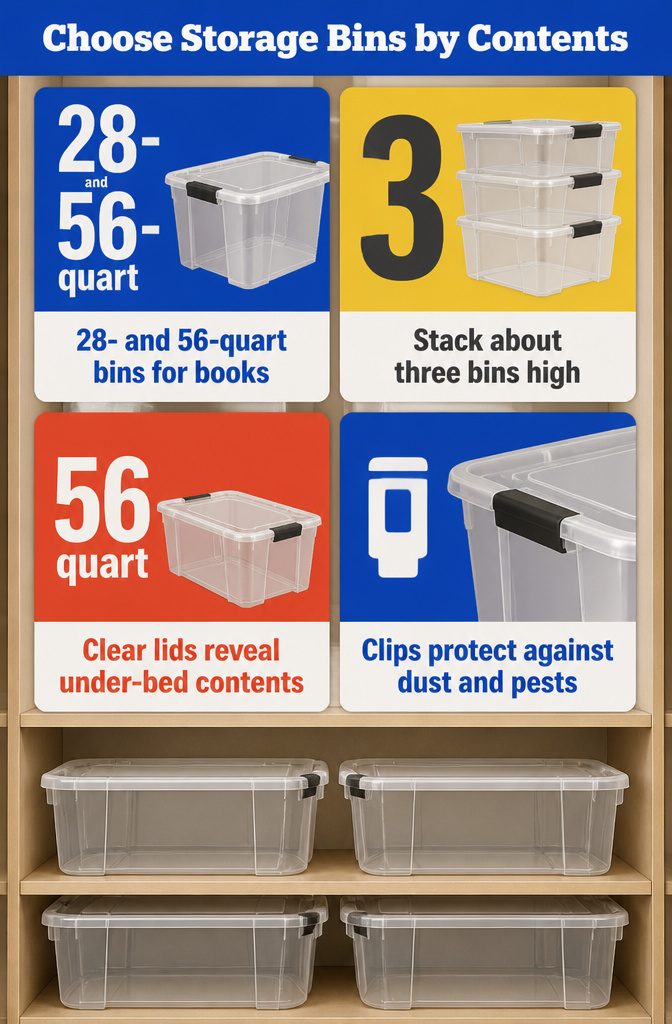
Match the Bin to What Goes Inside
Size decides whether you pull everything out to find one thing or see it the moment you open the lid.
Target’s 28-quart and 56-quart Sterilite bins work for flatter, heavier items and larger books; the shallow profile keeps weight manageable and lets you stack about three high before lids start to bend.
IKEA SAMLA bins come in 3-gallon and 6-gallon sizes with new latching lids that hold more securely.
For small accessories, the Container Store’s 7½ × 6½ inch boxes fit drawer dividers and shelves without wasted space, and their 35½-inch underbed boxes slide under most frames.
Material and visibility matter more than you think. Clear plastic lets you spot what you need without opening anything, which is why the 56-quart bins with clear lids beat the solid-lid versions for under-bed storage.
If you’re stacking bins in a closet where only the front shows, opaque lids keep the look cleaner. Lids with clips protect against dust and pests, but open-top bins give you faster access when you’re pulling things daily.
Measure your space first, buy bins that fit those dimensions exactly, and label everything so you’re not guessing six months later.
Keep Everything Identifiable and Easy to Reach
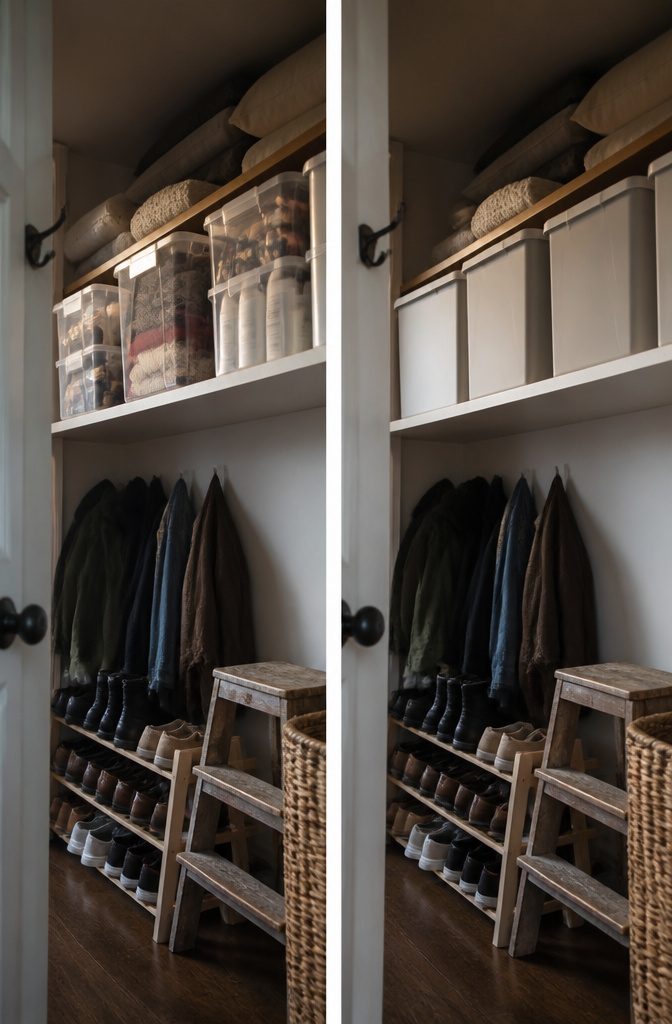
The detail you need to find again is most of the work. Clear bins show what is inside without pulling them down, and that advantage matters most when you stack them or slide them deep on a shelf.
Opaque bins need labels, and I write on them the moment I close them rather than trusting I will remember the next time I need batteries or the winter scarves.
One source recommends keeping items you reach for often near the front and the seasonal or seldom-touched pieces farther back, which cuts down on the shuffling and restacking each time you open the closet.
The same source suggests making a map of where things sit if you have more than a few bins in rotation.
Grouping by category holds across all five sources, because a bin that mixes birthday supplies with bath towels is a bin you cannot name and will not remember.
Protect Stored Items From Damage
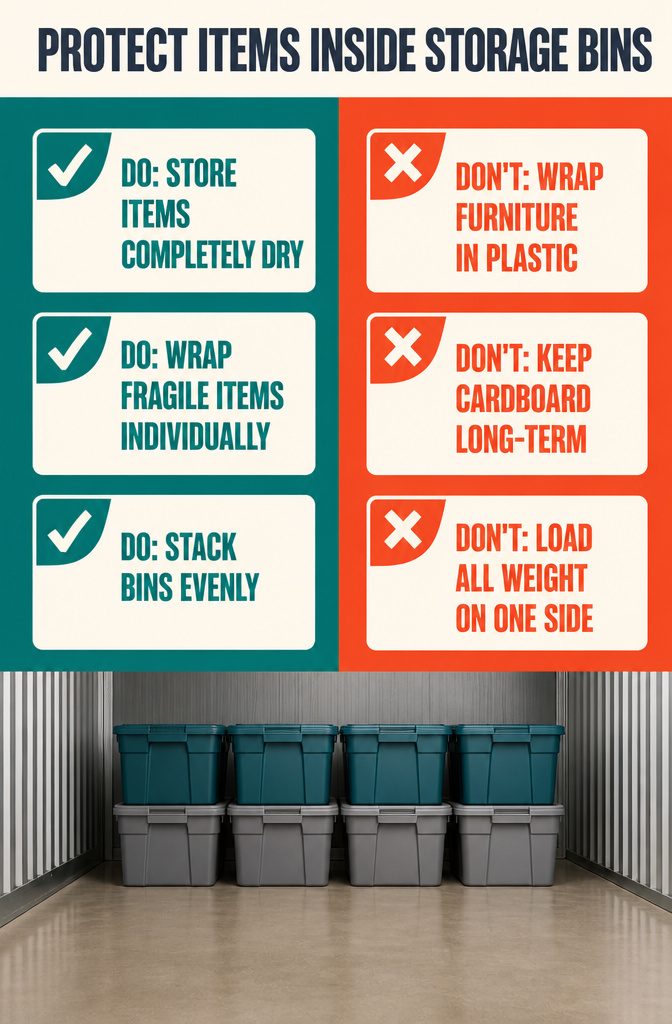
A few precautions keep stored items from warping, molding, or attracting pests:
- Store items dry. Moisture trapped inside a bin leads to mold and mildew, especially on fabric, paper, and unsealed wood.
- Wrap fragile items individually before binning them. Newspaper, bubble wrap, or packing paper all work.
- Skip plastic wrap on furniture. It traps condensation against the surface and can ruin the finish.
- Avoid cardboard boxes in long-term storage. Cardboard attracts roaches, silverfish, and mice, and wet cardboard molds quickly.
- Stack bins evenly. Randomly stacked boxes tip, damage contents, or cause injury when they fall.
- Distribute weight across the floor. Loading all heavy bins on one side can make storage unit doors stick or refuse to open.
Lids keep dust and bugs out, but they also hide what is inside. Open-top bins give faster access when you are rotating items weekly.
What Not to Store in Bins
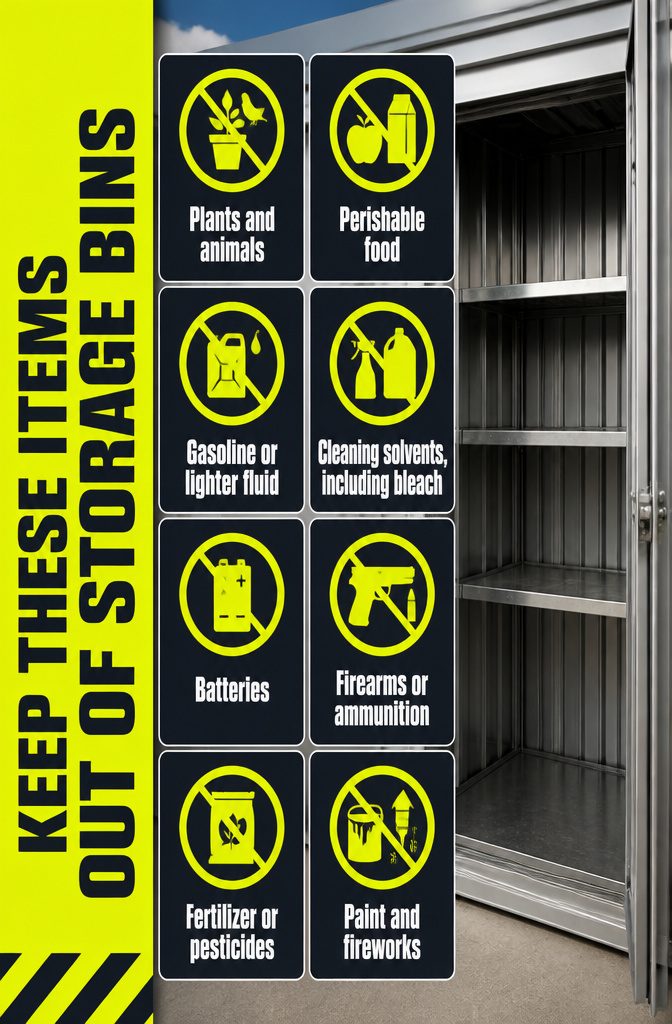
Storage bins handle plenty, but some items are either unsafe in a sealed container or outright banned in many facilities.
Keep flammable materials and hazardous substances out of bins entirely:
- Plants and animals (both living and perishable)
- Perishable food
- Gasoline or lighter fluid
- Cleaning solvents, including bleach
- Batteries
- Firearms or ammunition
- Fertilizer or pesticides
- Paint
- Fireworks
Most of these pose fire risk, off-gas fumes, or degrade in ways that damage the bin and everything around it.
Batteries can corrode and leak, paint cans rust through, and anything flammable becomes a liability the moment temperatures swing. If a rental facility or your homeowner’s insurance lists it as prohibited, that prohibition exists because someone learned the hard way.
Frequently Asked Questions
What not to store in plastic bins?
Never store flammable materials, hazardous substances, perishable food, plants, animals, gasoline, lighter fluid, cleaning solvents, batteries, firearms, ammunition, fertilizer, pesticides, paint, or fireworks in plastic bins.
These items pose fire risk, off-gas fumes, corrode, or degrade in ways that damage the bin and everything around it.
What size storage bin do I need?
Measure your space first and buy bins that fit those dimensions exactly. For flatter, heavier items, 28-quart and 56-quart bins keep weight manageable and stack about 3 high, while small accessories fit well in 7½ × 6½ inch boxes or 35½-inch underbed containers.
How do you organize inside storage bins?
Use smaller bins inside a larger bin to divide space and keep items grouped by category.
Group craft materials by project, toys by type, and kitchen supplies by use so you open exactly what you need rather than sorting through multiple containers.
How do I make my storage bin look nice?
Wrap or paint the bin, add decorative tape or paper, or use matching labels. For clear bins, you can adhere decorative paper on the inside.
What can I do with empty storage bins?
Reuse them in another area of your house, save them for future projects, give them to family or friends, donate them to charity or a thrift store, or sell them on Facebook or Craigslist.