
TV wall panels range from a can of black paint to a full custom unit that needs a drill, a level, and a lease long enough to justify the holes.
The deciding factor is how permanent you can afford to be: renters who patch on move-out day have different options than owners who plan to stay.
1. Custom TV Wall Units with Floating Consoles

A full wall treatment built around your screen turns the TV from an appliance into architecture.
The floating console keeps floor space open, which matters in a rental where every square foot counts, and the LED backlighting hides cord clutter without requiring an electrician.
The panel and console are fabricated as one system, so measure your screen first and order to fit.
Most units run high installed, though you can source the components separately for far less if you have a drill and a level.
This suits someone staying put for a while. The wall attachment is permanent, and the look demands a room large enough to carry it.
Samsung’s microLED technology changes the game for the design of video walls in retail, public spaces and media.
— Samsung

Colorful LED Lights: Features 16 million color LED strip capable of creating various mood lighting effects for different settings like bedroom, gaming room, or home theater. Bring you a better visual experience.

An ideal way to mount your Monitor or LCD panel TV to the wall,to use your space efficiently and watch your favorite TV shows comfortably!
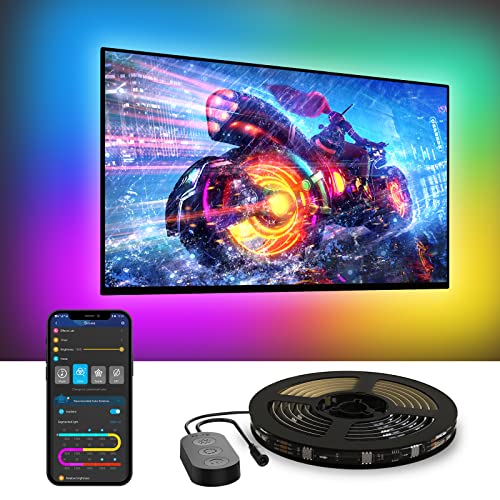
A Symphony of RGBIC Lighting: Govee RGBIC technology realizes the color segmentation display of the TV lights behind, creating more dynamic and gorgeous lighting effects. Experience more vibrant colors in your TV lights and upgrade your visuals.
2. Marble & Wood Slat TV Accent Wall
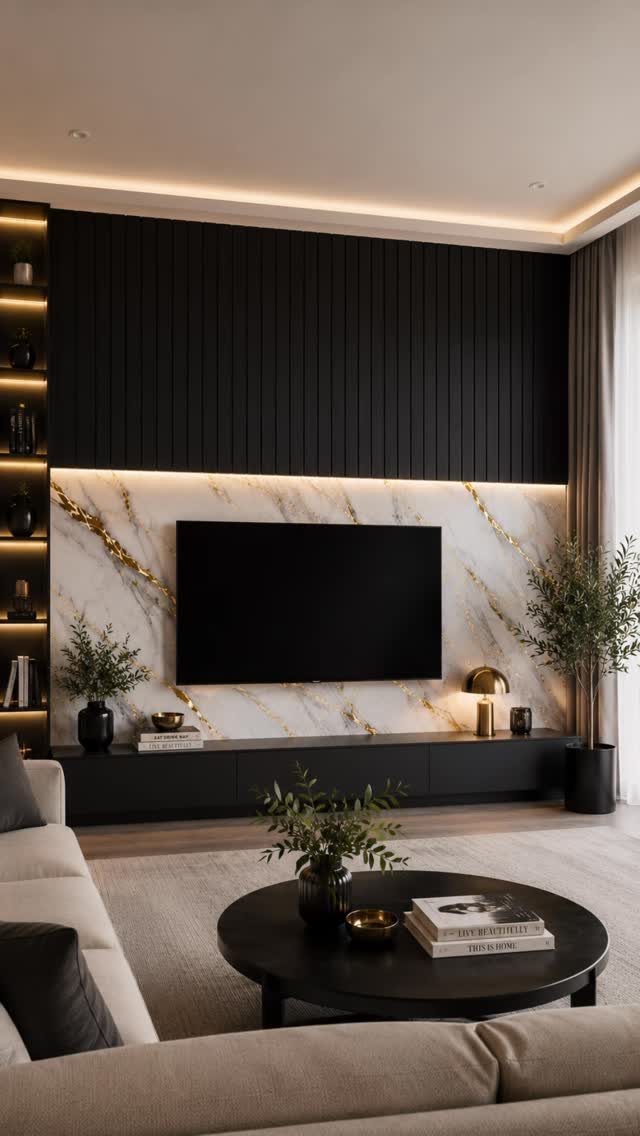
Marble-look porcelain or laminate panels meet vertical wood slats in a combination that reads expensive without the quarried-stone price.
Black slats above warm what could otherwise feel cold, and the whole thing installs as a weekend project with construction adhesive and a brad nailer.
I would use peel-and-stick marble panels for a rental; they lift off with a heat gun when you move. The slats come in short sections sold by the piece at most lumber yards.
Best for a room with some natural light. In a basement or north-facing space, the black upper band can swallow the room whole.

【Noted 】: Our included hardware is only for:✅ Brick walls✅ Wood walls✅ Concrete walls. Not suitable for Drywall / Cavity Wall.

【PREMIUM QUALITY CONSTRUCTION】Constructed from premium solid wood composite board, this TV wall frame boasts a smooth surface and resistance to fading. Its solid and wear-resistant build ensures long-term durability. Equipped with standard wall-mounted accessories and high-quality hardware, it provides a strong and sturdy support.
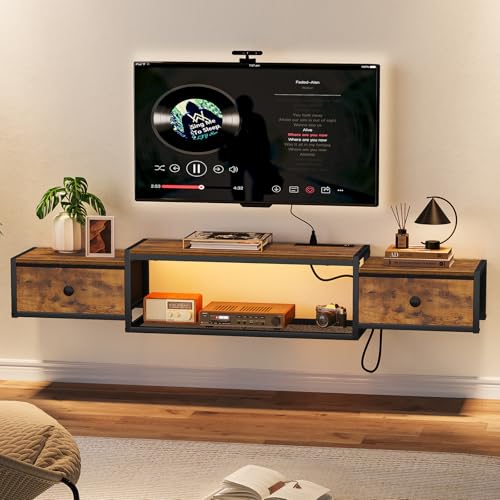
Save Floor Space: This wall-mounted floating entertainment center frees up floor space and creates a tidy living room. Measuring 63“ L x 11” W x 11" H, it accommodates TVs ranging from 32 to 75 inches. The open metal frame in the center allows for rapid ventilation and heat dissipation, making it convenient for storing electronic devices such as set-top boxes and game consoles.
3. Painted Black TV Accent Wall
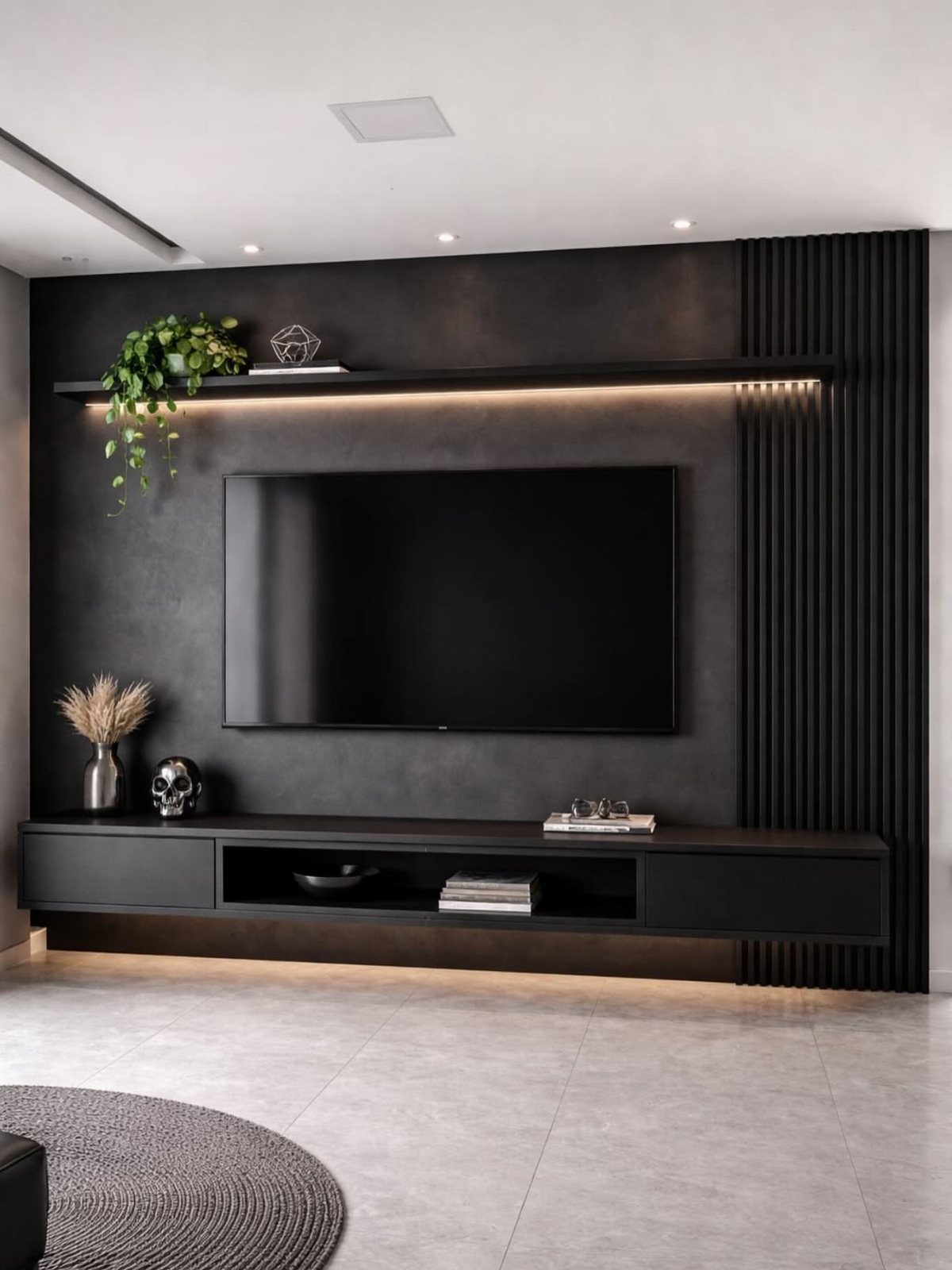
Flat black paint does what paneling does at about 1/20 the cost and none of the sawdust. The texture comes from a roller with a thick nap or a skim coat beneath the color, not from the paint itself.
Frog tape is the difference between this looking intentional and looking like a mistake. Press it hard, paint the edge with the base color first to seal the seam, then roll your black.
Two coats minimum; three if you are covering a light color. Paint and supplies for a standard wall run less than a trip to the hardware store if you skip the primer and already own the roller.
A narrow room wants the full wall. In a wide space, tape a large rectangle centered on the TV so the screen sits inside a frame.

DESIGNER COLLABORATION - CHRIS LOVES JULIA - A Grey and White Marble colorway; highlights the Bonneville design; with recognizable Chris Loves Julia collection details.

DESIGNER COLLABORATION- CHRIS LOVES JULIA - Beige tones and the bonneville pattern bring distinctive style and personality to your space.

Nexus Vinyl Tiles: Refresh your home for a low cost and no hassle with the Nexus Vinyl Floor Tiles. Our tiles can be used in any room in your home including the kitchen, dining room, bedrooms, bathrooms, foyers, and basements. No messy glue or adhesives needed. Includes 20 vinyl tiles.
4. Concrete Wallpaper TV Accent Wall
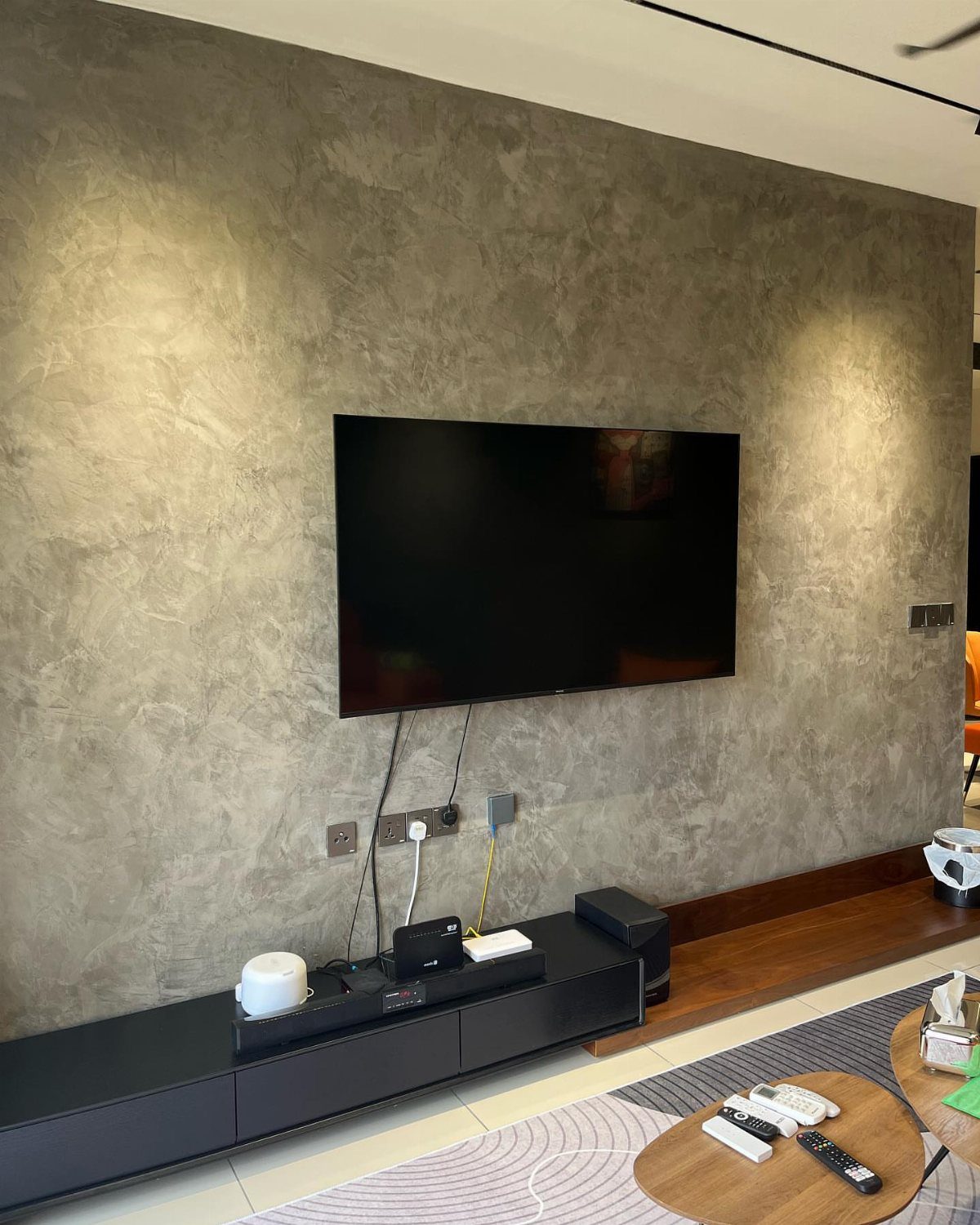
Concrete wallpaper gives you the loft look without the loft lease. The mural format means one continuous image, no repeating pattern to match, and it goes up with paste the way any paper does.
PhotoWall’s Concrete Wall mural is priced by the square; for a standard TV wall, order extra and trim to fit. The texture is printed, not embossed, so it will not hide seams the way vinyl might.
A sharp blade and a straightedge matter more than usual here.
This works when your room already leans industrial. Against warm woods and soft textiles, the gray can read as a mistake rather than a choice.

Package Coverage: Each box includes 20 tiles(each 11.8 x 11.8 inch), covering 19 square feet, perfect for creating feature walls or unique ceiling designs.

DIY Your Accent Wall - With 3D raised pattern and sleek, modern design, these panels effortlessly enhance various interior styles, transforming ordinary walls into captivating accent walls, a simple DIY solution for both residential and commercial interiors

High Impact Visual Upgrade: includes 60 pcs of black 3D wall panels (12"x12" each), covering approx. 58 Sq.Ft; The modern fluted slat design adds dynamic depth and architectural elegance to boring flat walls, perfect for creating a stunning DIY feature wall in living rooms, bedrooms, or studios
5. Black Wood Slat TV Accent Wall
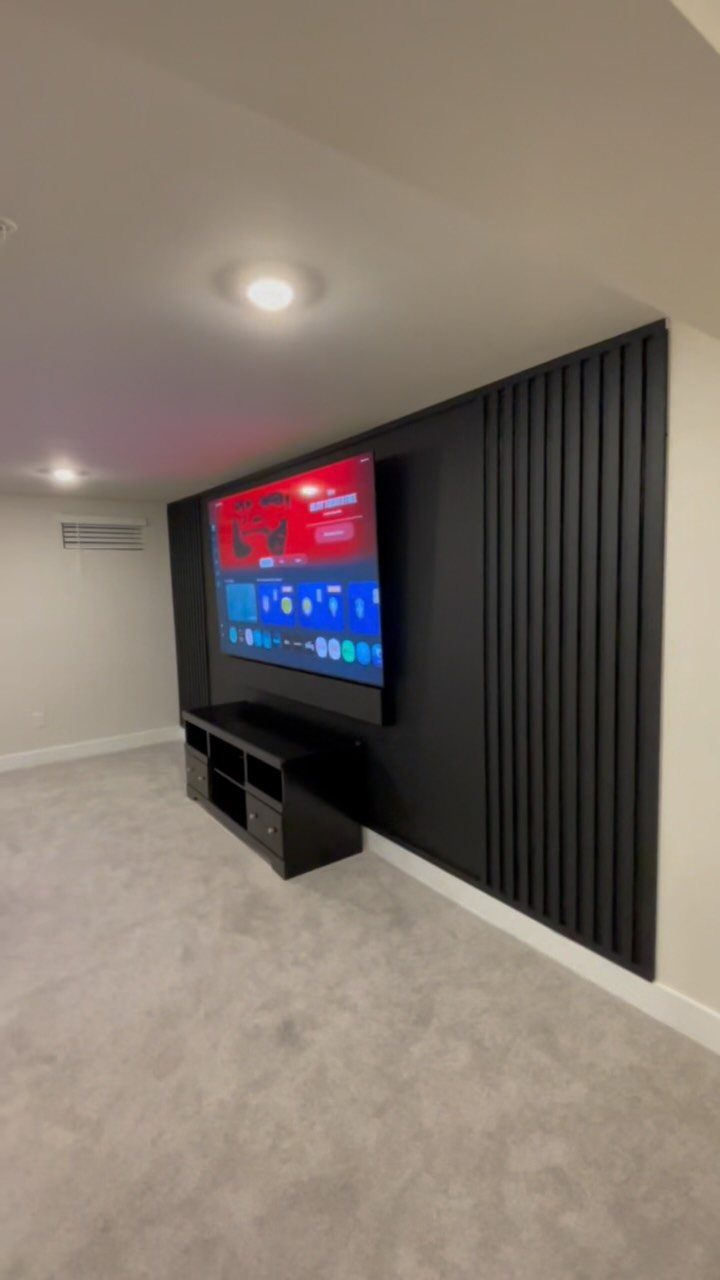
Black wood slat panels have become the default modern TV wall for a reason: they ship flat, click together, and hide every cable you run behind them.
The acoustic felt backing is a side benefit I did not expect until I heard the difference in my own living room.
Panels vary in price depending on spacing and wood species. A full wall needs more than you would guess because of the gaps and the cuts around the edges.
Installation goes faster with a helper, and even faster if your wall is already flat and you are not cutting around outlets.
The texture needs breathing room. In a small room, the slats can feel like a cage; this is better suited to spaces where you can stand well back.

23.6 x 118 in roll covers about 19.3 sq ft, light gray concrete peel and stick wallpaper with the look of foam wall panels for DIY renter friendly accent wall, TV wall, bedroom and coffee shop decor

Immersive 3D Depth & Realistic Texture: Transform your space with dramatic cement-like texture and deep dimensional relief. Our panels create captivating focal walls in living rooms, bedrooms, offices, or entertainment areas—instantly elevating any interior with modern character

🏠Details: 15.8x78.8 Inch, total 8.65 sq.ft (40cmX2m). Self adhesive(no extra glue needed). Made of durable vinyl. Charcoal marble contact paper peel and stick waterproof. Oil proof. Fully removable.
6. TV Wall with Wall Frame Molding

Picture-frame molding turns the TV into something the wall expected rather than something it tolerates. The fluted columns and globe sconces push toward Art Deco, but the same bones read colonial in white or moody in forest green.
Colonial molding is standard MDF, cheap by the linear foot at any big-box store. Map your rectangles on the floor first; I lay out painter’s tape on the wall and live with it for a day before cutting anything.
Caulk every seam, prime every cut end, and paint the wall and molding the same color so the joints disappear.
This rewards patience and a miter saw. If you rent, lightweight polyurethane molding goes up with adhesive and comes down with a putty knife.
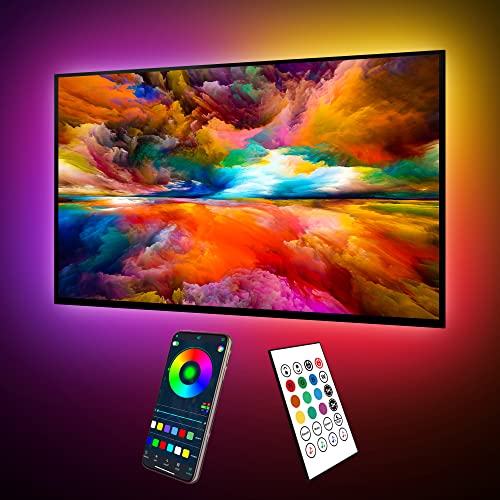
Upgraded ICRGB TV Backlight Effects: Maylit ICRGB TV lights can display multiple colors on a line at a time, compared with traditional RGB TV lights. More vibrant and dynamic to light up the TV, improve your TV watching experience.

Upgraded Ailofy Panoramic Wide-Angle Camera Technology: The upgraded panoramic wide-angle camera captures color information across the TV screen for fuller sync input. Paired with optimized color processing, it helps improve edge color matching and creates a more balanced, immersive backlight effect around the TV.

【TV LED Backlight with Music Sync】KANTUTOE's TV LED Backlight features over 20 dynamic modes and 16 million color variations. Press the music button on the remote control or app to activate the TV LED light's built-in high-sensitivity microphone, which captures real-time music and ambient sound intensity. The light strip displays different colors and rhythms that are synchronized with the music.
7. Frame TV Gallery Wall

A Samsung Frame TV turns the screen itself into one more piece of art, which makes the whole wall feel intentional instead of like a television bolted to drywall.
Surround it with framed prints in mismatched sizes and finishes, keeping the mat widths and frame depths similar enough that the cluster reads as intentional, not chaotic.
I would start with pieces I already own and add 2 or 3 new ones rather than buying a full set; Framebridge can match existing frames if you mail them a sample.
This only pays off if you actually use the art mode, so budget for the subscription or load your own images. Skip this if your TV sits in a dark corner where the art never looks convincing.

【SPACE-SAVING ELEGANCE】The wall-mounted design not only saves valuable floor space but also creates a sleek, minimalist look. This TV cabinet maximizes upper wall space, making room for your media components, while keeping the floor free for easy cleaning with a sweeping robot.

Multi-Port Charging Station & Ambient Lighting: The floating TV shelf features 3 AC outlets and 2 USB ports for easy charging of your TV, gaming console, Wi-Fi router, DVD and more. Plus, an adjustable LED light offers color customization for a cozy ambiance

Ample Storage Space: Wampat wall mounted floating entertainment center comes with 3 generous storage compartments for holding DVD player, gaming accessory, books, and decorations. The flip door design saves more storage space than traditional drawers and wall mount tv stand greatly frees up valuable floor space and suitable for all room
8. Walnut Vertical Wood Slat Wall

Walnut slats run floor to ceiling behind the mount, and the vertical grain draws the eye up in rooms with standard ceilings.
I would order samples first because walnut ranges from honey to chocolate depending on the supplier, and one batch can look orange against another.
Installation takes a weekend if the wall is flat; uneven drywall needs furring strips first, which adds half a day and some extra lumber cost.
This suits renters only if they are willing to patch screw holes later, since the panels anchor through the face.

Exquisite Marble Design: Made from PVC material, it is eco-friendly and aligns with modern home aesthetics.Perfect for enhancing shower walls, kitchen backsplash, or accent walls, these tiles offer a luxurious look without the high cost
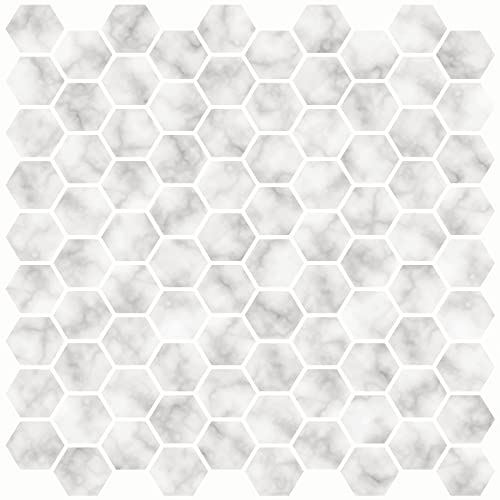
4 Tile Sheets Per Pack

【Size】 60cmx30cm (about 23.6x11.8in) per panel, totally 10 panels, 19.4 Sq. Ft. Coverage. Thickness about 2.42mm.
Frequently Asked Questions
What are the best materials for a TV wall panel?
Wood slat panels, MDF molding, concrete-look wallpaper, and marble-look laminate each suit different budgets and skill levels.
Black wood slat panels with acoustic felt backing hide cables and soften sound, while MDF frame molding costs little by the linear foot and paints to any finish.
Peel-and-stick marble panels come back off with a heat gun, and lightweight polyurethane molding pops free with a putty knife, so neither leaves much to patch.
How can I make my TV wall more visually appealing?
Treat the TV as something the wall expected rather than something it tolerates.
Picture-frame molding around the screen, a painted black rectangle that frames it, or a gallery of mismatched prints surrounding a Frame TV all make the screen feel chosen.
Texture matters more than cost: flat black paint with a thick-nap roller, vertical wood slats, or concrete wallpaper each give the eye something to land on besides a black rectangle.
How much does it cost to install a TV wall panel?
A painted black accent wall runs less than a hardware-store trip if you already own the roller and skip primer. MDF molding is cheap by the linear foot, though a miter saw and patience add to the real cost.
Full custom units with floating consoles and LED backlighting run high installed, but sourcing components separately and using a drill and level drops the price sharply.
Wood slats cost more than the sticker price suggests: tighter spacing eats more material, and the gaps plus edge trims add up to extra square footage fast.
Can you put a TV on a slatwall?
Yes, though the slats need to run vertically and you must plan the mount placement around the gaps.
Black wood slat panels ship flat, click together, and every cable hides behind them, but the wall must be flat or you will spend half a day adding furring strips first.
How do you hide cables on a TV wall?
Slats run cables behind them without any extra work, since the gaps are already there. LED backlighting on a floating console hides cord clutter without needing an electrician.
Paint the molding to match the wall and the seams fade out; cables against a dark background do the rest.
Concrete wallpaper and flat black paint do not hide cables on their own; plan a raceway or use the slat system instead.