
Art Deco wood floors run from a weekend stain job to panel pricing that rivals stone tile, and the deciding factor is how much of the room you want the floor to carry.
1. Chevron Patterns

Chevron slants the boards so each pair meets in a clean V, sharper than herringbone’s staggered zigzag. That angle catches light differently across the day, which is why it reads as dressed-up even in a plain oak.
Engineered planks handle this better than solid hardwood because the angles expose end grain to humidity swings. I would check the subfloor flatness; any dip telegraphs through the points.
This pattern eats more material than straight lay, and waste runs higher if your room is not rectangular. It suits long sightlines like hallways or galley kitchens where the Vs pull the eye forward.
In a small square room the effect can feel busy, so I would save the splurge for a space worth the drama.
Multiple Size Options for Different Needs:Available in 30" x 40", 40" x 50", 50" x 60", and 60" x 80". The smaller sizes are great for kids, pets, chairs, travel, and office naps, while the larger sizes are ideal for adults, sofas, couches, beds, movie nights, dorm rooms, and full-body lounging.

8x12 Inch Classic Wall Decor Size:This metal tin sign measures 8" x 12", a practical size for wall display, shelf styling, door decoration, gallery walls, home bars, coffee corners, garages, cafes, offices, kitchens, bedrooms, and personalized wall art collections.

Multiple Size Options for Different Needs:Available in 30" x 40", 40" x 50", 50" x 60", and 60" x 80". The smaller sizes are great for kids, pets, chairs, travel, and office naps, while the larger sizes are ideal for adults, sofas, couches, beds, movie nights, dorm rooms, and full-body lounging.
2. Art Deco Color Palette

On a wood floor this translates to stain choice more than paint.
For brown floors I would steer toward charcoal or warm beige walls rather than matching the orange undertones directly; the floor already carries the warmth and competing reds turn muddy.
Gold accents read as lighting, mirror frames, or chair legs rather than floor-level detail, which keeps the eye moving upward.
If your floors are pale oak, you have more room to play with wall color. Dark stained floors need the restraint.
Budget-wise, this is paint and thrifted brass rather than custom anything.

100 % Waterproof Rigid Core Vinyl – Engineered ISOCORE construction ensures full water resistance for kitchens, bathrooms, basements, and laundry areas, with no acclimation required before installation.
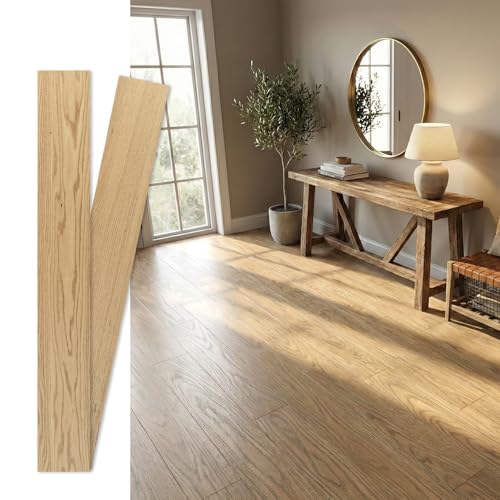
Tongue and Groove Design: Jeedeson engineered hardwood flooring features a classic tongue and groove construction.

【Ultra-Durable & Pet-Friendly】With a 0.3mm wear layer tested over 15,000 abrasion cycles, this luxury vinyl plank flooring resists scratches, dents, and spills. Ideal for busy homes with pets and kids, it stays beautiful for years even in high-traffic areas.
3. Herringbone Wood Floor
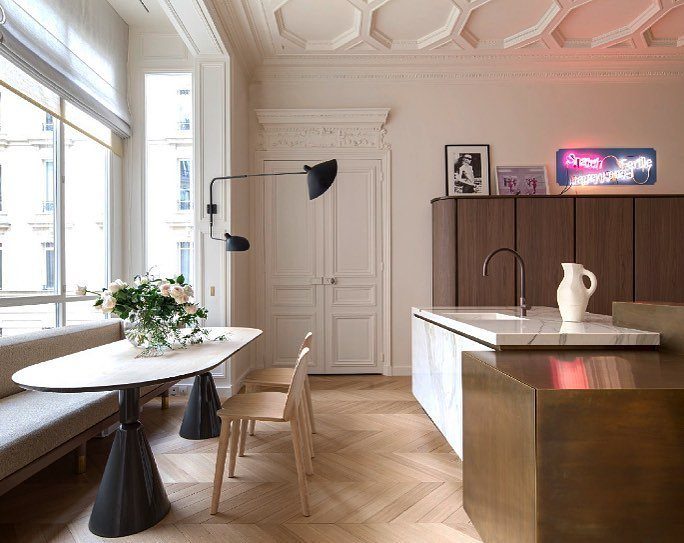
Herringbone staggers its rectangles so the short ends abut, creating a broken zigzag that reads softer than chevron’s continuous line. It carries the same vintage formality but forgives slightly uneven subfloors because the breaks hide minor lippage.
I laid this in my last apartment’s dining area using white oak engineered planks, glued down over concrete.
The pattern demands a dry layout before any adhesive touches the floor; once the first few rows set wrong, the error compounds across the whole field.
This suits open plans where the pattern can run uninterrupted between kitchen and living areas. Scale matters: small planks in a large room look fussy, and wide planks in a small room lose the repeat.
I would mock it with cardboard tiles before cutting anything.

Chic Design & Wood Texture - Classic herringbone pattern with realistic wood grain texture, combining classic charm with the rustic beauty of natural wood, add a touch of earthy warmth to your interiors.

【Premium Thickened Vinyl Flooring Roll】Experience our 1.5mm thick vinyl flooring roll with 5 layers for enhanced quality. It's non-slip, non-fading, and provides thermal insulation. Measuring 23.6" x 196", it covers 32 sq ft without snap-lock installation, making it hassle-free and stylish.
【Premium Thickened Vinyl Flooring Roll】Experience our 1.5mm thick vinyl flooring roll with 5 layers for enhanced quality. It's non-slip, non-fading, and provides thermal insulation. Measuring 23.6" x 118", it covers 19 sq ft without snap-lock installation, making it hassle-free and stylish.
4. Geometric Starburst Wood Floor
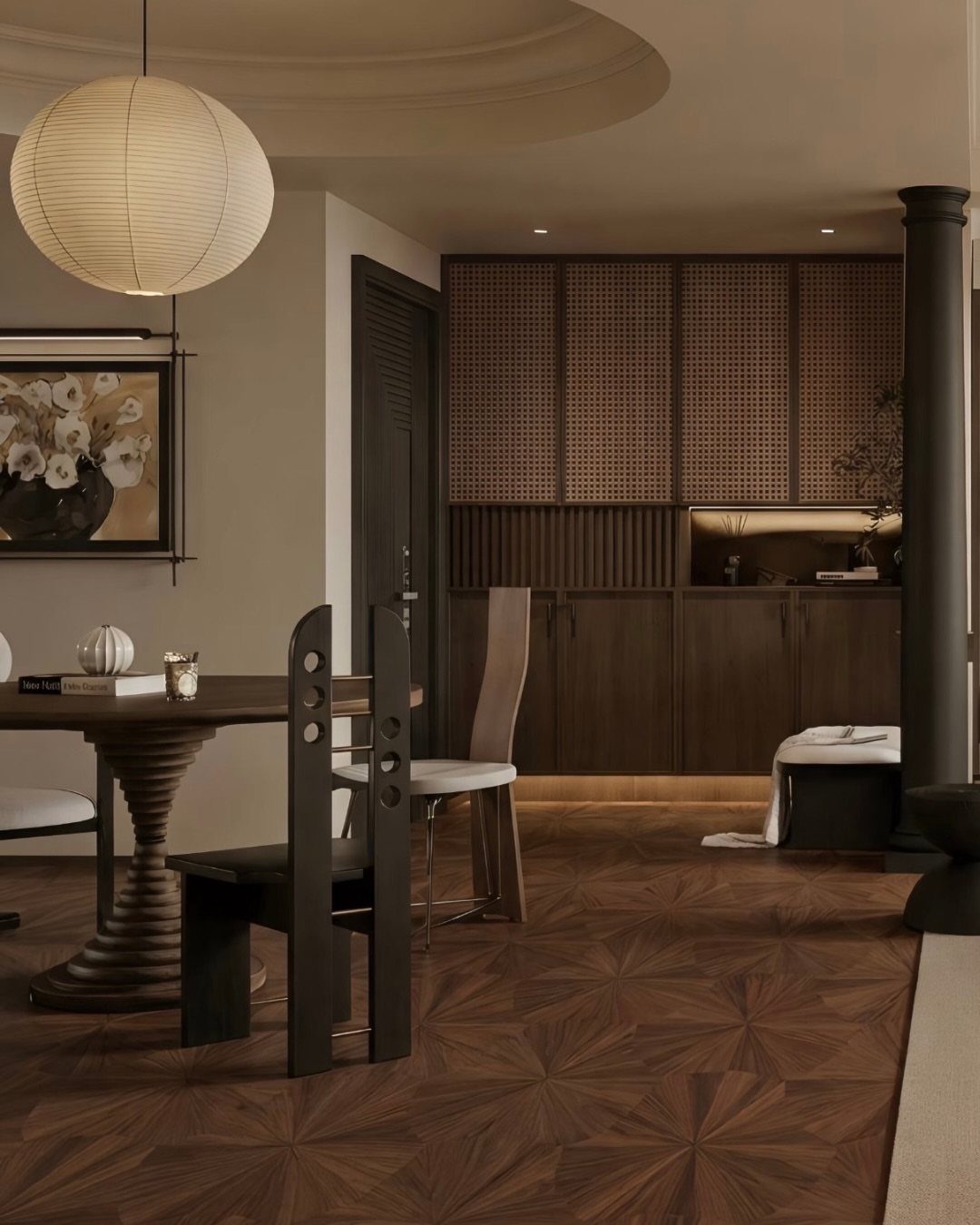
Starburst parquet builds a repeating radial pattern from small triangular and diamond pieces, typically in contrasting stains on the same species. Dark walnut with a near-black accent keeps the geometry visible without high contrast that would read dated.
This is not a site-finished job. The inlay work happens in a workshop, so you are buying panels to glue or nail down, and the cost jumps accordingly.
I would expect to pay panel prices comparable to mid-range stone tile, not plank flooring.
It suits single statement rooms where the floor is the architecture: a dining room with plain walls, a foyer with minimal furniture. Too much competing pattern nearby and the eye has nowhere to rest.
Maintenance is standard for hardwood, though the grooves collect dust that a flat mop misses.

Ideal for use on all interior wood projects: furniture, cabinets, doors, trim and paneling
Ideal for use on all interior wood projects: furniture, cabinets, doors, trim and paneling

Non-Toxic & Low Odor, Safe for Indoor Use: Breathe easy with our water-based wood stain! It’s non-toxic, environmentally friendly and low VOC formula makes it perfectly safe for indoor projects like kitchen cabinets, bedroom furniture, and more — without the strong chemical fumes found in traditional stains.
5. Wood and Tile Diamond Floor
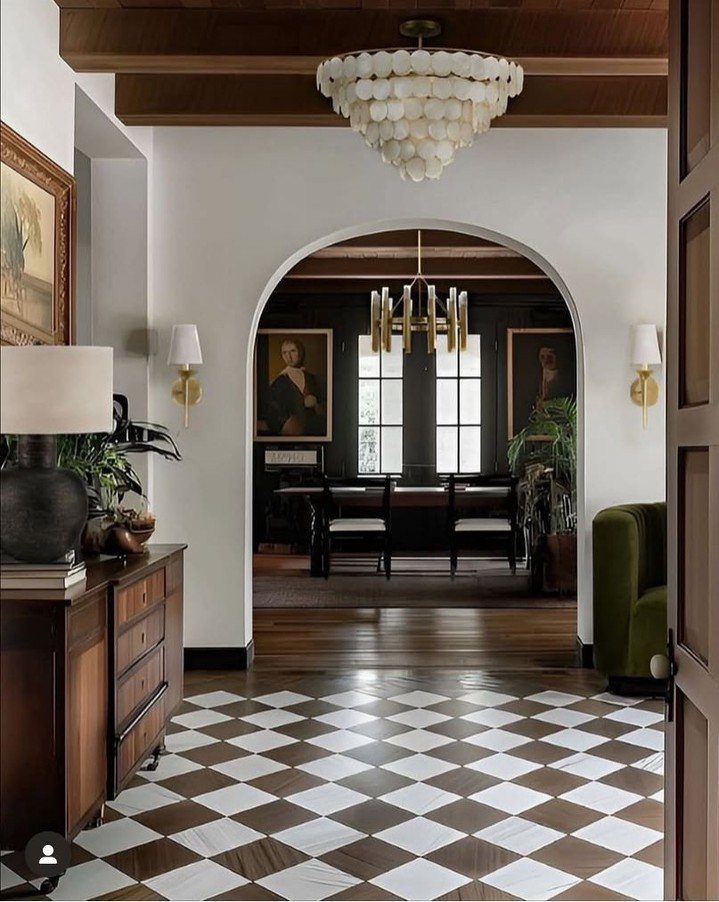
The checkerboard here alternates wood diamonds with white marble or ceramic, set in a square grid that reads as Art Deco through geometry rather than color complexity. The grout lines add a grid the wood alone would lack.
This demands exacting layout: the diamonds must be true cuts, and the two materials need matching thickness or the floor will be a trip hazard.
I would not attempt this as a first tile job; the cuts are unforgiving and lippage between wood and ceramic is hard to correct after setting.
The practical tradeoff is maintenance. Wood expands; grout cracks.
A flexible grout or engineered wood with stable core helps, though no solution lasts forever in a high-sun foyer. This suits entryways where the pattern announces the house, or bathrooms where the tile areas handle water.
In a full kitchen I would worry about dropped knives on the grout lines.

𝐇𝐞𝐚𝐯𝐲-𝐃𝐮𝐭𝐲 𝐅𝐥𝐨𝐨𝐫𝐢𝐧𝐠 𝐑𝐨𝐥𝐥: Engineered with a premium 1mm thickness, this vinyl roll is significantly more substantial than standard decorative stickers. Weighing 1.5 lbs, its heavyweight construction ensures the material stays flat and provides a durable, professional-grade finish that easily withstands high-traffic area wear

Elegant Aesthetic: Parquet flooring offers a timeless and sophisticated look to elevate any interior space.
𝐇𝐞𝐚𝐯𝐲-𝐃𝐮𝐭𝐲 𝐅𝐥𝐨𝐨𝐫𝐢𝐧𝐠 𝐑𝐨𝐥𝐥: Engineered with a premium 1mm thickness, this vinyl roll is significantly more substantial than standard decorative stickers. Weighing 3.0 lbs, its heavyweight construction ensures the material stays flat and provides a durable, professional-grade finish that easily withstands high-traffic area wear
Art Deco Design Characteristics
Art Deco design showed up in France around 1925 and spread fast. The style treated aluminum, stainless steel, lacquer, and inlaid wood and stone as everyday materials, not rare luxuries.
Surfaces were glossy or perfectly polished. Chevron patterns, zigzagged and stepped forms, and sweeping sunburst motifs covered facades and interiors.
Rich jewel tones and glossy finishes carried the look.
For a wood floor, this means geometry does the work, not ornament. Aluminum and polished wood read as luxury because they are machined and exact, not because they are expensive.
I would keep that precision in mind when choosing between site-finished plank and pre-cut panel: the factory edge usually wins for the sharp joints this style needs.

Multiple Size Options for Different Needs:Available in 30" x 40", 40" x 50", 50" x 60", and 60" x 80". The smaller sizes are great for kids, pets, chairs, travel, and office naps, while the larger sizes are ideal for adults, sofas, couches, beds, movie nights, dorm rooms, and full-body lounging.

Multiple Size Options for Different Needs:Available in 30" x 40", 40" x 50", 50" x 60", and 60" x 80". The smaller sizes are great for kids, pets, chairs, travel, and office naps, while the larger sizes are ideal for adults, sofas, couches, beds, movie nights, dorm rooms, and full-body lounging.

Wood Grain Chair Mat: There are 20 styles of wood-textured office chair mats for you to choose from. There will be chair mats suitable for your home. Protect and decorate your hard floor
Maintenance of Wood Floors
Hardwood lasts long enough to look better with age, and a sand-and-varnish cycle resets it close to new. Light tones brighten a room more than most alternatives.
Chevron and herringbone expose end grain at every angle, so water and grit find more openings than in a straight plank floor. Those cuts are the first place wear shows, and they are the hardest to patch.
I would plan the first refinish earlier than a straight-lay floor, maybe year 8–10 instead of 12–15, and budget for it. A screen-and-recoat, adding a new varnish layer without full sanding, buys time if the grooves have not worn to raw wood.

100% Waterproof Rigid Core Vinyl: Engineered ISOCORE construction ensures full water resistance for kitchens, bathrooms, basements, and laundry areas, with no acclimation required before installation

Crafted from high-quality hardwood, the Napa Valley Hickory Engineered Hardwood Flooring guarantees unmatched durability and resilience
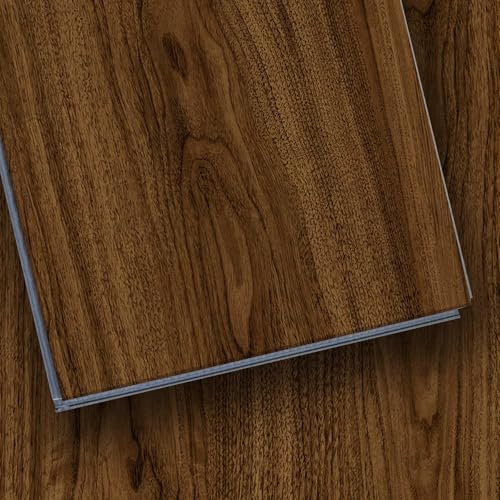
【Ultra-Durable & Pet-Friendly】With a 0.3mm wear layer tested over 15,000 abrasion cycles, this luxury vinyl plank flooring resists scratches, dents, and spills. Ideal for busy homes with pets and kids, it stays beautiful for years even in high-traffic areas.
Installation Options
Vinyl handles the same geometry without the subfloor demands. Chevron, herringbone, even the diamond grid print cleanly on vinyl, and the material forgives slight subfloor unevenness that would telegraph through wood.
I would use vinyl for a rental or a first project where the budget is tight and the timeline is a weekend. The look reads Art Deco from across the room; only up close does the material give itself away.
For a kitchen especially, the practical side matters: water does not phase it, and a single damaged plank swaps out without the whole floor coming up. The cost difference is real.
Engineered hardwood for a herringbone kitchen runs material plus adhesive plus the dry layout time; vinyl clicks or glues down in an afternoon.

Texture & Durability: Want to refresh your space fast but tired of peel and stick floor tiles that look fake or peel up after days? This one delivers realistic texture and stays put. With upgraded matte craftsmanship, the vinyl flooring replicates authentic wood grain to fit any home decor. and its high-quality multi-layer reinforced PVC makes it 100% waterproof, flame-retardant, scratch and abrasion resistant

WOOD GRAIN FLOOR MAT (16 Tiles,16 Sq ft, Pine) — Provides comfort and cushion to hard floor surfaces with classic faux wood finish — Includes 16 floor mat wood grain tiles to enhance the comfort and appearance of your space
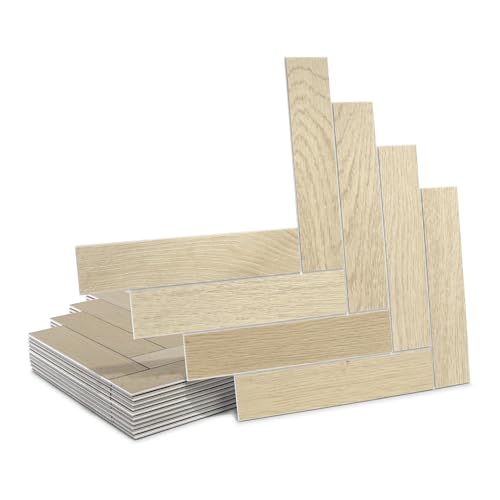
𝗨𝗽𝗴𝗿𝗮𝗱𝗲𝗱 𝗠𝗮𝘁𝗲𝗿𝗶𝗮𝗹 - Crafted from durable stone composite, these floor tiles feature a 4mm rigid core and a 0.3mm wear layer. Each tile measures 10.8" x 9.3", with 12 tiles per box covering 8.4 sq. ft. Experience the authentic feel and stability of real ceramic tile, without the hassle—truly a step up from standard peel-and-stick vinyl flooring.
Historical Context of Art Deco
The style surfaced in France around 1925 and moved into movie theaters, skyscrapers, vacuum cleaners, and cars.
That context explains why the floor patterns feel dressed-up even in cheap materials. The original Deco floors were not humble; they announced progress and machine precision.
A chevron board cut with a miter saw carries some of that same intent. I would not soften the geometry to make it cozy: the sharp V or the exact diamond is the point.
The 1920s sources mixed jewel tones with glossy finish, but for a wood floor the gloss level matters more than the color. A satin varnish reads contemporary; a higher sheen reads the era itself.
Flooring was often so intricate during the Art Deco era, people rarely, if ever, looked up.
— Hunker
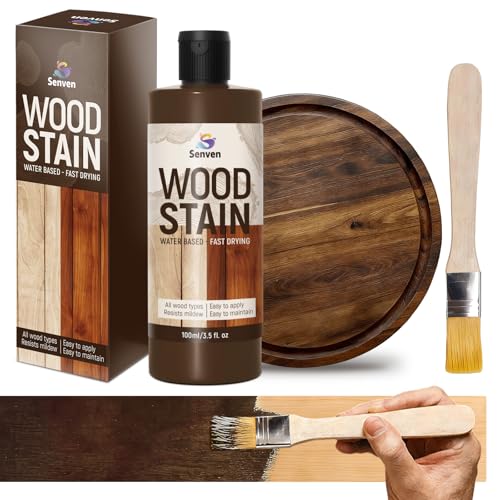
Professional Results: Achieve rich, even color and enhanced wood grain with just a single application. SENVEN wood stain fast-drying, high-concentration formula provides excellent coverage and deep penetration, instantly revitalizing old wood with a natural matte finish

Professional Results: Achieve rich, even color and enhanced wood grain with just a single application. SENVEN wood stain fast-drying, high-concentration formula provides excellent coverage and deep penetration, instantly revitalizing old wood with a natural matte finish
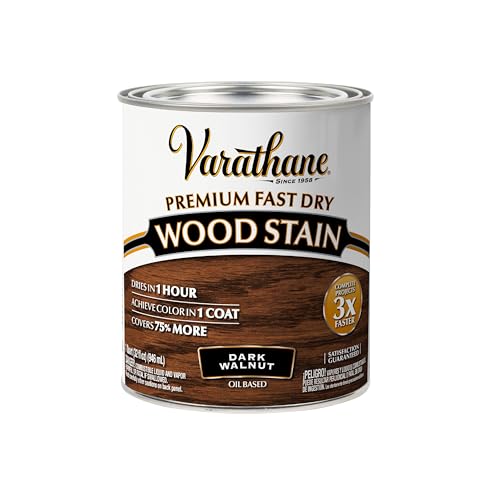
Ideal for use on all interior wood projects: furniture, cabinets, doors, trim and paneling
Frequently Asked Questions
What does an Art Deco floor look like?
Art Deco floors rely on geometry: chevron or herringbone wood patterns, starburst parquet, and wood-tile checkerboards with crisp grout lines.
Glossy finishes and high-contrast stains, like dark walnut against near-black accents, keep the look rooted in the 1920s luxury aesthetic rather than busy color.
What is deco flooring?
Deco flooring is any floor that channels Art Deco design through bold geometry, polished surfaces, and symmetrical pattern. In wood that means herringbone, chevron, starburst inlay, or diamond layouts paired with tile, usually finished to a reflective sheen.
How to make a wood floor look good?
Regular maintenance matters more than the starting grade. A sand and fresh varnish brings worn hardwood back to near-new, and light-toned woods brighten a room more than darker stains.
Engineered planks handle humidity better than solid wood in tricky climates, which keeps the surface flat and the pattern readable.
What wood was used in Art Deco furniture?
Walnut and oak were both common in the period, and they work just as well underfoot as they did in cabinets and tables.
For floors, white oak takes stain predictably and holds fine geometry like herringbone, while walnut delivers the deep brown base typical of Deco starburst inlays.
What is the most expensive type of flooring?
Hardwood runs from about $6.30 to $11.66 per square foot depending on species, and custom parquet or starburst inlay panels cost closer to mid-range stone tile.
The price jumps because the cutting and assembly happen in a workshop before delivery, not on site.