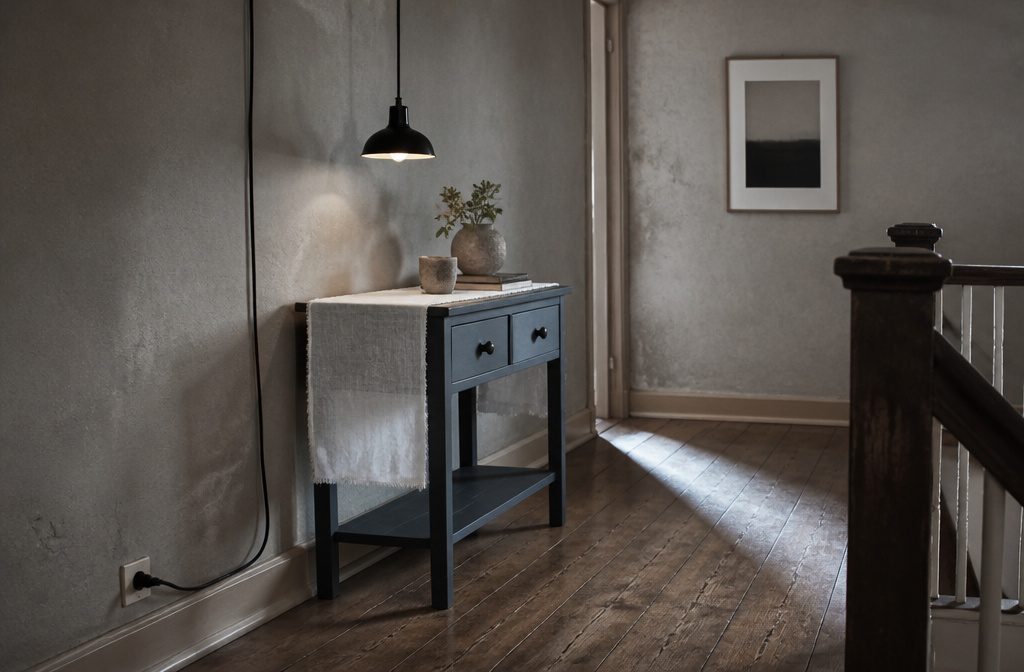
A plug-in pendant light hangs from the ceiling on a cord that runs to a standard wall outlet instead of hardwiring into a junction box.
That means you can install one in fifteen minutes without an electrician, and you can move it when you move.
The farmhouse pulley pendants in this guide sit at $59.99, the matte black barn shades at $49.99, and the metal cage designs at $69.99 with ninety reviews behind them.
Farmhouse and Rustic Plug-In Pendants
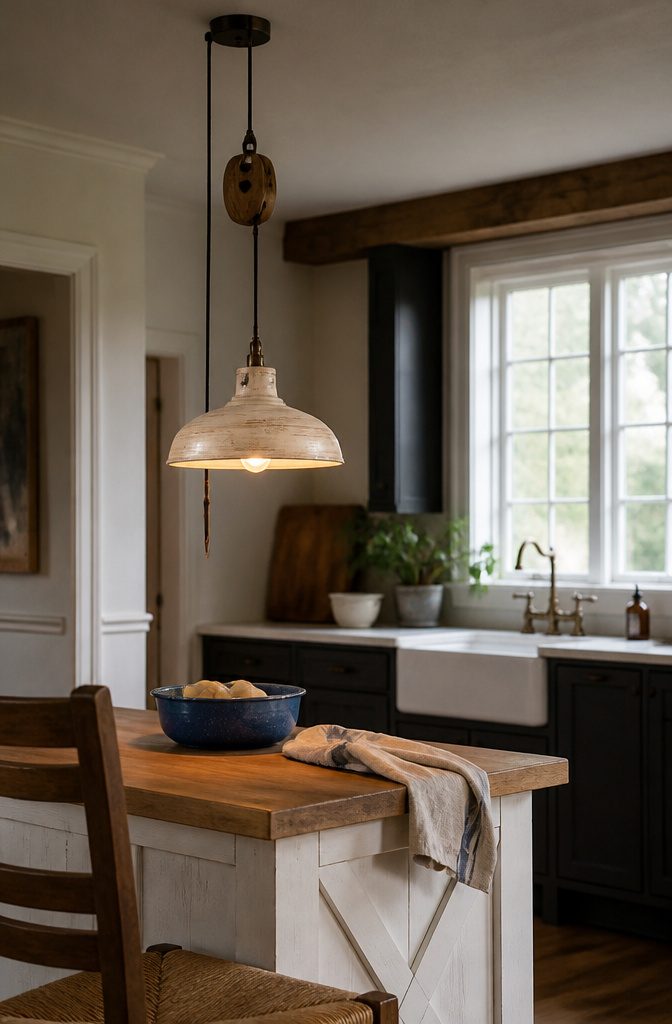
Farmhouse pendants in distressed wood bring the antique look without the antique price.
The pulley designs I keep coming back to sit at $59.99 each and arrive in green, red, black, or blue finishes that read more like old workshop equipment than something new off a shelf.
The handcrafted distressed wood gives these fixtures texture you can see from across the room, and the off-white tone works best when you hang them against oil-rubbed bronze hardware or dark cabinetry.
I’d put these over a kitchen island first, then a dining table if the room can take the rustic weight.
A study desk gets one only if the rest of the space already leans farmhouse, because a single pulley pendant in an otherwise clean-lined room looks like you forgot to finish decorating.
The red and green shades pull harder toward vintage industrial than the black or blue, which sit quieter and blend into more finishes.
Industrial Barn-Shaped Shades
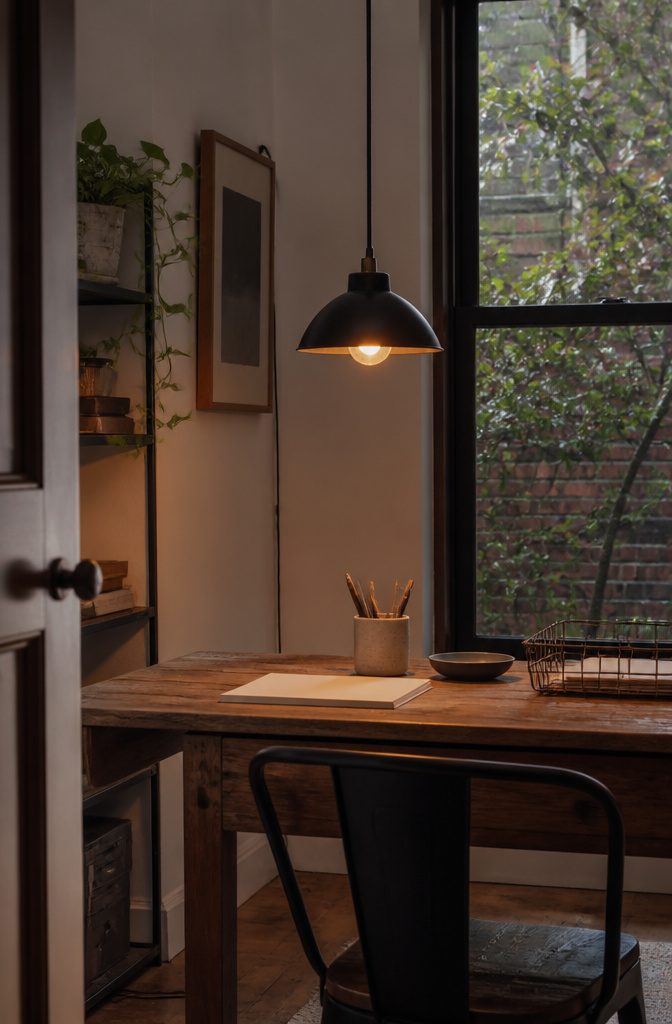
Matte black inverted metal barn shades catch ambient light from the bulb inside and reflect it outward through the open bottom, spreading a warm, fuzzy glow across the room instead of a hard downlight.
The hollow cavity amplifies the effect, so even a moderate-wattage bulb reads softer and more diffuse than the same bulb in a closed drum shade.
The Industrial Plug-In Pendant Light Barn Shape with On/Off Switch runs $49.99 and has pulled 45 reviews, which puts it in reliable territory for a light at this price.
The shade material matters here: a matte finish scatters light more evenly than gloss, and you can swap in a warmer color temperature bulb if the glow skews too white out of the box.
Texture changes the spread slightly, but the barn profile does most of the work.
Metal Cage and Mason Jar Designs
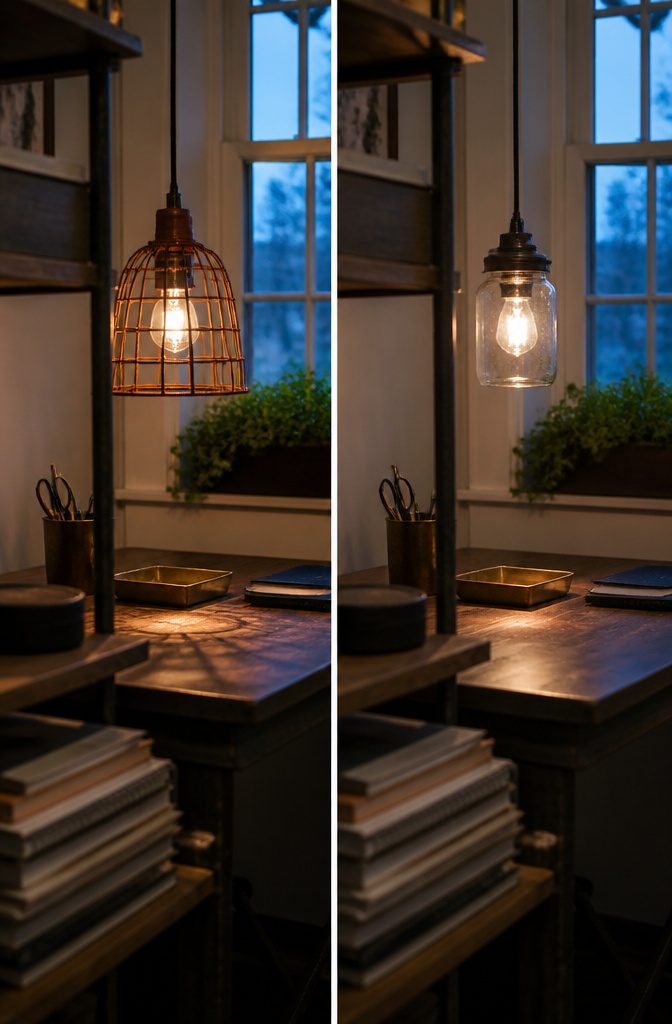
Metal cage pendants carry that industrial edge without needing much else in the room. The Farmhouse Plug-In with Rust Finish Metal Cage Shade sits at $69.99 with 90 reviews behind it, and the rust finish reads warmer than plain black wire.
You will see bird-cage shapes, fan-cage shapes, and simple wire grids. The silhouette matters more than the shade material here: the cage throws patterned shadows when the bulb is on, so the fixture works hardest at night.
Mason jar pendants with clear glass and brass lids lean rustic but stay light.
The brass lamp holder and lid catch the bulb glow without blocking it, and the look suits kids’ rooms, home offices, or covered outdoor spaces where you want something cheerful that does not take itself too seriously.
The cage reads edgy; the jar reads friendly. Pick based on which mood the room already leans into.
Fabric Drum and Sculptural Shades
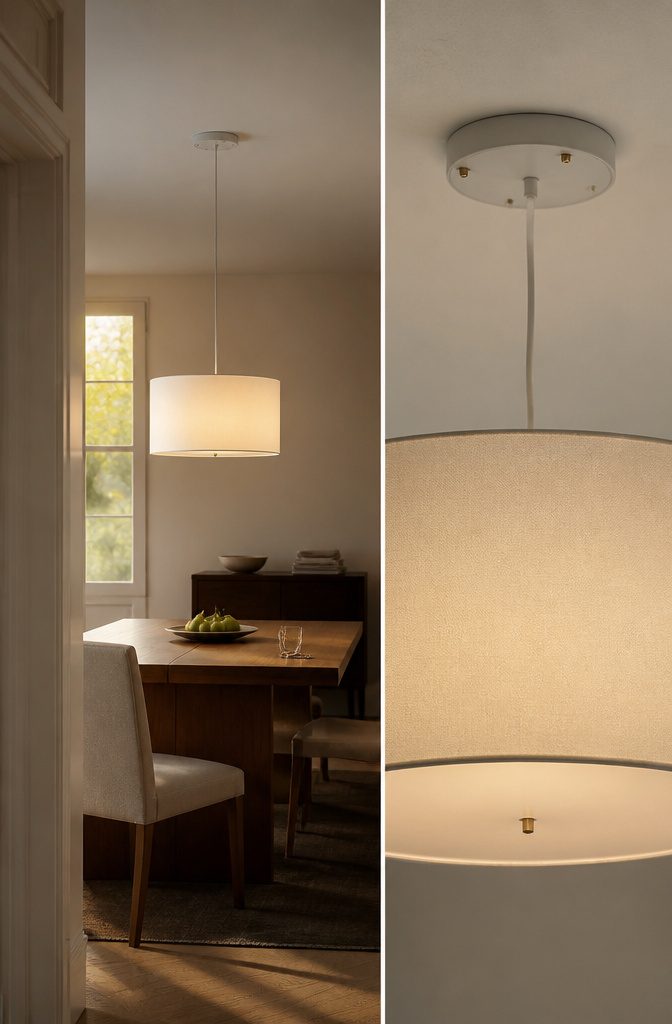
Fabric pendants soften overhead light in a way metal or glass shades never quite manage. The fabric itself diffuses the bulb, so you get even, glare-free light across the whole room instead of a hot spot directly beneath the fixture.
Drum shapes are the straightforward pick: a cylinder of fabric stretched over a wire frame, predictable and clean. Lantern styles taper or balloon at the middle, adding a bit more shape to the ceiling line.
The cigar pendant runs longer and narrower at 19.68 × 9.84 × 9.84 inches, which suits a hallway or a slim dining table better than a broad drum would.
Hourglass profiles pull in at the waist and flare at top and bottom, breaking up the drum silhouette without going fully sculptural.
The Kinnear pendant pairs an 18-inch round fabric diffuser with a 15-foot cord, giving you enough reach to plug in across the room and still center the light where you need it.
Sculptural lanterns push the shape further, sometimes into a cocoon or an organic curve that reads more like ceiling art than a straightforward fixture.
I reach for fabric when the room already has enough hard surfaces and the light itself needs to stay soft.
Rattan, Glass, and Metal Finishes
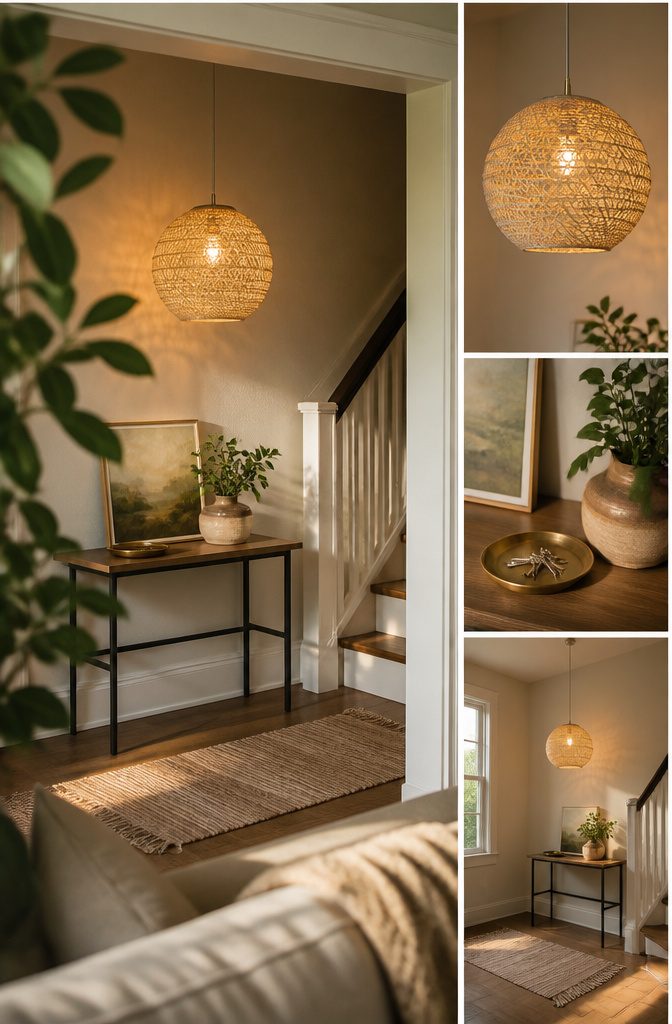
Rattan, Glass, and Metal Finishes
The Aline pendant hangs a 15-inch diameter sphere of cream rattan from a slim wire, and the wrapped-twine look reads sculptural without blocking the light.
At 13.5 x 15 x 15 inches and compatible with a 60W bulb, it fits kitchens and entryways where you want texture overhead but not visual weight. The shade feels airy, which matters when a pendant drops into a sight line.
Glass designs shift mood between day and night depending on whether the glass is clear or matte, and the Shiloh line borrows its silhouette from Japanese lanterns.
Metal finishes bring the contrast: the Minneapolis pendant runs 20.75 x 6 x 6 inches and comes in Copper and Aged Gold, while the Swell spun-aluminum 3-light in Brass delivers three shades on one cord.
I reach for metal when the ceiling needs definition and rattan when the room already has hard surfaces to spare.
Where I Use Plug-In Pendants
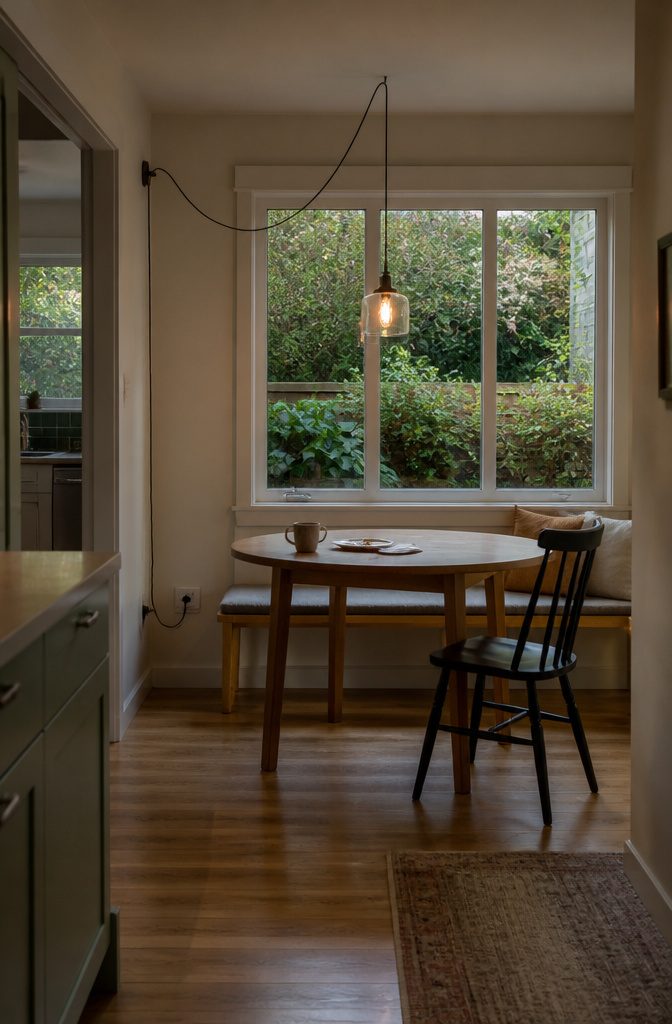
The biggest reason I reach for a plug-in pendant is that it goes anywhere an outlet does.
No hardwired ceiling box, no electrician, no patching drywall if I move it next month. I’ve seen them over kitchen islands, dining tables, and breakfast nooks where the builder never ran electric.
They work in entryways that need a statement fixture but have no overhead wiring, and over study desks or bar areas where a task light beats an ambient ceiling can.
Kids’ rooms get them because rewiring a rental is off the table, and offices use them when adding a drop pendant to one corner of the room makes more sense than flooding the whole ceiling with recessed lights.
I’ve even spotted them outdoors under covered patios, plugged into a weatherproof outlet and moved inside when the season ends. If the outlet is there, the pendant can be.
Plugging In and Moving the Fixture
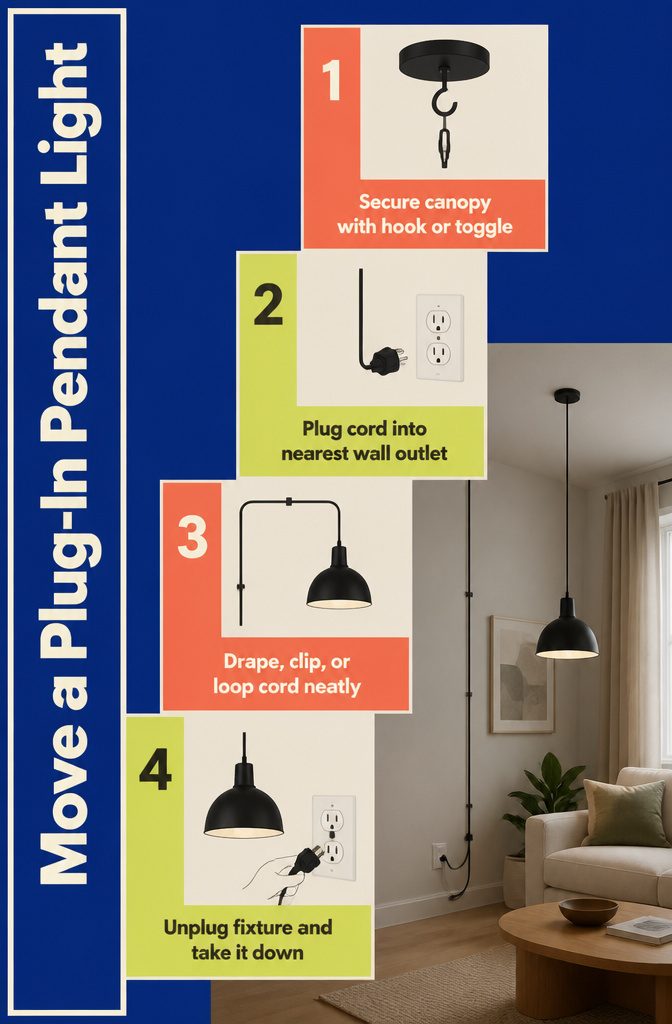
The cord runs from the fixture to the nearest wall outlet, which means there’s no electrician to schedule and no junction box to install. You plug it in the same way you would a floor lamp.
The canopy mounts with a hook or toggle bolt depending on what the ceiling can take, and the cord can be draped, clipped, or looped to keep it tidy along the wall.
When you move or want the light somewhere else, you unplug it and take it down.
One customer noted the entire process took 15 minutes from opening the box to switching the light on. That timeline holds for most plug-in pendants, assuming the hook or anchor is already in place.
There’s no wire stripping, no breaker to shut off, and no permit to pull. The fixture stays as temporary or as permanent as you need it to be.
Frequently Asked Questions
What is a plug-in pendant light?
A plug-in pendant light hangs from the ceiling and runs a cord to the nearest wall outlet instead of connecting to a hardwired junction box.
You plug it in like a floor lamp, mount the canopy with a hook or toggle bolt, and move it whenever you want without calling an electrician.
The cord can be draped, clipped, or looped along the wall to keep it tidy.
How do you install a plug-in pendant light?
You mount the canopy to the ceiling with a hook or toggle bolt, then plug the cord into the nearest outlet.
There is no wire stripping, no breaker to shut off, and no permit required. One customer finished the entire process in 15 minutes from opening the box to switching the light on.
What are the best plug-in pendant lights for farmhouse style?
Farmhouse pendants in distressed wood with pulley designs sit at $59.99 each and come in green, red, black, or blue finishes that look like old workshop equipment.
The handcrafted distressed wood has visible texture, and the off-white tone works best against oil-rubbed bronze hardware or dark cabinetry. Red and green shades lean harder toward vintage industrial, while black and blue stay quieter.
Do plug-in pendant lights give off enough light?
Matte black barn shades reflect bulb light outward through the open bottom and spread a warm, diffuse glow instead of a hard downlight.
Fabric drum shades deliver even, glare-free light across the whole room because the fabric diffuses the bulb. The shade material and shape control how the light spreads, and you can swap in a warmer color temperature bulb if needed.