
Dark brown wood colors run from warm milk-chocolate tones to near-black imported hardwoods that cost more than the furniture built from them.
1. American Black Walnut

American black walnut runs from chocolate brown into purple-brown territory, sometimes with cream-colored sapwood at the edge. That contrast is natural, not a flaw; live-edge builders often leave it exposed, while cabinet makers pick matched heartwood for a quieter face.
The wood sands silky, and fresh cuts read cooler with gray-purple notes. For a weekend project, walnut hits a sweet spot: widely available, medium cost, and workable with standard tools.
Premium grades cost more, but standard lumberyard walnut still looks like the real thing.

Ideal for use on all interior wood projects: furniture, cabinets, doors, trim and paneling

PRODUCT DETAILS - This 13 piece kit includes 6 Repair Markers, 6 paper wrapped wax sticks and 1 wax stick sharpener packaged in a blister card.
2. Dark Brown Wood Stains

A stain test board saves hours of second-guessing. Minwax Dark Walnut, Varathane Jacobean, a 50/50 mix of the two, and Ebony each read differently depending on the wood species underneath.
Dark Walnut sits warm, Jacobean goes deeper with red undertones, and Ebony pushes near-black.
Varathane sits on Home Depot shelves, Minwax on Lowe’s; either is a quick trip to grab.
I would test on the actual wood going into the project, not a scrap of something else, because oak, pine, and poplar all drink stain differently.
The 50/50 mix often solves the problem when one shade feels too orange and the other too harsh.
How much the grain shows through matters as much as the color itself. More pigment hides grain but also blocks UV fading.

Length: 36" Per Board, Variable Width: 6-10", Thickness: 7/8"
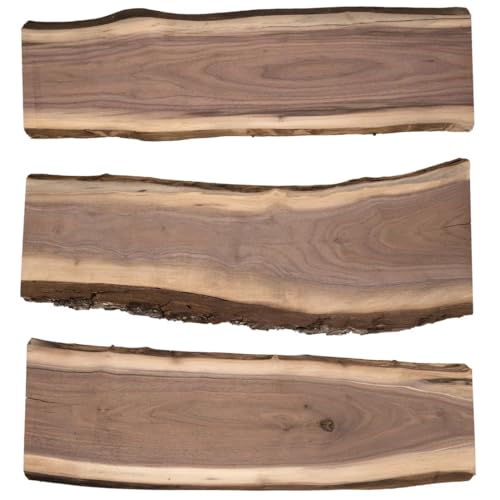
Length: 24" Per Board, Variable Width: 6-10", Thickness: 7/8"

Length: 36" Per Board, Variable Width: 10-14", Thickness: 7/8"
3. Wenge

Wenge reads almost black from across a room, with lighter caramel streaking that keeps it from going flat. The grain is coarse and open, and the interlocking structure makes it harder to plane smooth than walnut or oak.
Blades dull faster; I would budget extra sanding time and sharp cutters.
This is an African import with variable availability and a high price tag. For a cutting board or a small accent piece, a single board goes far.
For flooring, the hardness wears well but the darkness shows every dust particle. I would use wenge where I want one strong vertical element: a desk top, a headboard panel, a single statement shelf.
Check current stock before designing around it. Sizes run smaller than domestic hardwoods, and a project calling for wide boards may need a different species.

Labeled Boards for Organized Prep: Three dedicated cutting boards are clearly marked for Meat & Fish, Cheese & Bread, and Fruits & Vegetables, so you can quickly choose the right board for each task. This labeled cutting board set helps keep food categories separate during everyday prep and helps reduce flavor transfer between ingredients.
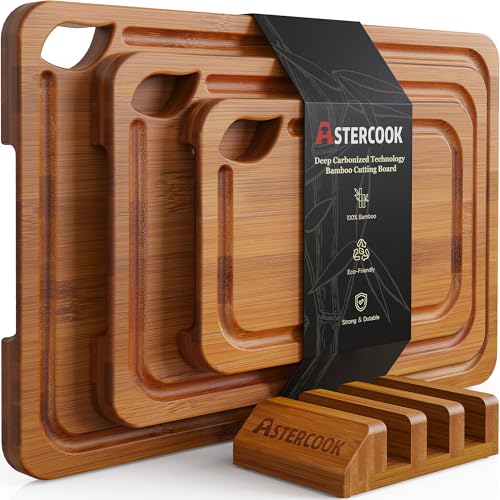
【Nature Bamboo for Lasting Strength】 Crafted from premium bamboo and treated with high-heat carbonization, this wood cutting board set resists warping, cracking, and water absorption. Stronger than standard cutting boards for kitchen, it protects knife edges and stays smooth through years of everyday use.

【Superior Acacia Wood Construction】 Made from high-quality acacia wood, this 3-piece cutting board set offers outstanding strength and longevity. The dense fiber structure of acacia resists cracking and wear, holding up to heavy daily use. Each board comes with attached silicone feet for slip-free chopping.
4. Dark Wood Color (#855E42)
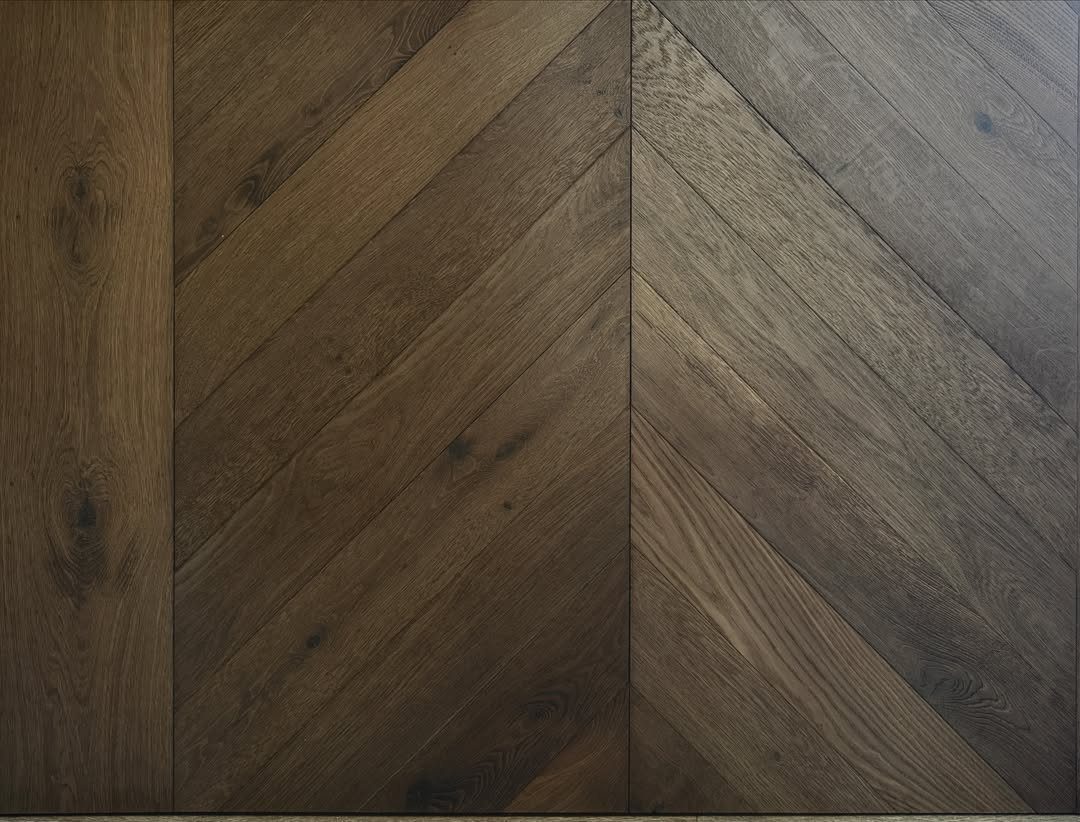
The warm, earthy tone reads as natural wood without tying you to any single species.
I have seen it used on cabinetry samples and flooring showroom boards when the goal is "dark brown" without the purple or red cast that real walnut or mahogany can carry.
In a room with cool northern light, this tone stays warmer than espresso stains that turn gray. With warm bulbs or afternoon sun, it deepens toward milk chocolate.
For paint or laminate, the code gives a target; for real wood, it is a reference to hold against stain samples under your actual lighting.
RGB values do not account for sheen. Satin reads lighter than matte at the same hue.
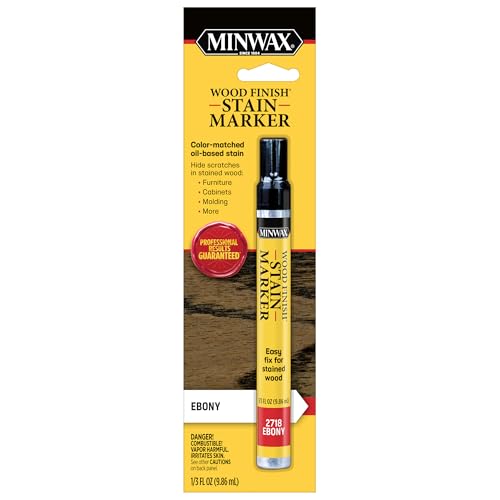
EASY TOUCH-UP – This Minwax Wood Stain Marker is great for quick and easy touch-ups of common nicks and scratches on wood items. It’s also ideal as a stain pen for small hobby and wood craft projects, or to add decorative touches to larger wood projects.

SAFE FOR FOOD CONTACT: Specially formulated for butcher blocks, cutting boards, salad bowls, and interior wood surfaces; nontoxic and safe for food contact when fully dried per 21 CFR 175.300

Ideal for use on all interior wood projects: furniture, cabinets, doors, trim and paneling
5. Zebrano
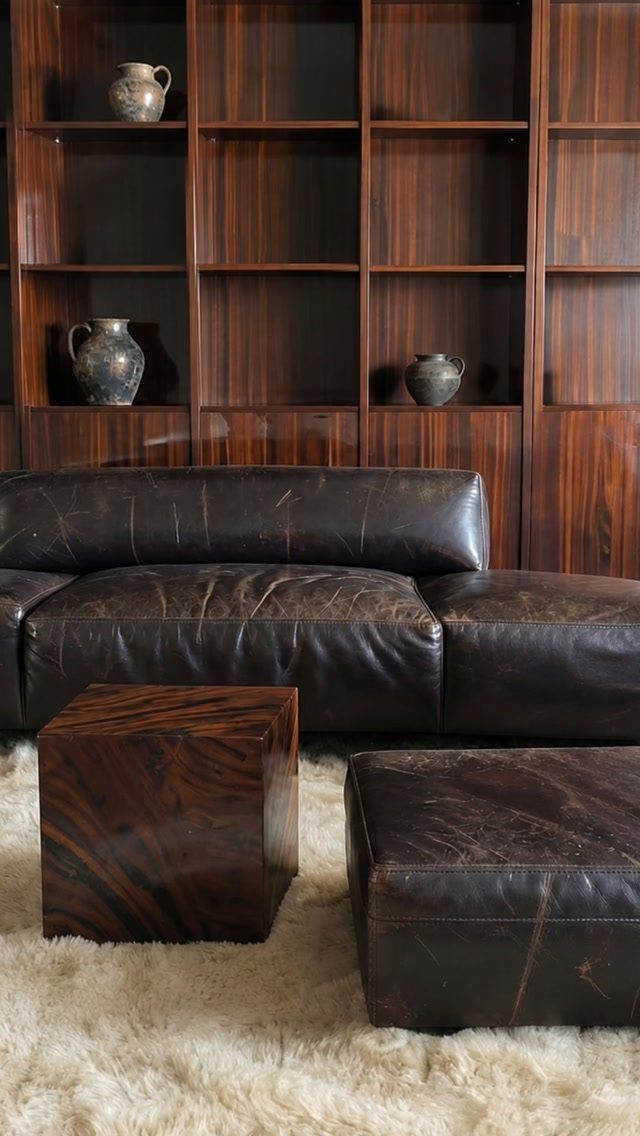
Zebrano stripes are unmistakable: golden brown bands alternating with dark brown to black, running across the grain in patterns no two boards duplicate.
The interlocked grain tears under a dull blade and can chip at corners, so I would take light passes and finish with a scraper or high-grit paper.
This is veneer territory for most budgets. A zebrano board large enough for a dining table would cost more than the chairs around it.
I would use it as drawer fronts, a single cabinet door panel, or a small cube side table where the striping carries the design without needing much material.
Variation between pieces is significant. I would select boards in person or request a photo of the actual stock, not trust a sample image.

Chic Design & Wood Texture - Classic herringbone pattern with realistic wood grain texture, combining classic charm with the rustic beauty of natural wood, add a touch of earthy warmth to your interiors.

Texture & Durability: Want to refresh your space fast but tired of peel and stick floor tiles that look fake or peel up after days? This one delivers realistic texture and stays put. With upgraded matte craftsmanship, the vinyl flooring replicates authentic wood grain to fit any home decor. and its high-quality multi-layer reinforced PVC makes it 100% waterproof, flame-retardant, scratch and abrasion resistant

【Premium Thickened Vinyl Flooring Roll】Experience our 1.5mm thick vinyl flooring roll with 5 layers for enhanced quality. It's non-slip, non-fading, and provides thermal insulation. Measuring 23.6" x 196", it covers 32 sq ft without snap-lock installation, making it hassle-free and stylish.
6. Dark Brown Herringbone Wood Flooring
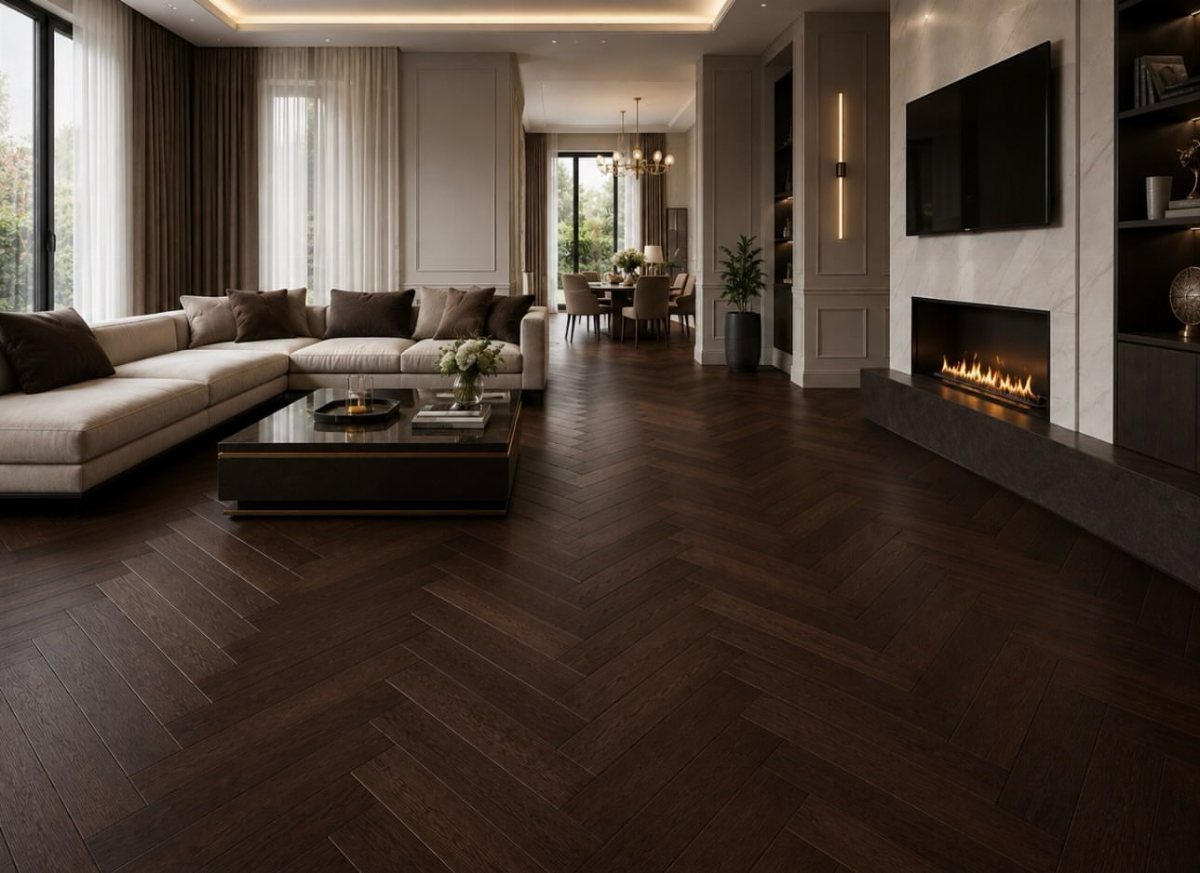
Herringbone flooring turns a dark brown plank into a geometric statement. The pattern adds labor: each piece meets at an angle, so cuts multiply and the subfloor must be flat or the lines telegraph every bump.
Herringbone needs more waste than a straight install; I would pad the order higher than usual.
The visual rhythm works best when the planks are narrow; that keeps the chevron crisp. Dark brown hides the seams better than a pale oak, which helps if the install is your first attempt.
I would start the pattern from the room’s center and work outward, not from a wall, or the edges will look lopsided.
This pattern needs a stable environment. Wide seasonal humidity swings open gaps in dark wood that show as pale lines against the brown.
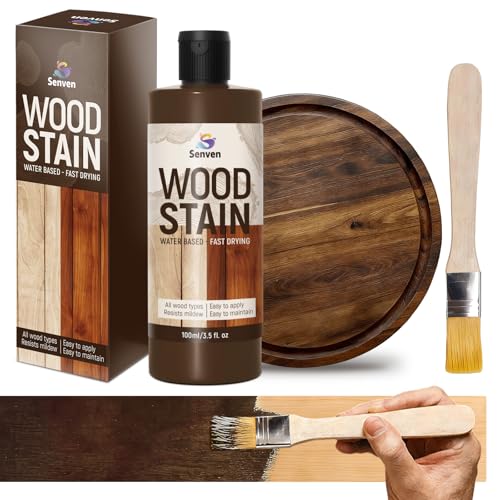
Professional Results: Achieve rich, even color and enhanced wood grain with just a single application. SENVEN wood stain fast-drying, high-concentration formula provides excellent coverage and deep penetration, instantly revitalizing old wood with a natural matte finish

AUTHENTIC WOOD FINISH -Go Beyond Faux with our patented liquid wood technology. It looks and feels like wood because it contains over 60% recycled wood fibers. Transform any hard surface into stunning wood with Retique It! Get the warm, natural look of wood on any surface without the cost and hassle of traditional woodwork.

[LOOKS & FEELS LIKE WOOD BECAUSE IT IS REAL WOOD] Patented in 2018, liquid wood is the only non-faux finish paintable product on the market because it contains over 65% wood by volume. We have found a way to make wood particles 1/5th the size of your red blood cells then put them in a paintable system.
7. Dark Brown Kitchen Cabinets

Gold hardware on dark brown cabinets reads expensive even when it is not. The vertical ribbing on the upper drawers catches light differently than flat panels, so the room feels dressed without extra clutter.
I would check the undertone against the flooring: a cabinet that pulls red against a gray floor looks mismatched, not warm. Black countertops keep the look modern; white marble veining would shift it traditional fast.
If the kitchen gets afternoon sun, the dark finish absorbs heat and can fade near the sink window. A sample door held up in morning and afternoon light shows whether the color holds or turns muddy.

Length: 18" Per Board, Variable Width: 5-6", Thickness: 7/8"

PREMIUM BLACK WALNUT SLAB: Each live edge slab is crafted from genuine black walnut, featuring rich, dark heartwood and contrasting creamy sapwood.
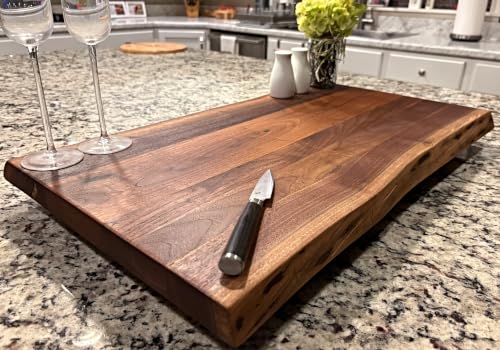
IMPORTANT NOTE: The board being sold here is shown in only the first 3 pictures. The other pictures are just to showcase a sample range of our other cutting boards and butcher blocks. Incidentally, for an alternative Walnut Appetizer Board, search for "B07DVDGFXD" on Amazon. We also carry Appetizer Boards made of Hickory (search for "B073TDTD8Q" on Amazon).
8. Dark Brown Wood Dining Table
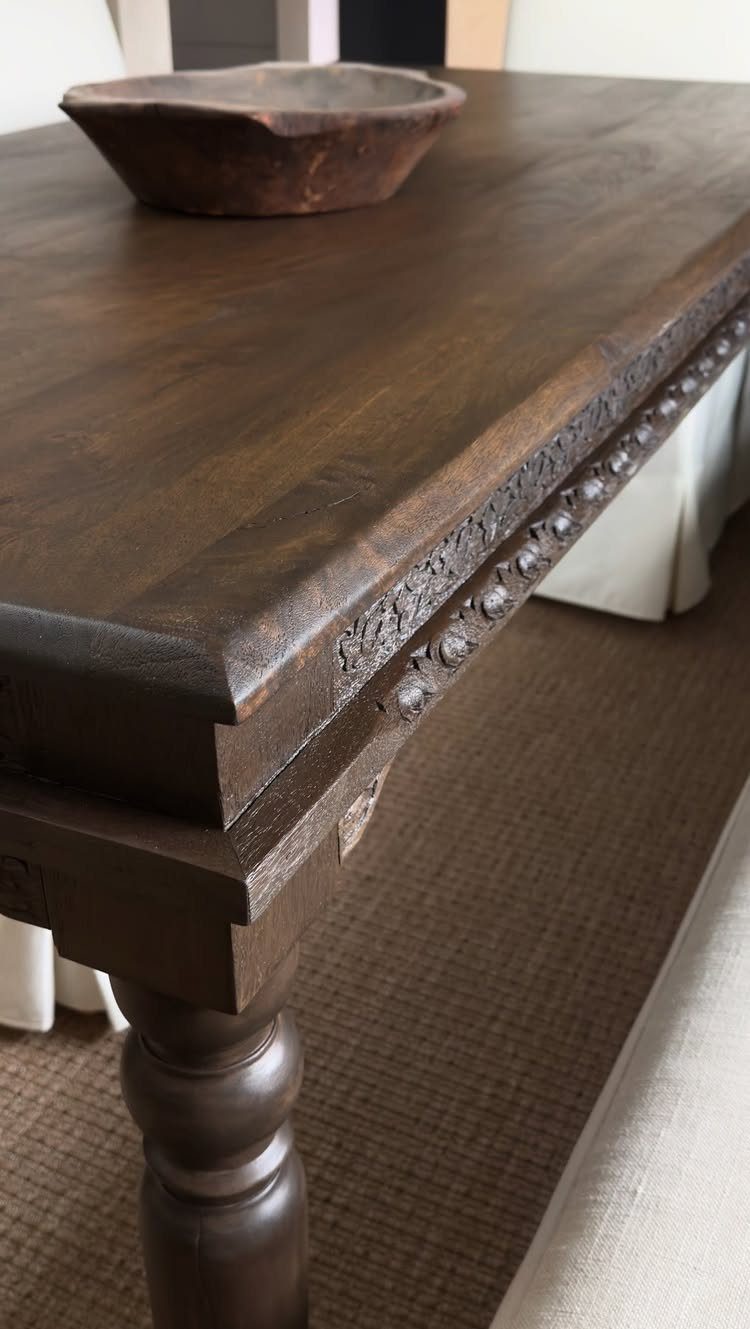
A turned leg and carved edge dress up a table that otherwise needs nothing.
The grain in dark brown solid wood hides the small dents that happen when someone drops a serving spoon or a kid drives a toy truck across it.
I have seen these tables in oak, walnut, and pine stained to match; the pine version costs less but dents deeper, so the carved detail starts looking worn sooner.
A rustic bowl dead center works for a table that sees daily use. For holidays, that same bowl moves to a sideboard and the space becomes a buffet line.
A table this heavy needs felt pads, not the thin stick-ons: the legs will grind through cheap ones in a year.

100% BAMBOO: Kikcoin bamboo wooden cutting boards for kitchen preserves the original bamboo grain and texture.The surface is carefully polished and coated with food-grade oil, ensuring a smooth, burr-free finish that resists cracking

MULTIPLE SIZES: Kitsure wooden cutting board comes in many sizes. The 15"×10" board is ideal for daily use, the compact 11"×7" board works well for quick jobs like slicing fruits, and the larger 18"×12" board suits for more extensive works like carving roasts. Cutting board sets with various sizes are also available in Kitsure, enabling you to handle different ingredients at the same time.
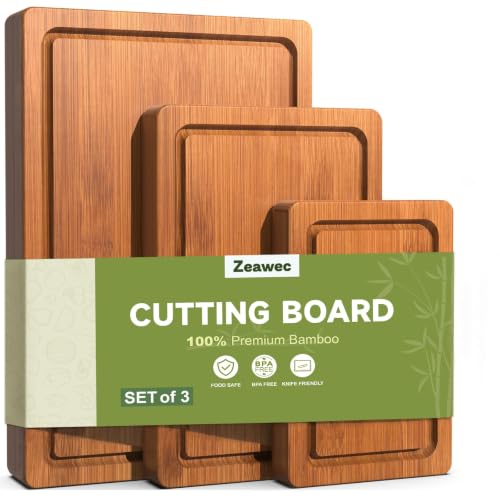
【Say Goodbye To Warped Boards】: Enjoy long-lasting durability with carbonized bamboo that resists cracking and splitting, even with heavy daily use.
9. Dark Wood Front Door

A dark wood door with glass sidelights solves the tunnel problem of a solid slab: light moves through, but the vertical panels keep privacy from the street.
The modern handle runs long and thin, which suits a door this scale better than a round knob that would look like a misplaced cabinet pull.
Stain choice matters more outside than in. Dark browns with red undertones turn orange against warm brick; walnut-based tones stay truer.
In direct summer sun, the surface gets hot enough to soften cheaper finishes, so I would step up to a deck-rated stain with pigment, not a clear coat. A covered porch keeps the finish from taking direct sun and rain.
An unprotected south-facing door needs more frequent touch-up at the bottom where rain pools.

Ultra penetrating wood Stains
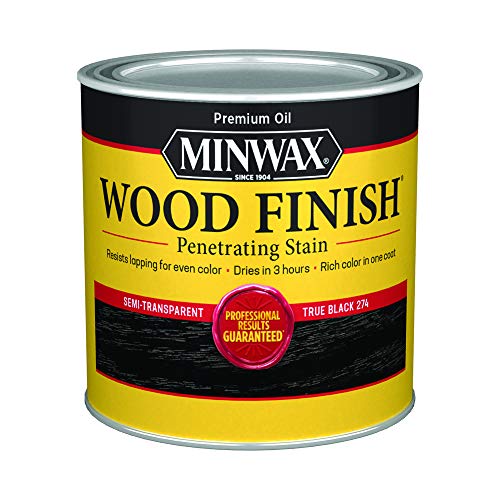
RICH EVEN COLOR – Minwax Wood Finish is a deep penetrating, oil-based wood stain that provides beautiful color and enhances the natural wood grain in one coat. It’s perfect for interior staining projects such as wood furniture, cabinets, doors and more.

Restor-A-Finish is a unique finish-penetrating formula that restores wood finishes while blending out minor scratches, blemishes and abrasions
10. Dark Brown Wood Sideboard
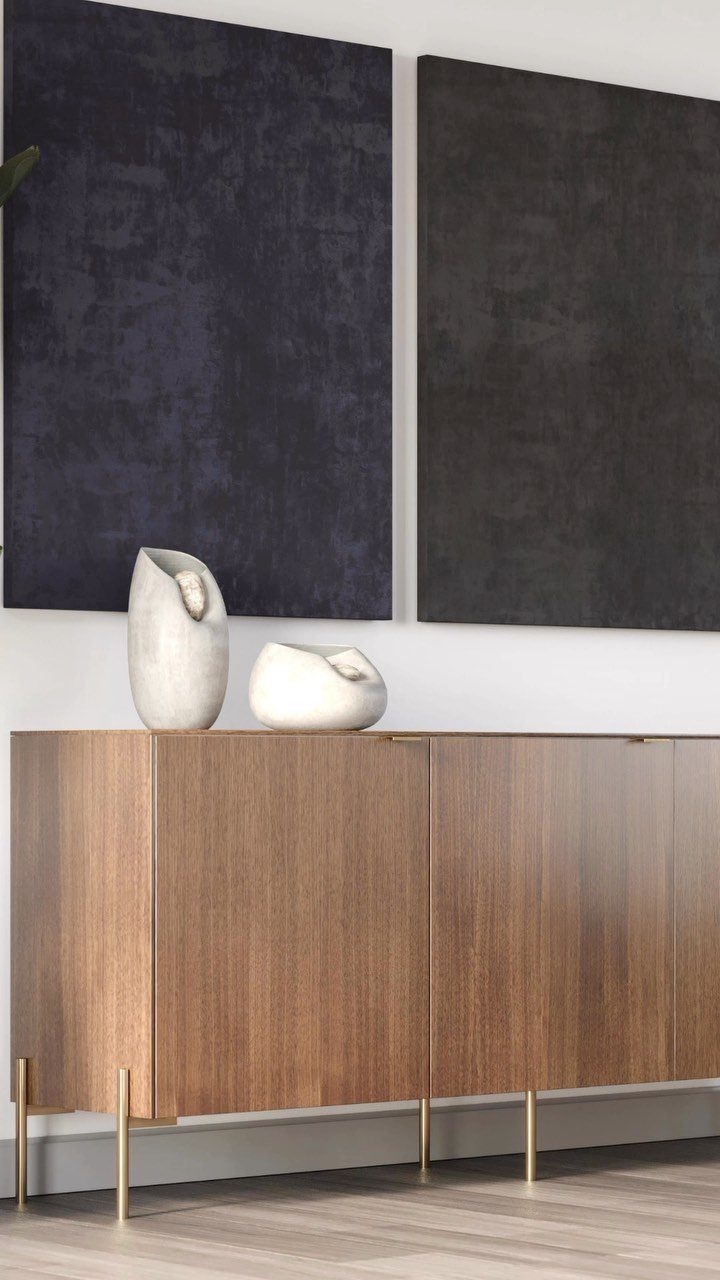
Vertical grain on a sideboard draws the eye upward, which helps in a long low piece that could otherwise look like a box on legs.
Thin, angled gold metal reads almost as a line drawing rather than furniture; it keeps the dark wood from feeling heavy against a white wall.
I would measure the art behind it before ordering: dark squares sitting slightly wider than the credenza frame the piece instead of crowding it.
Two ceramic vessels is the right number. Three starts a collection, one looks like a leftover.
The vertical grain also means dust shows less than on a high-gloss horizontal surface, so this finish forgives a skipped cleaning week.

🏠DETAILS: Size 15.8 X 78.8 Inch, total 8.65 sq.ft(40cmX2m), Self adhesive (no extra glue needed). Made of durable thin vinyl, thickness: 0.21 mm. Herringbone wood floor contact paper peel and stick, Waterproof, Removable.

🟤【Decorative Vinyl Flooring】 Enhance the aesthetic appeal of your space with our brown wood grain vinyl flooring tiles. The realistic wood grain design adds a touch of elegance and sophistication, perfect for any interior decor style. Each vinyl tile is 36x6 inches, 4 PCS of tiles per box , so one box of vinyl floor tiles can cover 5.9 square feet. The thickness of the wood look vinyl tile is about 0.02 inch. Thickened and scratch resistant.

[Realistic Wood Grain with DIY Options]: With a super realistic wood grain appearance and various color options, these tiles meet personalized decorative needs. They are versatile enough for use in homes or commercial spaces, suitable for shop decoration, rental renovations, and RV flooring projects.
11. Dark Brown Wood Coffee Table
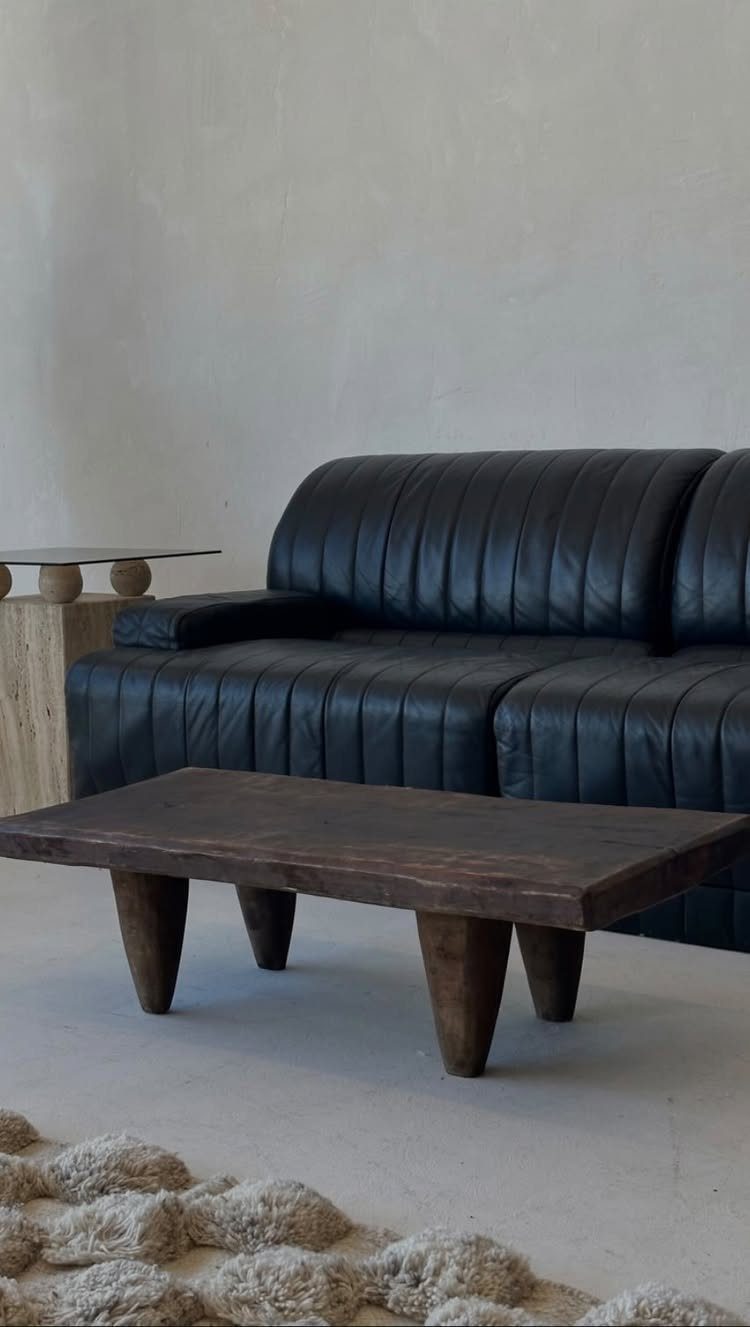
Chunky legs on a coffee table survive being sat on, stepped over, and used as a footrest without wobbling.
The deep dark brown here is almost black in low light, which lets it hold its own against a black leather sofa instead of disappearing.
I would keep the top clear: the scale is the statement, and a tray of candles would read cluttered.
The ribbed sofa behind it adds texture, so the table stays smooth and plain. If the room had a plain fabric sofa, I might want a live-edge top or some carving to balance it.
A rug with some texture underfoot completes the triangle: hard table, soft sofa, rough weave under both.
12. Straight Plank Dark Wood Flooring
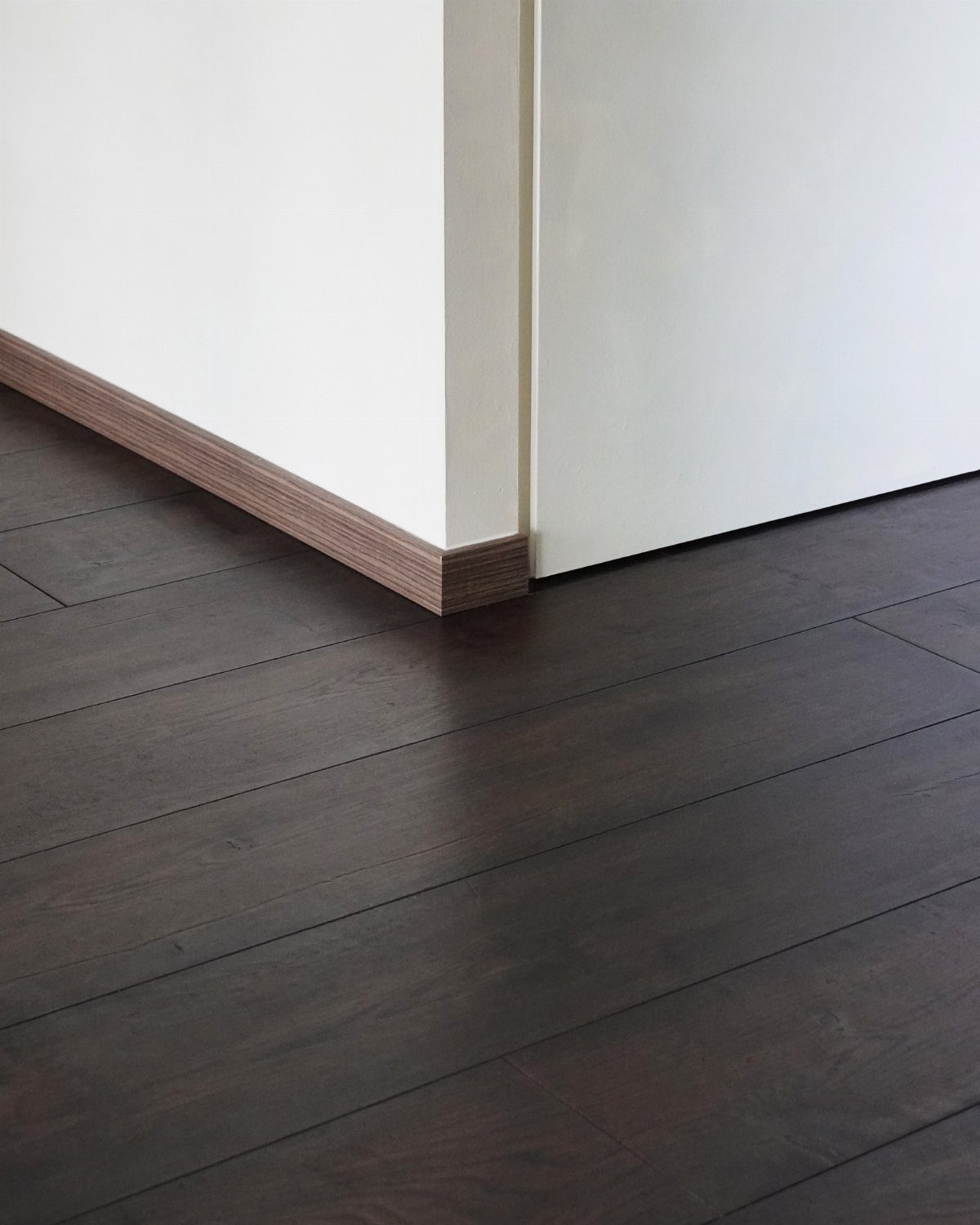
Matching baseboards to the floor instead of the wall is a choice that only works when the floor is this good. The dark brown planks run straight and tight, no pattern, so the grain itself carries the interest.
White walls and doorframe give it negative space to breathe; a busy room with patterned wallpaper would fight this flooring.
I would check the plank width against the room size. Wide planks in a small space can look like a dance floor laid wrong; these seem standard width, which plays safer.
A substantial baseboard, not a thin strip, makes the transition feel intentional. If the subfloor is uneven, straight plank shows every dip, so a level check before install saves the callback.
13. Outdoor Dark Wood Kitchen
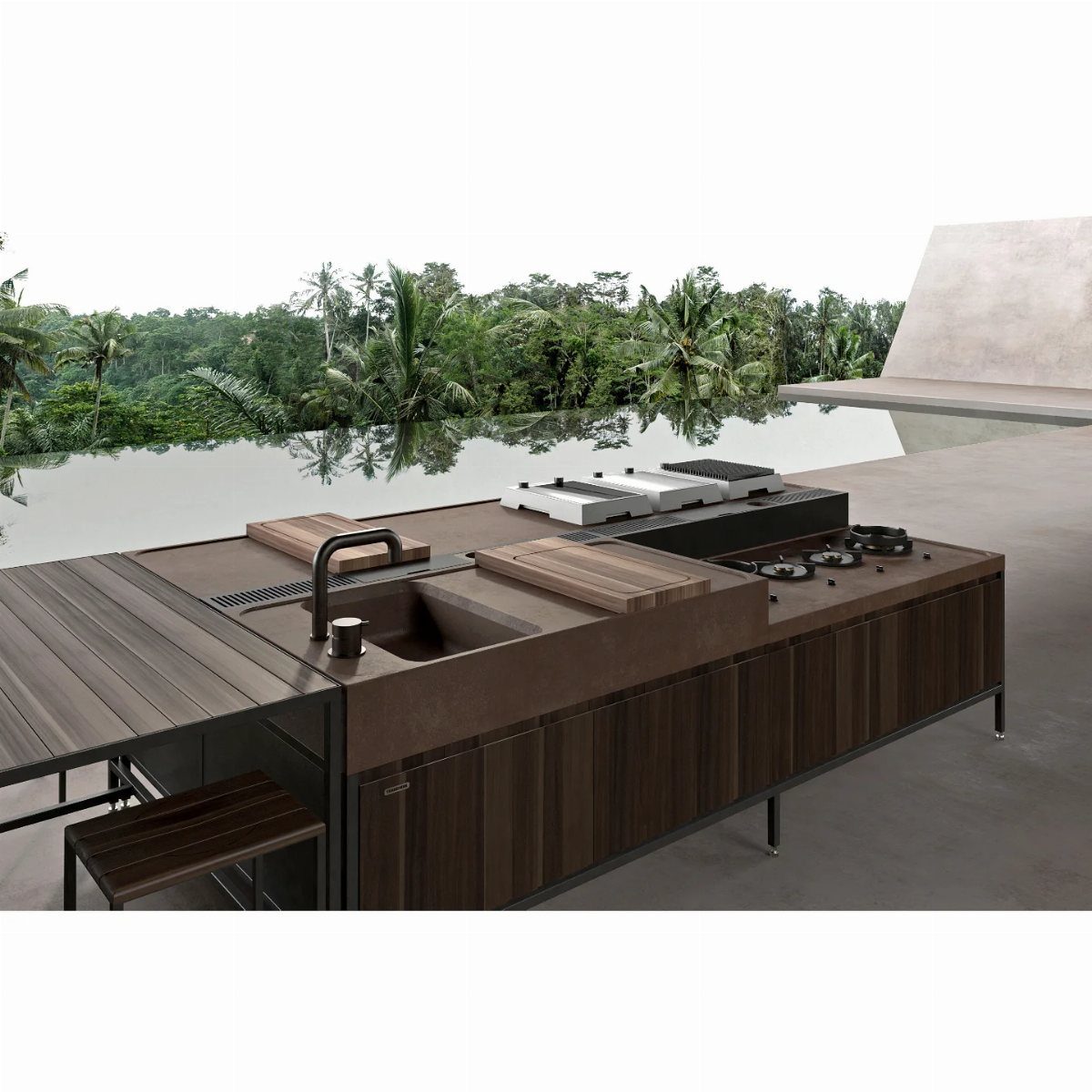
An outdoor kitchen built from dark brown wood only works if the finish is built for rain and sun both. Cabinetry this close to a pool takes chlorine mist and splashing as part of its daily weather.
I would spend the money on a semi-transparent or solid-color stain with heavy pigment load, not a clear seal.
Clear finishes look honest for about two seasons, then the wood grays out unevenly where the grill heat hits and where the sprinkler reaches. Pigment blocks that UV shift and hides the patchiness when it starts.
You do lose some of the grain you probably picked dark brown wood to show.
For a kitchen island with appliances and a sink, I think that is the right loss; the visual interest comes from the layout and the cooking, not from figuring out which board weathered faster.
Check whether your local code calls for noncombustible surfaces near the cooktop before you order anything pre-finished. Some stains rate higher on that test than others, and the label matters to an inspector more than the color chip does.
Applying Dark Wood Stains
Sand to 220 grit before staining. That opens the wood enough for even absorption without leaving scratches that show through dark pigment.
Wipe the dust off completely; leftover grit seals itself into the finish.
A wood conditioner matters most when you are taking a light species dark. Pine, poplar, and birch will blotch without it.
I would condition every test board, not just the final piece, so the sample matches the real result.
Brush stain in the same direction the grain runs; going across it leaves streaks that catch the light wrong. Cross-grain strokes leave dark lines where pigment pools in the scratches.
Oak and ash show dark stripes from their large pores; the earlywood and latewood absorb differently no matter how careful you are. Quartersawn oak adds bright ray fleck that moves as you walk past.
End grain drinks stain fastest and turns almost black next to face grain. Sand it one grit finer, or seal it first with a thin washcoat, then test on scrap before touching visible parts.
Choosing Wood Types
The gap between them is wide, so the species choice matters more than the stain color.
Slow-growing trees produce denser, harder timber. That density costs more and wears longer, which is the tradeoff for flooring or a table that sees daily use.
For a weekend shelf project, a softer species stained dark saves money and still looks right.
Shop stains in-store. Online prices run higher for the same can, and the color on screen is unreliable against real wood.
Wood Color Variations
Wood in nature runs from pale white and cream through yellow, tan, orange, pink, red, every shade of brown, and into purple-brown, gray-brown, and nearly black.
Most lumberyards stock the cream-to-brown range; the bright yellows, true reds, purples, and solid blacks take more hunting.
Each keeps an earthy base but shifts warm or cool, red or gray.
Light changes everything. A dark wood with purple undertone reads gray in northern light and warm under a 2700K bulb.
The same board at 9 AM and 5 PM can look like two different stains. I would move samples around the room and check at both times before committing.
Aging darkens most woods. Mahogany shifts deeper red over years; walnut holds steadier.
That future color is part of the choice, not a surprise to manage later.
Durability of Dark Woods
Walnut gives dark brown with strength and stability. Mahogany adds red that deepens over time; it is chosen where the wood will be seen, on exterior doors and visible furniture.
Teak costs the most and lasts the longest, a tropical hardwood dense enough for weather.
Density protects against dents but not against UV. Dark pigment in the finish blocks fading better than clear coats, which matters for outdoor use or any south-facing window.
The grain you lose to pigment is worth keeping the color true.
Dark wood on every surface in a small room swallows the light and walls feel like they are closing in.
I would limit it to one anchor piece: a cabinet run, a floor, or a table, paired with lighter walls or soft green to keep the room from feeling heavy.
Frequently Asked Questions
What color wood is dark brown?
Dark brown wood runs from chocolate brown into near-black territory, with American black walnut hitting a true chocolate-to-purple-brown range and wenge reading almost black from across a room.
Minwax Dark Walnut reads warm under light, Varathane Jacobean turns deeper toward red, and Ebony gets so close to black you start losing the grain lines.
The same stain reads differently depending on the species underneath, so oak, pine, and poplar all end up looking like their own version of dark brown.
What type of wood is known for its deep dark color?
American black walnut, wenge, and ebony are the species that carry deep dark color naturally in their heartwood, no stain required.
Walnut runs chocolate to purple-brown, wenge reads almost black with caramel streaking, and ebony is the darkest of the three.
These tropical and temperate hardwoods developed dense, dark heartwood as a defense against insects and fungi, which is why the color goes all the way through rather than sitting on the surface.
What are different shades of dark brown?
The shades move from warm chocolate brown through espresso and into near-black, with undertones shifting between purple, red, and gray depending on the wood or stain.
Dark Walnut keeps things warm, Jacobean pulls red, and Ebony goes so far toward black the grain starts to disappear.
When Dark Walnut alone looks too orange and Jacobean alone looks too severe, cutting them together usually settles the tone somewhere livable.