Creating a kitchen herb garden has become a trendy and practical way to bring the freshness of nature right into your culinary space. If you’ve been dreaming of having fresh herbs at your fingertips while cooking, you’re not alone. Many of us are seeking that green touch to not only elevate our home decor but also enhance our meals with vibrant flavors. This post is crafted for anyone who loves to cook, enjoys gardening, or simply wants to add some life to their kitchen. You’ll discover that growing your own herbs is easier than you think and can be done even in the smallest of spaces.
In this post, we’ve gathered 15 creative ideas for indoor kitchen herb gardens that will inspire you to start your own green project. Whether you have a spacious kitchen or just a small windowsill, these ideas cater to all environments. From vertical gardens to stylish countertop containers, you’ll find designs that fit your style and needs. Plus, I’m sharing practical tips along the way to ensure your herbs thrive. Get ready to cultivate a little slice of greenery that not only decorates your kitchen but also provides you with fresh herbs for your meals!
Key Takeaways
– Discover various creative setups for your kitchen herb garden that fit different spaces, from vertical gardens to countertop containers.
– Learn how to select the right herbs based on your cooking style and preferences for a truly rewarding gardening experience.
– Find helpful gardening tips that ensure your herbs stay healthy and flourishing, even in an indoor setting.
– Explore unique container gardening options, including repurposed kitchen items and upcycled containers, that add charm to your home.
– Understand the benefits of growing fresh herbs at home, from enhancing your meals to improving your kitchen’s aesthetic.
1. Vertical Garden Charm
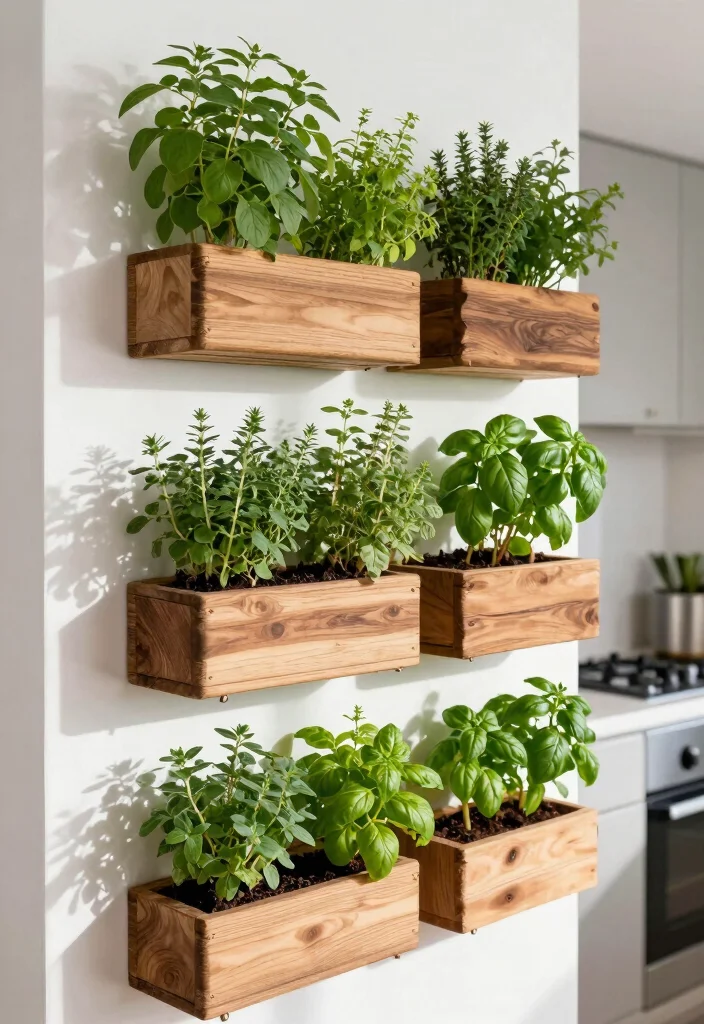
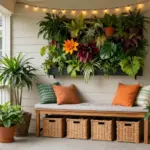
Are you looking for a stylish way to elevate your herb game? Vertical gardens are not only space-saving but also a beautiful way to display your favorite herbs. Imagine fresh mint, parsley, and cilantro cascading down a wall, creating a lively atmosphere in your kitchen.
Using wall-mounted planters or repurposed ladders, you can easily create a stunning herb wall. Opt for recycled materials like wooden pallets for an eco-friendly touch. Make sure your garden gets plenty of sunshine and water from above to keep all your plants happy.
– Choose a sunny wall: Find the perfect spot for optimal light.
– Select thriving herbs: Pick herbs that grow well in vertical setups.
– Water from the top: Ensure all plants receive moisture evenly.
With a bit of creativity, your vertical garden will be both functional and a striking element in your home.
A vertical herb wall proves that great flavor doesn’t need floor space. It’s stylish, practical, and endlessly fresh—mint, parsley, and cilantro at arm’s reach. Hang recycled planters, soak in sunlight, and turn any kitchen into a green, edible gallery.
2. Stylish Countertop Containers
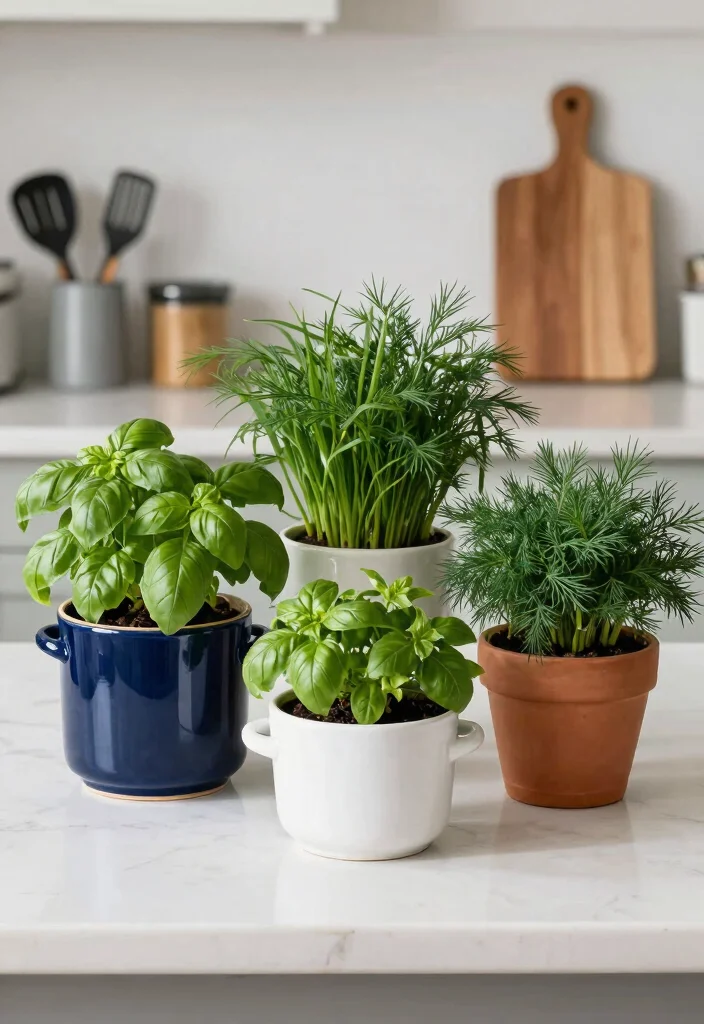
Do you want to turn your kitchen into a fresh herb haven? Countertop containers can blend beauty and functionality, making your cooking space feel more inviting. Picture vibrant rosemary, sage, and chives beautifully arranged in chic ceramic or metallic pots right on your kitchen counter.
Mix and match different sizes and styles to create an eye-catching display. Position your herbs near the stove or prep area, making them easily accessible for cooking. Enhance the look by adding decorative stones or gravel on top of the soil for a polished finish.
– Mix materials: Combine various pot styles for visual interest.
– Position for convenience: Keep them close to your cooking space.
– Decorate the tops: Use pebbles for added style.
With stylish containers, you elevate both the aesthetic and practicality of your kitchen.
Fun fact: A compact kitchen herb garden on the counter can trim grocery bills by up to 20% each month. It also boosts aroma and accessibility right where you cook.
3. Hanging Herb Gardens
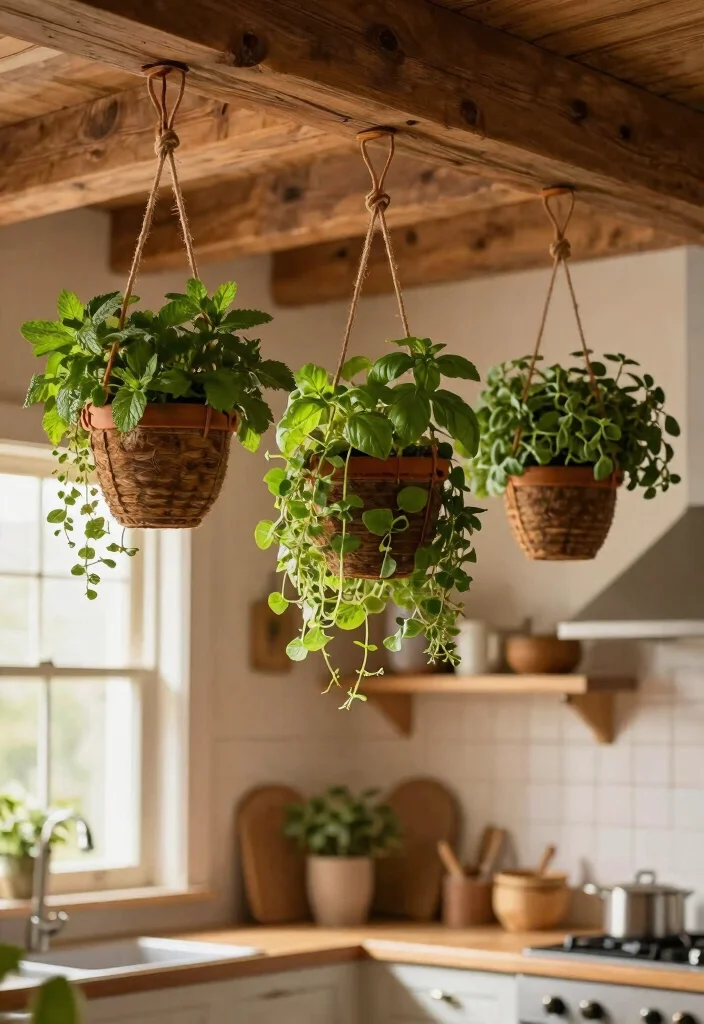
Are you short on counter space but still want to enjoy fresh herbs? Hanging herb gardens offer a fantastic solution, adding a touch of greenery without cluttering your kitchen. Imagine trailing herbs like lavender and thyme gracefully cascading from baskets or wall-mounted shelves.
This setup not only saves space but also creates a charming focal point, especially in kitchens with high ceilings. Ensure that your herbs are easy to reach for watering and harvesting. Consider adding macramé hangers for a trendy, bohemian vibe.
– Select cascading herbs: Choose varieties that can drape beautifully.
– Secure your hangings: Make sure they are stable and accessible.
– Personalize: Use different colors or textures for your containers.
With hanging gardens, you introduce a lush aesthetic that brightens your cooking space.
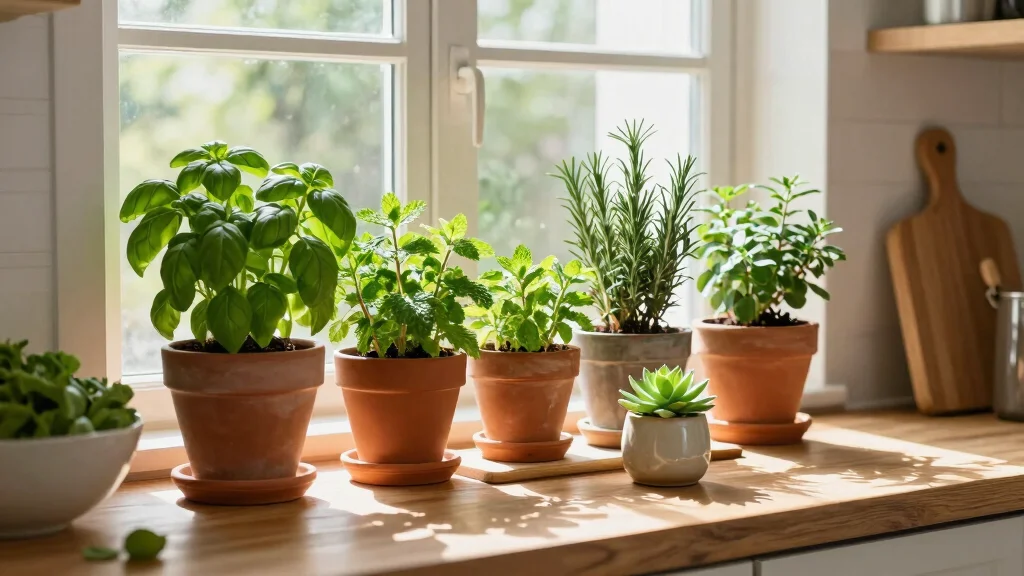
4. Windowsill Delight
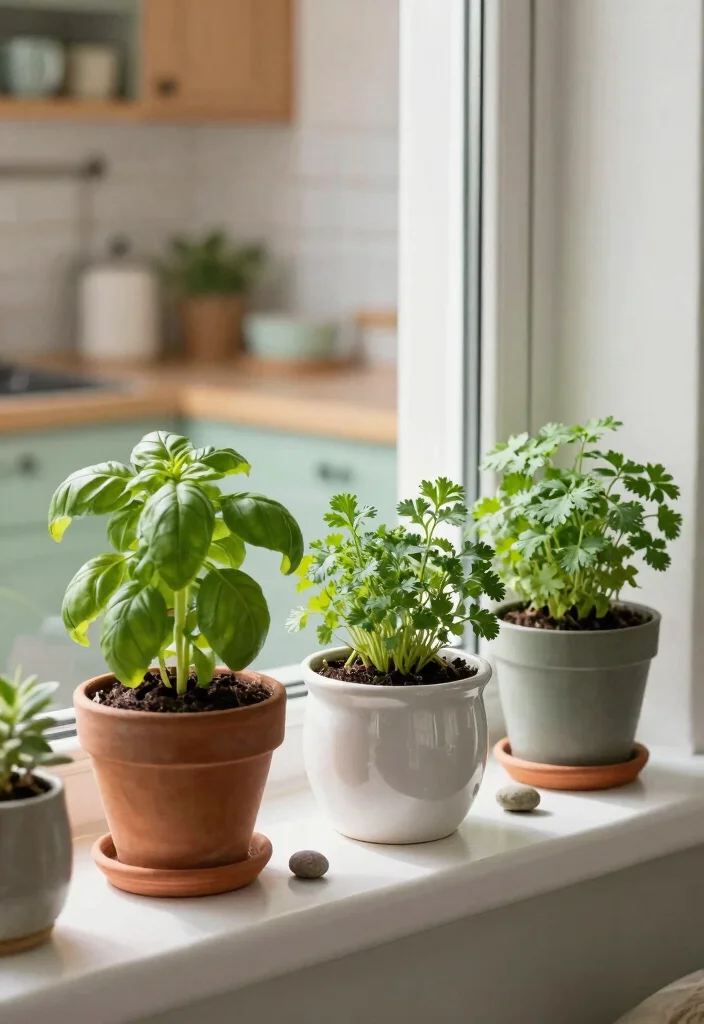
Have a sunny windowsill that’s begging for some greenery? Transform it into a delightful herb garden, perfect for herbs that love bright light like basil, cilantro, and parsley. Arrange small pots in a neat row for a simple yet effective setup.
To avoid mess, place saucers under each pot. Choose pots that complement your kitchen decor, and remember to rotate them regularly for even sunlight exposure.
– Select herbs wisely: Pick those that thrive on the windowsill.
– Use matching pots: Create an aesthetically pleasing arrangement.
– Rotate for sun: Ensure all herbs get equal light.
This easy setup adds a touch of nature and freshness to your kitchen atmosphere.
5. Rustic Wooden Crates
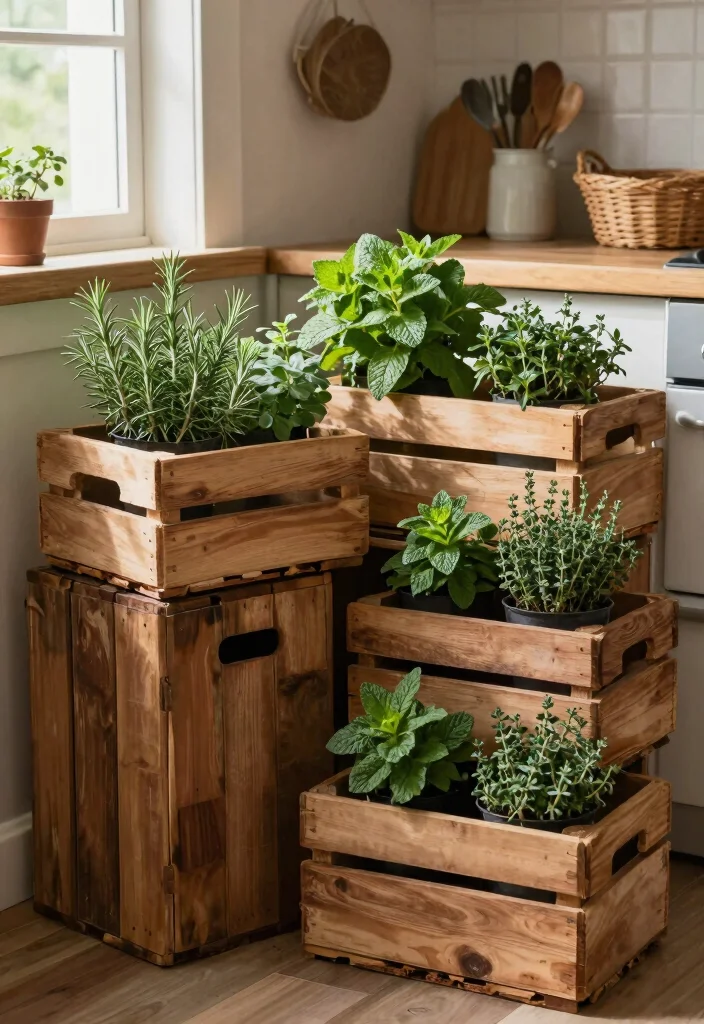
Are you looking for a charming way to organize your herb garden? Wooden crates offer a rustic aesthetic while providing ample space for your herbs. Stack them on your counters or hang them on walls for a dramatic presentation filled with colorful herbs.
You can customize the crates with paint or stain to match your kitchen style, or leave them raw for a more farmhouse appeal. This design allows for excellent drainage and airflow, promoting healthy growth.
– Choose your layout: Stack or hang crates based on your space.
– Experiment with finishes: Customize the look to fit your style.
– Group herbs: Keep similar varieties together for easy access.
Rustic crates add a warm, inviting atmosphere that enhances your indoor herb garden.
How To Choose The Right Kitchen Herb Garden
When it comes to cultivating an indoor kitchen herb garden, selecting the right elements is crucial for success. Below are key criteria to help you make the best choices for your space.
1. Size
Before you start, measure the space where you plan to set up your herb garden. Think about how many herbs you want to grow. Smaller spaces can benefit from vertical gardens or countertop containers, while larger areas can accommodate shelving units or herb spirals. Make sure the size of your containers fits comfortably without cluttering your kitchen.
2. Material
Consider the materials of your containers. Options range from ceramic and terracotta to plastic and metal. Ceramic pots are stylish and retain moisture well, while plastic is lightweight and budget-friendly. For a rustic look, reclaimed wood can add charm. Just ensure whatever material you choose has drainage holes to prevent root rot.
3. Herb Selection
Choose herbs that you frequently use in cooking. Popular options include basil, cilantro, and parsley. Think about the amount of sunlight each herb needs. Some, like mint, thrive in partial shade, while others, like rosemary, prefer full sun. Mixing herbs with similar sunlight and watering needs can simplify care.
4. Light Requirements
Assess how much natural light your kitchen receives. If your kitchen has bright, direct light, you can grow sun-loving plants easily. For darker corners, consider using grow lights. These can help simulate sunlight and ensure your herbs thrive even in less-than-perfect conditions.
5. Maintenance Level
Different herbs have different maintenance needs. Some herbs, like chives and basil, can be very forgiving and easy to care for. Others, like cilantro, can bolt quickly in warm conditions. Think about how much time you can commit to your herb garden and choose herbs that fit your lifestyle.
6. Budget
Lastly, set a budget for your kitchen herb garden. Costs can vary based on the pots, soil, seeds, or plants you choose. You can start small with a few herbs and gradually expand your garden as you gain confidence. Look for sales or discounts at local garden centers to save money.
Pro Tip: Start with a few easy-to-grow herbs and expand your collection as you learn what works best in your kitchen space. Herbs like basil and mint are great beginner options, as they grow quickly and can be used in various recipes! 🌱
6. Modern Glass Terrariums
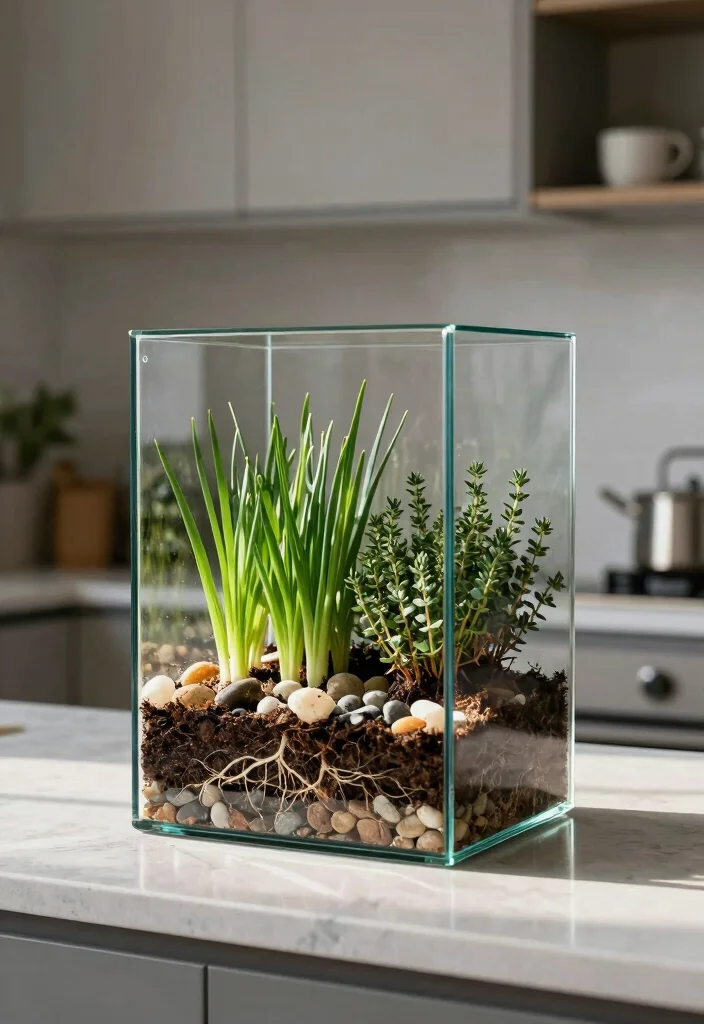
Want a stylish way to showcase your herbs? Glass terrariums are a chic choice that lets you admire the roots of small herbs like chives and thyme. These trendy containers create a striking visual element in your kitchen while keeping your herbs healthy.
Layer pebbles, activated charcoal, and potting soil for the perfect growing environment. Make sure to provide adequate drainage to prevent overwatering. This modern twist not only nurtures your herbs but also serves as a decorative piece.
– Layer wisely: Use pebbles and soil for optimal growth.
– Choose compact herbs: Select varieties that thrive in limited space.
– Display thoughtfully: Position your terrarium where it can be showcased.
Glass terrariums combine elegance with practicality, making them a standout in any indoor herb garden.
7. Repurposed Kitchen Items
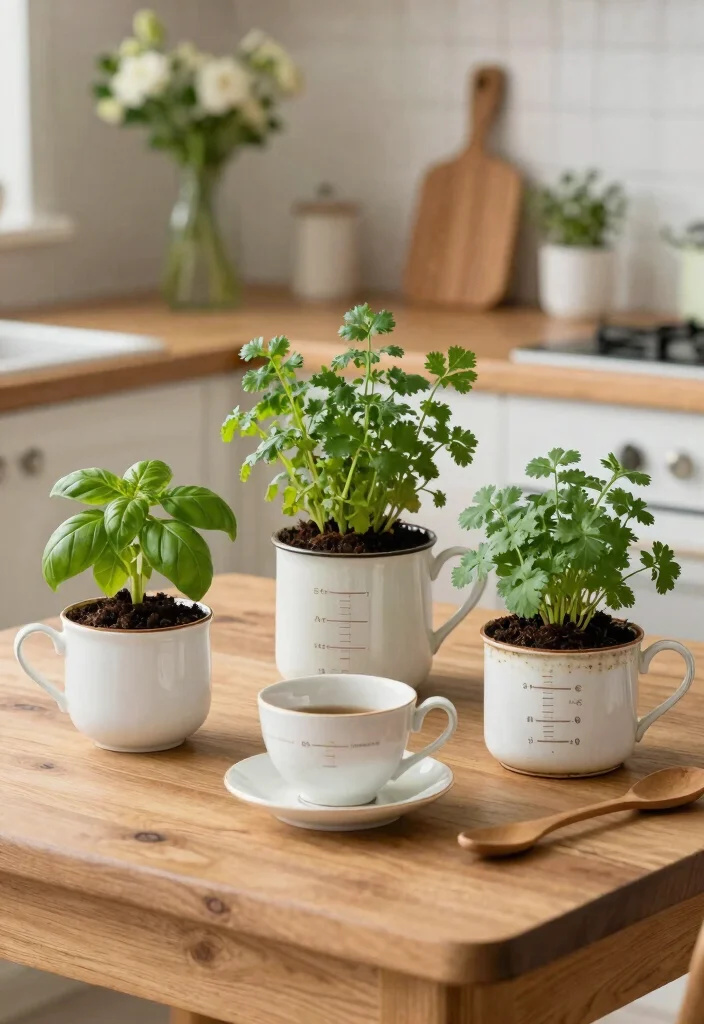
Looking for a fun way to recycle your kitchen items? Turn old mugs, teacups, or measuring cups into quirky herb pots! This creative approach not only saves money but also adds personality to your indoor garden.
Fill these repurposed items with herbs like basil or parsley, ensuring to drill drainage holes where needed. This project can also be a fun family activity, bringing everyone together in the kitchen.
– Gather unused items: Look for kitchenware that can be transformed.
– Ensure proper drainage: Drill holes if necessary.
– Mix and match pots: Create a playful assortment of planters.
Repurposed kitchen items make your herb garden unique and charming while sparking conversations.
8. Herb Spiral Gardens
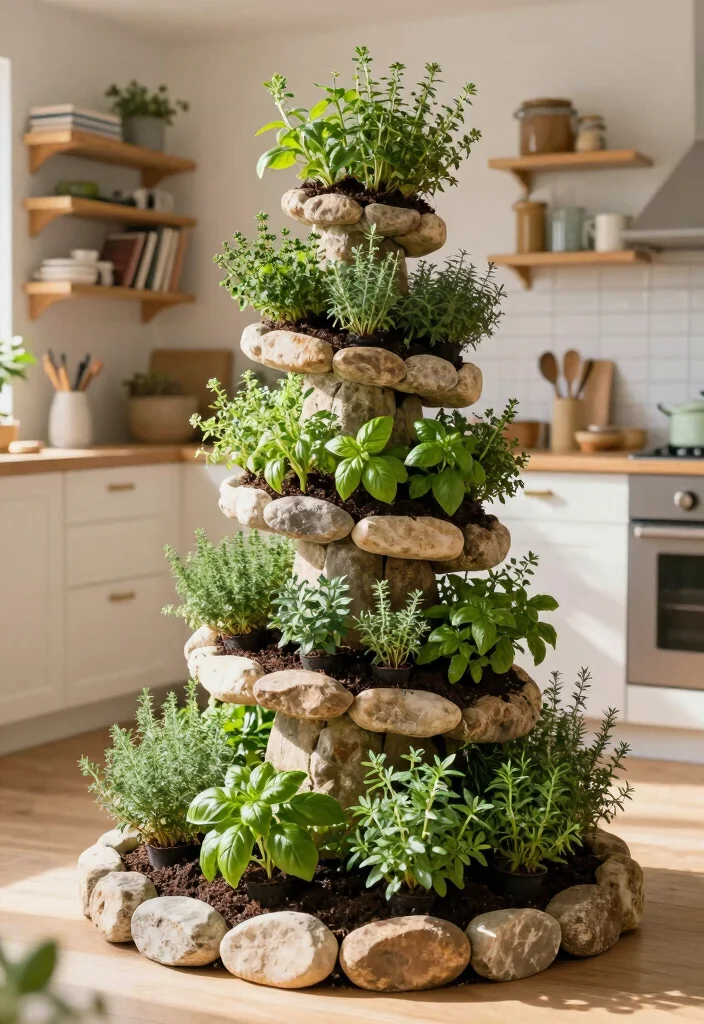
Are you interested in a unique way to grow your herbs? An herb spiral garden is an innovative design that maximizes space and creates diverse microclimates for various herbs. The spiral shape allows for both moisture-loving and drought-resistant herbs to flourish in one area.
This approach is ideal for both indoor and outdoor kitchens, allowing you to fill it with aromatic herbs like rosemary, lavender, and mint. The visual appeal and functionality of an herb spiral can truly enhance your cooking space.
– Build the spiral: Use stones for structure.
– Choose diverse herbs: Select varieties that thrive in different conditions.
– Maintain regularly: Adjust watering according to each section’s needs.
With an herb spiral garden, you can enjoy both beauty and practicality in your kitchen.
Fun fact: An herb spiral can fit 6–12 herbs and boost growth by creating two microclimates in one compact kitchen herb garden. Watering is smarter too—moisture-loving herbs like mint thrive low, while rosemary dries out a bit.
9. Kitchen Shelving Units
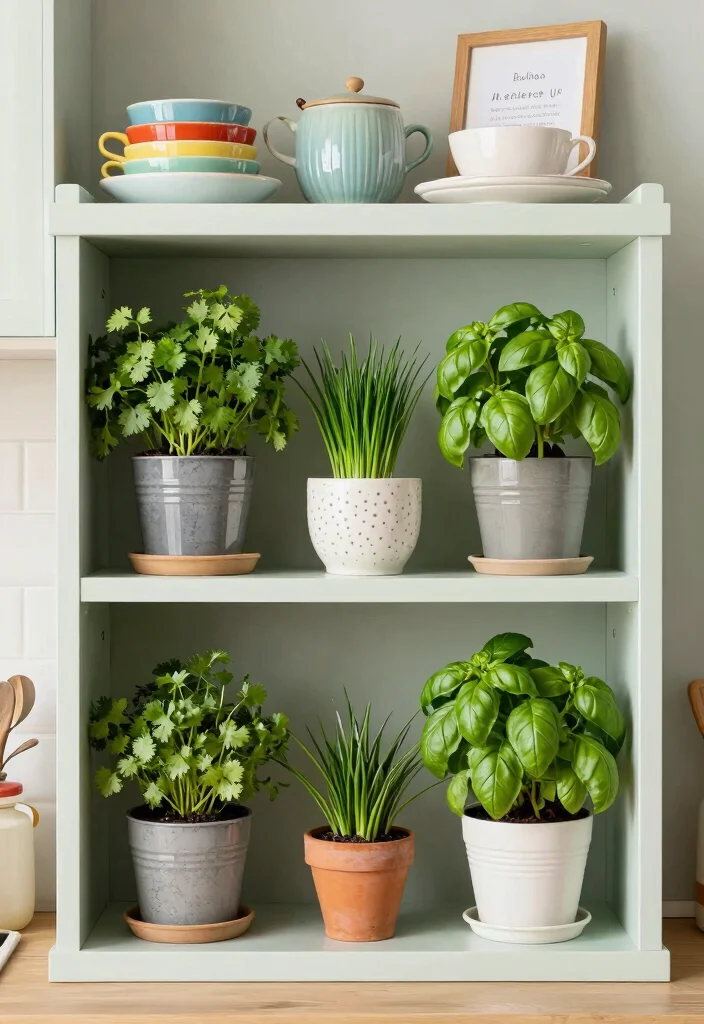
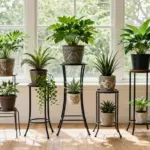
Want to transform your shelving unit into a vibrant herb garden? Incorporate pots of various herbs between your favorite kitchen decor or gadgets for a lively display. This approach adds visual interest to your kitchen while keeping fresh herbs readily accessible.
Mix herbs and flowers for a colorful arrangement, and consider grouping smaller pots on higher shelves while placing larger ones at eye level. This setup allows for personalization and style in your cooking space.
– Select an appropriate shelf: Ensure it’s accessible and suited for your herbs.
– Mix and match decor: Combine herbs with kitchen items for a unique look.
– Group by size: Organize pots by height for an appealing arrangement.
With a shelving unit, your kitchen can transform into a beautiful herb garden that reflects your personal style.
10. Vintage Style Herb Jars
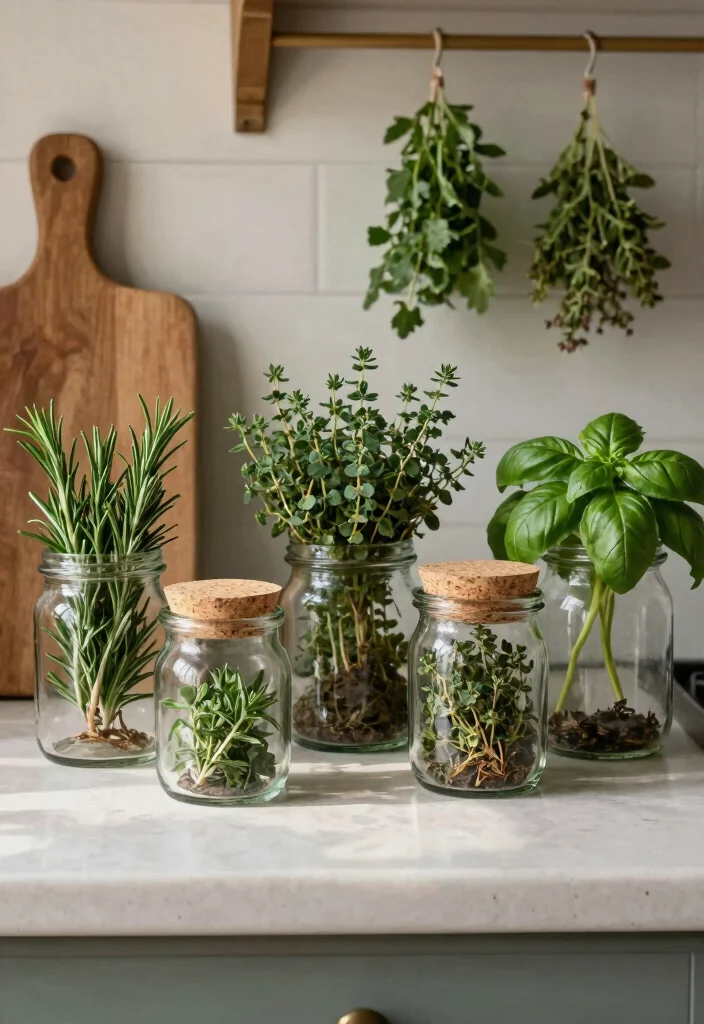
Do you love vintage charm? Herb jars can add both function and style to your kitchen while keeping your herbs fresh. Think of glass jars with cork lids or mason jars filled with vibrant herbs displayed on counters or shelves.
Label your jars creatively using chalk or twine, making it easy to identify each herb while adding a personal touch to your decor. This method elevates your kitchen’s aesthetic while ensuring your herbs stay fresh.
– Find unique jars: Look for interesting glass containers with character.
– Label for organization: Use creative methods to identify your herbs.
– Display attractively: Arrange jars on counters or shelves for a cohesive look.
Vintage-style herb jars enhance your indoor garden while showcasing your culinary passion.
11. Herb Bouquet Centerpieces
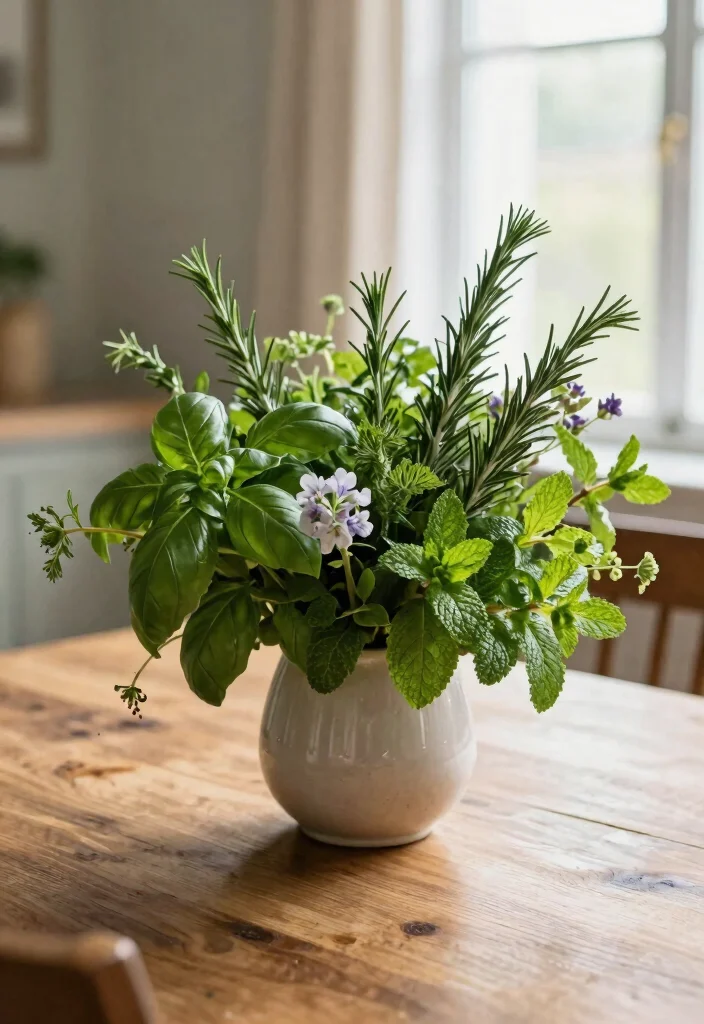
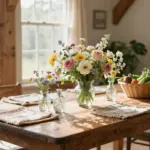
Want to uplift your dining table with something unique? Create stunning centerpieces using fresh herbs instead of traditional flowers! A bouquet of rosemary, basil, and mint not only looks beautiful but also fills your space with delightful aromas.
Arrange your herbs in a simple vase or mix them with seasonal flowers for an artistic touch. Changing the arrangement regularly keeps your kitchen feeling fresh and vibrant.
– Select an array: Combine herbs with flowers for added appeal.
– Use seasonal picks: Choose herbs based on availability.
– Refresh often: Change water and herbs to keep things lively.
Herb bouquet centerpieces infuse your kitchen with fragrance and charm.
12. Herbs in Upcycled Containers
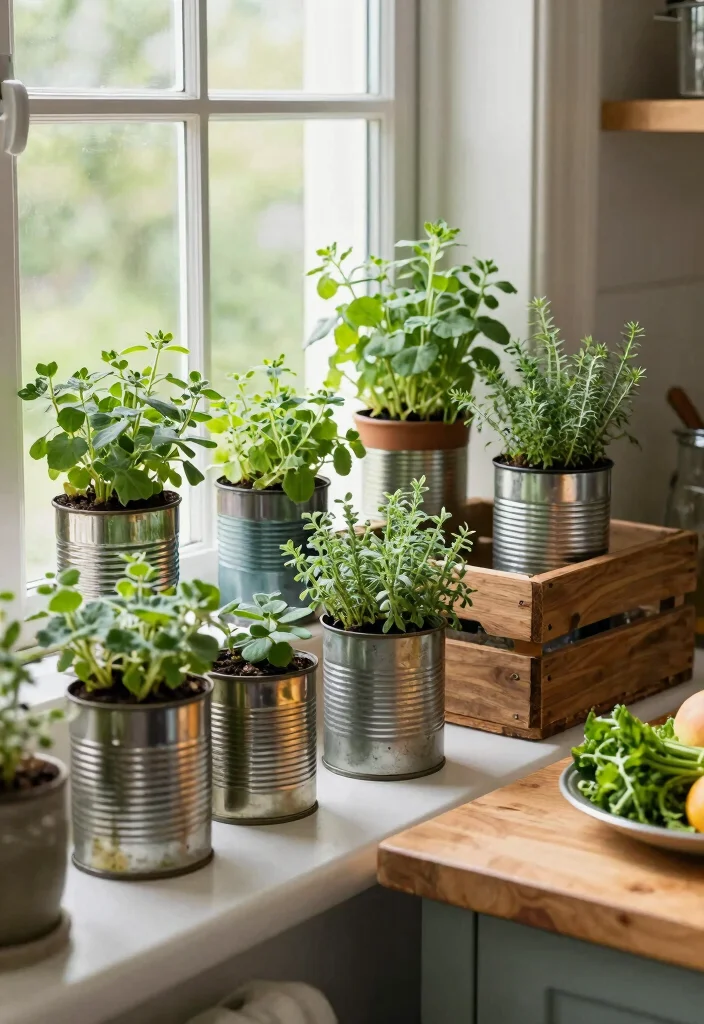
Ready to give old containers a new purpose? Turn tin cans, wooden boxes, and even wine bottles into creative homes for your herbs! This eco-friendly approach adds a personal touch to your kitchen while being fun and resourceful.
Ensure your containers have drainage holes for healthy herbs. You can also paint or decorate them to match your kitchen’s vibe, enhancing the overall aesthetic.
– Upcycle wisely: Choose containers that are adaptable for planting.
– Personalize creatively: Decorate them to reflect your style.
– Ensure drainage: Make sure water can escape to prevent soggy roots.
Upcycled containers bring charm and creativity to your indoor herb garden.
13. Hidden Herb Garden Drawers
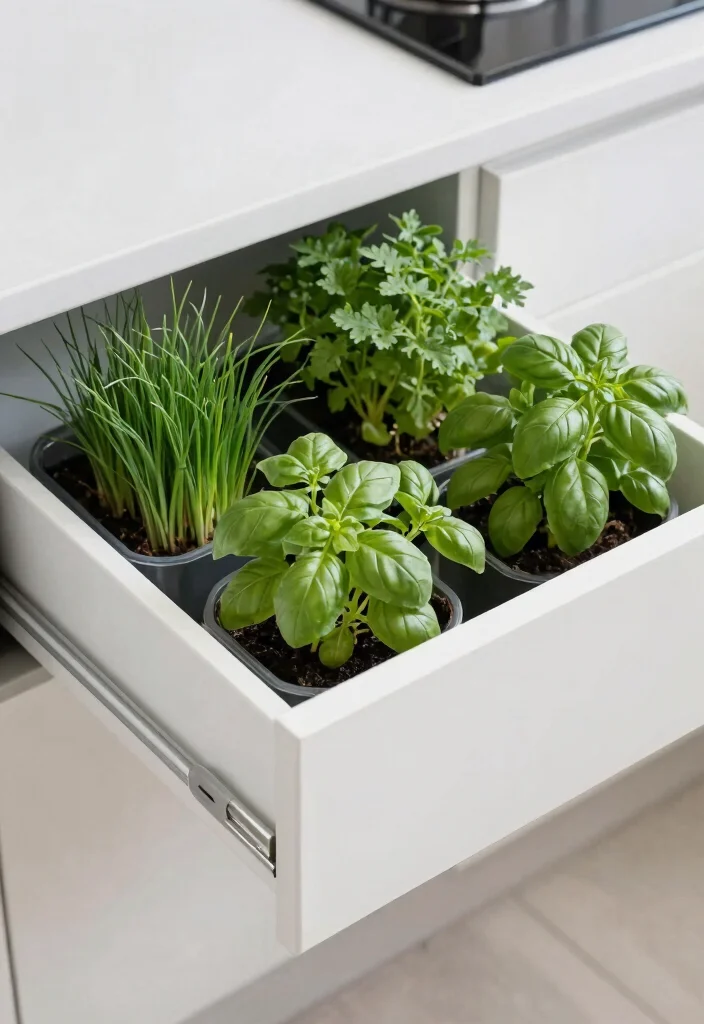
Looking for a clever way to incorporate herbs into your kitchen? Create hidden herb gardens in your kitchen drawers! This innovative approach keeps your herbs discreet yet accessible, perfect for small spaces.
Use shallow containers that fit snugly in your drawers, and opt for herbs like chives or small lettuces that thrive in limited depth. Be sure to monitor moisture levels, as drawers can retain humidity.
– Choose shallow planters: Ensure they fit comfortably inside.
– Select suitable herbs: Pick those that do well in shallow soil.
– Monitor moisture: Regularly check to maintain herb health.
Hidden herb garden drawers can be a delightful surprise, blending functionality and creativity.
14. Potpourri with a Twist
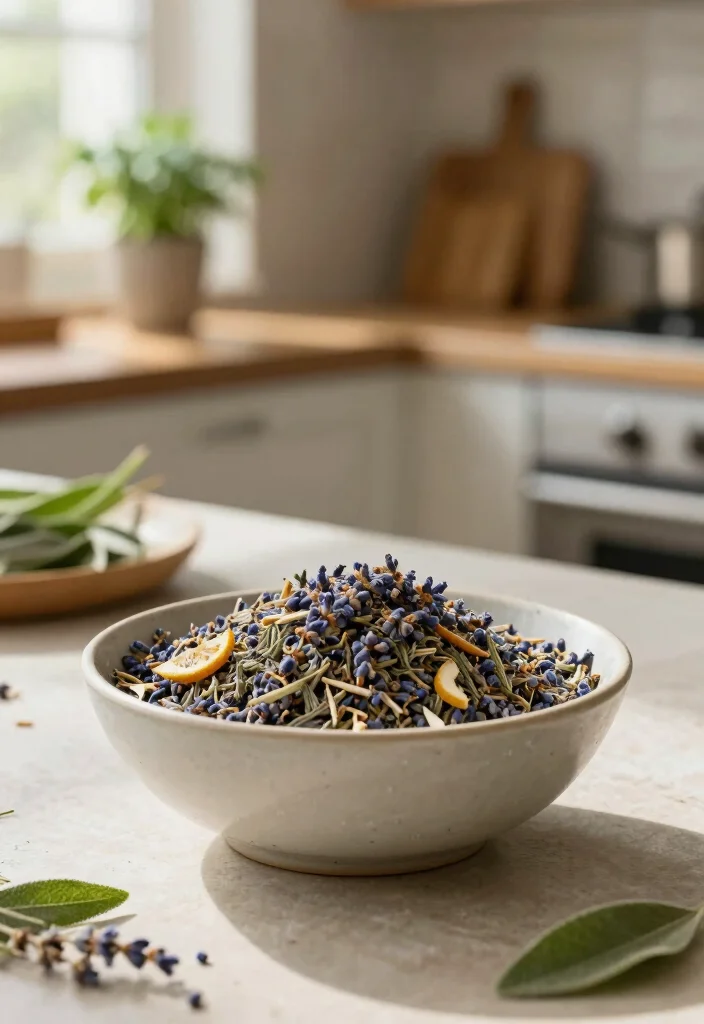
Want to fill your kitchen with delightful scents? Blend your herbs into potpourri for a fragrant indoor garden experience! Mix dried sage and lavender with citrus peels and essential oils for a refreshing aroma that brightens your space.
Display your potpourri in a decorative bowl or jar, allowing the fragrance to permeate your kitchen. Refresh it monthly for a continuous burst of freshness.
– Choose fragrant herbs: Opt for varieties that smell great in potpourri.
– Combine thoughtfully: Mix with complementary scents for added depth.
– Display attractively: Use a beautiful container for aesthetics.
Potpourri with herbs is a unique way to showcase your indoor garden’s beauty and fragrance.
15. DIY Herb Marker Labels
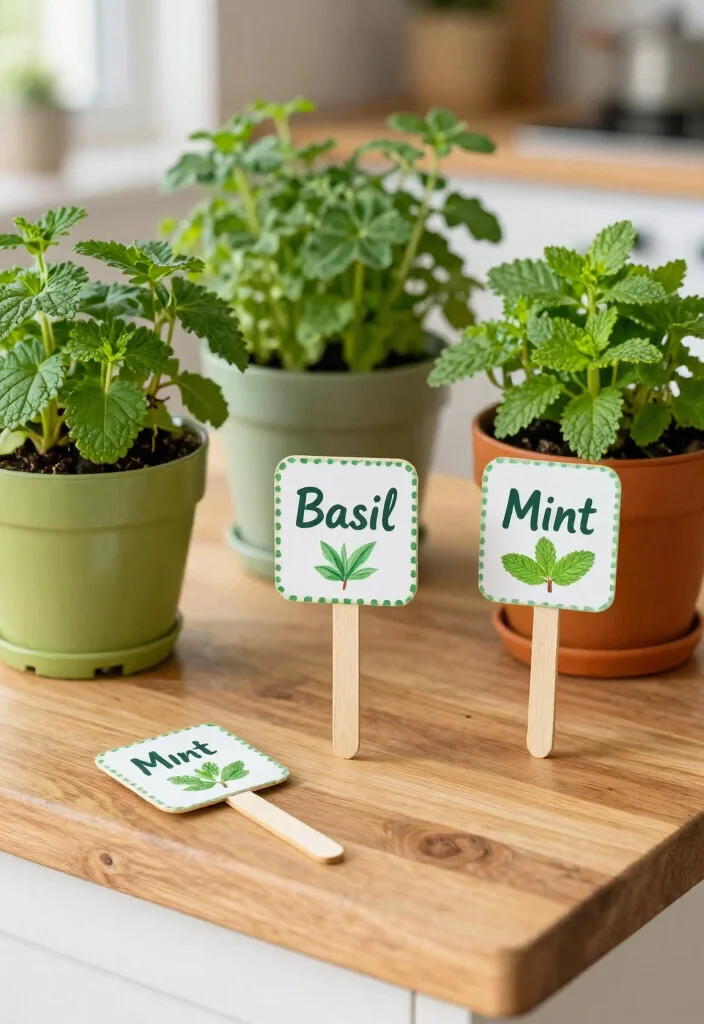
Want to add a personal touch to your herb garden? Create DIY herb marker labels! Using materials like wooden sticks or small stones, you can label each pot with the herb’s name for easy identification.
Consider decorating the labels with paint or twine to match your kitchen style. It’s a fun project that can involve the family, making plant care more enjoyable.
– Gather materials: Look for items you can use as markers.
– Label creatively: Use unique designs that reflect your personality.
– Involve the family: Make it a fun crafting activity for everyone.
DIY herb marker labels enhance your indoor garden’s aesthetic while adding functionality.
Conclusion
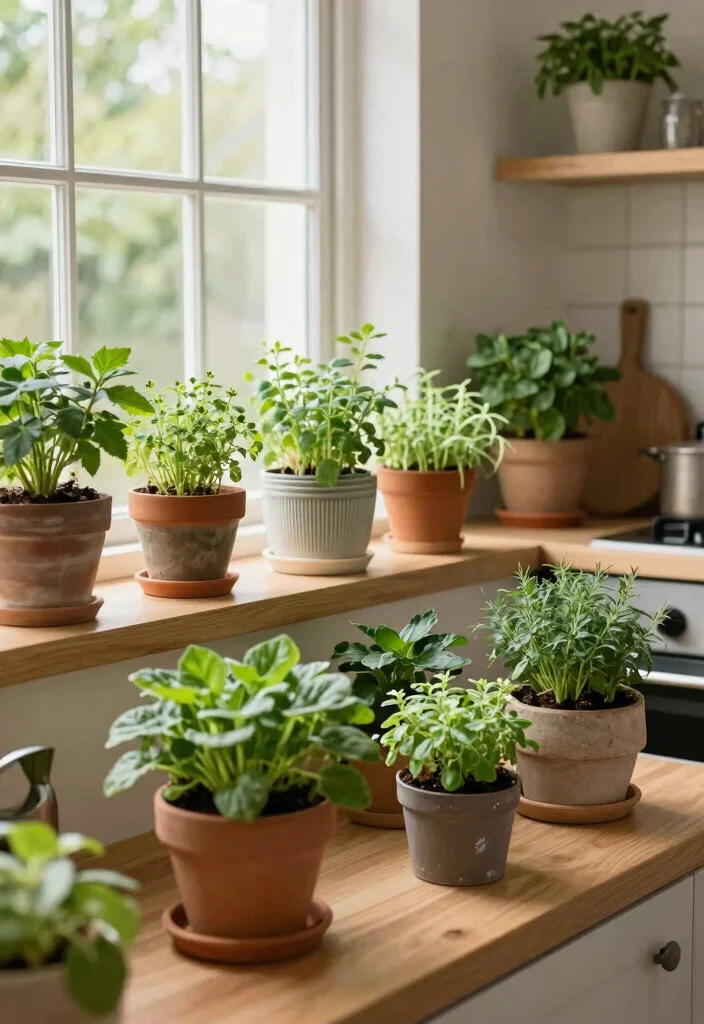
Cultivating an indoor kitchen herb garden not only enhances your cooking but also adds a lively touch to your home decor. From vertical gardens to charming repurposed items, these ideas can fit any kitchen style and space.
Start small, have fun, and let your creativity bloom as you grow your flavorful companions right at home. Share your favorite herb garden tips or ideas in the comments!
Note: We aim to provide accurate product links, but some may occasionally expire or become unavailable. If this happens, please search directly on Amazon for the product or a suitable alternative.
This post contains Amazon affiliate links, meaning we may earn a small commission if you purchase through our links, at no extra cost to you.
Frequently Asked Questions
Which herbs are best to start a kitchen herb garden in a small indoor space?
Great starter herbs for a small indoor space include basil, parsley, chives, thyme, and mint. Use 6–8 inch pots with drainage and a light, well-draining potting mix. Place them on a sunny windowsill or under a compact grow light to give your kitchen herb garden 12–16 hours of light. Water when the top inch of soil is dry, and avoid waterlogging to keep your indoor herb garden healthy and flavorful. With this setup, you will have fresh herbs at your fingertips all year.
How can I design a stylish container gardening setup for my kitchen counter?
Design a stylish container gardening setup by using matching pots with drainage and a neat tray to catch drips. Group herbs with similar light needs and consider a slim vertical planter or wall-mounted rack to maximize counter space. Place the setup on a sunny spot or add grow lights for extra brightness; this keeps your kitchen herb garden looking good as decor and providing fresh herbs for cooking. An ideal mix could be basil, parsley, thyme, and mint for a practical, gorgeous display.
What are easy gardening tips to keep herbs thriving year-round indoors?
Follow these easy gardening tips to keep herbs thriving year-round: provide bright light (ideally 12–16 hours daily, using grow lights if needed), use a light, well-draining potting mix, and water consistently without soggy soil. Prune regularly to encourage bushier growth and a steady supply of fresh herbs. Rotate pots every couple of weeks for even light exposure and keep the room temperature steady between 65–75°F. Consider a small grow light timer to automate the bright hours and make caring for your indoor herb garden even easier with practical gardening tips.
How do I harvest and use fresh herbs without harming the plant or losing flavor?
Harvest by using sharp scissors to cut just above a leaf node to promote regrowth. Harvest in the morning when flavors are strongest. Never remove more than one-third of a plant at a time to avoid stunting. Rinse leaves and dry them before using; store in a jar of water in the fridge for a few days to keep your fresh herbs vibrant. Regular pruning also helps your kitchen herb garden stay productive.
What common mistakes should I avoid when starting an indoor herb garden and container gardening?
Common mistakes to avoid include overwatering or underwatering due to inconsistent light; not providing enough sun; using regular garden soil in containers; overcrowding pots which restrict air flow; neglecting drainage and pests; and skipping pruning or harvesting. Also ensure you have proper drainage, avoid crowding, and keep a simple light plan so your kitchen herb garden can succeed. Start small and scale up as you gain confidence with your container gardening project.
Related Topics
kitchen herb garden
indoor herb garden
container gardening
fresh herbs
DIY herb planters
kitchen plants
small space gardening
herb garden tips
easy gardening
home decor
sustainable living
beginner friendly