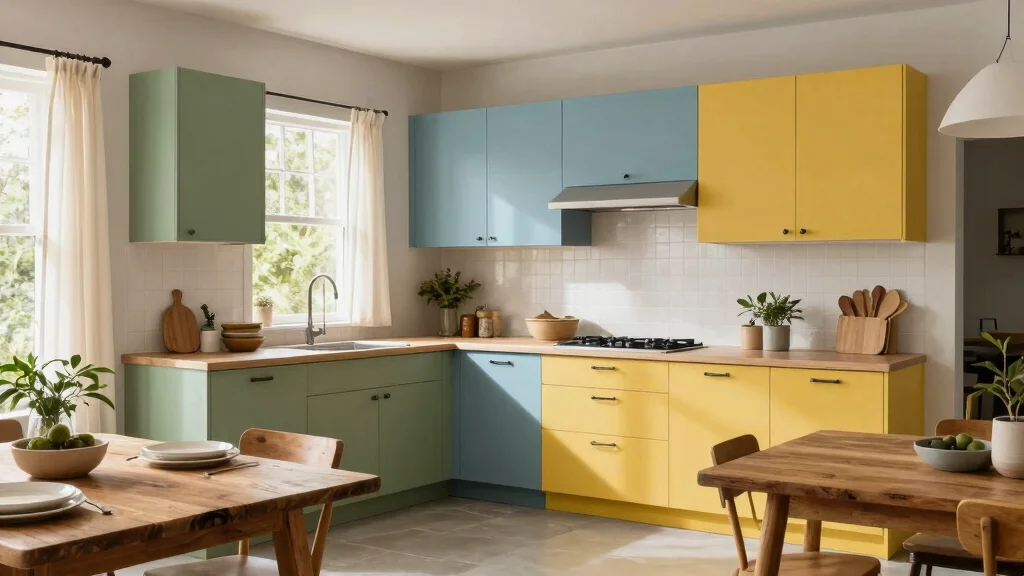
Finding the right color for your kitchen cabinets can seem like a daunting task, especially when you want to create an inviting and stylish space. You might be craving a fresh look that reflects your personality while also being mindful of sustainability. This post is here to guide you through that journey. We’ve gathered a selection of 18 kitchen cabinet color ideas that can transform your kitchen into a space you’ll love, all while considering eco-friendly options that benefit both your home and the planet.
If you’re someone who is passionate about home decor, especially in the kitchen, this guide is perfect for you. We know you care about aesthetics, but you also want to make choices that are sustainable and practical. Whether you’re planning a full renovation or just looking to refresh your cabinets with a new coat of paint, you’ll find plenty of inspiration here. No matter your style, these cabinet color trends will help you create a kitchen that feels modern, welcoming, and environmentally conscious.
In this post, you’ll discover a variety of colors ranging from soft pastels to deep, rich tones. You’ll gain insights into how these hues can enhance your kitchen’s design and create a cohesive look. Plus, we’ll cover practical tips on cabinet painting ideas, ensuring you leave with actionable suggestions for your next home improvement project. Let’s dive in and explore the possibilities of vibrant, sustainable kitchen cabinet colors that truly elevate your space!
Key Takeaways
– Explore 18 diverse kitchen cabinet color ideas that combine style with sustainability for an eco-friendly home.
– Discover popular kitchen cabinet color trends that reflect modern tastes and elevate your kitchen’s appearance.
– Learn about practical cabinet painting ideas that allow for a DIY approach without sacrificing quality or aesthetic.
– Gain kitchen design inspiration through color schemes that will make your space feel fresh and inviting.
– Understand how to implement these color ideas effectively to create a cohesive and beautiful kitchen environment.
1. Sage Green: Nature’s Embrace
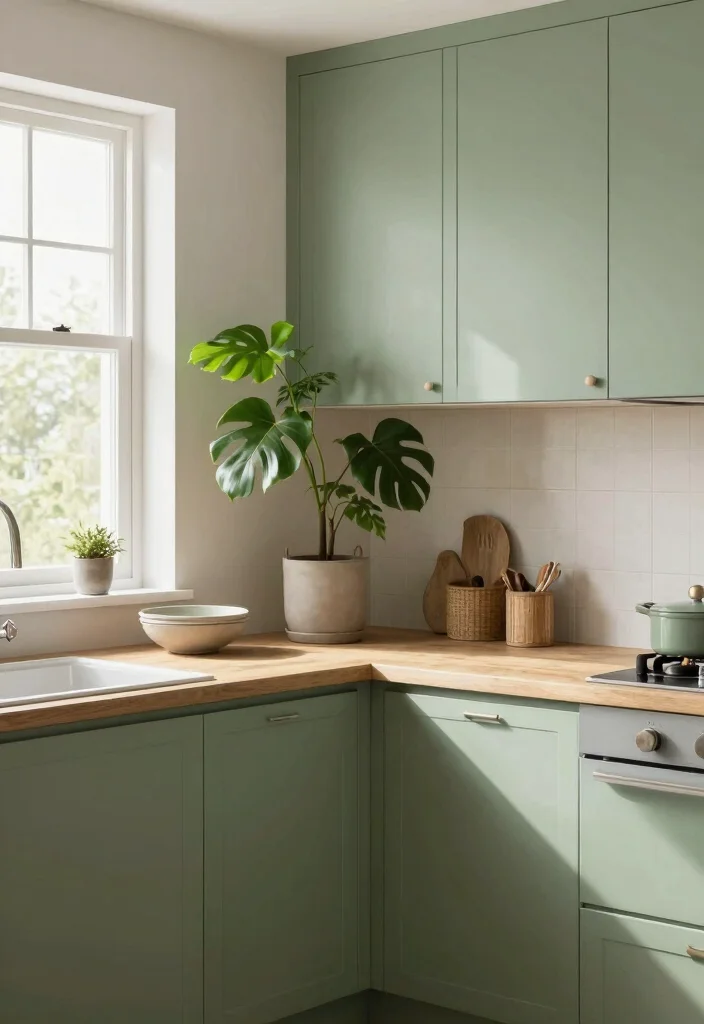
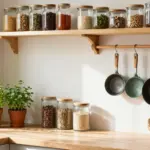
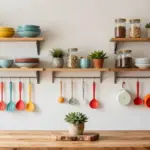
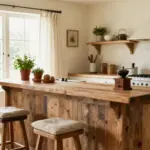
Sage green brings a soothing touch to your kitchen, reminiscent of lush gardens and serene landscapes. This gentle hue fosters a sense of peace, making it a perfect choice for those seeking a calming environment. When combined with natural wood accents, sage green creates a harmonious blend that feels both inviting and grounded. Think of beautiful open shelving displaying earthy cookware and vibrant houseplants, all enhanced by the glow of warm lighting.
To successfully implement this palette, consider pairing sage green with creamy whites or soft beiges, which can refresh the space. Incorporating organic textures, like woven baskets or handmade pottery, can elevate your kitchen while keeping it eco-friendly. This color not only beautifies your surroundings but also encourages a close connection to nature.
Here are some tips to seamlessly integrate sage green into your kitchen:
– Pair sage lower cabinets with open oak shelves for warmth.
– Use butcher block countertops alongside painted islands.
– Incorporate brass handles on green cabinet doors for a chic look.
– Add plants to enhance the organic vibe throughout the space.
With these elements, sage green transforms your kitchen into a tranquil retreat, celebrating the beauty of natural materials and colors.
Fun fact: Sage Green cabinets can visually expand a kitchen by up to 15% when paired with warm lighting and natural wood. This calm Sage Green also pairs beautifully with sustainable materials, making kitchen cabinet color ideas feel inviting and eco-friendly.
2. Muted Mustard: The Warm Pop
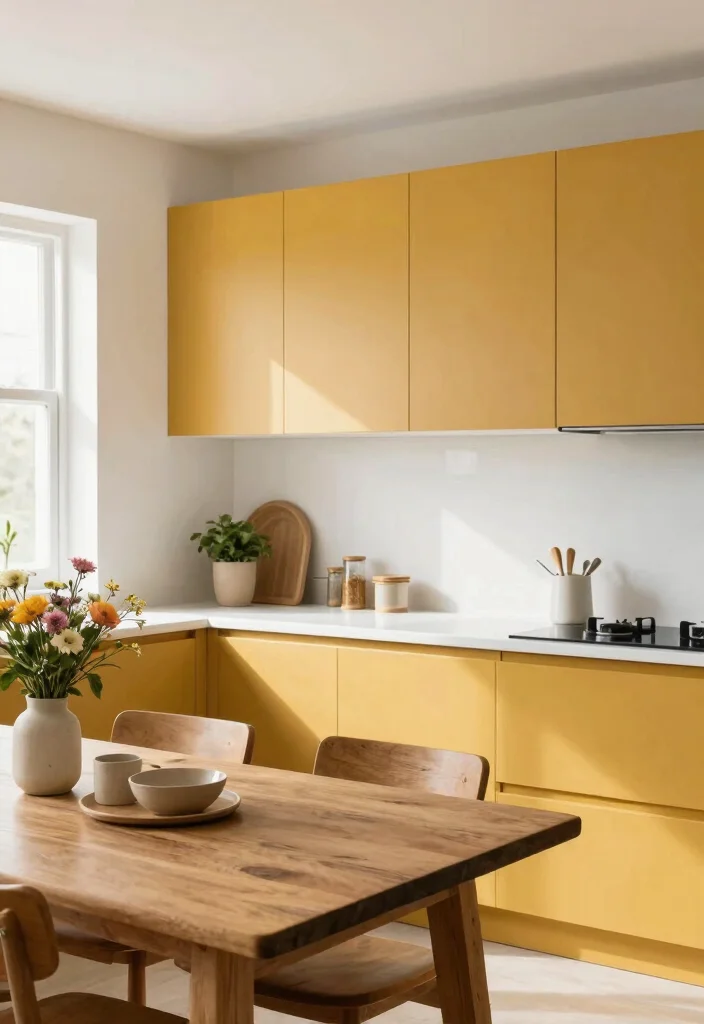
Muted mustard serves as a delightful burst of warmth in your kitchen, infusing the space with a cheerful ambiance. This inviting color works wonders in sunlit areas, creating an uplifting and vibrant atmosphere. When used for cabinets, muted mustard pairs beautifully with crisp white or deep navy countertops, establishing a stunning contrast that draws the eye. Imagine a cozy kitchen filled with reclaimed wood shelves and organic cotton textiles that maintain a sustainable theme.
To effectively incorporate this lively color, consider using muted mustard for lower cabinets or as an island accent. Mixing it with navy blue adds a modern twist, while copper or brass hardware can enhance its warmth. This color goes beyond aesthetics; it transforms your kitchen into a space of creativity and joy.
Here are some actionable ways to use muted mustard:
– Paint lower cabinets in muted mustard for a bold base.
– Combine with navy for a chic, contemporary feel.
– Incorporate warm metallic fixtures for added elegance.
– Use natural wood elements to balance the vibrant tones.
Muted mustard is more than just a color; it’s an invitation to enjoy the lively energy of your kitchen, encouraging culinary adventures.
3. Charcoal Grey: Modern Elegance
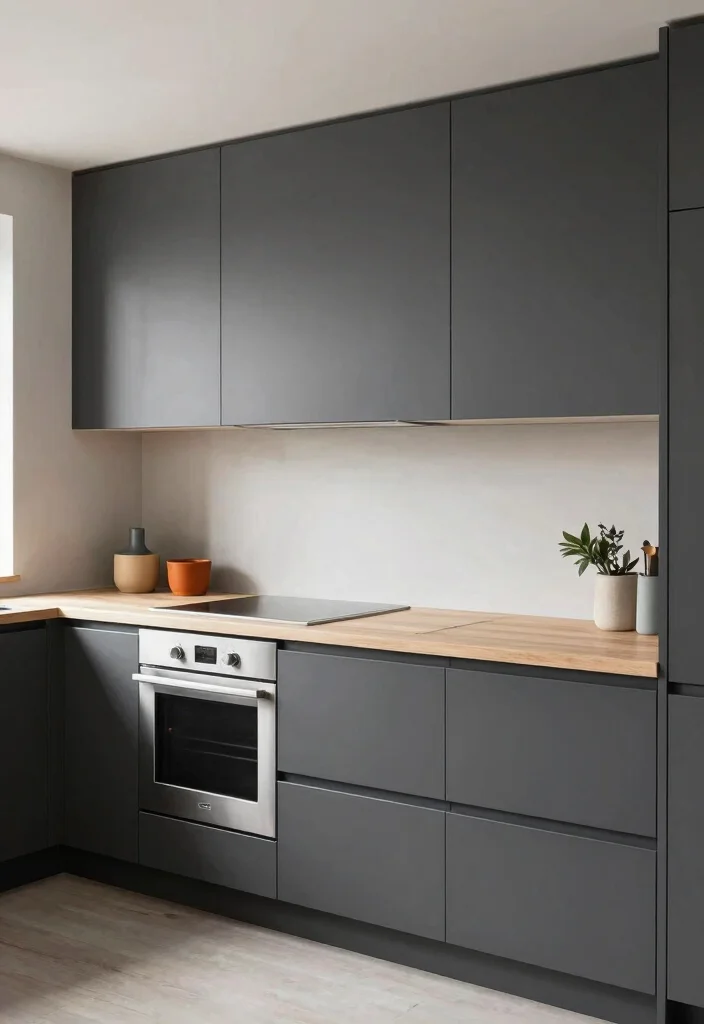
Charcoal grey introduces a touch of modern sophistication to your kitchen, providing depth and character. This versatile color pairs seamlessly with lighter elements, creating an elegant contrast that elevates your space. Imagine combining charcoal grey cabinetry with light wood accents and bold pops of color, like sunny yellows or deep reds, to create a dynamic and inviting atmosphere.
To effectively use charcoal grey, consider making it the primary color while adding vibrant decor accents to keep the energy lively. Opting for a matte finish enhances its modern appeal, while metal elements can create a sleek, contemporary edge. This color not only serves as a bold statement but also fosters a stylish environment for both cooking and entertaining.
Here are some practical tips for incorporating charcoal grey:
– Use it as a base color and add bright accents through decor.
– Choose matte finishes for a sophisticated touch.
– Pair with shiny metals for a contemporary feel.
– Add colorful accessories to keep the space lively.
Charcoal grey can redefine your kitchen into an elegant space, perfect for hosting gatherings and enjoying culinary creativity.
Key Trade-offs & Our Top Pick
1. Sage Green
– Pros:
– Brings a calming and natural feel to your kitchen.
– Pairs well with neutral tones and wooden accents.
– Cons:
– May not suit all kitchen styles, particularly very modern ones.
– Can feel out of place in darker spaces.
– Best for: Those wanting a nature-inspired, serene environment in their kitchen.
2. Charcoal Grey
– Pros:
– Offers a sleek, modern look which fits many kitchen designs.
– Hides stains and smudges well.
– Cons:
– Can make a small kitchen feel even smaller.
– Might require more light to avoid a gloomy atmosphere.
– Best for: Homeowners looking for a contemporary and sophisticated touch.
3. Crisp White
– Pros:
– Provides a timeless and classic look.
– Brightens up the space and creates an illusion of openness.
– Cons:
– Shows dirt and stains easily, requiring regular cleaning.
– Can feel sterile without decorative elements.
– Best for: Those who appreciate a clean, minimalist kitchen aesthetic.
4. Deep Navy
– Pros:
– Adds depth and richness, creating a bold statement.
– Pairs beautifully with brass or gold hardware.
– Cons:
– May overwhelm smaller kitchens if not balanced with lighter colors.
– Can be too dark for those preferring bright, airy spaces.
– Best for: People wanting a striking and elegant design choice.
5. Olive Green
– Pros:
– Evokes an organic and warm vibe, ideal for eco-friendly homes.
– Works well with natural materials and earthy palettes.
– Cons:
– Might clash with certain decor styles outside of rustic or organic themes.
– Can feel heavy in poorly lit kitchens.
– Best for: Those seeking a sustainable and earthy kitchen aesthetic.
Expert Recommendation:
Best Overall: Crisp White
Crisp White is the top pick for most people due to its versatility and classic appeal. It pairs well with almost any color scheme, making it easy to accessorize. Additionally, it’s a great choice if you’re looking to brighten your space. With proper maintenance, its longevity is a big plus, ensuring your kitchen looks fresh for years to come.
Why We Picked This:
While Crisp White is often the go-to, Sage Green or Deep Navy might better suit your personal style. If you love earthy tones, Olive Green is fantastic for eco-friendly designs. Remember, your kitchen should reflect your personality and lifestyle, so choose a color that feels right for you!
4. Soft Blue: Fresh and Breezy
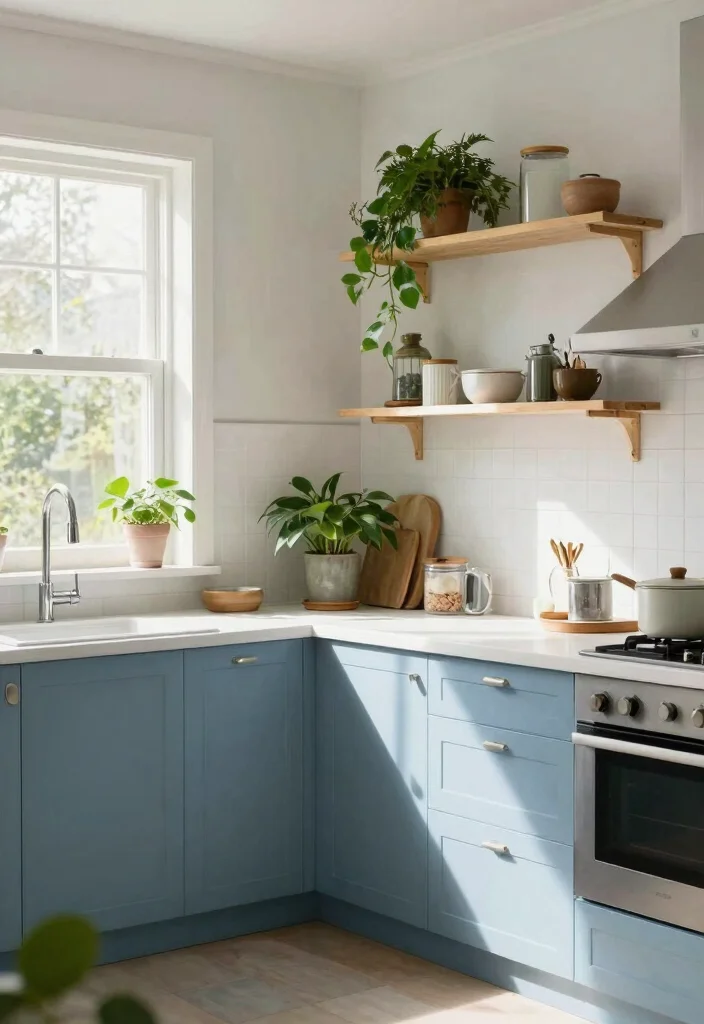
Soft blue is a refreshing hue that evokes a sense of calm and tranquility in your kitchen, reminiscent of clear skies. This soothing color pairs beautifully with natural wood and white elements, creating a light and airy ambiance that feels open and inviting. Imagine a kitchen adorned with white countertops and vibrant greenery, enhancing the serene vibe.
To maximize the impact of soft blue, consider mixing it with crisp white cabinetry for a spacious effect. Using it as an accent on an island or bar area can add a playful touch, while incorporating vintage decor pieces can promote an eco-friendly aesthetic. This color not only beautifies your kitchen but also promotes a lifestyle centered on relaxation and sustainability.
Here are some ideas for incorporating soft blue:
– Mix with white cabinetry for a fresh, airy space.
– Use as an accent for your kitchen island.
– Incorporate vintage decor to enhance sustainability.
– Add indoor plants for a lively touch.
Soft blue not only transforms your kitchen visually but also encourages a serene and sustainable lifestyle.
5. Earthy Terracotta: Rustic Charm
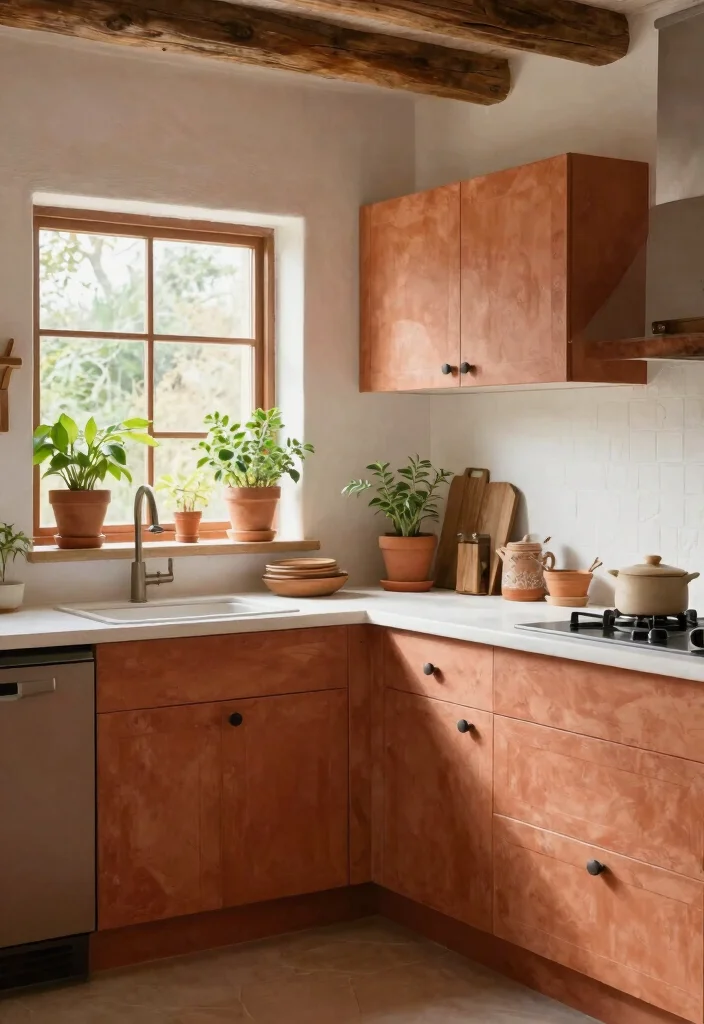
Earthy terracotta brings a warm, rustic charm to your kitchen, echoing the natural tones found in the environment. This rich hue fosters a cozy and inviting atmosphere, especially when paired with white or cream elements that highlight its depth. Picture a kitchen with reclaimed wood accents and ceramic decor, amplifying the organic feel.
To effectively incorporate terracotta, consider using it as a full cabinet color or as an accent for backsplashes. Pairing it with sage green accessories creates a harmonious earth-tone palette, while natural fibers can enhance the overall organic aesthetic. This color not only adds vibrancy but also fosters a connection to nature in your cooking space.
Here are some tips for integrating terracotta:
– Use it as a primary color for your cabinets or backsplashes.
– Pair with sage green for a cohesive look.
– Incorporate natural textiles and artisanal decor elements.
– Use terracotta pots for plants to enhance the rustic charm.
Earthy terracotta enriches your kitchen with warmth and character, inviting a sense of nature into your home.
6. Crisp White: Timeless Simplicity
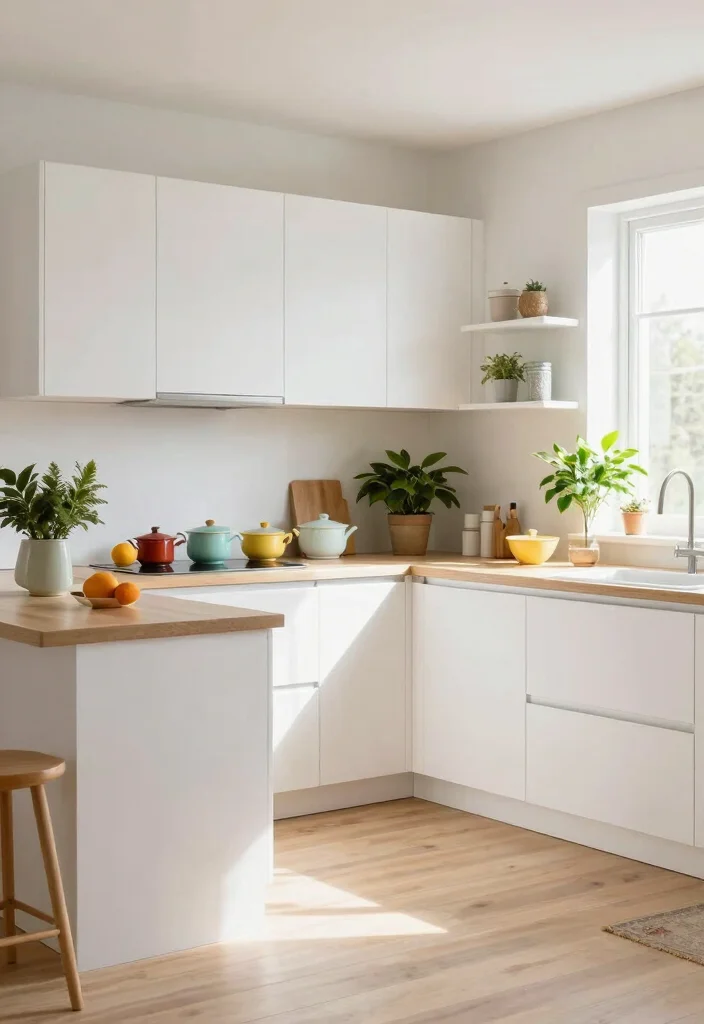
Crisp white kitchen cabinets offer a classic and timeless aesthetic, reflecting light beautifully to create an open feel. This versatile color serves as an excellent base for various decor styles, from minimalist to farmhouse. When paired with natural wood flooring or colorful textiles, crisp white shines while reinforcing an eco-friendly theme.
Accessorizing with vibrant dishes or decorative objects allows you to showcase your personality and style. To make the most of white cabinets, consider integrating different textures, such as reclaimed wood or woven fabrics, to add warmth and interest to the space. This color promotes a light, airy feeling that is perfect for social gatherings and culinary creativity.
Here are some actionable ways to enhance the use of crisp white:
– Incorporate various textures like wood and linen for warmth.
– Use contrasting colors in decor for a vibrant touch.
– Add greenery for a refreshing pop of color.
– Utilize layered lighting to create a cozy atmosphere.
Crisp white not only elevates your kitchen’s appearance but also encourages a welcoming environment for friends and family.
7. Deep Navy: Bold and Beautiful
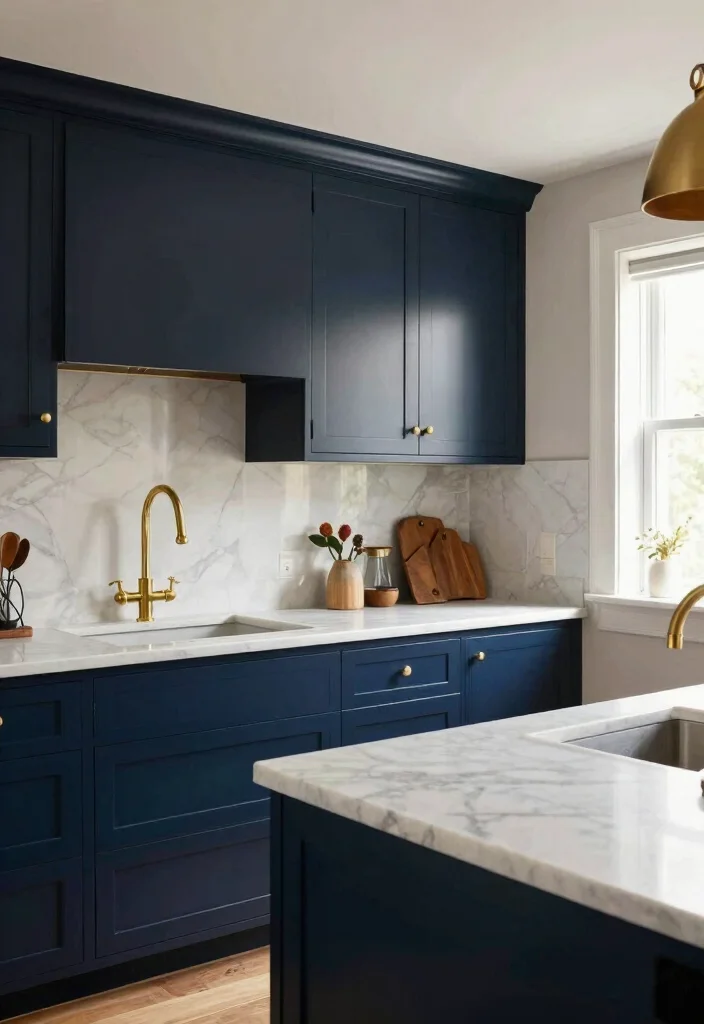
Deep navy exudes sophistication and elegance, making it a striking choice for both modern and traditional kitchens. This bold color creates a cozy backdrop for decor, especially when paired with white or light-colored countertops for a stunning contrast. Imagine a kitchen where navy cabinets are complemented by warm wooden accents and metallic fixtures, creating a luxurious atmosphere.
To maintain a sustainable approach, opt for eco-friendly materials and don’t shy away from incorporating metallic accents for a touch of glamour. This color can transform your kitchen into a stylish oasis, inviting creativity and comfort.
Here are some practical tips for effectively using deep navy:
– Utilize it as an accent wall to draw attention.
– Pair with warm woods for a balanced look.
– Incorporate brass or gold fixtures for a luxurious feel.
– Use colorful decor to lift the dark tones.
Deep navy is not just a color; it’s a statement that reflects your unique style and personality in your kitchen design.
Deep navy is one of the bold, timeless kitchen cabinet color ideas that pair beautifully with white countertops. Choose eco-friendly materials and low-VOC finishes to keep your space stylish and sustainable.
8. Soft Lavender: Whimsical Charm
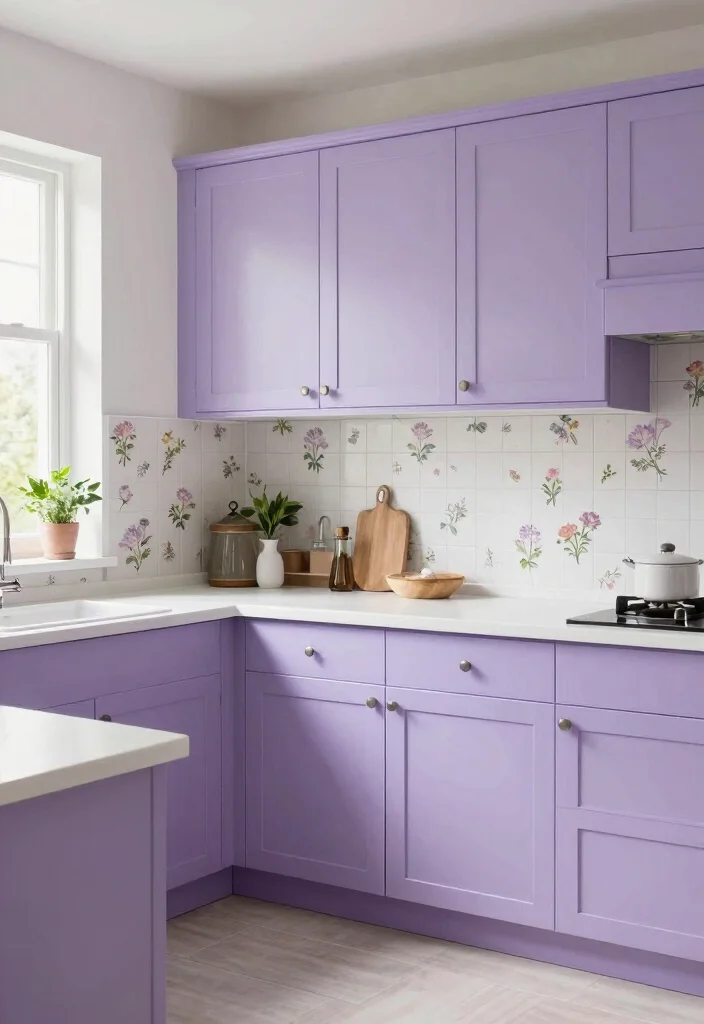
Soft lavender adds a whimsical touch to your kitchen, enveloping the space in a gentle and calming hue. This enchanting color pairs beautifully with pale greys or whites, creating a serene and inviting atmosphere. Imagine lavender cabinets accented with natural wood details and charming vintage decor, enhancing the warmth of your kitchen.
To effectively incorporate soft lavender, consider using it as an accent for open shelving or cabinet doors, while pairing it with floral patterns in textiles for added charm. Combining it with muted greens can create a cohesive and natural palette that feels refreshing. This color invites creativity, making your kitchen a unique sanctuary.
Here are some ideas to include soft lavender in your kitchen:
– Use it as an accent for shelves or lower cabinets.
– Pair with floral textiles for a cohesive look.
– Combine with muted greens to enhance the natural vibe.
– Incorporate vintage pieces to elevate the charm.
Soft lavender transforms your kitchen into a personal haven, inspiring creativity and individual expression.
9. Burnt Orange: Warmth and Energy
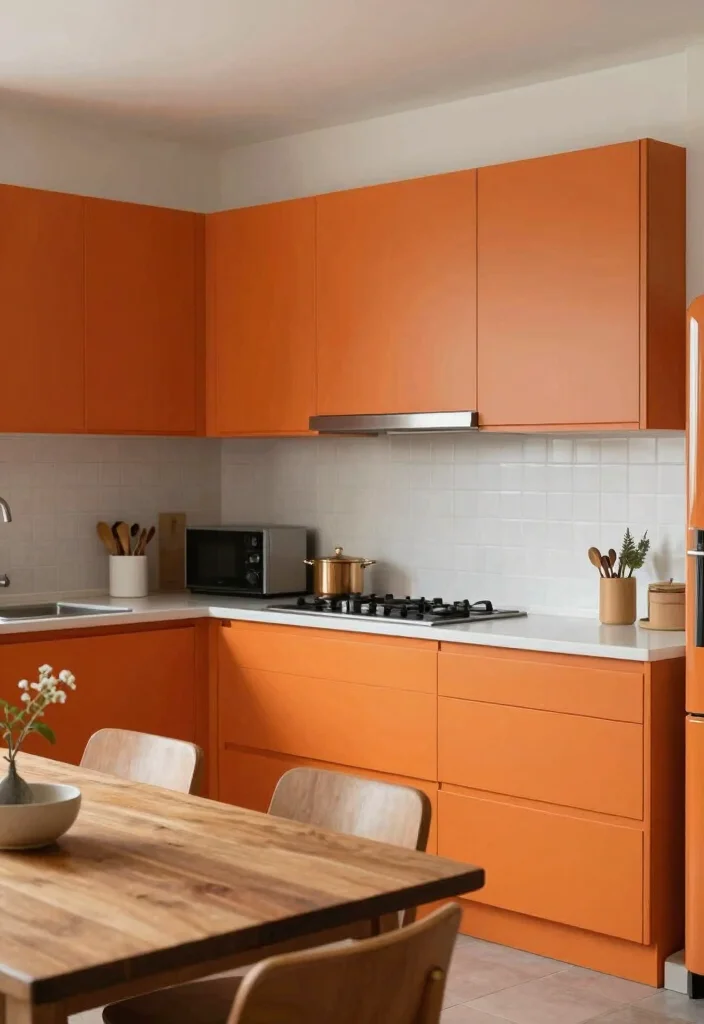
Burnt orange brings vibrant energy and warmth to your kitchen, reminiscent of autumn hues. This lively color excels as an accent for cabinets or islands, offering a striking pop against neutral backgrounds. Picture a kitchen where burnt orange cabinets are paired with natural wood or stone elements, maintaining an eco-friendly vibe.
To effectively incorporate burnt orange, consider using it as a bold accent on lower cabinets, or combining it with earthy tones like browns or creams for a harmonious look. Warm lighting can highlight its richness, creating a cozy atmosphere for cooking and gathering. This color inspires creativity in your culinary adventures.
Here are some practical tips for integrating burnt orange:
– Use it on lower cabinets or as an accent on shelves.
– Combine with earthy browns for a balanced palette.
– Add warm lighting to enhance the richness of the color.
– Incorporate natural textures to ground the vibrant tones.
Burnt orange not only energizes your kitchen but also fosters a welcoming space for sharing meals and memories.
10. Cool Teal: Coastal Calm
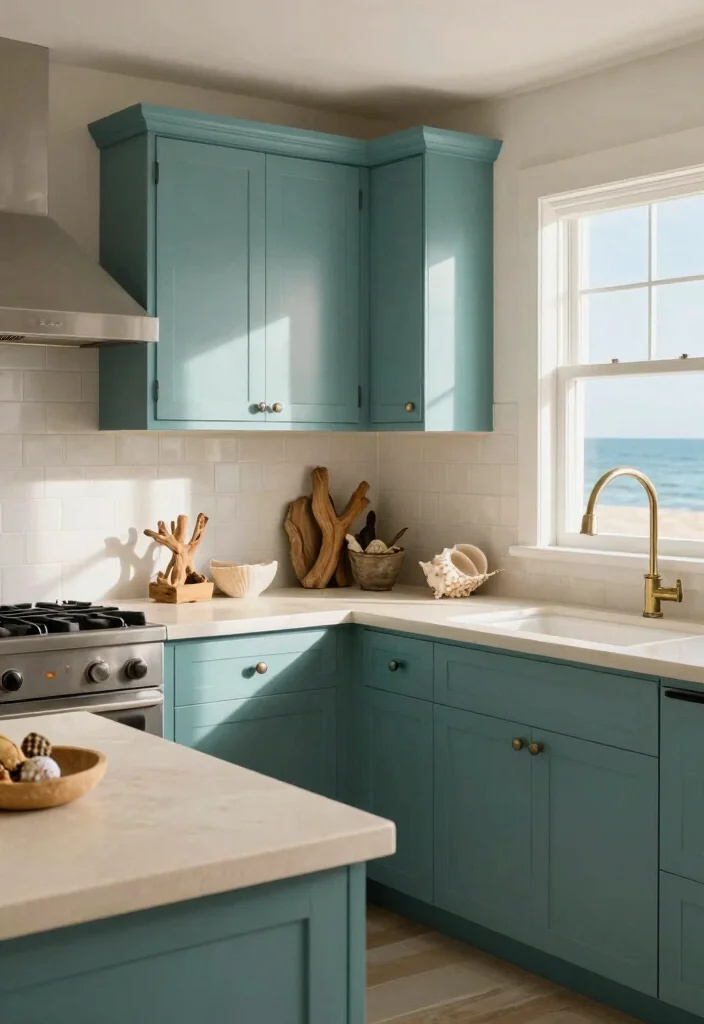
Cool teal is a refreshing color that evokes feelings of serenity and the coastal lifestyle. This versatile hue can breathe life into your kitchen while remaining neutral enough to complement various design styles. Pairing teal cabinets with sandy beige countertops creates a beachy vibe that is both calming and lively.
To enhance the sustainable aspect of your kitchen design, incorporate organic materials and textures. This color not only beautifies your space but also fosters a tranquil atmosphere for cooking and entertaining.
Here are some actionable suggestions for using cool teal:
– Use teal as an accent on an island or shelves.
– Combine with white or natural tones for a fresh feel.
– Consider decorative items in complementary colors for added interest.
– Incorporate coastal-inspired decor to enhance the theme.
Cool teal not only enhances your kitchen’s aesthetic but also brings a sense of calm and tranquility into your home.
11. Rich Burgundy: Luxurious Depth
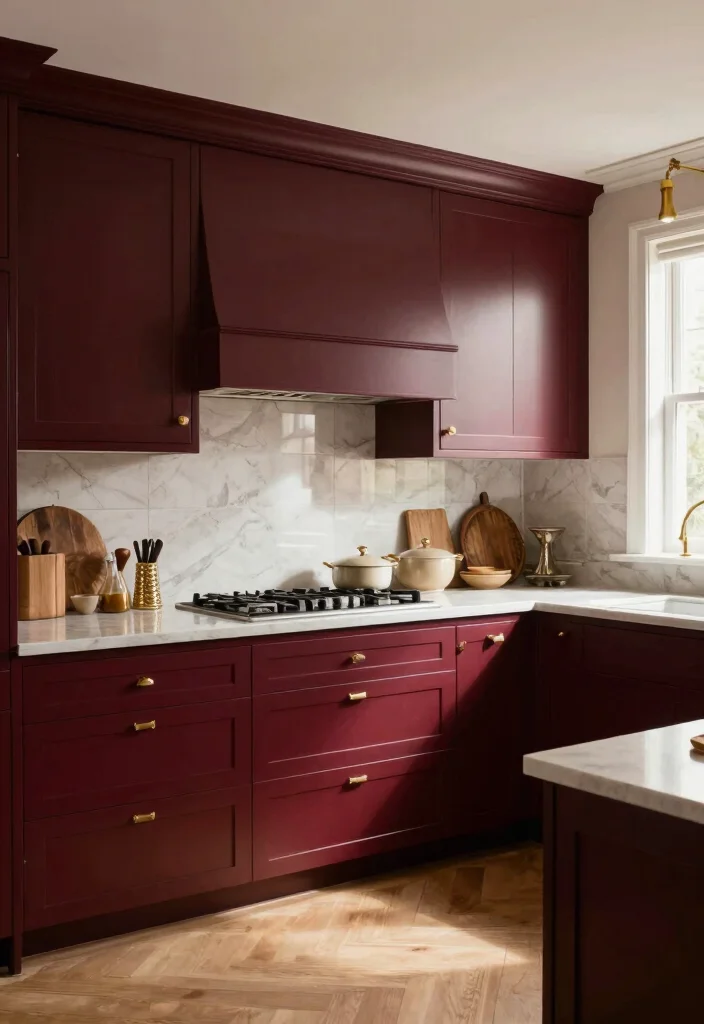
Rich burgundy adds a touch of depth and luxury to your kitchen, creating a cozy and sophisticated space. This stunning color evokes warmth and elegance, making it perfect for establishing a welcoming cooking environment. When paired with light countertops or natural materials, burgundy creates a striking visual contrast that enhances the overall aesthetic.
Consider using sustainable materials and vintage-inspired accessories to maintain an eco-friendly feel. This color can transform your kitchen into an elegant retreat, inspiring culinary creativity and warmth.
Here are some practical tips for incorporating rich burgundy:
– Use it on lower cabinets or as an accent on an island.
– Mix with gold or brass fixtures for an opulent touch.
– Combine with soft neutrals to create balance.
– Incorporate natural textures to enhance the warmth.
Rich burgundy not only transforms your kitchen into a sophisticated space but also invites warmth and creativity into your culinary endeavors.
12. Light Coral: Cheerful and Bright
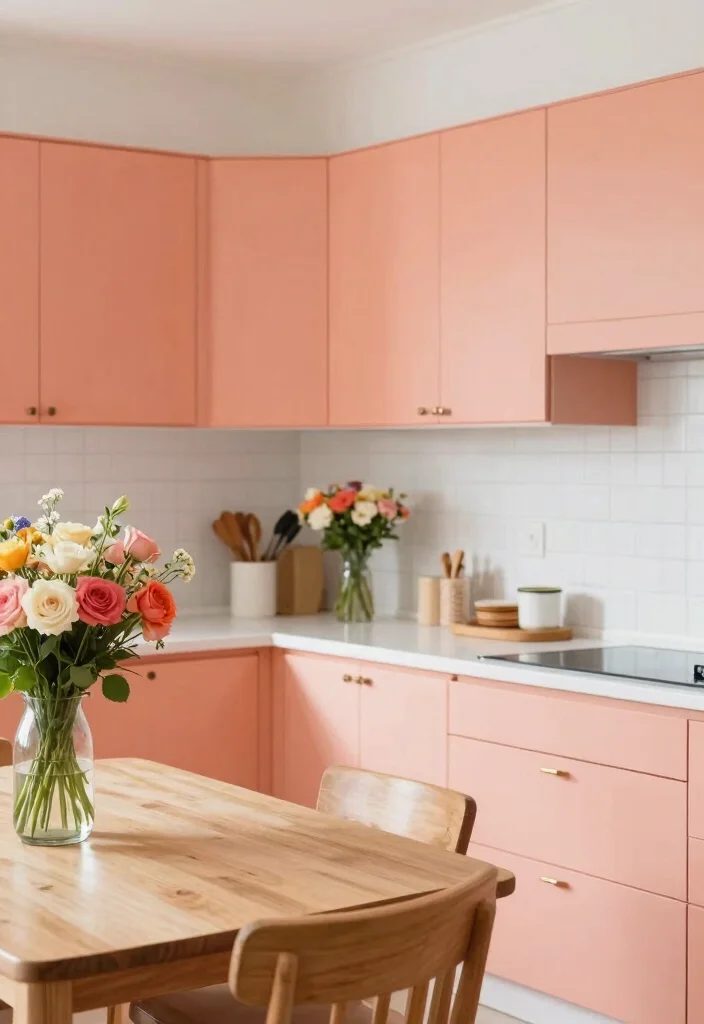
Light coral infuses your kitchen with a cheerful and inviting glow, striking a balance between vibrant and soft. This lively hue creates a sense of warmth and brightness, making it perfect for a lively atmosphere. When paired with white or light wood, coral can create an airy and fresh look that feels welcoming.
To promote sustainability, consider incorporating natural materials for countertops and accessories, enhancing the overall aesthetic. This color not only energizes your kitchen but also encourages a joyful cooking experience.
Here are some actionable ways to incorporate light coral:
– Use it on upper cabinets to maximize light.
– Combine with browns and creams for a harmonious palette.
– Decorate with fresh flowers that complement the color.
– Incorporate colorful dishware for added personality.
Light coral creates an enjoyable space for cooking and entertaining, inviting warmth into your kitchen.
13. Smoky Slate: Contemporary Edge
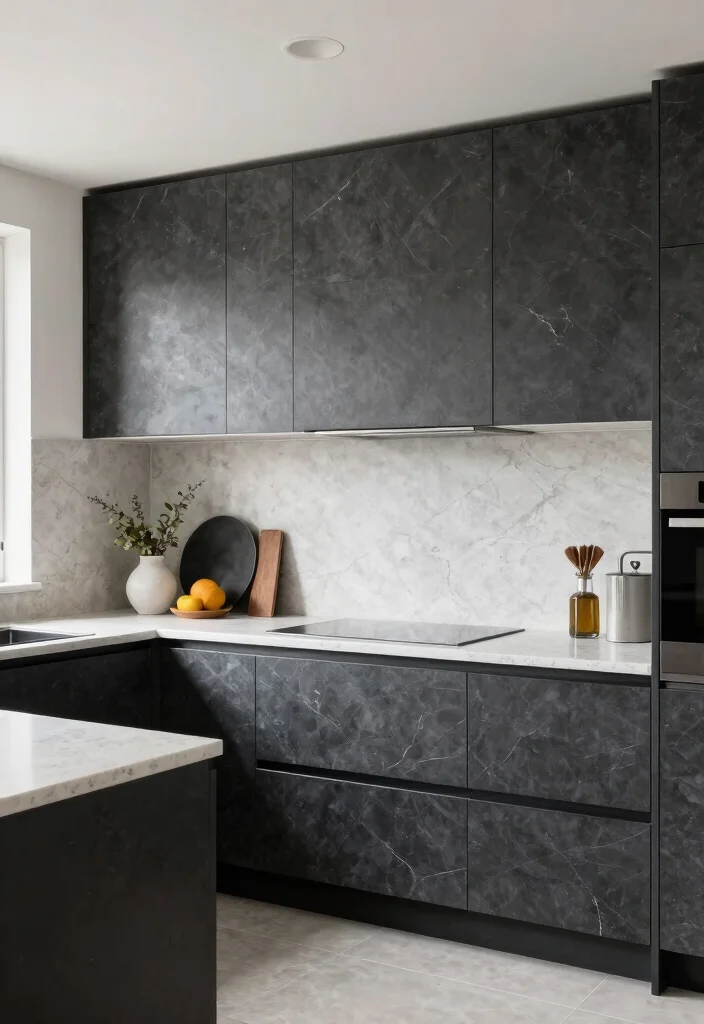
Smoky slate introduces a modern edge to your kitchen, offering depth and sophistication. This versatile color can stand alone or serve as a neutral base for bolder accents, making it ideal for contemporary designs. Picture smoky slate cabinetry paired with light quartz countertops and natural wood elements, maintaining an eco-friendly theme.
To effectively utilize smoky slate, consider using it as a primary color for a dramatic effect. Adding colorful decor pieces can uplift the space, while matte or glossy finishes allow you to achieve your desired aesthetic. This color captures the essence of modern style while promoting a sustainable lifestyle.
Here are some practical tips for incorporating smoky slate:
– Use it as a primary color for a bold statement.
– Add colorful decor to brighten the space.
– Incorporate matte or glossy finishes for texture.
– Use natural materials to enhance the eco-friendly aspect.
Smoky slate not only enhances your kitchen’s contemporary style but also emphasizes an eco-conscious approach to design.
14. Mint Green: Refreshingly Modern
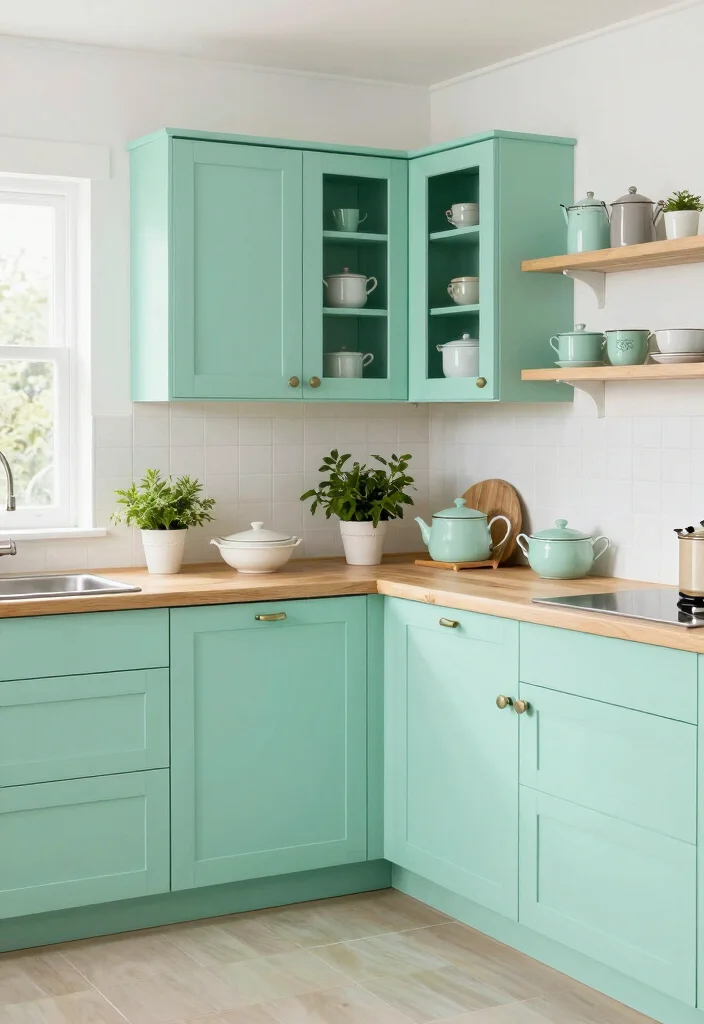
Mint green evokes a fresh and crisp atmosphere in your kitchen, perfect for those seeking a modern yet playful design. This delightful shade creates an inviting look, especially when paired with light woods or white countertops. Imagine mint cabinets adding a touch of whimsy to your cooking space, making it feel bright and cheerful.
To enhance the playful vibe, consider using mint green for upper cabinets or as an accent on an island. Pairing it with organic materials can create an eco-friendly touch, while patterned textiles can add interest and personality. This color rejuvenates your kitchen, inspiring fun and creativity in culinary activities.
Here are some ideas for using mint green:
– Use it for upper cabinets or as an island accent.
– Pair with natural materials for an eco-friendly vibe.
– Consider patterned textiles to add visual interest.
– Incorporate greenery to enhance the fresh look.
Mint green not only revitalizes your kitchen but also makes cooking and gathering a fun-filled experience.
15. Chocolate Brown: Rich and Homey
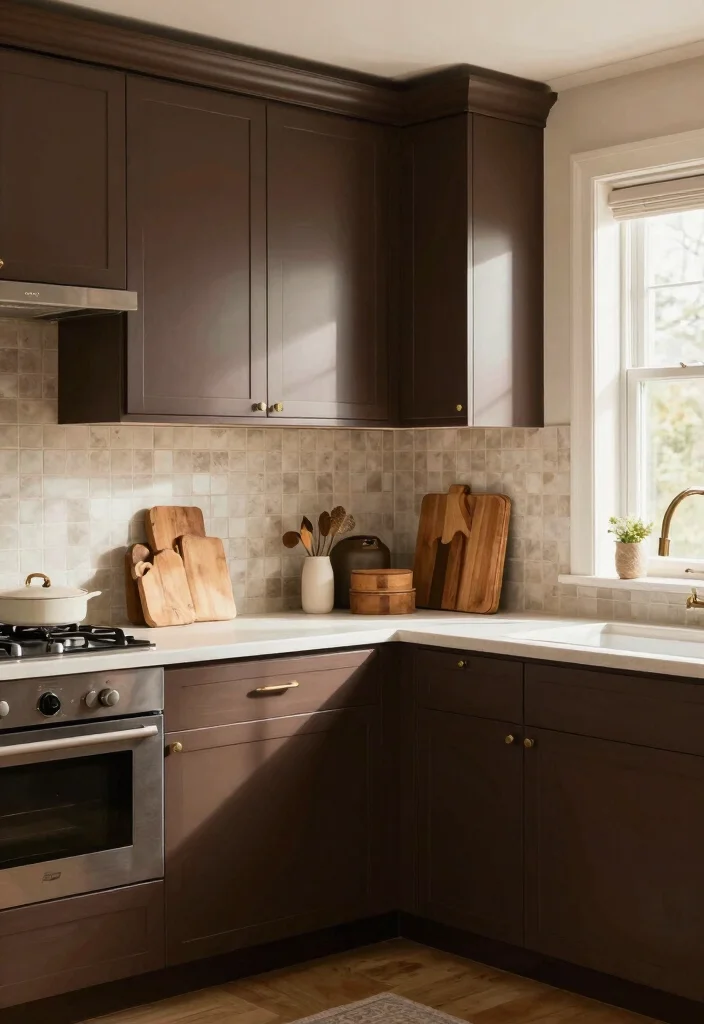
Chocolate brown lends a rich and comforting feel to your kitchen, reminiscent of cozy, rustic homes. This warm color creates a strong foundation for various styles, especially when complemented with lighter elements. Imagine chocolate cabinets paired with beige or cream accents, enhancing the inviting ambiance.
To create a welcoming environment, consider using chocolate brown as a base color, with lighter countertops to balance the richness. Adding pops of color through decor and textiles can uplift the space, while reclaimed wood accents reinforce an eco-friendly theme. This color transforms your kitchen into a warm haven for family meals and entertaining guests.
Here are some practical suggestions for incorporating chocolate brown:
– Use it as a base color for cabinetry with lighter countertops.
– Add colorful decor elements for visual interest.
– Incorporate reclaimed wood accents to enhance sustainability.
– Use warm lighting to create a cozy atmosphere.
Chocolate brown creates a warm and welcoming kitchen, perfect for culinary adventures and family gatherings.
16. Dusty Rose: Subtle Elegance
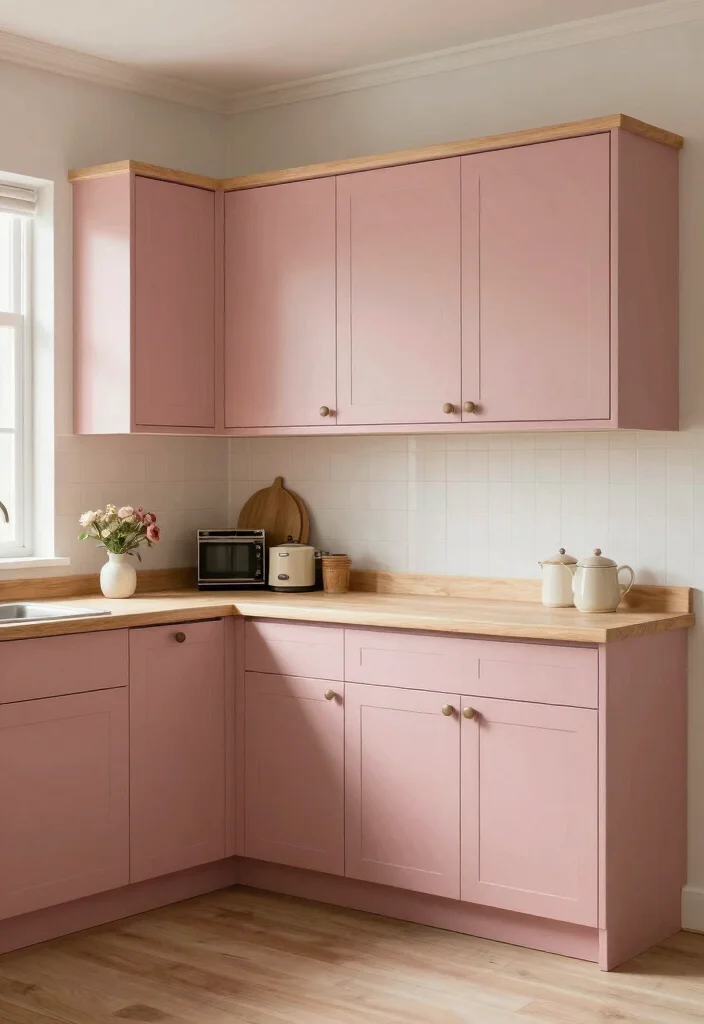
Dusty rose offers a delicate touch of color that adds subtle elegance to your kitchen design. This muted hue is ideal for those who desire a soft, romantic look without overwhelming the senses. Dusty rose pairs beautifully with natural wood tones and whites, creating a refreshing and light-filled space.
Using sustainable materials can further enhance the eco-friendly appeal of this color choice. To incorporate dusty rose effectively, consider using it as an accent on lower cabinets or as a framing color for an island. Combining it with soft grays and whites can create a sophisticated palette, while vintage accents can elevate the charm. This color infuses your kitchen with personality while maintaining a serene atmosphere.
Here are some ideas for integrating dusty rose:
– Use it as an accent on lower cabinets or to frame an island.
– Combine with soft grays and whites for sophistication.
– Incorporate vintage accents to enhance the charm.
– Use warm lighting to highlight the color.
Dusty rose transforms your kitchen into a stylish and serene space, inviting warmth and creativity.
Dusty rose is the gentle hero your kitchen cabinets deserve. It pairs well with natural wood and white accents, keeping things calm and bright—perfect for eco-friendly homes that want style without sacrificing sustainability.
17. Olive Green: Earthy and Organic
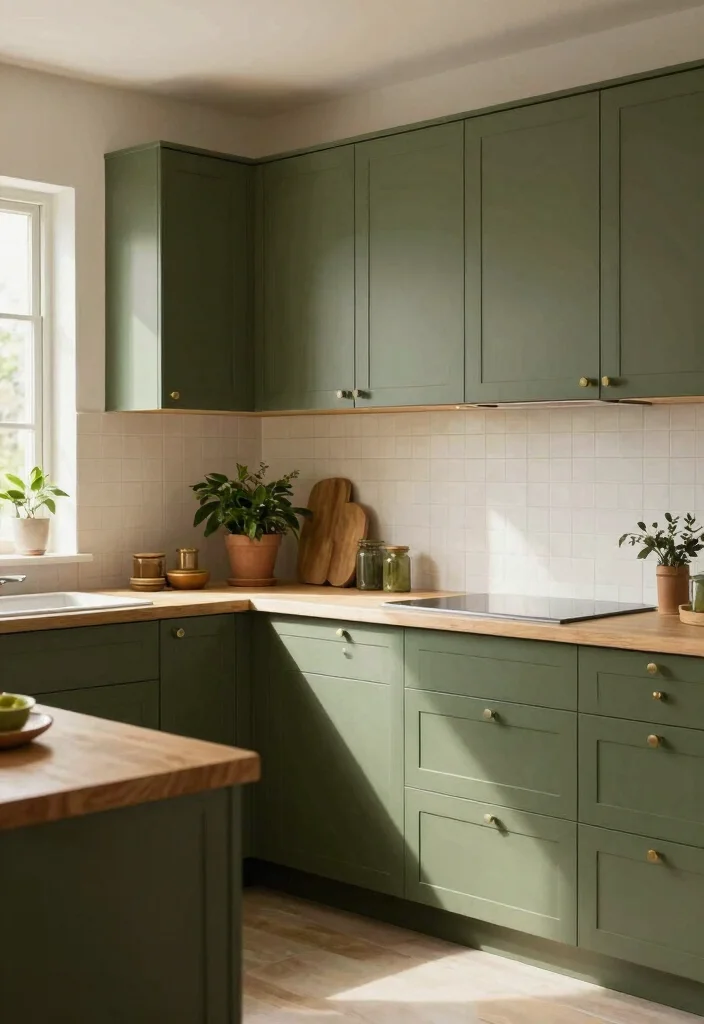
Olive green embodies the essence of nature, providing a rich and earthy tone that creates a grounded atmosphere in your kitchen. This color pairs beautifully with natural wood and white elements, enhancing warmth and comfort. It’s an excellent choice for those seeking a sustainable and organic vibe.
To create a harmonious look, consider combining olive green with other earthy tones. This color not only beautifies your kitchen but also encourages a connection to nature, making it a serene space for culinary creativity.
Here are some tips for incorporating olive green:
– Use it for cabinetry or as an accent on an island.
– Pair with terracotta or cream for balance.
– Add nature-inspired decor for cohesiveness.
– Incorporate textured fabrics to enhance the organic feel.
Olive green invites tranquility into your kitchen, making it a perfect retreat for cooking and gathering.
18. Neutral Beige: Understated Elegance
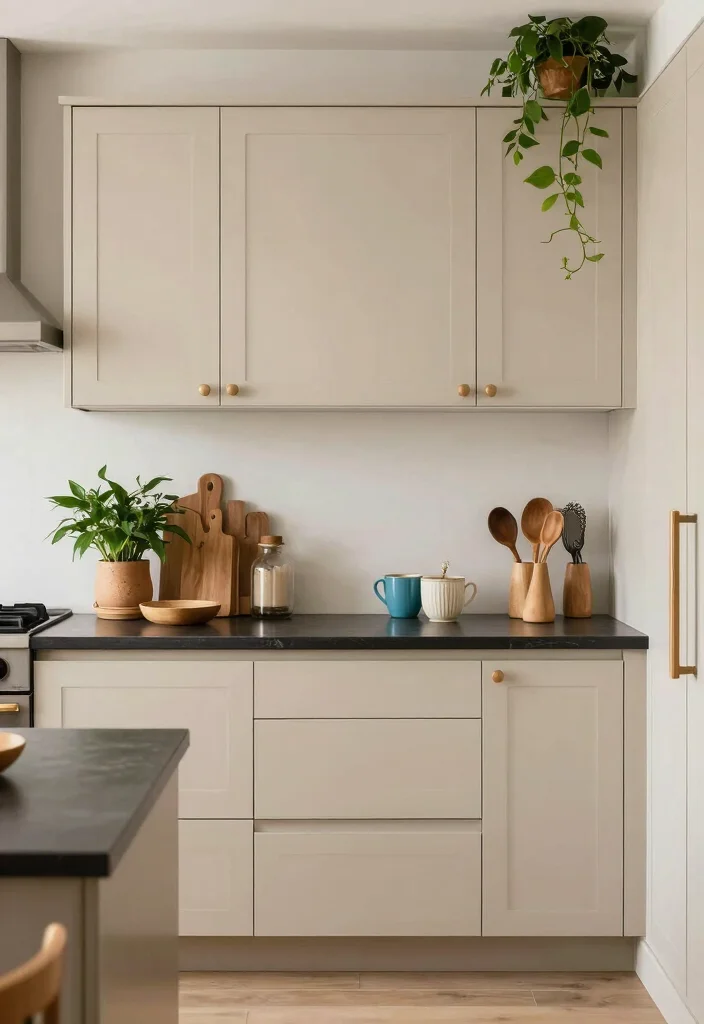
Neutral beige offers a soft and versatile backdrop that complements various decor styles. This calming color promotes a sense of connectivity, making it an ideal choice for sustainable kitchens. Beige cabinets can create an inviting and warm atmosphere, working seamlessly with bold accents and natural textures.
When paired with dark countertops or vibrant decor accents, neutral beige transforms into a beautifully understated choice. To make the most of neutral beige, consider using it as the primary color for cabinetry, complemented by colorful accents. Integrating different textures can enhance visual interest and promote an eco-friendly vibe. This color creates a cozy haven for culinary creativity.
Here are some practical suggestions for incorporating neutral beige:
– Use it as a primary color for cabinetry with colorful accents.
– Combine with natural materials to enhance sustainability.
– Integrate various textures for visual appeal.
– Use layered lighting to create warmth.
Neutral beige invites elegance and warmth into your kitchen, making it a perfect space for culinary exploration.
Conclusion
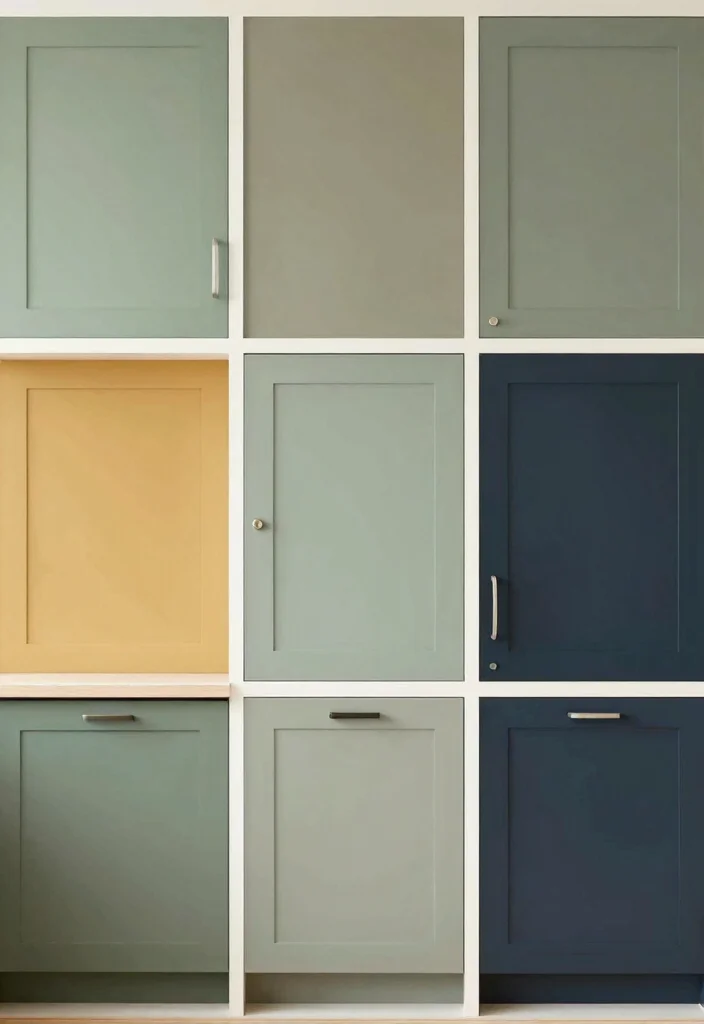
Revamping your kitchen can be a rewarding journey, especially with the right color choices.
From serene greens to vibrant earth tones, each color brings unique energy and personality, creating a sustainable and beautiful environment.
As you consider these kitchen cabinet color ideas, remember that your choices reflect your values and lifestyle, harmonizing style with sustainability.
Note: We aim to provide accurate product links, but some may occasionally expire or become unavailable. If this happens, please search directly on Amazon for the product or a suitable alternative.
This post contains Amazon affiliate links, meaning we may earn a small commission if you purchase through our links, at no extra cost to you.
Frequently Asked Questions
What are the best kitchen cabinet color ideas for a sustainable, eco-friendly home?
For eco-friendly homes, start with colors inspired by nature. Try kitchen cabinet color ideas that lean into earthy neutrals—soft whites, warm grays, and gentle greens—that pair beautifully with FSC-certified wood or bamboo. Choose low-VOC paints and durable finishes to minimize rework later. Repaint existing cabinets when possible, instead of replacing, and add sustainable hardware to boost longevity. Test color samples in your space before committing and use color schemes for kitchens that keep clutter calm and light flowing.
Tip: consider a two-tone approach (lighter uppers, darker lowers) to save paint and create contrast with less color exposure.
This combination gives you stylish kitchen cabinet color ideas while staying mindful of the environment.
Which kitchen cabinet color trends are both stylish and eco-friendly for modern kitchens?
When you want kitchen cabinet color trends that feel fresh and sustainable, go for colors that stand the test of time in modern kitchen colors. Think sage greens, warm beiges, subtle charcoal, and natural wood tones. Pair them with durable, low-VOC finishes and recycled-metal hardware to keep the look current without increasing waste. Use finishes that resist fading so cabinets won’t need frequent repainting, and layer in sustainable accents like recycled glass backsplashes.
Tip: keep a simple base palette and inject energy with textiles and lighting rather than constant repainting.
These choices offer stylish sustainability and align with eco-friendly home design.
How can I create color schemes for kitchens that emphasize sustainability and style?
Start with a calm base and build with sustainable materials. For color schemes for kitchens, pick a dominant neutral and add 1–2 eco-friendly accent colors drawn from the same family to avoid clash. Consider kitchen design inspiration from sustainable models, and tie your palette to natural textures like wood, stone, and recycled tile. Use kitchen cabinet color ideas that work with your chosen scheme and choose low-VOC paints to keep indoor air clean.
Test swatches in different lighting and create a cohesive flow between cabinets, walls, and countertops.
With thoughtful planning, your space looks beautiful and environmentally responsible.
What cabinet painting ideas keep indoor air quality high with low-VOC paints and durable finishes?
Embrace cabinet painting ideas that prioritize eco-friendly products. Choose water-based low-VOC paints and primers designed for kitchens, plus a tough topcoat that resists fingerprints. Prep properly—clean, sand, and prime—to maximize adhesion and minimize touch-ups. Repaint rather than replace cabinets to cut waste, and select hardware made from recycled materials. Ensure good ventilation during painting for better air quality.
Pro tip: use sustainably sourced wood or veneers for any new panels and seal edges to extend life.
These practical cabinet painting ideas let you refresh with kitchen cabinet color ideas while keeping sustainability front and center.
How do I design a kitchen with eco-friendly cabinet colors that still feel warm and inviting?
Build warmth with natural neutrals and textures. Choose kitchen cabinet color ideas like ivory, taupe, soft greige, or warm greens that pair with wood grain and stone. Layer in color schemes for kitchens using lighting, textiles, and accessories made from sustainable materials. Let kitchen design inspiration guide you to durable, low-emission finishes and eco-friendly hardware. Keep things timeless: sustainable choices today should still feel welcoming years from now, so avoid flashy trends that fade quickly.
Tip: add a light to highlight cabinet colors and use plants or natural fibers to soften the space.
With thoughtful planning, your eco-friendly kitchen cabinets become a warm, inviting anchor for daily living.
Related Topics
home decor
kitchen design
sustainable living
modern kitchen colors
eco-friendly homes
cabinet painting ideas
color trends
DIY kitchen upgrades
color schemes
beginner friendly
transform your space
minimalist kitchen